


In short ⚡
Blanket rate is a simplified freight pricing method where a single uniform rate applies to shipments across multiple destinations or zones, regardless of individual distance variations. This approach streamlines logistics pricing by eliminating complex zone-specific calculations, commonly used for regional distribution or consolidated shipments.
Introduction
Freight pricing often becomes a labyrinth of zone-based calculations, distance matrices, and weight brackets. Businesses shipping to multiple locations within a region face administrative burdens tracking different rates for each destination.
The blanket rate emerges as a strategic solution in international and domestic logistics. By applying one consistent rate across designated areas, companies achieve pricing predictability while reducing operational complexity.
Key characteristics of blanket rate pricing include:
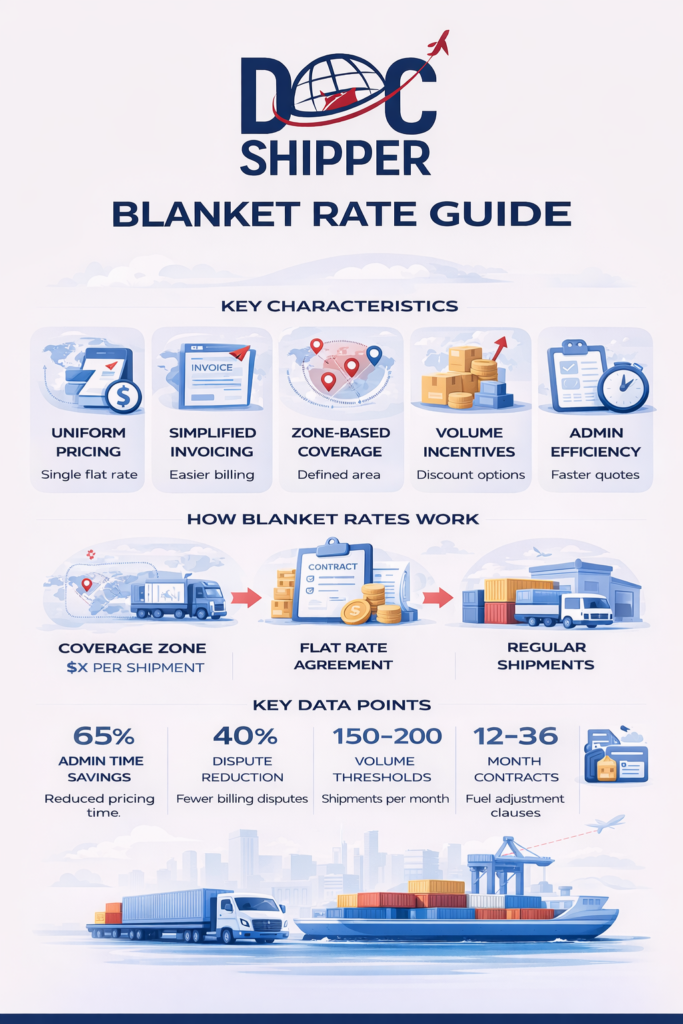
- Uniform pricing: Single rate applies regardless of exact delivery location within the coverage zone
- Simplified invoicing: Eliminates individual distance calculations for each shipment
- Zone-based coverage: Typically applies to defined geographic regions or service areas
- Volume incentives: Often negotiated for high-volume shippers with regular distribution patterns
- Administrative efficiency: Reduces pricing disputes and accelerates quote generation
Understanding Blanket Rate Mechanisms & Applications
Blanket rates function by establishing a predetermined price point that averages costs across multiple destinations. Carriers calculate this rate by analyzing historical shipping patterns, typical distances, and operational expenses within the designated zone.
The pricing model works best for consolidated distribution networks where shipments follow predictable patterns. For instance, a manufacturer shipping to retailers across a metropolitan area benefits from consistent pricing without calculating individual store distances.
From a contractual perspective, blanket rates typically appear in service level agreements (SLAs) between shippers and carriers. These agreements specify coverage zones, weight limitations, and service parameters. The International Chamber of Commerce (ICC) recognizes such pricing structures within Incoterms® frameworks, particularly for domestic delivery terms.
The cost allocation methodology behind blanket rates considers multiple factors: fuel surcharges, handling fees, average transit distances, and delivery density. Carriers absorb higher costs for distant locations while benefiting from shorter routes within the same zone.
At DocShipper, we negotiate blanket rate agreements for clients with regular distribution needs, ensuring transparent pricing while optimizing carrier relationships. Our logistics experts analyze shipping patterns to determine whether blanket rates offer genuine cost advantages compared to zone-based pricing.
The regulatory compliance aspect requires attention to non-discriminatory pricing practices. Competition authorities in various jurisdictions monitor blanket rate structures to ensure they don’t create unfair market advantages or violate antitrust regulations.
Practical Examples & Comparative Data
Understanding blanket rates becomes clearer through concrete scenarios and comparative analysis. The following examples illustrate practical applications across different logistics contexts.
Comparative Pricing Analysis
| Pricing Method | Coverage Area | Rate Structure | Best For |
|---|---|---|---|
| Blanket Rate | Entire metropolitan region | $45 per pallet (0-150 miles) | High-volume regional distribution |
| Zone-Based Pricing | 5 distinct zones | $35-$65 per pallet (varies by zone) | Scattered delivery locations |
| Distance-Based | Calculated per mile | $1.85 per mile + base fee | Long-haul or irregular routes |
Use Case: E-Commerce Retailer Distribution
Scenario: An online furniture retailer ships 200 pallets monthly to customers across the Greater Los Angeles area (covering approximately 140-mile radius).
Blanket Rate Agreement:
- Rate: $52 per pallet for all deliveries within LA County and Orange County
- Monthly volume: 200 pallets
- Total monthly cost: $10,400
- Average cost predictability: 100% (no distance-based variations)
Alternative Zone-Based Calculation:
- Zone 1 (0-30 miles): 80 pallets × $38 = $3,040
- Zone 2 (31-60 miles): 60 pallets × $47 = $2,820
- Zone 3 (61-100 miles): 40 pallets × $58 = $2,320
- Zone 4 (101-140 miles): 20 pallets × $72 = $1,440
- Total monthly cost: $9,620
Analysis: While the zone-based approach shows $780 monthly savings (7.5%), the blanket rate offers significant administrative advantages: simplified invoicing, faster quote generation, and elimination of distance verification disputes. For businesses prioritizing operational efficiency over marginal cost differences, blanket rates deliver superior value.
DocShipper Platform
Optimize Your Global Logistics with Cutting-Edge Solutions
Enhance efficiency, cut costs, and gain 24/7 visibility  over your entire supply chain.
- Cut your shipping costs and maximize your margins
- Manage sourcing, freight, & customs on one platform
- Get real-time tracking and analytics
Key Data Points
- Administrative time savings: Blanket rates reduce pricing calculation time by approximately 65% compared to multi-zone systems
- Dispute reduction: Companies report 40% fewer billing disputes when using uniform pricing structures
- Volume thresholds: Carriers typically offer blanket rates for shippers exceeding 150-200 shipments monthly within the coverage zone
- Cost variation tolerance: Blanket rates work optimally when individual shipment costs vary by less than 25% from the average
- Contract duration: Most blanket rate agreements span 12-36 months with quarterly fuel adjustment clauses
Conclusion
Blanket rates represent a strategic pricing tool that balances cost efficiency with operational simplicity. For businesses with consistent regional distribution patterns, this approach eliminates complexity while maintaining budget predictability.
Need expert guidance on negotiating blanket rate agreements or optimizing your freight pricing strategy? Contact DocShipper for personalized logistics consultation.
📚 Quiz
Test Your Knowledge: Blanket Rate
1. What best describes a blanket rate in freight logistics?
2. A common misconception about blanket rates is that they are always cheaper than zone-based pricing. What does the article actually state?
3. An e-commerce retailer ships 180 pallets per month to various stores spread across a metropolitan region. Which pricing approach is most suitable for this shipper?
🎯 Your Result
📞 Free Quote in 24hFAQ | Blanket Rate: Definition, Calculation & Practical Examples
Blanket rates work best for high-volume shippers with regular deliveries to multiple locations within a defined region. E-commerce retailers, wholesale distributors, and manufacturers with regional distribution centers gain maximum advantage from simplified pricing structures.
Carriers analyze historical shipping data, average distances, fuel costs, handling requirements, and delivery density within the coverage zone. The rate reflects an averaged cost that balances profitable short-haul shipments with less profitable distant deliveries.
Yes, blanket rates can apply to international logistics, particularly for cross-border shipments within trade blocs like the EU or USMCA regions. Carriers may offer uniform pricing for shipments to neighboring countries with similar customs procedures and transit times.
Most carriers require 150-200 shipments monthly within the designated zone before offering blanket rates. Volume thresholds vary by carrier, geographic region, and shipment characteristics. Smaller shippers may access blanket rates through freight consolidators or third-party logistics providers.
Fuel surcharges typically apply as percentage adjustments to the base blanket rate, recalculated monthly or quarterly based on national fuel price indexes. Contracts should clearly specify the fuel surcharge methodology and adjustment frequency to maintain pricing transparency.
Not necessarily. Blanket rates offer cost savings primarily through administrative efficiency rather than raw freight costs. Shippers with deliveries concentrated in nearby zones may pay slightly more under blanket rates but gain significant operational benefits through simplified processes.
Shipments outside the designated blanket rate zone typically revert to standard zone-based or distance-based pricing. Contracts should specify overflow pricing mechanisms and clearly define geographic boundaries to avoid billing disputes.
Standard blanket rates usually cover basic pickup and delivery services. Special requirements like liftgate service, inside delivery, or appointment scheduling typically incur additional charges. Comprehensive service level agreements should detail included services and accessorial fee structures.
Annual reviews align with most carrier pricing cycles, though contracts typically span 12-36 months. Significant changes in shipping volumes, fuel costs, or distribution patterns warrant earlier renegotiation to ensure pricing remains competitive and aligned with operational realities.
Blanket rates appear more commonly in LTL (less-than-truckload) shipping where consolidation creates natural cost averaging. FTL (full truckload) shipments may use blanket rates for dedicated lanes with consistent volumes, though distance-based pricing remains more prevalent for full truckload services.
Proper documentation includes the master service agreement specifying rate terms, proof of delivery confirming destination locations within the coverage zone, and monthly shipping summaries. Maintaining detailed records prevents disputes and facilitates contract compliance audits.
Small businesses can access blanket rates through freight brokers, third-party logistics providers, or shipping cooperatives that aggregate volumes from multiple shippers. These intermediaries negotiate blanket rates with carriers and extend benefits to smaller clients who wouldn't individually qualify.
Need Help with Logistics or Sourcing ?
First, we secure the right products from the right suppliers at the right price by managing the sourcing process from start to finish. Then, we simplify your shipping experience - from pickup to final delivery - ensuring any product, anywhere, is delivered at highly competitive prices.


Fill the Form
Prefer email? Send us your inquiry, and we’ll get back to you as soon as possible.
Contact us


