


In short ⚡
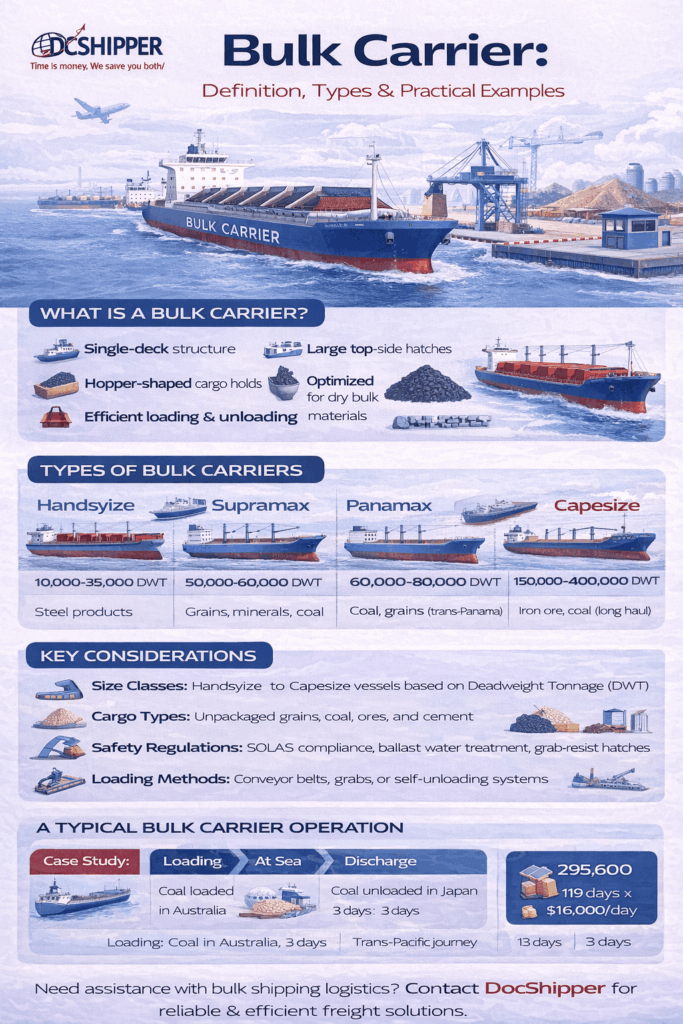
A bulk carrier is a specialized cargo vessel designed to transport unpackaged bulk commodities such as grains, coal, ore, and cement in large quantities. These ships feature single-deck construction with top-side hatches and hopper-shaped cargo holds optimized for efficient loading, stowage, and discharge of dry bulk materials.
Introduction
Many importers and exporters struggle to understand which vessel type suits their commodity shipment. Choosing the wrong ship category can result in damaged cargo, excessive freight costs, or contractual disputes.
Bulk carriers represent approximately 15-17% of the global merchant fleet and handle over 40% of international seaborne trade by volume. Understanding their specifications is crucial for anyone involved in raw material logistics.
Key characteristics include:
- Specialized hull design with reinforced double-bottom and side structures
- Self-unloading capability or compatibility with shore-based discharge equipment
- Size classification systems ranging from Handysize to Capesize vessels
- Cargo hold configuration optimized for specific bulk densities
- Ballast water management systems for stability during empty voyages
Technical Design & Operational Expertise
Bulk carriers operate under strict SOLAS (Safety of Life at Sea) regulations and must comply with the International Maritime Organization’s specialized codes. The vessel’s structural integrity depends on proper cargo distribution to prevent stress concentrations that could lead to hull failure.
The size classification system directly impacts route flexibility and port accessibility. Handysize vessels (10,000-35,000 DWT) access smaller ports, while Capesize ships (over 150,000 DWT) require deep-water terminals and cannot transit the Panama or Suez Canals.
Cargo hold design varies significantly based on intended commodities. Grain carriers feature smooth tank tops and specialized ventilation, while ore carriers have smaller holds with reinforced floors to handle high-density materials. The hold-to-hatch ratio affects loading efficiency and cargo accessibility.
Modern bulk carriers incorporate grab-resistant hatch covers and automated systems that reduce port turnaround time by 30-40%. According to the International Maritime Organization, these technological improvements have reduced loading-related incidents by over 50% since 2010.
Ballast water treatment systems became mandatory under the BWM Convention, requiring all vessels to prevent invasive species transfer. This adds operational complexity but protects marine ecosystems during the 40-60% of voyage time when bulk carriers sail empty.
At DocShipper, we systematically verify vessel suitability certificates and cargo hold inspection reports before confirming bulk shipments, ensuring compliance with both maritime regulations and commodity-specific requirements.
Practical Examples & Market Data
Understanding real-world applications helps shippers select appropriate vessel types and anticipate freight costs. The bulk carrier market operates on volatile charter rates influenced by seasonal demand, fuel prices, and geopolitical factors.
| Vessel Type | Capacity (DWT) | Typical Cargo | Average Day Rate (2024) |
|---|---|---|---|
| Handysize | 10,000-35,000 | Steel products, forest products | $8,000-$12,000 |
| Supramax | 50,000-60,000 | Grains, minerals, coal | $11,000-$16,000 |
| Panamax | 60,000-80,000 | Coal, grains (trans-Panama) | $13,000-$19,000 |
| Capesize | 150,000-400,000 | Iron ore, coal (long haul) | $18,000-$35,000 |
Case Study: A European steel manufacturer importing 55,000 tons of iron ore from Brazil would typically charter a Supramax bulk carrier. At current rates ($14,000/day) with a 35-day round voyage including loading/discharge, the vessel cost totals $490,000, equating to approximately $8.90 per ton—representing 15-20% of total landed costs.
Key operational considerations include:
- Demurrage costs averaging $15,000-$25,000 daily for delays beyond agreed laytime
- Cargo loss rates of 0.5-1.5% for bulk commodities due to handling and moisture
- Seasonal rate fluctuations with grain harvest periods seeing 40-60% premium increases
- Fuel consumption ranging from 25-35 tons/day for laden voyages (Supramax class)
- Port infrastructure requirements including minimum draft depths of 12-18 meters for larger vessels
Conclusion
Bulk carriers form the backbone of global commodity trade, requiring specialized knowledge to optimize costs and ensure cargo integrity. Proper vessel selection based on commodity type, volume, and route determines shipment success.
Need expert guidance on bulk shipping logistics? Contact DocShipper for tailored freight solutions and end-to-end cargo management.
📚 Quiz
Test Your Knowledge: Bulk Carrier
Q1 — What is the primary purpose of a bulk carrier?
Q2 — A Capesize bulk carrier needs to ship iron ore from Brazil to China. Which statement is correct?
Q3 — A European manufacturer needs to import 55,000 tons of iron ore from Brazil. Which vessel class is the most appropriate choice?
🎯 Your Result
📞 Free Quote in 24hFAQ | Bulk Carrier: Definition, Types & Practical Examples
Bulk carriers transport unpackaged homogeneous cargo in holds, while container ships carry standardized boxed units. Bulk vessels lack the cellular structure and require specialized loading/unloading equipment for loose materials.
Yes, through compartmentalized holds. However, contamination risks require thorough cleaning between incompatible cargoes. Most operators prefer dedicated runs for specific commodities to maintain cargo quality and reduce turnaround time.
Loading duration depends on vessel size and port equipment. Handysize vessels typically load in 24-36 hours, while Capesize ships may require 48-72 hours. Modern automated terminals can achieve rates of 50,000-80,000 tons per day.
The "five major bulks" account for 70% of dry bulk trade: iron ore (1.5 billion tons annually), coal (1.2 billion tons), grains (500 million tons), bauxite/alumina (140 million tons), and phosphate rock (50 million tons).
For homogeneous cargoes exceeding 5,000 tons, bulk carriers offer 30-50% cost savings per ton compared to containerized transport. However, they require full cargo lots and specialized terminal infrastructure.
Critical risks include cargo liquefaction (especially with concentrates), structural failure from improper loading sequences, hold flooding, and oxygen depletion in enclosed spaces. SOLAS Chapter XII addresses these through mandatory inspections and loading protocols.
Three main types exist: voyage charter (specific journey), time charter (vessel rental period), and bareboat charter (vessel lease). Voyage charters are most common for spot market transactions, with rates negotiated per ton or lump sum.
Modern bulk carriers operate economically for 20-25 years with proper maintenance. After 15 years, vessels face increased survey requirements and insurance premiums. The global fleet average age is approximately 10.5 years.
Yes, specialized marine cargo insurance covers bulk commodities against inherent risks like moisture damage, contamination, and shortage. Hull and machinery insurance protects the vessel itself, while P&I (Protection and Indemnity) covers third-party liabilities.
Severe weather can cause cargo shifting, hatch cover damage, and structural stress. Vessels may delay departure or seek shelter, adding 2-5 days to voyage duration. Grain cargoes require special trimming to prevent dangerous free surface effects.
Essential documents include the Bill of Lading, Charter Party agreement, cargo manifest, Certificate of Origin, phytosanitary certificates (for agricultural products), and cargo quality certificates. Port authorities may require additional permits based on commodity type.
Small importers typically use freight forwarders who consolidate multiple shippers' cargo to fill vessel holds. Minimum practical quantities start around 1,000 tons, though specialized brokers can arrange shared space for smaller lots at premium rates.
Need Help with
Logistics or Sourcing ?
First, we secure the right products from the right suppliers at the right price by managing the sourcing process from start to finish. Then, we simplify your shipping experience - from pickup to final delivery - ensuring any product, anywhere, is delivered at highly competitive prices.


Fill the Form
Prefer email? Send us your inquiry, and we’ll get back to you as soon as possible.
Contact us




