In short ⚡
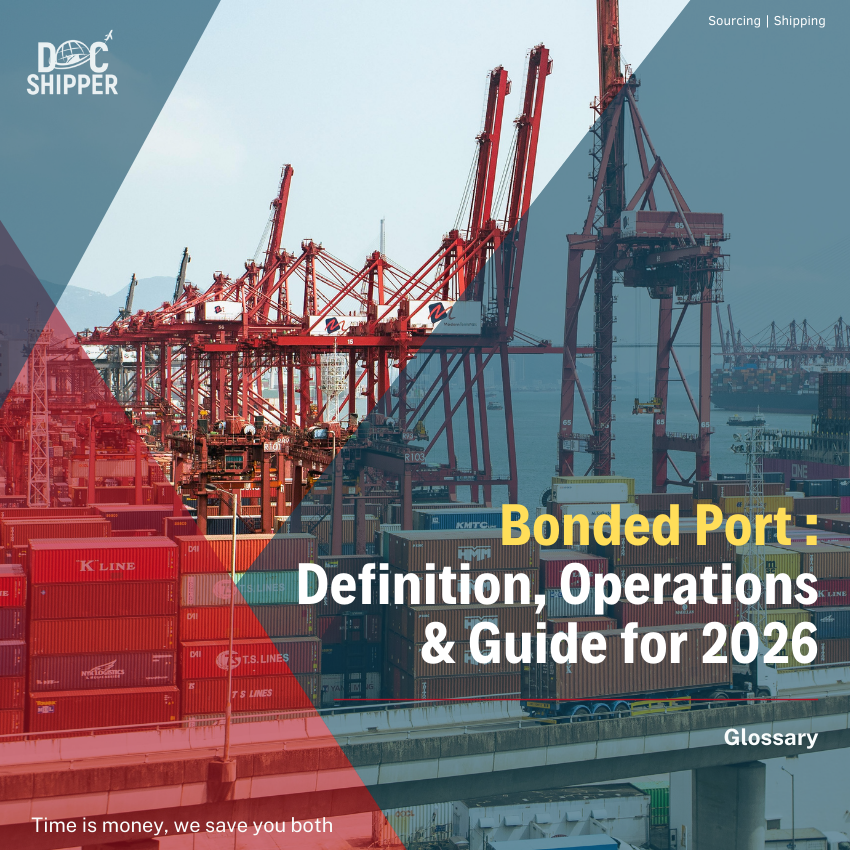
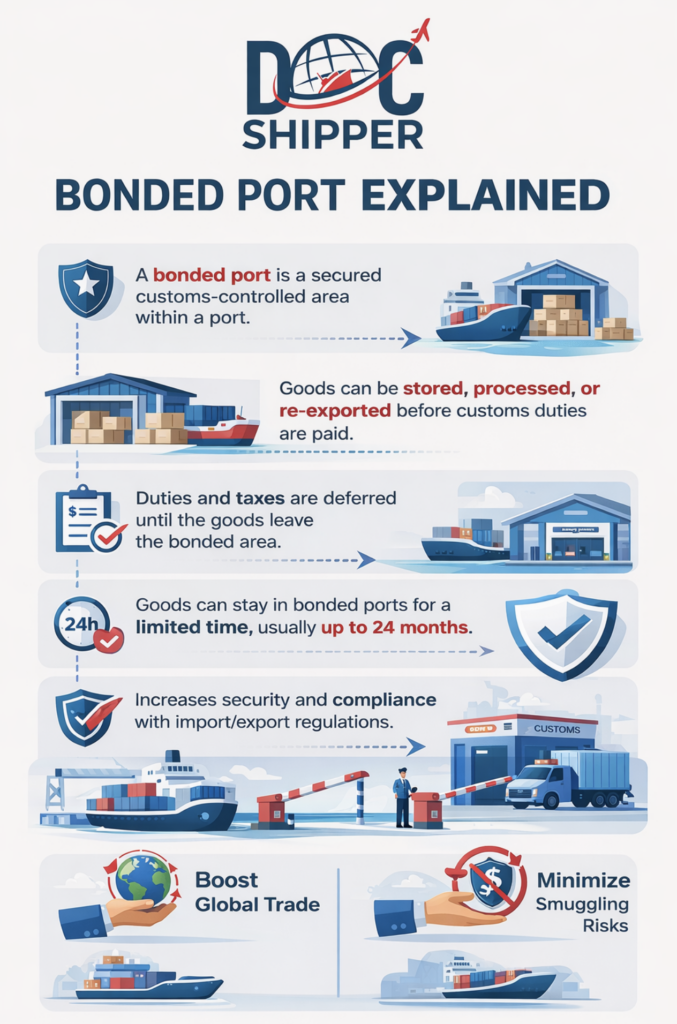
A bonded port is a customs-controlled facility where imported goods can be stored, handled, or processed without immediate payment of duties and taxes. This status allows businesses to defer customs charges until goods enter domestic commerce, optimizing cash flow and facilitating international trade operations.
Introduction
Many importers face liquidity challenges when customs duties must be paid immediately upon cargo arrival. This upfront cost can strain working capital, especially for high-value shipments or goods awaiting final destination confirmation.
Bonded ports solve this problem by creating secure zones where merchandise remains under customs supervision. Businesses gain financial flexibility while maintaining compliance with international trade regulations.
Key characteristics of bonded port operations include:
- Duty deferral: Customs charges apply only when goods leave the bonded area for domestic consumption
- Storage flexibility: Extended warehousing periods (typically 3-5 years depending on jurisdiction)
- Value-added processing: Authorized activities like repackaging, labeling, or light manufacturing
- Re-export advantages: Goods shipped to third countries avoid domestic duties entirely
- Trade facilitation: Streamlined procedures for international logistics operations
Regulatory Framework & Operational Mechanisms
Bonded ports operate under strict customs supervision governed by national legislation and international conventions. The Revised Kyoto Convention establishes global standards for customs procedures, including bonded warehouse operations.
The licensing process requires port operators to demonstrate adequate security infrastructure, inventory management systems, and compliance protocols. Customs authorities conduct regular audits to verify that bonded goods remain physically segregated from domestic merchandise.
Three primary operational models exist within bonded ports:
Public bonded warehouses accept goods from multiple importers. These facilities provide cost-effective storage for businesses without dedicated infrastructure. Operators charge fees based on volume, duration, and handling requirements.
Private bonded warehouses serve single companies with high-volume import operations. This model offers greater control over inventory management and specialized handling procedures. Authorization requires demonstrating consistent import volumes and robust compliance systems.
Duty-free zones within ports allow manufacturing or assembly activities. Components imported duty-free can be transformed into finished products. Customs charges apply only to the final goods’ domestic market portion, creating significant cost advantages for export-oriented manufacturers.
At DocShipper, we systematically evaluate bonded port options during shipment planning to optimize our clients’ duty payment timing and reduce landed costs.
Concrete Examples & Strategic Applications
Bonded ports deliver measurable financial benefits across various trade scenarios. The following comparative analysis illustrates duty deferral advantages:
| Scenario | Standard Port | Bonded Port | Savings |
|---|---|---|---|
| $500K electronics shipment (15% duty) | $75K paid immediately | $0 until sale (90-day average) | $75K working capital freed |
| Re-export to third country | $75K paid + refund process | $0 (never enters commerce) | $75K + administrative costs |
| 6-month storage before distribution | $75K + 6 months interest cost | Duty paid upon release | $2,250 (assuming 6% annual rate) |
Use Case: Automotive Parts Distributor
A European auto parts importer receives quarterly container shipments worth €800,000. By utilizing bonded port storage, the company:
- Defers €160,000 in VAT and customs duties (average 20% rate)
- Releases inventory progressively as customer orders arrive
- Pays duties only on sold merchandise over 90-day periods
- Maintains €120,000 additional working capital on average
- Achieves 4.5% annual savings through optimized cash flow management
Strategic advantages for specific industries:
- E-commerce: Store imported goods near distribution hubs, paying duties only when orders ship domestically
- Pharmaceuticals: Maintain temperature-controlled bonded storage while awaiting regulatory approvals
- Fashion retail: Adjust inventory allocation between markets based on seasonal demand without duty penalties
- Electronics: Test market response before committing to duty payment on full shipment volumes
- Manufacturing: Import components duty-free when final products target export markets
DocShipper Platform
Cut logistics costs. Not corners.
See exactly where your logistics costs are bleeding — and how to fix it. Book your expert demo.
Conclusion
Bonded ports transform customs duty payment from an immediate financial burden into a strategic cash flow tool. By deferring charges until goods enter domestic commerce, businesses optimize working capital and gain operational flexibility in global supply chains.
Need expert guidance on bonded port utilization for your shipments? Contact DocShipper for customized logistics solutions.
📚 Quiz
Test Your Knowledge: Bonded Port
Q1 — What is the defining feature of a bonded port?
Q2 — A shipment arrives at a bonded port and is later re-exported to a third country without ever entering domestic commerce. What happens to the customs duties?
Q3 — A pharmaceutical company is waiting for regulatory approval before distributing imported medicines. Which bonded port feature makes this situation most manageable?
🎯 Your Result
📞 Free Quote in 24hFAQ | Bonded Port: Definition, Operations & Practical Examples
Most jurisdictions allow 3-5 years of bonded storage. Specific durations vary by country and goods type. Extensions may be granted upon customs authority approval.
Yes, authorized activities include repackaging, labeling, quality inspections, and light assembly. Manufacturing processes require specific duty-free zone authorization.
The importer or consignee covers storage, handling, and facility charges. Rates depend on cargo type, volume, and duration. These costs are separate from deferred customs duties.
The warehouse operator or importer remains liable for customs duties on missing merchandise unless destruction is proven through official customs supervision and documentation.
Most commercial merchandise qualifies. Restricted items include perishable foods, hazardous materials requiring special permits, and goods subject to import quotas or embargoes.
Bonded warehouses defer duties on stored goods. Free trade zones additionally permit manufacturing with duty exemptions on exported products. Both operate under customs supervision.
Yes, importers pay duties only on released quantities. Remaining inventory stays bonded until subsequent withdrawals. This flexibility supports demand-based inventory management.
Essential documents include commercial invoice, packing list, bill of lading, customs entry form, and bonded warehouse receipt. Electronic systems streamline submission in modern facilities.
Warehouse operators typically provide basic liability coverage. Importers should maintain cargo insurance for full declared value, as operator coverage may have limitations.
Release timeframes range from same-day to 48 hours, depending on customs processing, duty payment confirmation, and warehouse operational schedules. Pre-clearance arrangements expedite the process.
Overstaying maximum durations may trigger automatic duty assessment, storage penalties, or forced sale at customs auction. Timely extensions prevent these consequences.
Yes, under customs supervision through bonded transportation procedures. Goods remain duty-suspended during transfer between authorized bonded warehouses or ports.
Need Help with
Logistics or Sourcing ?
First, we secure the right products from the right suppliers at the right price by managing the sourcing process from start to finish. Then, we simplify your shipping experience - from pickup to final delivery - ensuring any product, anywhere, is delivered at highly competitive prices.


Fill the Form
Prefer email? Send us your inquiry, and we’ll get back to you as soon as possible.
Contact us