In short ⚡
Prohibited and Restricted Imports: What You Cannot Ship and How to Check. Prohibited goods cannot enter the destination market, while restricted goods may enter only with the required licence, permit, certificate, or proof of compliance. Check the product before ordering by following these steps:
- Identify the correct HS code using the product’s material, function, composition, technical characteristics, and intended use.
- Check the destination’s official tariff: HTS and CBP guidance for the United States, the UK Integrated Online Tariff for Great Britain, or TARIC and Access2Markets for the European Union.
- Identify the responsible authority and confirm whether a licence, permit, certificate, registration, or approval is required before shipment.
- Verify product compliance, including labels, warnings, ingredients, test reports, declarations, conformity markings, instructions, packaging, and traceability.
- Prepare the complete document file before departure, including the invoice, packing list, transport documents, permits, certificates, test reports, product photos, and packaging evidence.
In this guide, you will find the differences between prohibited, restricted, and compliance-controlled goods, the main risks for food, health products, electronics, toys, branded goods, and wood packaging, country-specific checks for the US, UK, and EU, and the steps to follow if customs stops your shipment.
We hope you’ll find this article genuinely useful, but remember, if you ever feel lost at any step, whether it’s finding a supplier, validating quality, managing international shipping or customs, DocShipper can handle it all for you!
Before you pay a supplier, determine whether your product is prohibited, restricted, or simply subject to safety and labelling rules in the destination market. The practical method is to classify the product with its HS code, check the official tariff and agencies, confirm any licence or permit, and prepare the documents before departure.
This distinction matters for importers sourcing cosmetics, food, supplements, toys, electronics, batteries, wooden products, branded goods, or industrial items from China and Asia. A product that is legal to sell in the origin country may still be refused at the border because its composition, packaging, documentation, origin, or intended use triggers an import restriction.
DocShipper Info
Confirm whether your goods are prohibited, restricted, or compliance-controlled before paying your supplier.
Prohibited vs restricted imports: what is the difference?
Prohibited imports cannot enter the country at all, whatever paperwork you provide. Restricted imports may enter, but only when you have the required licence, permit, certificate, or proof of compliance. A third category, compliance-controlled goods, is generally allowed but must meet product safety, labelling, packaging, or technical standards.
For example, narcotics, certain weapons, protected species traded outside the applicable rules, and counterfeit goods may be prohibited or seized. Food, plants, medicines, chemicals, radio equipment, and some batteries are more often restricted or compliance-controlled. Their entry depends on the product’s exact characteristics and the documents required by the destination authority.
The commercial consequence is different. A prohibited shipment can be seized, destroyed, or ordered out of the country. A restricted shipment may be detained while customs or a partner agency asks for a missing permit, certificate, test report, or declaration. If the importer cannot correct the issue, the goods may still be re-exported or destroyed, with storage and handling costs continuing during the hold.
Rules are national, and sometimes regional or state-based. The same supplement, wireless device, wooden crate, or branded product can be accepted under one market’s conditions and restricted under another’s. That is why a supplier’s statement that a product has already been exported is not proof that it can enter the United States, Great Britain, or the European Union.
| Status | What it means | Typical examples | Importer action |
| Prohibited | Entry is not permitted, regardless of ordinary commercial paperwork. | Some narcotics, weapons, counterfeit goods, and protected species traded unlawfully. | Do not order or ship. Verify whether a lawful exception exists with the competent authority. |
| Restricted | Entry is possible only with a licence, permit, certificate, approval, or other government condition. | Food, plants, medicines, chemicals, animals, and certain controlled technologies. | Identify the authority and obtain approval before departure. |
| Compliance-controlled | The goods are not necessarily restricted at the border, but must comply with safety, technical, packaging, or labelling rules. | Toys, cosmetics, electronics, batteries, and children’s products. | Collect test reports, declarations, markings, labels, and technical files before ordering. |
DocShipper Tips
Review food, wood packaging, batteries, branded goods, and dual-use controls before production begins.
The main categories of prohibited and restricted goods
The categories most likely to create problems for business importers are food and agricultural products, plants and wood packaging, health products, chemicals, batteries, radio equipment, toys, branded goods, weapons, and dual-use items. The exact status depends on the HS code, composition, end use, origin, and destination authority.
Do not treat the table below as a replacement for an official decision. Use it to identify the risk category, then check the destination tariff and the responsible agency before your supplier begins production.
Food, plants, animals and wood
Food, supplements, seeds, plants, animals, soil, and products of animal origin can require registration, prior notification, sanitary certificates, import permits, or inspection. The description “natural product” is not enough: ingredients, processing method, packaging, and intended use can change the applicable rule.
Wood packaging is an easily missed restriction. Wooden pallets, crates, and dunnage entering the EU must be treated and marked under ISPM 15. According to AGRINFO, non-compliant packaging can be destroyed or the goods can be re-exported. Ask the supplier to confirm the packaging material and provide photographs of the official mark before loading.
Health, cosmetics and chemicals
Cosmetics, medicines, medical devices, supplements, disinfectants, and industrial chemicals are not interchangeable categories. Their ingredients, claims, concentration, intended use, and importer obligations may determine whether they require registration, a responsible person, safety documentation, a permit, or a specific label.
In the United States, the FDA is one of the partner government agencies whose requirements may apply alongside CBP procedures. In Great Britain, the Food Standards Agency and the Health and Safety Executive may be relevant depending on the product. In the EU, TARIC identifies customs measures, but product compliance can also involve separate EU regulations and national enforcement.
Looking for a Reliable Shipping & Sourcing Partner?


Electronics, batteries and radio equipment
Electronics can be held for reasons that are unrelated to customs duty. Radio transmitters may require authorisation or conformity evidence, while lithium batteries raise both transport and product safety questions. A Bluetooth speaker, for example, may need radio equipment documentation, battery transport information, safety testing, and destination-specific marking.
Ask the supplier for the complete model specification, battery chemistry, test reports, declaration of conformity, user instructions, and packaging details. Never rely only on a generic “CE certificate” sent without identifying the exact model, because the document may relate to another product or fail to cover the requirements of the destination market.
Toys and children’s products
Toys and children’s products are closely controlled because age grading, small parts, materials, chemicals, electrical functions, and advertising claims can affect the applicable standard. A product designed for children may therefore require more evidence than a visually similar general consumer item.
The European Commission’s Safety Gate report recorded 4,671 alerts in 2025 for dangerous non-food products, the highest number reported since 2003. Cosmetics represented 36% of alerts, toys 16%, and electrical appliances 11%; chemical risks accounted for 53% of alerts.
Branded goods and counterfeits
Importing branded goods for resale requires more than an invoice from your supplier. You should confirm that the supplier is authorised to sell the goods and that the products are genuine. Customs and rights holders may act against counterfeit goods, unauthorised parallel imports, or products that infringe trademarks, designs, or other intellectual property rights.
US Customs and Border Protection reported 25,079 intellectual property rights seizures in FY2025, compared with 20,516 in FY2024. The seized goods had a manufacturer’s suggested retail price of USD 7.4 billion, and total trade seizures reached 57,360, an increase of 18.4%.
Weapons, dual-use goods and sanctioned origins
Weapons, ammunition, explosives, military items, encryption technology, and dual-use goods can require licences or be prohibited depending on the product and end user. Sanctions may also apply to the origin, supplier, vessel, bank, end user, or intended use, even when the physical product appears ordinary.
Forced-labour rules are another origin-related risk. In the United States, CBP can detain goods suspected of being made with forced labour under the Uyghur Forced Labor Prevention Act and related rules. The FY2025 figures cited above include 7,325 shipments detained for forced labour, so supply-chain traceability should be checked before production rather than after arrival.
| Category | Examples | Likely status | United States | United Kingdom | European Union |
| Food, supplements and agriculture | Food, seeds, plants, animal products | Restricted or compliance-controlled | FDA, USDA/APHIS | Food Standards Agency, APHA | TARIC measures, sanitary and phytosanitary rules |
| Cosmetics and health products | Cosmetics, medicines, supplements, medical devices | Restricted or compliance-controlled | FDA and other relevant agencies | Relevant UK health and product authorities | EU product rules and national enforcement |
| Electronics and batteries | Speakers, chargers, lithium batteries | Compliance-controlled, sometimes restricted | CPSC, FCC-related requirements, transport rules | Ofcom and product safety rules | Conformity, battery and transport requirements |
| Toys and children’s products | Toys, childcare articles, products with small parts | Compliance-controlled | CPSC | UK product safety authorities | EU product safety rules and Safety Gate enforcement |
| Wood packaging | Pallets, crates, dunnage | Restricted if treatment and marking are missing | Applicable agricultural entry rules | Plant health authorities | ISPM 15 requirements under Regulation (EU) 2016/2031 |
| Branded products | Clothing, footwear, accessories, electronics | Prohibited if counterfeit; restricted or actionable if unauthorised | CBP and rights holders | HMRC and rights holders | Customs authorities and rights holders |
| Weapons and dual-use goods | Weapons, explosives, controlled technology | Prohibited or restricted | CBP and relevant control agencies | HMRC, DBT, HSE and other authorities | EU and national export/import control rules |
Michael McGrath, European Commissioner for Democracy, Justice, the Rule of Law and Consumer Protection, said: “The safety of consumer products is a top priority for the Commission. The record number of alerts reported in 2025 through the Safety Gate system demonstrates that Europe’s product safety framework is becoming stronger, more effective, and – most importantly – essential.” Read the European Commission source.
How to check if your product is restricted, in 5 steps
Classify the product with its HS code, check the destination’s official tariff, identify the responsible authority, confirm product compliance, and prepare the documents before departure. This sequence turns a broad question such as “Can I import this item?” into a verifiable file that your supplier, customs broker, and authorities can review.
- Identify the HS code. Start with the product’s material, function, composition, technical characteristics, and intended use. Do not accept a supplier’s code without review: an incorrect classification can hide a licence requirement or show the wrong customs measure. When the product is complex, ask a customs broker for a pre-classification.
- Check the official tariff for the destination. For the United States, review the HTS and the relevant CBP partner government agency requirements. For Great Britain, use the UK Integrated Online Tariff and the official GOV.UK list. For the EU, check TARIC and use Access2Markets for additional market-access information.
- Identify the licence, permit, or certificate. Record the authority, application process, validity period, importer obligations, and whether the approval must exist before shipment. A supplier’s export licence does not automatically replace the importer’s permit in the destination market.
- Confirm product compliance. Check labels, warnings, ingredients, test reports, declarations, conformity markings, instructions, packaging, and traceability. Depending on the market and product, this may include CE or UKCA-related evidence, CPSC certificates, radio equipment documentation, food information, or chemical records.
- Build the document file before departure. Match the commercial invoice, packing list, transport documents, certificates, permits, test reports, product photos, and packaging evidence to the exact model and shipment. Have the broker review the file before the factory loads the goods.
Use the following questions with your supplier before paying the balance:
- What is the exact product composition, model number, intended use, and age range?
- Which HS code are you proposing, and what technical information supports it?
- Do you have test reports for the exact model and destination market?
- Can you provide the declaration of conformity, safety data, labels, and user instructions?
- Does the product contain a battery, radio transmitter, animal material, plant material, chemicals, or controlled components?
- Are the branded goods genuine, and can you provide proof of brand authorisation?
- What material is used for pallets, crates, and dunnage, and do wooden components carry the required ISPM 15 mark?
- Can you provide supply-chain records showing the origin of the raw materials where forced-labour rules may apply?
Consider a Shenzhen supplier’s Bluetooth speaker with a lithium battery shipped to the UK. The working file should be built in this order:
| Check | Application to the speaker |
| HS code | Classify the speaker according to its function, wireless capability, battery, and technical characteristics. |
| UK tariff lookup | Review the UK Integrated Online Tariff for the selected code and identify any measures or notes. |
| Authority and permit check | Determine whether radio equipment rules, battery obligations, or another approval applies. Do not assume that no customs licence means no compliance obligation. |
| Product compliance | Request the exact-model test report, declaration of conformity, relevant marking evidence, user instructions, and safety information. |
| Transport documentation | Confirm the battery details and the documentation required to transport the product safely. |
| Pre-departure review | Send the complete file to the customs broker before the factory loads the shipment. |
DocShipper Tips
Verify the HS code, permits, test reports, labels, and exact-model documents with your broker.
DocShipper Platform
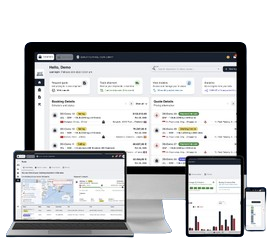
One platform. Your entire supply chain
Sourcing, freight, customs & documents — all centralised, all visible, 24/7.
Country rules at a glance: United States, United Kingdom, European Union
The United States uses CBP together with partner government agencies, Great Britain publishes authority-specific prohibitions and restrictions, and the EU combines TARIC customs measures with product and national rules. Always check the market of import, not just the country where the supplier is located.
DocShipper Info
Use HTS, the UK Integrated Online Tariff, or TARIC, then confirm sector-specific requirements.
United States: CBP and partner government agencies
CBP administers border entry, but it does not replace the agencies responsible for particular product risks. FDA, USDA/APHIS, CPSC, EPA, FWS, ATF, and other partner agencies may impose separate requirements. CBP provides a directory of partner government agency import guides, which should be checked alongside the HTS classification.
For a food product, the relevant question may concern FDA requirements and prior notifications. For plants or animal products, USDA/APHIS may apply. For toys, children’s goods, and some consumer products, CPSC requirements can be decisive. For protected species, check CITES-related controls and the relevant wildlife authority.
United Kingdom: HMRC and sector authorities
For Great Britain, use the official GOV.UK prohibited and restricted imports list and the UK Integrated Online Tariff. The GOV.UK list identifies the authority responsible for different controls, including HMRC, the Food Standards Agency, the Department for Business and Trade, HSE, Ofcom, and APHA.
The list was published on 31 January 2026 and updated on 20 July 2026 according to the supplied source. Because UK rules can change, check the current version and confirm whether the destination is Great Britain or another part of the United Kingdom before relying on the result.
European Union: TARIC measures and national rules
Use the European Commission’s TARIC consultation to review the measures attached to the HS code. Then use Access2Markets for additional information on procedures, documents, and market-access conditions.
TARIC is essential, but it is not the only compliance check. Member states may apply national controls and enforcement rules, including requirements relevant to food, chemicals, consumer safety, or customs prohibitions. Confirm the specific member state of import and the product’s distribution route.
| Market | Primary lookup | Main authorities or tools |
| United States | HTS and CBP import guidance | CBP, FDA, USDA/APHIS, CPSC, EPA, FWS, ATF and other partner agencies |
| United Kingdom | UK Integrated Online Tariff and GOV.UK list | HMRC, FSA, DBT, HSE, Ofcom, APHA |
| European Union | TARIC and Access2Markets | European Commission, customs authorities, member-state authorities, CITES and IPPC-related rules |
What happens if customs stops your goods?
Customs may detain the shipment while requesting evidence, release it after the file is corrected, or order re-export, seizure, or destruction. If the goods are prohibited or counterfeit, documentation may not solve the problem. Storage, demurrage, detention, inspection, and destruction costs can accumulate while the shipment is held.
The usual sequence begins with a hold notice or document request. Your broker should identify whether the issue concerns classification, a missing permit, a product safety failure, an inaccurate invoice, an origin concern, intellectual property, or packaging. Ask for the deadline and the exact document format required rather than sending unrelated paperwork.
Next, gather the evidence from the supplier and manufacturer. This may include a permit, certificate of analysis, test report, declaration of conformity, battery information, brand authorisation, origin records, or photographs of compliant packaging. If the goods are legally admissible but cannot be released immediately, ask whether a customs-bonded warehouse or another authorised storage solution is available.
If the issue cannot be corrected, the authority may require re-export or destruction. A prohibited or counterfeit shipment can also be seized, and penalties may apply. Do not instruct the supplier to alter documents or relabel goods after the fact: that can create an additional customs or fraud problem.
Acting quickly can make a practical difference. A Trustpilot review from Frank A dated 21 February 2026 describes a package held at Thai customs that was cleared in under 12 hours after intervention. Another review, from Andreas Ravn dated 9 September 2025, describes an export from China involving licence problems that were handled with the supplier by a Chinese-speaking team. These experiences are not a guarantee of timing, but they illustrate why the broker, supplier, and importer should communicate as soon as a hold appears.
| Customs decision | Meaning | Immediate action |
| Document hold | Customs or a partner agency needs additional information. | Contact the broker, identify the missing document, and request it from the supplier. |
| Inspection or safety detention | The authority needs to verify the product, composition, labelling, or safety evidence. | Provide exact-model technical files and avoid sending generic certificates. |
| Release after correction | The issue can be resolved with acceptable evidence or a corrected declaration. | Confirm the final entry data and retain the complete file for future shipments. |
| Re-export order | The goods cannot be released in the destination market. | Follow the authority’s instructions and assess transport, storage, and supplier recovery options. |
| Seizure or destruction | The goods are prohibited, counterfeit, unsafe, or otherwise subject to enforcement. | Obtain the official notice, seek specialist advice, and do not interfere with the goods. |
DocShipper Alert
Fast document review can limit storage, demurrage, re-export, or destruction costs.
Conclusion: import without surprises
Check every product by HS code before paying your supplier. The goal is not only to determine whether the product is banned, but also to identify the permit, certificate, safety evidence, labelling, packaging, and supply-chain records required for lawful entry.
- Prohibited goods cannot enter the market; restricted goods need a licence, permit, or certificate.
- Most stopped business shipments involve restrictions or non-compliance rather than an absolute ban.
- Use the official tariff for the destination before ordering: HTS for the US, the UK Integrated Online Tariff, or TARIC for the EU.
- Check hidden restrictions involving wood packaging, batteries, product safety, branded goods, and forced-labour rules.
- If customs holds the goods, act immediately because storage and demurrage can continue during the detention.
Not sure your product can enter the US, UK, or EU? Send us its product details and supplier documents. Our customs team can check the HS code, licences, and compliance file before your goods leave the factory, then coordinate shipping and customs clearance in the same operation.
FAQ | Prohibited and Restricted Imports: How to Check Your Goods Before Ordering
No. A sample, gift, or courier shipment can still be subject to the same prohibitions, permits, product-safety rules, and intellectual-property controls as a commercial shipment. A lower customs value may reduce duty, but it does not normally remove the requirement for an import licence, safety evidence, or an accurate description. Confirm the rules before asking a supplier to send samples.
The importer usually remains responsible for ensuring that the goods can legally enter the destination market. A supplier’s test report or declaration is useful evidence, but it does not transfer your legal obligations. Check that each document matches the exact model, manufacturer, product version, destination market, and current applicable standard. If the supplier refuses to provide supporting evidence, treat that as a commercial warning and do not pay the balance until the gap is resolved.
You should assume that a material change may invalidate the original assessment. Changes to ingredients, components, battery capacity, wireless functions, packaging, labels, claims, or the legal manufacturer can trigger a new test, declaration, registration, or permit. Ask the relevant authority or compliance specialist whether the change requires an updated file before production continues.
No. A broker can classify goods, submit declarations, and communicate with customs, but the importer remains responsible for providing complete and accurate information. Give the broker the real composition, intended use, origin, value, model numbers, and technical documents. Never ask a forwarder to use a vague description or a different HS code simply to reduce duty or avoid a control.
Do not wait until the goods are finished if the documents are needed for lawful entry. Request at least a complete product specification, draft labels, composition or material data, and evidence from a previous identical production run before placing the order. Make the purchase contract conditional on receiving acceptable final documents and reserve the right to reject goods that do not match the approved specifications.
Yes. Customs or a partner agency may hold the shipment while checking one product, particularly when several items share an invoice, container, or transport document. Mixed shipments also increase the risk of inaccurate descriptions and missing permits. Separate controlled goods where practical, identify every model and quantity clearly, and ensure that the commercial invoice and packing list correspond exactly to the physical contents.
Need Help with
Logistics or Sourcing ?
First, we secure the right products from the right suppliers at the right price by managing the sourcing process from start to finish. Then, we simplify your shipping experience - from pickup to final delivery - ensuring any product, anywhere, is delivered at highly competitive prices.


Fill the Form
Prefer email? Send us your inquiry, and we’ll get back to you as soon as possible.
Contact us