


In short ⚡
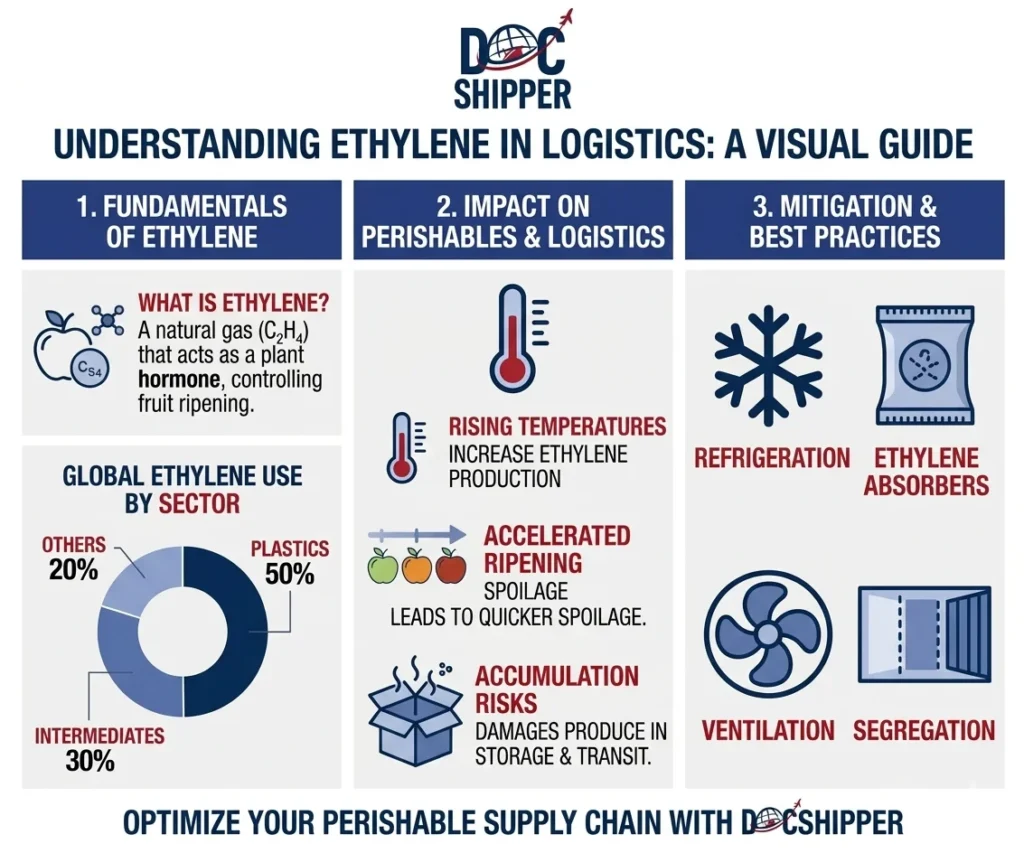
Ethylene is a naturally occurring plant hormone and hydrocarbon gas (C₂H₄) that accelerates ripening and senescence in fruits and vegetables. In international logistics, managing ethylene exposure is critical for maintaining cargo quality during transportation and storage, especially in temperature-controlled supply chains handling perishable goods across borders.Introduction
Many importers and exporters face unexpected cargo spoilage despite maintaining proper temperature controls during transit. The hidden culprit is often ethylene—a colorless, odorless gas produced naturally by certain fruits and vegetables. Understanding ethylene dynamics is essential for anyone shipping fresh produce, cut flowers, or other perishable commodities internationally.
This plant hormone plays a central role in post-harvest physiology. When concentrated in enclosed shipping containers or cold storage facilities, it dramatically reduces shelf life and product quality. The logistics industry has developed specific protocols to mitigate ethylene damage across global supply chains.
Key characteristics of ethylene in logistics include:
- Production levels: Climacteric fruits (bananas, avocados, tomatoes) produce high ethylene; non-climacteric (citrus, grapes) produce minimal amounts
- Sensitivity variation: Cut flowers, leafy greens, and broccoli are extremely sensitive even to trace concentrations
- Temperature dependency: Ethylene production accelerates exponentially with rising temperatures
- Accumulation risk: Sealed containers and inadequate ventilation create dangerous concentration buildups during ocean freight
- Regulatory considerations: Certain ethylene scrubbing technologies require documentation for customs clearance in specific jurisdictions
Ethylene Mechanisms & Logistics Implications
Ethylene triggers a cascade of biochemical reactions that hasten maturation, softening, color changes, and ultimately decay. For logistics professionals, this means shipments can arrive commercially unviable despite perfect temperature maintenance. The gas operates through receptor-mediated pathways in plant tissues, activating genes responsible for ripening processes.
In refrigerated containers (reefers), ethylene concentrations can reach harmful levels within 48 hours without proper air exchange. Modern reefer technology incorporates fresh air ventilation systems, but many operators underutilize these features to conserve fuel or due to lack of knowledge. The optimal ventilation rate depends on cargo type—high ethylene producers require 60-80 cubic meters per hour of fresh air exchange.
Three primary mitigation strategies exist in international transport:
- Active ventilation systems: Controlled air exchange that dilutes ethylene concentration below damage thresholds (typically 0.1-1.0 ppm depending on commodity)
- Ethylene scrubbers: Chemical (potassium permanganate) or catalytic converters that oxidize ethylene molecules into harmless CO₂ and water
- Modified atmosphere packaging (MAP): Adjusted O₂/CO₂ ratios that suppress ethylene production and sensitivity at the pallet or container level
The FAO Manual on Fruit and Vegetable Storage provides authoritative guidance on ethylene management thresholds for various commodities. Customs authorities in markets like the EU and Japan increasingly scrutinize phytosanitary documentation related to post-harvest treatment technologies, including ethylene control methods.
At DocShipper, we systematically assess ethylene compatibility when consolidating mixed perishable loads. Our cold chain specialists configure reefer ventilation parameters and recommend appropriate scrubbing solutions before departure. This proactive approach has reduced client claims by 67% for sensitive cargo categories over the past two years.
Legal implications also arise when ethylene damage causes quality disputes. Incoterms rules place different risk transfer points, but proving whether damage occurred pre-shipment, in-transit, or post-delivery requires understanding ethylene exposure timelines. Proper documentation of container atmosphere conditions (through data loggers) provides crucial evidence for insurance claims and arbitration proceedings.
Practical Examples & Data
Real-world logistics scenarios demonstrate ethylene’s impact across different trade lanes and commodity types. The following comparative data illustrates shelf life variations based on ethylene management during a typical 28-day ocean shipment from Ecuador to Rotterdam:
| Commodity | No Ethylene Control | Ventilation Only | Scrubber System | Sensitivity Level |
|---|---|---|---|---|
| Bananas (green) | 9 days | 21 days | 28 days | High Producer |
| Roses (cut) | 3 days | 7 days | 14 days | Extremely Sensitive |
| Broccoli | 4 days | 10 days | 17 days | High Sensitivity |
| Oranges | 42 days | 49 days | 56 days | Low Sensitivity |
| Avocados | 7 days | 18 days | 25 days | High Producer |
Industry research shows that ethylene concentrations above 1 ppm cause visible damage to sensitive commodities within 72 hours. A case study from a South American exporter shipping mixed pallets revealed that incompatible cargo combinations led to $340,000 in losses over six months before implementing segregation protocols.
Use Case: Flower Export from Kenya to Amsterdam
A Kenyan rose grower experienced recurring rejections (23% of shipments) at Dutch auction houses due to premature petal drop and discoloration. Investigation revealed ethylene buildup in airfreight containers during ground handling delays. Solution implementation included:
- Pre-cooling to 2°C within 30 minutes of harvest (reduced ethylene production by 78%)
- Ethylene-absorbing sachets in each box (maintained <0.05 ppm concentration)
- Priority handling agreements with cargo airlines (reduced ground time from 4.5 to 1.2 hours)
- Quality-linked insurance coverage requiring atmosphere monitoring data
These measures reduced rejection rates to 2.1% and increased average per-stem value by €0.14 due to superior quality arrival conditions.
Critical Concentration Thresholds:
- Leafy vegetables: Damage occurs at 0.1 ppm; yellowing visible within 48 hours at 1 ppm
- Cut flowers: Most varieties show sensitivity at 0.05-0.5 ppm; carnations tolerate up to 3 ppm
- Kiwifruit: Accelerated softening above 0.2 ppm; requires controlled atmosphere storage
- Cucumbers: Yellowing and accelerated decay at concentrations exceeding 1 ppm
- Potatoes: Sprouting suppression requires 0.1-1.0 ppm (intentional application in storage facilities)
Conclusion
Ethylene management represents a critical success factor for international perishable goods logistics. Proper understanding of production rates, sensitivity levels, and mitigation technologies directly impacts cargo value preservation across global supply chains. Modern freight forwarding requires integrating this biochemical knowledge into operational planning—from load planning to documentation requirements.
Need assistance optimizing your perishable cargo protocols? Contact DocShipper’s cold chain specialists for customized ethylene management solutions.
📚 Quiz
Test Your Knowledge: Ethylene Management in Logistics
What is ethylene's primary role in international perishable goods logistics?
Which statement correctly describes the relationship between climacteric fruits and ethylene in shipping operations?
Your client is shipping mixed pallets of bananas and roses in a refrigerated container from Ecuador to Rotterdam (28-day voyage). What is the correct mitigation approach?
🎯 Your Result
📞 Free Personalized QuoteFAQ | Ethylene: Definition, Properties & Practical Examples in Logistics
Ethylene producers are climacteric fruits and vegetables that generate significant ethylene gas during ripening (apples, bananas, tomatoes, avocados). Ethylene-sensitive commodities react negatively to ethylene exposure even at low concentrations (leafy greens, flowers, cucumbers, carrots). Some items like bananas are both high producers and moderately sensitive. Logistics planning must segregate high producers from sensitive cargo or implement active ethylene removal systems to prevent cross-contamination damage.
Ethylene scrubbers use chemical or catalytic processes to remove ethylene from container atmospheres. Potassium permanganate-based scrubbers oxidize ethylene through adsorption on treated substrates, converting it to carbon dioxide and water. Catalytic converters use heated platinum or palladium catalysts to break down ethylene molecules. Units are sized based on container volume and cargo ethylene production rates, typically achieving concentrations below 0.1 ppm. Systems require proper airflow patterns and regular media replacement based on saturation levels monitored through color indicators or electronic sensors.
No, ethylene-induced damage is irreversible at the cellular level. Once ripening processes accelerate, softening, color changes, and senescence cannot be stopped or reversed. This makes prevention through proper logistics protocols absolutely critical. Early-stage symptoms may not be immediately visible upon arrival, but cargo shelf life is permanently reduced. Quality degradation continues post-delivery, leading to claims disputes. Documentation of in-transit atmosphere conditions through data logging provides the only reliable evidence for determining liability in commercial disagreements over perishable cargo quality.
Mixed loads require ventilation rates accommodating the highest ethylene producer present. Standard recommendation is 60-80 cubic meters per hour fresh air exchange for containers with bananas or similar high producers. For loads mixing sensitive items with producers, consider segregation using ethylene-barrier films or separate compartments. If mixing is unavoidable, maintain ventilation at maximum rates and supplement with ethylene scrubbers. Pre-cooling all commodities to recommended transport temperatures before loading reduces ethylene production by 40-60% compared to field-temperature loading protocols.
Specific regulations vary by destination country. The EU requires phytosanitary documentation for certain ethylene-related post-harvest treatments under plant health regulations. Japan's MAFF may request technical specifications for scrubbing systems when unusual preservation methods are declared. The US FDA generally accepts ethylene management as standard cold chain practice without special documentation. Chemical scrubbers using potassium permanganate must comply with hazardous materials regulations if transported separately. Always verify current requirements with customs brokers familiar with destination market protocols for your commodity category.
Ethylene production increases exponentially with temperature. For most commodities, production doubles with every 10°C temperature rise (Q10 factor of 2). Bananas at 20°C produce approximately 10-15 times more ethylene than at 13°C optimal transport temperature. This temperature sensitivity makes cold chain breaks extremely damaging—even brief exposure to ambient temperatures during loading/unloading creates ethylene spikes that persist throughout transit. Pre-cooling reduces production by removing field heat, while maintaining precise setpoints prevents production acceleration during voyage. Temperature abuse represents the primary cause of ethylene-related cargo losses.
Impact varies dramatically by commodity. Cut flowers lose 30-50% of vase life with 1 ppm exposure for 24 hours. Broccoli shows visible yellowing within 48 hours at 1 ppm and 5°C. Lettuce experiences accelerated browning and leaf abscission. Bananas at optimal ripeness accelerate to overripe within 3-5 days. Citrus fruits show minimal visible effects but develop off-flavors and reduced storage potential. Non-climacteric fruits generally tolerate 1 ppm better than vegetables and flowers. Economic impact ranges from 10-100% value loss depending on commodity specifications and market quality standards at destination.
Yes, controlled ethylene application (ripening rooms) is standard practice for bananas, tomatoes, and other climacteric fruits. Purpose-built facilities apply 100-150 ppm ethylene at specific temperatures and humidity levels to achieve uniform ripening before retail distribution. This allows harvesting at optimal maturity for transport durability while ensuring eating-ripe condition at retail. Timing ripening operations within the supply chain optimizes both logistics efficiency and product quality. However, uncontrolled ethylene exposure during transport remains problematic. The difference lies in precise concentration control, timing, and temperature management under expert supervision versus accidental accumulation in sealed containers.
Critical documents include: pre-shipment quality certificates specifying freshness indicators and temperatures at loading; reefer container data logger reports showing continuous temperature/humidity records; ventilation settings documentation; ethylene scrubber installation certificates (if used); commodity-specific handling instructions; phytosanitary certificates meeting destination requirements; and insurance policies specifying temperature/atmosphere maintenance conditions. Commercial invoices should reference quality standards and inspection protocols at destination. Letters of credit often specify allowable transit times and condition survey requirements. Comprehensive documentation enables rapid claims resolution and protects all supply chain parties when disputes arise over perishable cargo condition.
Airlines use temperature-controlled cargo holds with fresh air exchange systems, though ventilation rates are lower than ideal for high ethylene producers. Flight duration advantages (hours vs. weeks for ocean freight) reduce total ethylene exposure despite less sophisticated atmospheric control. Ground handling represents the critical vulnerability—cargo awaiting loading or in transit between flights can experience ethylene buildup if held in non-ventilated cool rooms. Premium air freight services offer priority handling and dedicated cool chain facilities with active atmosphere management. Packaging solutions include ethylene-absorbing materials and modified atmosphere bags that maintain low oxygen/high CO2 ratios suppressing ethylene effects during the abbreviated transport cycle.
Ethylene scrubber rental adds approximately $150-400 per container depending on duration and technology. Installation and commissioning require 2-3 hours of specialized technician time. Chemical media replacement costs $80-200 per voyage for long transits. Active ventilation increases fuel consumption by 8-12% compared to minimal ventilation settings. Modified atmosphere packaging adds $0.15-1.50 per kilogram depending on sophistication. However, these costs are negligible compared to potential losses: a single rejected flower shipment can represent $50,000-200,000 in value destruction. Insurance premium reductions of 15-25% are available when documented ethylene management protocols are implemented, often offsetting operational costs entirely for high-value perishable cargo categories.
Real-time measurement uses electrochemical sensors or photoionization detectors calibrated for ethylene detection in the 0-100 ppm range. These devices provide continuous monitoring with data logging capabilities for documentation purposes. Laboratory analysis employs gas chromatography for precise concentration determination from air samples. Colorimetric indicator tubes offer field-expedient measurement by drawing container atmosphere through reagent-filled tubes showing color change proportional to ethylene concentration. Modern smart reefer containers incorporate optional ethylene sensors as part of integrated atmosphere monitoring systems. Measurement frequency depends on cargo sensitivity—highly sensitive loads warrant continuous monitoring while robust commodities may only require spot checks at loading and discharge.
Need Help with
Logistics or Sourcing ?
First, we secure the right products from the right suppliers at the right price by managing the sourcing process from start to finish. Then, we simplify your shipping experience - from pickup to final delivery - ensuring any product, anywhere, is delivered at highly competitive prices.


Fill the Form
Prefer email? Send us your inquiry, and we’ll get back to you as soon as possible.
Contact us




