


In short ⚡
ISPM 15 (International Standards for Phytosanitary Measures No. 15) is a global regulation established by the International Plant Protection Convention (IPPC) that governs the treatment of wood packaging materials used in international trade. Its primary objective is to prevent the spread of invasive pests and diseases through untreated wooden pallets, crates, and dunnage, ensuring biosecurity across borders.Introduction
Every year, thousands of shipments face costly delays or rejections at customs due to non-compliant wooden packaging. Many importers and exporters underestimate the critical role that ISPM 15 compliance plays in safeguarding global supply chains. This international standard isn’t merely bureaucratic paperwork—it’s a vital biosecurity measure that protects ecosystems from destructive organisms like the Asian longhorned beetle and pinewood nematode.
In the context of international logistics, ISPM 15 affects virtually every mode of transport where wood packaging is utilized. Whether you’re shipping machinery from Germany, electronics from China, or agricultural equipment from the United States, understanding this regulation is non-negotiable for smooth customs clearance.
Key characteristics of ISPM 15 include:
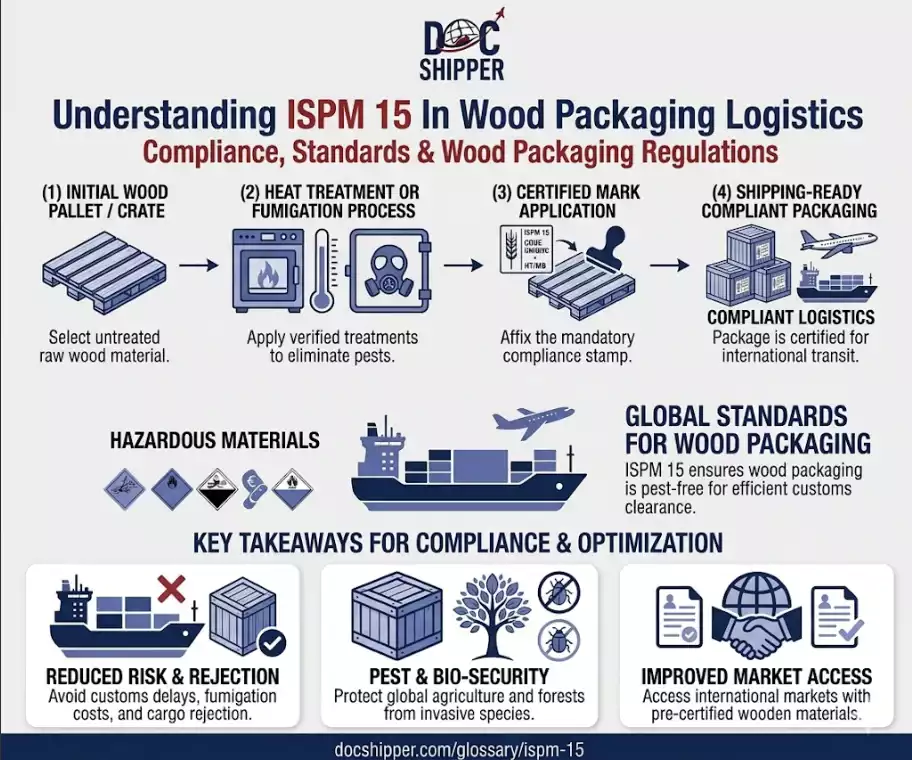
- Heat treatment or fumigation requirements: Wood must undergo approved treatments to eliminate pests.
- Visible marking obligations: Compliant packaging bears a specific IPPC stamp indicating treatment method and origin.
- Global enforcement: Over 180 countries have adopted ISPM 15 regulations, making non-compliance a universal risk.
- Application to raw wood only: Processed materials like plywood, particleboard, and cardboard are generally exempt.
- Continuous certification: Packaging producers must be authorized and regularly audited by national plant protection organizations.
Technical Requirements & Compliance Framework
ISPM 15 mandates that all wood packaging materials (WPM) used in international commerce undergo approved phytosanitary treatment. The two primary methods recognized are heat treatment (HT) and methyl bromide fumigation (MB), though the latter is being phased out globally due to environmental concerns. Heat treatment requires heating wood to a minimum core temperature of 56°C for at least 30 minutes, effectively eliminating bark beetles, nematodes, and other quarantine pests.
The IPPC mark serves as proof of compliance and must appear on at least two opposite sides of the packaging. This mark contains specific components: the IPPC symbol, a two-letter ISO country code, the producer’s unique registration number, and the treatment code (HT or MB). Counterfeit or improperly applied marks constitute serious violations that can result in shipment refusal and financial penalties.
From a regulatory perspective, ISPM 15 aligns with WTO Sanitary and Phytosanitary (SPS) Agreement principles, establishing science-based measures to protect plant health without creating unnecessary trade barriers. National Plant Protection Organizations (NPPOs) in each country oversee implementation, certification programs, and enforcement. For authoritative guidance, the IPPC official publication provides comprehensive technical specifications and updates.
Common non-compliance scenarios include using untreated wood, applying fraudulent marks, mixing compliant and non-compliant materials, and failing to maintain proper documentation. Customs authorities increasingly employ trained inspectors and detector dogs to identify violations. At DocShipper, we systematically verify ISPM 15 compliance before consolidation and shipping, preventing costly rejections and ensuring your cargo meets all destination country requirements.
Beyond the basic treatment requirement, repair and remanufacturing regulations stipulate that any wood added during repairs must also be treated and marked accordingly. If more than one-third of a pallet’s components are replaced, the entire unit must be recertified. This granular level of detail underscores why partnering with experienced logistics providers ensures continuous compliance throughout your supply chain.
Practical Examples & Data Insights
Understanding ISPM 15 in theory is one thing; seeing its real-world application provides clarity. Consider a European manufacturer exporting industrial machinery to Australia—a country with some of the strictest biosecurity protocols globally. In 2022 alone, Australian authorities intercepted over 12,000 non-compliant wood packaging shipments, resulting in fumigation costs averaging $800-$1,500 per container and delays exceeding 10 business days.
| Treatment Method | Cost per Pallet | Processing Time | Environmental Impact |
|---|---|---|---|
| Heat Treatment (HT) | $8-$15 | 24-48 hours | Low (energy-based) |
| Methyl Bromide (MB) | $12-$25 | 18-24 hours | High (ozone-depleting) |
| Non-compliant (post-interception) | $150-$300 | 5-10 days | Variable |
Use Case: Electronics Shipment from China to EU
A French importer ordered 500 laptops from Shenzhen, packaged in wooden crates. The supplier initially proposed untreated pine crates to reduce costs by €200. However, upon arrival at Le Havre port, French customs inspectors identified the non-compliant packaging. The shipment was quarantined, requiring on-site fumigation at a cost of €1,840, plus 12 days of storage fees totaling €960. The total penalty: €3,000, or 15 times the initially “saved” amount. This scenario illustrates why upfront ISPM 15 compliance is always more economical than remediation.
Data from the IPPC’s 2023 global compliance report reveals that heat treatment now accounts for 94% of all certified wood packaging, reflecting the industry’s shift toward environmentally sustainable practices. North America and Europe demonstrate the highest compliance rates (98% and 96% respectively), while developing regions show improvement but still face challenges with enforcement infrastructure.
Key operational considerations include:
- Supplier vetting: Always verify your packaging provider holds valid NPPO certification before production begins.
- Documentation accuracy: Ensure commercial invoices and packing lists explicitly state “ISPM 15 compliant” to expedite customs clearance.
- Alternative materials: For frequent shipments, consider switching to plastic, metal, or engineered wood alternatives exempt from ISPM 15.
- Regional variations: Some countries impose additional requirements beyond ISPM 15—New Zealand, for instance, prohibits bark presence even on treated wood.
- Digital verification tools: Emerging blockchain-based certification systems enable real-time validation of treatment authenticity, reducing fraud risk.
Conclusion
ISPM 15 represents a cornerstone of international biosecurity, protecting global ecosystems while facilitating legitimate trade. Compliance isn’t optional—it’s a fundamental prerequisite for customs clearance across 180+ countries. The relatively modest cost of proper treatment pales in comparison to the financial and operational consequences of violations.
Need guidance on ISPM 15 compliance for your next shipment? Contact DocShipper for expert assistance in packaging verification, supplier auditing, and end-to-end logistics management.
📚 Quiz
Test Your Knowledge: ISPM 15
What is the primary objective of ISPM 15?
Which of the following wood materials is exempt from ISPM 15 requirements?
A shipment arrives at customs with wooden packaging lacking the IPPC mark. What is the most likely outcome?
🎯 Your Results
📞 Free Quote in 24hFAQ | ISPM 15: Definition, Requirements & Practical Examples
No, ISPM 15 specifically applies to solid wood packaging such as pallets, crates, dunnage, and cable drums. Processed wood products like plywood, particleboard, oriented strand board (OSB), and cardboard are exempt because their manufacturing processes involve heat or adhesives that eliminate pest risks. However, if solid wood components are used alongside processed materials, the entire unit must comply.
Customs authorities will typically issue a non-compliance notice requiring immediate action. Options include: on-site treatment (fumigation or heat treatment) at your expense, re-export of the goods, destruction of the packaging with potential cargo damage, or complete shipment rejection. Costs range from $500 to $5,000 depending on container size and treatment method, plus storage fees accumulating daily during resolution.
Request the supplier's NPPO registration number and contact the issuing country's plant protection organization directly to confirm validity. Check that the IPPC mark on packaging matches the certified producer's registered stamp design. Reputable suppliers provide treatment certificates and audit reports. Be cautious of unusually low-cost packaging offers, as counterfeit certification is a known issue in some regions.
Yes, methyl bromide (MB) remains an approved treatment method under ISPM 15, though its use is declining due to the Montreal Protocol's phase-out of ozone-depleting substances. Many countries now restrict or prohibit MB fumigation for environmental reasons. Heat treatment (HT) has become the preferred standard, representing over 90% of compliant wood packaging globally. Always verify destination country requirements, as some explicitly ban MB-treated materials.
Generally no—ISPM 15 is an international standard designed for cross-border trade. However, some countries with internal quarantine zones (like Australia and the United States) may require treated wood packaging for interstate shipments to prevent pest spread between regions. Always consult local agricultural authorities if transporting goods across state or provincial borders in countries with active biosecurity programs.
Yes, but strict conditions apply. If less than one-third of the pallet components are replaced and the repair wood is ISPM 15 treated, the original mark remains valid. If more than one-third is replaced, the entire pallet must be retreated and remarked by a certified facility. Mixing treated and untreated wood automatically voids compliance. Maintaining repair documentation is essential for audit purposes.
ISPM 15 is a preventive standard requiring treatment before shipping, evidenced by the IPPC mark physically stamped on wood packaging. A fumigation certificate is a remedial document issued after chemical treatment, typically when non-compliant packaging is intercepted at customs. ISPM 15 compliance eliminates the need for fumigation certificates in most cases. The fumigation certificate details treatment date, chemical used, concentration, and exposure time.
Yes, plastic, metal, and composite material pallets are completely exempt from ISPM 15 as they pose no phytosanitary risk. Many companies switch to plastic pallets for repeat international shipping to eliminate compliance concerns, despite higher upfront costs ($50-$150 per plastic pallet versus $10-$25 for wood). The long-term benefits include reusability, consistent dimensions, and zero regulatory risk across all countries.
The treatment itself permanently alters the wood, so compliant packaging theoretically remains valid indefinitely if properly maintained. However, the IPPC mark must remain legible—if stamps fade, get damaged, or are removed during repairs, recertification is required. Certified facilities undergo annual audits by NPPOs, and certification can be revoked for non-compliance. Always verify marks are clear and complete before shipping.
No, ISPM 15 applies exclusively to wood packaging materials used for transport and protection of goods, not to the goods themselves. Wooden furniture, building materials, or product components are exempt even if made from untreated wood. However, if these items are shipped on wooden pallets or in wooden crates, the packaging must comply with ISPM 15 requirements.
While the IPPC mark itself serves as primary evidence, maintain supporting documents including: the packaging supplier's NPPO registration certificate, treatment records showing date and method, packing lists noting "ISPM 15 compliant WPM," and photographs of the marked packaging. Some countries require additional phytosanitary certificates for specific commodities. Comprehensive documentation expedites customs clearance and demonstrates due diligence if questions arise.
Yes, several alternatives eliminate ISPM 15 concerns: corrugated cardboard for lighter goods, molded pulp and paper-based solutions, plastic pallets and crates, metal containers and racks, and engineered wood products like plywood or OSB. Each alternative has cost and performance trade-offs. For high-volume shippers, investing in reusable plastic packaging often proves most economical long-term, while occasional exporters may prefer single-use certified wood packaging.
Need Help with
Logistics or Sourcing ?
First, we secure the right products from the right suppliers at the right price by managing the sourcing process from start to finish. Then, we simplify your shipping experience - from pickup to final delivery - ensuring any product, anywhere, is delivered at highly competitive prices.


Fill the Form
Prefer email? Send us your inquiry, and we’ll get back to you as soon as possible.
Contact us




