


In short ⚡
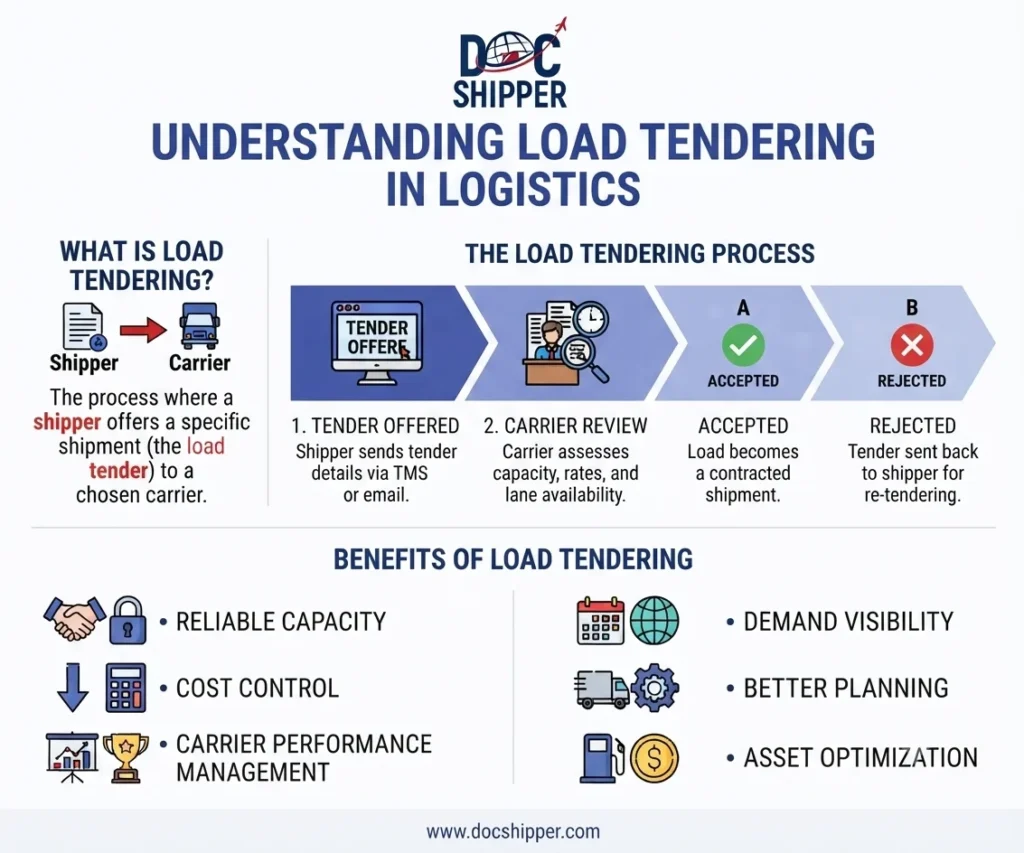
Load tendering is the process by which a shipper or freight broker formally offers transportation assignments to carriers through electronic or manual systems. This critical step initiates the carrier selection process, establishing contractual obligations and service expectations before goods move through the supply chain.
Introduction
Many importers struggle with carrier communication breakdowns that lead to delayed shipments and unexpected costs. The root cause often lies in improper load tendering procedures that create confusion about pickup times, documentation requirements, and service terms.
In international logistics, load tendering serves as the formal handshake between shippers and carriers. This standardized communication method ensures all parties understand shipment details, legal obligations, and performance expectations before freight moves.
Key characteristics of effective load tendering include:
- Automated electronic transmission through EDI or API connections for immediate carrier notification
- Complete shipment details including origin, destination, weight, dimensions, and special handling requirements
- Clear acceptance deadlines that allow carriers to evaluate capacity and confirm availability
- Rate transparency with agreed-upon pricing and accessorial charges defined upfront
- Legal documentation that establishes liability, insurance coverage, and claims procedures
Load Tendering Process & Expert Insights
The load tendering workflow follows a structured sequence that balances shipper needs with carrier operational realities. Understanding each phase prevents common pitfalls that disrupt supply chain efficiency.
Electronic Data Interchange (EDI) systems transmit load tenders through standardized formats like EDI 204, which carriers receive directly into their transportation management systems. This automation reduces manual errors and accelerates response times compared to email or phone-based tendering.
The tender acceptance window typically ranges from 15 minutes to 2 hours, depending on contract terms and market conditions. Carriers evaluate lane profitability, equipment availability, and driver hours before committing. Shippers must build realistic response times into their planning cycles.
Cascading tender logic allows shippers to establish carrier hierarchies based on performance history, rates, and service levels. If the primary carrier declines within the acceptance window, the system automatically tenders to secondary options without manual intervention.
According to FMCSA regulations, load tenders must include specific information about hazardous materials, weight distribution, and securing requirements. Non-compliance can result in carrier rejection and regulatory penalties.
At DocShipper, we implement multi-carrier tender strategies that optimize acceptance rates while maintaining service quality. Our systems track carrier performance metrics to refine tender routing algorithms continuously, ensuring clients achieve both cost efficiency and on-time delivery.
Contract vs. spot market tendering requires different approaches. Contract loads leverage pre-negotiated rates and guaranteed capacity, while spot market tenders must attract carriers through competitive pricing during tight capacity periods. Shippers need visibility into current market rates to avoid tender rejections.
Concrete Examples & Industry Data
Real-world implementation reveals how proper load tendering directly impacts operational performance and costs across different shipping scenarios.
| Tender Method | Acceptance Rate | Avg. Response Time | Cost Impact |
|---|---|---|---|
| Manual Email | 62% | 3.5 hours | Baseline |
| EDI 204 Automated | 87% | 22 minutes | -12% vs. manual |
| API Integration | 91% | 8 minutes | -18% vs. manual |
| Multi-Carrier Platform | 94% | 5 minutes | -23% vs. manual |
Use Case: Electronics Importer — A California-based electronics company importing from Shenzhen previously tendered ocean freight through phone calls to three freight forwarders. Response delays caused 18% of shipments to miss vessel cut-offs, incurring demurrage charges averaging $850 per occurrence.
After implementing automated load tendering with seven qualified carriers, their system now sends tenders 72 hours before port cut-off, allowing carriers adequate planning time. Acceptance rates improved to 92%, and demurrage incidents dropped to under 3% annually.
Industry benchmarks from International Chamber of Commerce data show that shippers using digital tender platforms achieve 27% faster carrier assignment compared to traditional methods, directly correlating with reduced dwell times and inventory carrying costs.
Peak season considerations significantly affect tender acceptance. During Q4 retail surges, manual tender acceptance rates drop to 48%, while automated systems maintaining carrier relationships through consistent volume achieve 79% acceptance even during capacity crunches.
Cross-border load tendering introduces additional complexity with customs documentation and border crossing protocols. Successful tenders must include commercial invoices, certificates of origin, and harmonized tariff codes. DocShipper’s tender templates automatically populate these requirements based on product classifications, reducing carrier rejection rates by 34% for international shipments.
Conclusion
Load tendering transforms from administrative task to strategic advantage when executed through standardized digital systems. Proper implementation reduces costs, improves carrier relationships, and creates supply chain predictability that directly impacts customer satisfaction.
Need assistance optimizing your load tendering process? Contact DocShipper for expert guidance tailored to your shipping requirements.
📚 Quiz
Test Your Knowledge: Load Tendering
What is the primary purpose of load tendering in logistics?
According to the article, what tender rejection rate indicates potential carrier network problems?
A shipper needs to tender a time-sensitive electronics shipment during peak season. Which approach would maximize acceptance probability?
🎯 Your Result
📞 Free Quote in 24hFAQ | Load Tendering: Definition, Process & Practical Examples
A complete load tender requires pickup and delivery locations with contact details, shipment weight and dimensions, commodity description with freight class, requested pickup date and time window, special handling instructions, reference numbers, and agreed-upon rate including any accessorial charges. Missing critical elements results in carrier rejection or service failures.
Standard practice allows 30 to 90 minutes for tender responses, though contracts may specify different timeframes. Expedited shipments may require 15-minute windows, while advance bookings can extend to 24 hours. Shorter windows improve planning certainty but may reduce acceptance rates during high-demand periods.
Tender acceptance creates a binding contractual obligation. Carrier no-shows typically trigger penalty clauses outlined in the contract, ranging from $250 to $1,500 depending on shipment urgency. The shipper must quickly re-tender to backup carriers, often at premium spot rates, with the original carrier liable for cost differences.
Withdrawal after acceptance constitutes breach of contract and may incur cancellation fees, typically 50% of the agreed freight rate. Some contracts include force majeure clauses for unavoidable circumstances. Repeated cancellations damage shipper reputation and reduce future tender acceptance rates from quality carriers.
FTL tenders assign entire trailers to single shipments with direct routing, while LTL tenders request space allocation within consolidated loads. LTL carriers tender back guaranteed pickup dates after evaluating terminal schedules and consolidation opportunities. FTL tenders receive faster responses but require more precise volume forecasting.
Rejection rates above 25% suggest inadequate carrier diversification or uncompetitive rates. Healthy shipper-carrier relationships maintain rejection rates below 15%. Analyze rejection reasons: capacity constraints indicate insufficient backup carriers, while rate-related rejections signal market pricing disconnects requiring contract renegotiation.
Yes, Incoterms clarify responsibility boundaries for transportation, insurance, and customs clearance. Tenders must specify whether rates cover door-to-door delivery or port-to-port service. Ambiguous terms create disputes over additional charges. Common mistakes include assuming FOB covers destination delivery when it only extends to origin port loading.
Advanced platforms integrate with carrier capacity forecasting tools, adjusting tender routing based on real-time availability data. Systems learn historical acceptance patterns by lane and season, prioritizing carriers with higher probability of acceptance. Machine learning algorithms continuously optimize tender sequences to maximize first-tender acceptance rates.
Tender documentation establishes the contractual rate baseline for invoice verification. Audit systems compare carrier invoices against original tender terms, flagging unauthorized accessorial charges or rate discrepancies. Electronic tender archives provide indisputable records for dispute resolution, reducing payment errors by up to 40% compared to verbal agreements.
Digital freight marketplaces with carrier ratings and performance tracking enable spot market tendering with unprecedented reliability. Shippers can filter carriers by on-time performance, claims history, and insurance verification. While spot rates fluctuate more than contracts, technology-enabled tendering reduces the reliability gap to less than 5% for vetted carrier networks.
Weekly reviews identify emerging carrier performance trends and market capacity shifts. Monthly analysis supports contract renegotiation decisions and carrier network optimization. Real-time dashboards alert logistics managers to unusual rejection spikes requiring immediate intervention, such as adding backup carriers or adjusting tender timing strategies.
Increasing rate offers by 10-15% for historically problematic lanes improves acceptance significantly. Flexible pickup windows accommodate carrier scheduling constraints. Offering return load opportunities or multi-stop consolidations increases lane attractiveness. Some shippers guarantee minimum weekly volumes to secure carrier commitment for challenging routes, creating mutual benefit relationships.
Need Help with
Logistics or Sourcing ?
First, we secure the right products from the right suppliers at the right price by managing the sourcing process from start to finish. Then, we simplify your shipping experience - from pickup to final delivery - ensuring any product, anywhere, is delivered at highly competitive prices.


Fill the Form
Prefer email? Send us your inquiry, and we’ll get back to you as soon as possible.
Contact us




