


In short ⚡
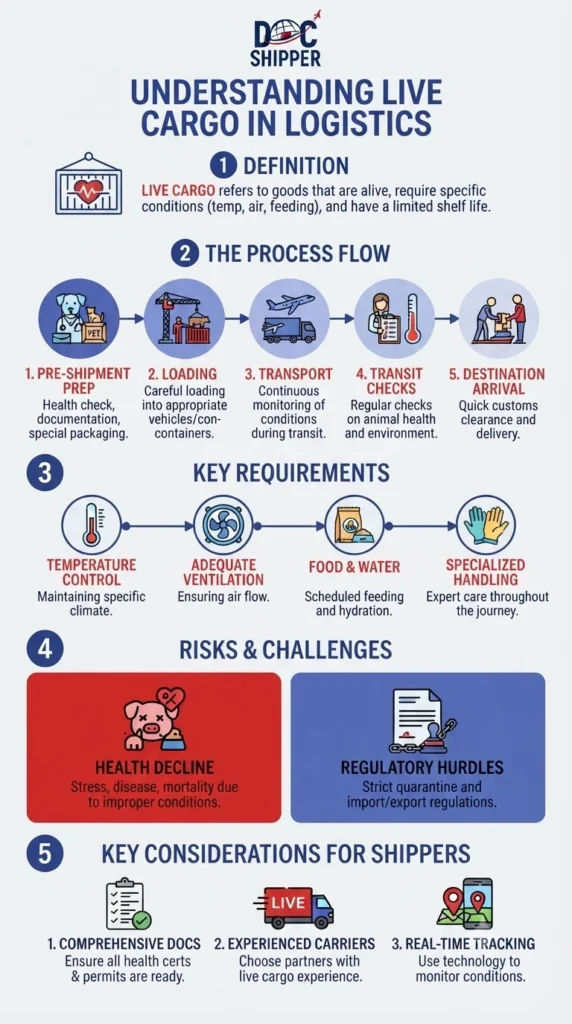
Live cargo refers to the transportation of living animals, including livestock, pets, and exotic species, via air, sea, or land freight. This highly regulated segment requires specialized handling, climate control, veterinary documentation, and compliance with international animal welfare standards to ensure safe transit.Introduction
Many shippers underestimate the complexity of transporting live animals internationally. Unlike standard freight, live cargo demands constant attention to temperature, ventilation, space, feeding schedules, and stress minimization. Regulatory non-compliance can result in shipment refusal, hefty fines, or even animal welfare violations.
In global supply chains, live cargo movements support industries ranging from agriculture and breeding programs to pet relocation and zoo exchanges. Understanding the logistics behind live animal transport is critical for businesses and individuals alike.
- Regulatory Framework: IATA Live Animals Regulations (LAR), CITES, national quarantine laws
- Transport Modes: Air freight (fastest), sea freight (large volumes), dedicated road transport
- Specialized Equipment: Climate-controlled containers, ventilated crates, custom-built stalls
- Documentation: Health certificates, export permits, vaccination records, airway bills
- Welfare Considerations: Stress reduction, travel duration limits, veterinary oversight
Handling Requirements & Regulatory Expertise
Transporting live animals involves navigating a complex web of international and domestic regulations. The IATA Live Animals Regulations (LAR) provide the industry standard for air transport of animals, covering container specifications, labeling, feeding, and species-specific requirements.
Container Standards: Crates must comply with strict size, ventilation, and structural integrity requirements. Animals must have sufficient space to stand, turn, and lie down comfortably. Materials must be non-toxic, escape-proof, and absorbent-lined to manage waste during transit.
Climate Control: Temperature-sensitive species require climate-controlled cargo holds. Airlines and freight forwarders coordinate with ground handlers to minimize time spent in unregulated environments. Extreme temperatures can cause stress, dehydration, or even fatalities.
Health Certification: Every shipment requires veterinary health certificates issued within 48-72 hours of departure. These documents confirm vaccination status, disease-free status, and fitness to travel. Countries enforce strict quarantine protocols for imported animals.
CITES Compliance: Endangered species transport falls under the Convention on International Trade in Endangered Species. Permits must be obtained from both exporting and importing countries. Violators face criminal prosecution and trade bans.
At DocShipper, we manage all documentation, coordinate veterinary inspections, and liaise with customs authorities to ensure full compliance throughout the live cargo journey. Our specialists are trained in species-specific handling protocols.
Practical Examples & Data
To illustrate the operational requirements of live cargo transport, consider these real-world scenarios frequently encountered in international logistics:
Case Study: Pet Relocation from Europe to Asia
A family relocating from France to Singapore ships their two dogs (medium-sized breeds). The process involves:
- Timeline: 12-16 weeks preparation (vaccinations, microchipping, blood tests)
- Documentation: EU Pet Passport, Singapore AVA import permit, rabies titer test results
- Flight Duration: 13 hours direct (Paris to Singapore)
- Container: IATA CR82 compliant crates (96cm L × 66cm W × 84cm H per dog)
- Cost Range: €3,500-€5,000 per animal (including all services)
Comparative Data: Transport Modes
| Transport Mode | Average Transit Time | Best For | Cost Level |
|---|---|---|---|
| Air Freight | 12-48 hours | Pets, racehorses, high-value breeding stock | High |
| Sea Freight | 14-30 days | Livestock (cattle, sheep), large volumes | Medium |
| Road Transport | 1-7 days | Regional livestock movements, zoo transfers | Low-Medium |
Industry Statistics
- ~2 billion live animals are transported by air annually worldwide
- The global pet relocation industry is valued at $1.2 billion as of 2023
- Livestock shipping accounts for approximately 15% of agricultural exports in Australia and New Zealand
- Temperature-controlled cargo holds reduce animal stress by up to 40% compared to standard holds
- Mortality rates for professionally handled live cargo are below 0.1% industry-wide
Conclusion
Live cargo logistics demands meticulous planning, regulatory expertise, and unwavering commitment to animal welfare. From container specifications to veterinary coordination, every detail directly impacts successful transport outcomes.
Need expert assistance with live animal shipments? Contact DocShipper for comprehensive support tailored to your specific requirements.
📚 Quiz
Test Your Knowledge: Live Cargo
What distinguishes live cargo from standard freight in international logistics?
Which statement about IATA Live Animals Regulations (LAR) is correct?
Your client needs to relocate two medium-sized dogs from Europe to Asia. When should booking ideally begin?
🎯 Your Results
📞 Free Quote in 24hFAQ | Live Cargo: Definition, Handling Requirements & Practical Examples
Live cargo includes all living animals transported commercially: domestic pets (dogs, cats), livestock (cattle, sheep, pigs), poultry, horses, aquatic species, zoo animals, laboratory animals, and exotic species. Each category has specific handling and regulatory requirements.
Small pets meeting airline size/weight limits can travel in-cabin on certain routes. Larger animals must be checked as cargo. Regulations vary by airline, destination country, and breed restrictions. Snub-nosed breeds often face additional limitations due to breathing risks.
Book at least 8-12 weeks in advance for international pet relocations to allow time for vaccinations, blood tests, permits, and documentation. Livestock and commercial shipments require 4-6 weeks minimum. Rush bookings may incur premium charges and limited routing options.
Denial occurs due to improper documentation, unsuitable containers, or health concerns. Airlines refund cargo fees but preparation costs (vet visits, permits) are non-refundable. Working with specialized agents like DocShipper minimizes this risk through pre-flight verification protocols.
Yes. Most airlines ban or restrict brachycephalic (snub-nosed) breeds like Bulldogs, Pugs, and Persian cats due to respiratory risks at altitude. Aggressive breeds may face additional scrutiny. Always verify breed acceptability with your carrier before booking.
For flights under 12 hours, animals are not fed to prevent digestive issues. Water is provided via spill-proof containers. Longer journeys require coordinated feeding stops, handled by trained ground staff. Owners must provide detailed feeding instructions and familiar food supplies.
Live cargo is the broad term covering all animal transport. Livestock shipping specifically refers to commercial movement of farm animals (cattle, sheep, pigs) for agricultural purposes, typically in bulk quantities via specialized vessels or road transport with different welfare standards.
Strongly recommended. Standard carrier liability covers limited amounts (typically $20-$50 per kg). Specialized pet insurance or livestock transit insurance covers veterinary costs, mortality, and liability up to declared values. Exotic or high-value animals require custom coverage.
Exotic species require CITES permits, specialized containment, and quarantine arrangements. Many countries prohibit import of certain species entirely. Transport must follow strict protocols for venomous animals, primates, and endangered species, with additional veterinary oversight and inspections.
Top causes include incomplete documentation (40%), unsuitable containers (25%), missed veterinary certification deadlines (20%), and adverse weather affecting temperature-controlled routing (15%). Professional freight forwarders mitigate these risks through proactive planning and real-time monitoring.
Yes. Most carriers provide tracking for live animal shipments. Premium services offer real-time GPS monitoring, temperature sensors, and photo updates during layovers. These systems alert handlers to any deviations from planned conditions, enabling immediate intervention if issues arise.
Import quarantine duration varies by country (1-30 days typically). Animals are held in government-approved facilities, undergo veterinary examinations, and are monitored for disease symptoms. Owners bear quarantine costs (housing, feeding, medical care). Some destinations offer home quarantine for qualifying animals.
Need Help with
Logistics or Sourcing ?
First, we secure the right products from the right suppliers at the right price by managing the sourcing process from start to finish. Then, we simplify your shipping experience - from pickup to final delivery - ensuring any product, anywhere, is delivered at highly competitive prices.


Fill the Form
Prefer email? Send us your inquiry, and we’ll get back to you as soon as possible.
Contact us




