In short ⚡
How to Read a Freight Quote: Every Line Item Explained requires separating the quote into origin charges, main freight, surcharges, destination charges, customs, and final delivery, then checking the Incoterm, pricing unit, validity, exclusions, and delivery scope.
Use this checklist to compare the quote accurately:
- Confirm the Incoterm, named place, route, transport mode, and whether the quote is port-to-port, airport-to-airport, or door-to-door.
- Check origin charges, including pickup, export clearance, origin THC, documentation, and any warehouse or consolidation services.
- Verify the pricing unit: per container for FCL, per CBM, tonne, or W/M for LCL, and per chargeable kilogram for air freight.
- Review BAF, PSS, CAF, EU ETS, security, congestion, and other surcharges, including their calculation basis and validity.
- Confirm destination THC, delivery order, customs clearance, duties, VAT, inspections, final delivery, and any exclusions.
- Check the validity date, transit time, free time, subject-to-space wording, rate-on-application lines, and charges that may change later.
Key topics include the anatomy of a freight quote, origin charges, chargeable units for FCL, LCL, and air freight, carrier surcharges, destination and customs costs, pricing conditions, and methods for comparing two quotes on the same scope.
We hope you’ll find this article genuinely useful, but remember, if you ever feel lost at any step, whether it’s finding a supplier, validating quality, managing international shipping or customs, DocShipper can handle it all for you!
To read a freight quote correctly, separate it into six blocks: origin charges, main freight, surcharges, destination charges, customs, and final delivery. Then verify the Incoterm, pricing unit, validity period, and exclusions before comparing the total.
Two quotes can differ by hundreds of dollars because one stops at the destination port while the other includes customs clearance and delivery to your warehouse. The reliable comparison is therefore not “which total is lower?” but “which quote covers the same journey, under the same Incoterm, with the same conditions?”
DocShipper Info
Confirm the Incoterm, pricing unit, validity, and exclusions before choosing a freight quote.
The anatomy of a freight quote
A freight quotation is normally built around the physical journey of your goods. The shipment leaves the supplier, moves through the export terminal, travels by sea or air, arrives at the destination, clears customs, and reaches its final delivery point.
The six blocks are: origin charges, main freight, surcharges, destination charges, customs, and delivery. A quote should also state the route, mode, equipment or chargeable weight, transit time, validity, and whether the rate is subject to space or equipment availability.
Start by identifying the commercial scope. An EXW quote may begin at the supplier’s premises, while an FOB quote usually begins after the seller has delivered and cleared the goods for export. A door-to-door quote should identify the final delivery location, not simply the destination port or airport.
The following sample is entirely fictitious and illustrative. Its purpose is to show how to annotate a quote, not to indicate typical charges.
| Quote block | Illustrative line | What to verify |
| Origin | Pickup, export clearance, origin THC, documentation | Pickup address, export scope, terminal and document fees |
| Main freight | Ocean freight, FCL container rate | Container type, route, sailing and transit time |
| Surcharges | BAF, PSS, security, EU ETS | Calculation basis, validity and carrier tariff |
| Destination | DTHC, delivery order, terminal fees | Port or airport, free time and local exclusions |
| Customs | Customs clearance, duties and VAT | Whether the broker fee, duties and taxes are included |
| Delivery | Truck delivery to warehouse | Address, access restrictions, unloading and waiting time |
DocShipper Tips
This makes missing origin, destination, customs, or delivery charges visible before you compare totals.
Origin charges
Origin charges are the costs incurred at the departure end before the main sea or air transport. They can include supplier pickup, export customs clearance, origin terminal handling, documentation, weighing, and warehouse or consolidation services.
THC means Terminal Handling Charge. It covers handling activities at a port or airport terminal, such as moving cargo through the facility. “Origin THC” and “destination THC” are separate lines, and the abbreviation may appear as OTHC or DTHC depending on the forwarder.
Under EXW, the buyer generally takes responsibility for arranging the shipment from the seller’s premises, including the origin collection and export formalities. Under FOB, the seller generally handles delivery to the named port and export clearance, but the buyer normally pays the ocean freight and costs after loading according to the agreed scope.
Do not assume that “origin included” means every factory-side expense is covered. Ask whether the quote includes pickup, loading, export declaration, origin handling, documentation, inspection, and any additional collection attempt. Also confirm whether the named address is the supplier’s factory or a consolidation warehouse.
| Line item | Meaning | Questions to ask |
| Pickup | Collection from the supplier or warehouse | Is the address included? Are waiting or extra stops excluded? |
| Export clearance | Preparation and filing of export customs documents | Who provides the commercial invoice and packing list? |
| Origin THC | Handling at the departure terminal | Is it included in the freight rate or charged separately? |
| Documentation | Transport and shipment document processing | Does the fee cover the bill of lading or airway bill? |
DocShipper Alert
Confirm pickup, export clearance, handling, documentation, inspections, and collection conditions in writing.
Looking for a Reliable Shipping & Sourcing Partner?


Main freight and the chargeable unit
Sea freight is usually priced per container for FCL, per cubic metre or weight for LCL, and air freight per chargeable kilogram. Never compare the headline number until you know the unit, equipment, route, cargo details, and pricing basis.
FCL means Full Container Load. The rate applies to a container such as a 20-foot or 40-foot unit, even when the container is not physically full. LCL, or Less than Container Load, combines your cargo with other shipments and is commonly priced using weight or volume, often expressed as W/M, meaning weight or measurement.
Air freight uses chargeable weight, which is the higher of the actual gross weight and the volumetric weight. Volumetric weight converts the space occupied by a shipment into a billable weight. GetTransport reports divisors of 5,000 cm³/kg for express couriers, 6,000 cm³/kg for IATA air cargo, and a common LCL basis of 1 CBM equal to 1,000 kg with a 1 W/M minimum. Confirm the divisor used for your shipment with the forwarder.
For market context, the Freightos Baltic Index data reported for week 40 of 2026 showed China and East Asia rates of USD 8,319 per FEU to the US West Coast, USD 9,606 per FEU to the US East Coast, USD 3,260 per FEU to North Europe, and USD 3,555 per FEU to the Mediterranean. These are route benchmarks, not a substitute for your shipment quote, because equipment, sailing, contract terms, surcharges and scope can differ.
When reviewing this block, check the port pair, carrier, vessel or flight schedule, transit time, container type, number of containers, and whether the rate is port-to-port or airport-to-airport. A low main-freight rate may simply exclude charges that another forwarder has displayed separately.
| Mode | Typical pricing unit | Check before comparing |
| FCL sea | Per container | Container size, port pair, sailing and included surcharges |
| LCL sea | Per CBM, tonne or W/M | Volume, gross weight, minimum charge and consolidation fees |
| Air cargo | Per chargeable kilogram | Actual weight, dimensions, volumetric divisor and airport pair |
| Express courier | Per chargeable kilogram | Parcel dimensions, service level and remote-area fees |
Surcharges: BAF, PSS, EU ETS and others
Surcharges sit alongside the main freight rate and can be fixed, percentage-based, route-specific, or subject to change. Common examples include BAF for fuel, PSS for peak season, CAF for currency adjustment, security fees, congestion fees, war-risk fees, and emissions-related charges.
BAF, or Bunker Adjustment Factor, compensates for changes in marine fuel costs. PSS, or Peak Season Surcharge, is applied when demand or capacity conditions lead a carrier to add a seasonal charge. CAF, or Currency Adjustment Factor, addresses currency movements. The exact names and calculation methods vary between carriers, so ask which tariff or carrier notice supports each amount.
The EU ETS is the European Union’s emissions trading system. Hapag-Lloyd reported that shipping emissions coverage increased from 40% in 2024 to 70% in 2025 and 100% from 2026, with 100% coverage for intra-EU voyages and 50% for EU to non-EU voyages. In November 2025, the carrier also said its EU ETS surcharge was expected to rise by about 45% and that it was merging this cost with FuelEU Maritime costs.
That does not mean every route has the same EU ETS amount. The charge depends on the route, vessel movement, carrier methodology and applicable voyage coverage. Review the carrier’s current tariff or surcharge notice, especially when the quote is valid for a short period.
| Code | Meaning | When to investigate |
| BAF | Bunker Adjustment Factor for fuel | When fuel levels or carrier tariffs change |
| PSS | Peak Season Surcharge | During high-demand periods or constrained capacity |
| CAF | Currency Adjustment Factor | When the rate is exposed to currency movements |
| EU ETS | Emissions-related maritime charge | For voyages involving the European Union |
| Security or congestion | Route or terminal-specific operational charge | When a port, region or carrier notice is named |
DocShipper Alert
Request the calculation basis, carrier tariff, validity, and route-specific treatment for BAF, PSS, CAF, EU ETS, and security fees.
Destination charges, customs and delivery
Destination charges begin when the shipment reaches the destination port or airport. They may include destination terminal handling, delivery order fees, deconsolidation for LCL, storage, inspection, customs brokerage, duties, VAT or other import taxes, and delivery to your warehouse.
A delivery order is the document or release instruction used to arrange cargo collection from the carrier or terminal. It is separate from the final trucking charge. For LCL shipments, destination deconsolidation and warehouse handling can also appear as separate lines.
Customs clearance is the process of submitting the import declaration and supporting documents to the customs authority. The broker’s service fee is not the same as import duty or VAT. A quote may include the broker fee while excluding taxes, or it may exclude both. Read the wording carefully and ask whether the calculation uses the product customs value, freight, insurance or another valuation basis.
Review the destination section against the actual delivery country and address. Port charges in Rotterdam, Los Angeles, Singapore or another destination are not interchangeable, and a delivery rate may exclude remote areas, residential access, liftgate service, unloading, waiting time or appointment fees. For the customs process itself, consult the customs clearance guide.
| Destination line | What it covers | Possible exclusion |
| DTHC | Handling at the destination terminal | Storage, inspection or special handling |
| Delivery order | Release or document processing | Carrier release conditions or local administrative fees |
| Customs clearance | Broker or forwarder declaration service | Duties, VAT, exams and government charges |
| Final delivery | Transport from port, airport or warehouse to your address | Waiting, unloading, appointment or remote-area fees |
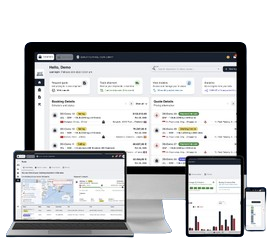
DocShipper Platform
One platform. Your entire supply chain
Sourcing, freight, customs & documents — all centralised, all visible, 24/7.
Conditions that change the price
A freight quote is not only a list of charges. Its commercial conditions determine whether the listed rate is actually available and what happens if the shipment changes.
Check the validity date first. A rate valid until a stated date may still be subject to carrier revisions, sailing availability, equipment availability, or booking confirmation. “Subject to space” means the quoted price may not be usable if the carrier cannot accept the shipment on the requested departure.
“Rate on application” means the amount is not fixed in the quote and must be requested or confirmed separately. Treat a blank, “TBA” or “as per actual” line as an unresolved cost, not as a zero charge. Ask the forwarder to state who bears the risk if the carrier changes the amount.
For containers, check free time. This is the number of days allowed before storage, demurrage or detention charges may start. Demurrage generally concerns the container remaining at the terminal beyond the allowed period, while detention generally concerns keeping the carrier’s equipment outside the terminal beyond the allowed period. The exact definitions and billing rules vary by carrier and location.
- Mark the quote’s issue date and expiry date.
- Circle every line marked subject to space, subject to equipment, rate on application, TBA or as per actual.
- Confirm the free-time allowance and the rates that apply after it expires.
- Ask whether congestion, peak season, security, emissions or currency surcharges can be added later.
- Record the transit time, planned sailing or flight, and any transshipment.
DocShipper Alert
Treat “TBA,” “rate on application,” and “as per actual” as open costs until the forwarder confirms responsibility and pricing.
DocShipper Tips
Align Incoterm, delivery scope, chargeable unit, surcharges, customs, validity, transit time, and exclusions line by line.
How to compare two quotes
To compare two freight quotes, put them on the same Incoterm and the same door-to-door scope, align every cost block, add missing items, and then compare transit time, validity and exclusions alongside the total.
The Incoterm is important because it allocates responsibilities, costs and risk between seller and buyer. Use the Incoterms 2020 rule agreed in the sales contract, then ask each forwarder to quote the buyer’s actual payable scope. Do not compare an EXW collection quote with an FOB port-to-port quote as if they were equivalent.
The following comparison uses fictitious values for illustration only. Quote A displays a complete door-to-door scope. Quote B appears cheaper because several destination and delivery lines are excluded or bundled without detail.
| Line | Quote A | Quote B | Missing or unclear? |
| Origin charges | USD 450 | Included | Ask which origin services are included |
| Ocean freight | USD 2,600 | USD 2,400 | Check carrier, sailing and transit time |
| BAF, PSS, EU ETS and security | USD 465 | USD 250, bundled | Ask for the surcharge breakdown and validity |
| DTHC | USD 275 | Excluded | Destination charge missing |
| Delivery order | USD 65 | Excluded | Local document fee missing |
| Customs clearance | USD 120 | Excluded | Broker fee missing |
| Final delivery | USD 300 | Excluded | Truck delivery missing |
| Quoted total | USD 4,275 | USD 2,650 | Quote B is not the same scope |
Quote A is calculated as USD 450 + USD 2,600 + USD 465 + USD 275 + USD 65 + USD 120 + USD 300 = USD 4,275. Quote B is USD 2,400 + USD 250 = USD 2,650, with origin described as included and USD 760 of destination, customs and delivery charges excluded.
Before choosing Quote B, request the missing USD 760 lines, confirm the bundled surcharge amount, and verify whether the origin inclusion covers the same work as Quote A. The cheapest visible total is not a saving if it stops at the destination port and produces separate invoices later.
Use this checklist for each quote:
- Is the Incoterm identical, including the named place?
- Does the scope end at the port, airport, terminal, warehouse or your door?
- Is the mode identical: FCL, LCL, air cargo or express?
- Are the container type, CBM, gross weight and dimensions correct?
- Are origin pickup, export clearance and origin THC included?
- Are BAF, PSS, CAF, EU ETS and security charges itemised?
- Are destination THC, delivery order, customs and final delivery included?
- Are duties, VAT, inspections and government charges excluded or included?
- What are the validity date, transit time, free time and booking conditions?
- Which lines can change according to the carrier’s current tariff?
Conclusion
A freight quote becomes useful when it lets you understand the complete cost and the conditions behind it. Read each block before looking at the total, and normalize the scope before comparing forwarders.
- Read quotes block by block, not by total.
- Check whether the pricing unit is per container, CBM, W/M or chargeable kilogram.
- Expect BAF, PSS, CAF, EU ETS and other carrier surcharges to be shown or explained.
- Review destination and customs lines carefully, because this is where separate invoices often appear.
- Compare quotes using the same Incoterm and the same door-to-door scope.
- Confirm validity, subject-to-space wording, free time and rate-on-application clauses.
Comparing freight quotes for your next shipment? Send us your current quote and we will return an itemised door-to-door offer on the same scope, with freight forwarding and customs clearance lines clearly separated.
FAQ | How to Read a Freight Quote: A Line-by-Line Guide
No. Freight charges and cargo insurance are usually separate. The carrier’s liability may be limited by the transport convention or the carrier’s standard terms, so it may not cover the full commercial value of your goods.
Ask whether the quote includes insurance, what value is insured, which risks are covered, and whether exclusions apply to fragile, used, perishable or high-value cargo. If insurance is not included, request a separate premium before comparing the total landed cost.
The forwarder or carrier may recalculate the price after weighing, measuring or inspecting the shipment. This is particularly important for air freight, LCL shipments and goods with unusual dimensions, because the chargeable weight or volume can change.
Before booking, provide final packing dimensions, gross weight, number of packages and pallet details. Keep the packing configuration unchanged where possible, and ask whether the quote includes a tolerance for discrepancies or remeasurement fees.
Not necessarily. Dangerous goods, oversized cargo, temperature-sensitive products, batteries, liquids and cargo requiring special handling often need separate approval and pricing.
Tell the forwarder about the cargo characteristics before requesting a final rate. Depending on the shipment, the forwarder may need:
- Safety Data Sheets or dangerous-goods declarations
- UN numbers, packing-group information and cargo classification
- Dimensions, weight distribution and lifting requirements
- Temperature range, packaging details or handling instructions
A standard quote may exclude permits, special equipment, inspections, hazardous-cargo surcharges or failed-booking costs.
The more complete the shipment information, the less likely the rate is to be revised later. At minimum, provide the commercial parties, exact pickup and delivery addresses, cargo description, packaging, quantity, dimensions, weight, value and preferred shipping date.
Also include the applicable Incoterm, HS code if available, country of origin and any special cargo requirements. For recurring shipments, send a representative packing list rather than relying on a rough estimate based only on the number of cartons.
It can happen if the quote was conditional or if the shipment details change. Common causes include a missed validity date, carrier tariff revisions, unavailable equipment, rolled bookings, incorrect cargo data or accessorial services requested after booking.
Request written confirmation that the quoted amount is accepted for a specific shipment, sailing and scope. The confirmation should identify which charges are fixed and which remain subject to actual cost, carrier revision, customs assessment or operational events. Keep the original quote and the booking confirmation together if a dispute arises.
“Prepaid” generally means the charge is billed at origin, while “collect” generally means it is billed to the consignee or payable at destination. However, these labels do not always show who ultimately bears the cost under the sales contract.
Check the quote, bill of lading instructions and Incoterm together. Confirm the billed party, payment currency, tax treatment and whether a destination agent will issue a separate invoice. Never assume that a charge paid at destination is included in the seller’s agreed delivery responsibility.
Need Help with
Logistics or Sourcing ?
First, we secure the right products from the right suppliers at the right price by managing the sourcing process from start to finish. Then, we simplify your shipping experience - from pickup to final delivery - ensuring any product, anywhere, is delivered at highly competitive prices.


Fill the Form
Prefer email? Send us your inquiry, and we’ll get back to you as soon as possible.
Contact us