


In short ⚡
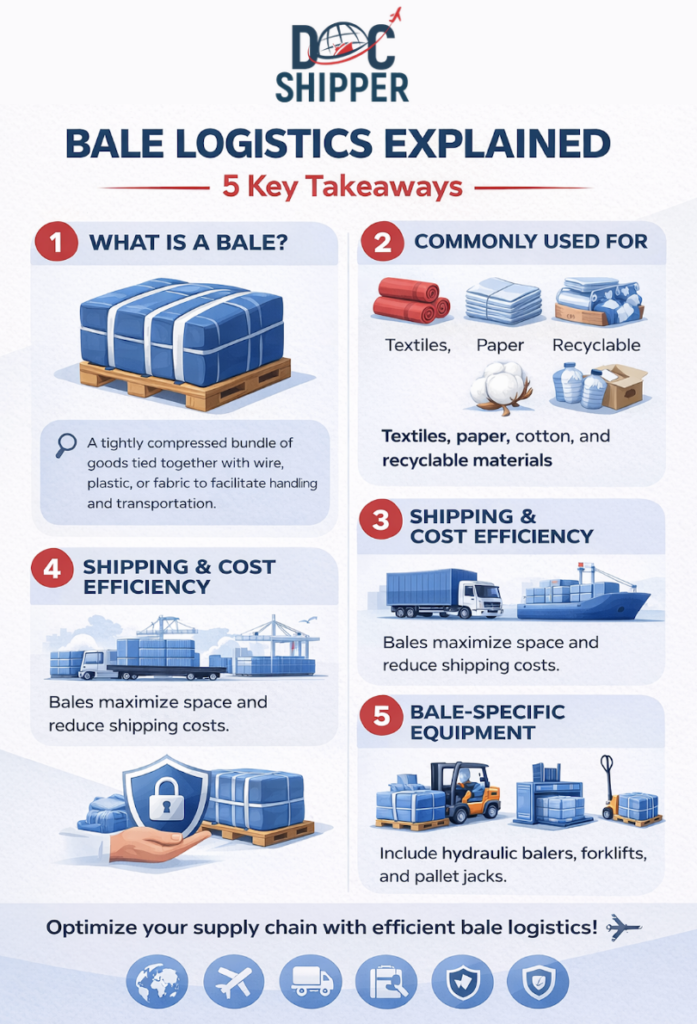
A bale is a compressed, bound unit of goods—typically soft materials like textiles, cotton, or recycled paper—packaged for efficient storage and transport. Bales optimize container space, reduce shipping costs, and facilitate handling in international logistics operations.
Introduction
Many importers struggle with cargo volume optimization, leading to inflated freight costs and inefficient container utilization. Understanding how bales function in global trade solves this challenge.
Bales represent a critical packaging method in supply chains involving textiles, agricultural commodities, and recyclable materials. Their standardized compression allows predictable stacking, simplified customs inspection, and reduced environmental footprint through maximized load efficiency.
- Compression ratio: Bales reduce material volume by 60-80% compared to loose packing
- Standardization: Uniform dimensions facilitate automated handling and warehouse storage
- Protection: Binding materials shield contents from moisture, contamination, and physical damage
- Customs compliance: Baled goods simplify declaration processes and inspection procedures
- Cost efficiency: Maximized container density directly lowers per-unit shipping expenses
Understanding Bales: Technical & Regulatory Aspects
The baling process involves mechanical compression using hydraulic or pneumatic presses, followed by securing with steel wire, plastic strapping, or natural fiber ties. Material type dictates compression force—cotton bales withstand 200+ PSI, while paper bales require gentler treatment to prevent structural damage.
Regulatory frameworks govern bale specifications across industries. The International Cotton Advisory Committee (ICAC) defines standard cotton bale dimensions at 55″×21″×27″ (approximately 500 lbs), ensuring global consistency. ICAC standards facilitate trade agreements and quality verification protocols.
Customs classification varies by content. Textile bales fall under HS Code Chapter 63 (used clothing/rags), while paper bales align with Chapter 47 (pulp/waste paper). Accurate classification prevents clearance delays and penalty assessments.
Handling equipment requirements differ from conventional cargo. Bale clamps, specialized forklifts, and grapple loaders prevent compression loss during transfer. At DocShipper, we coordinate equipment availability at origin and destination ports to maintain cargo integrity throughout the shipping process.
Environmental considerations increasingly influence baling practices. The European Union’s Waste Shipment Regulation mandates traceability for recycled material bales crossing borders. Compliance documentation must accompany shipments to avoid rejection or fines.
Practical Examples & Data-Driven Insights
A comparative analysis demonstrates baling advantages across common commodity types:
| Material Type | Loose Volume (m³) | Baled Volume (m³) | Space Savings | Container Capacity Increase |
|---|---|---|---|---|
| Used Textiles | 45 | 12 | 73% | +275% |
| Cardboard Waste | 38 | 9 | 76% | +322% |
| Raw Cotton | 52 | 15 | 71% | +247% |
| Plastic Film | 41 | 11 | 73% | +273% |
Use Case: Textile Export from Bangladesh
A Dhaka-based garment manufacturer ships 20 tons of fabric scraps monthly to European recyclers. Without baling, the material occupies 3.5×40ft containers. Compressed into standard 400kg bales (1.2m³ each), the same shipment fits into 1.8 containers—saving $2,400 per month in ocean freight at current rates ($1,800/container).
Key operational metrics:
- Compression time: Industrial balers process 8-12 tons/hour, enabling same-day containerization
- Weight distribution: Properly baled cargo maintains center of gravity, reducing container damage risk by 40%
- Inspection efficiency: Customs agents examine baled goods 35% faster than loose materials
- Storage density: Warehouses achieve 2.5× vertical stacking capacity with baled inventory
- Carbon footprint: Optimized container usage reduces CO₂ emissions by 0.8 tons per shipment (20ft container basis)
At DocShipper, we coordinate baling services at origin, ensuring compliance with destination country requirements while optimizing freight costs through precise volume calculations.
DocShipper Platform
One platform. Your entire supply chain
Sourcing, freight, customs & documents — all centralised, all visible, 24/7.
Conclusion
Bales transform logistics economics by maximizing container efficiency, reducing environmental impact, and streamlining customs procedures. Proper baling strategy directly impacts your bottom line through lower freight costs and faster clearance times.
Need expert guidance on baling requirements for your commodity? Contact DocShipper for tailored solutions that optimize your supply chain performance.
📚 Quiz
Test Your Knowledge: Bale in Logistics
Q1 — What is a bale in the context of international logistics?
Q2 — A shipper argues that mixing different materials into a single bale saves time and simplifies customs declarations. Is this correct?
Q3 — A Dhaka-based exporter ships 20 tons of fabric scraps monthly to Europe. Without baling, the cargo fills 3.5 × 40ft containers. After baling, how many containers are needed — and what is the approximate monthly freight saving?
🎯 Your Result
📞 Free Quote in 24hFAQ | Bale in Logistics: Definition, Handling & Practical Examples
Textiles, cotton, paper waste, cardboard, plastic film, hay, and certain agricultural products are typically baled. The method suits compressible materials requiring volume reduction for cost-effective transport.
Compression increases container capacity by 250-320%, allowing more product per shipment. This lowers per-unit freight expenses and reduces the number of containers needed for large volumes.
Standard 20ft containers support 21-24 tons maximum payload. Bale weight must allow compliance with road transport limits (typically 28-30 tons gross vehicle weight) at destination.
Steel wire (12-14 gauge), polypropylene strapping, and natural jute ties are acceptable. Material choice depends on cargo type—steel for heavy bales, plastic for lighter recyclables.
Standard commercial invoices, packing lists, and bills of lading apply. Recycled material bales need additional waste shipment permits under Basel Convention regulations for transboundary movements.
Yes. Methyl bromide or phosphine fumigation treats bales for pests. Compressed format actually improves gas penetration compared to loose materials, ensuring thorough treatment.
Quality steel wire or heavy-duty strapping maintains integrity for 60-90 days under normal conditions. UV-resistant plastic strapping performs best for extended storage in outdoor facilities.
Excess moisture (>12% for textiles, >8% for paper) causes mold growth and weight discrepancies. Pre-shipment moisture testing prevents cargo rejection and financial disputes.
Cotton follows ICAC guidelines (55"×21"×27"). Recycled textiles often use 1.2m×0.8m×0.6m dimensions. Paper bales vary by mill specifications but typically measure 1.0m×0.8m×1.2m.
Bale clamp forklifts or grapple loaders handle compressed cargo safely. Standard forklifts risk binding damage and load instability. Proper equipment prevents workplace accidents and product loss.
Homogeneous bales ensure customs compliance and buyer acceptance. Mixed-content bales face classification challenges and potential rejection. Segregation by material type is standard practice.
Properly baled cargo qualifies for standard marine insurance rates. Loose or poorly secured materials incur 15-25% premium surcharges due to increased damage risk during transit.
Need Help with
Logistics or Sourcing ?
First, we secure the right products from the right suppliers at the right price by managing the sourcing process from start to finish. Then, we simplify your shipping experience - from pickup to final delivery - ensuring any product, anywhere, is delivered at highly competitive prices.


Fill the Form
Prefer email? Send us your inquiry, and we’ll get back to you as soon as possible.
Contact us




