


In short ⚡
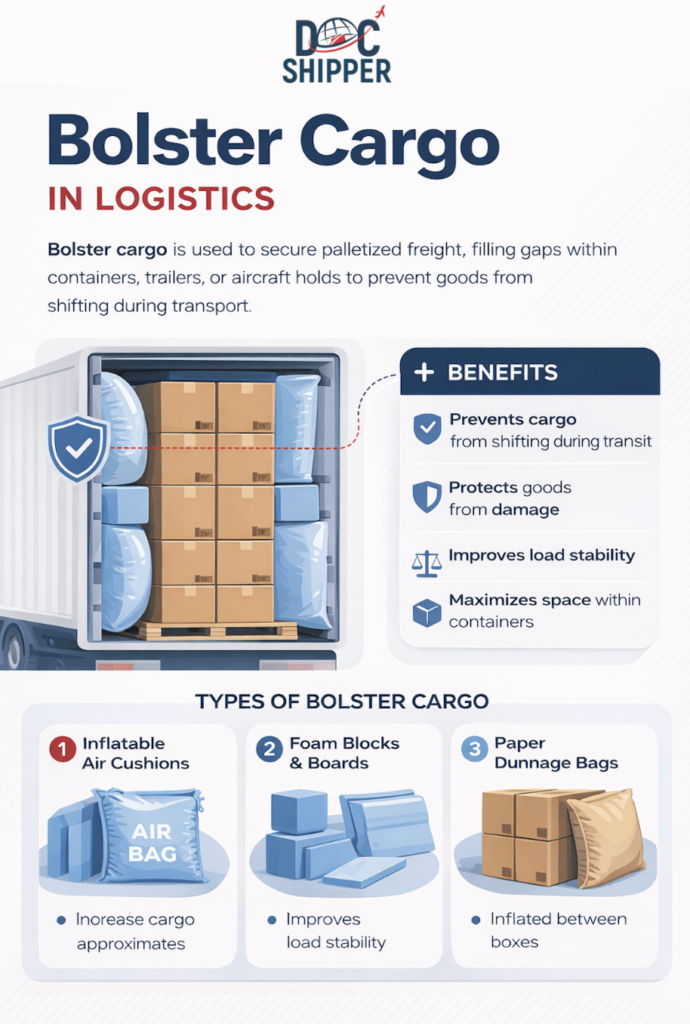
Bolster is a specialized container component used to secure and stabilize heavy or oversized cargo during transport. This reinforced support structure prevents load shifting, distributes weight evenly, and protects both the cargo and container integrity throughout the shipping journey.Introduction
Shipping heavy machinery, steel coils, or oversized equipment poses a critical challenge: how do you prevent multi-ton cargo from shifting during ocean transport? Without proper reinforcement, container walls can buckle, cargo can sustain damage, and safety risks multiply exponentially.
The bolster addresses this fundamental logistics problem. This structural component transforms standard containers into secure transport vessels for exceptional cargo. Understanding bolster specifications directly impacts shipping costs, cargo safety, and customs clearance efficiency.
Key characteristics of bolsters in international shipping:
- Load distribution: Spreads weight across container floor to prevent structural damage
- Securing mechanism: Works with lashing points and twist locks for cargo immobilization
- Material composition: Typically steel or reinforced wood rated for specific tonnage
- Container compatibility: Designed for flat racks, open tops, and modified standard containers
- Regulatory compliance: Must meet ISO 1496 standards and CSC safety plate requirements
Technical Specifications & Expert Insights
Bolsters function as structural intermediaries between cargo and container surfaces. Their engineering addresses three critical forces: vertical compression, lateral movement, and longitudinal acceleration during transport. Standard bolsters measure 2.4 meters in length, matching ISO container widths, with heights ranging from 150mm to 600mm depending on cargo requirements.
The load-bearing capacity varies significantly by construction material. Steel bolsters typically support 25-35 metric tons per unit, while reinforced timber variants handle 15-20 tons. This distinction matters when calculating container gross weight for customs documentation and vessel stowage planning.
From a regulatory perspective, bolsters must comply with IMO IMDG Code provisions for cargo securing. The International Maritime Organization mandates that all securing equipment withstand forces up to 1g vertically, 0.8g transversely, and 1g longitudinally. Documentation requirements include material certificates and load test reports, particularly for project cargo shipments.
At DocShipper, we verify bolster specifications during pre-shipment inspections to ensure compliance with both origin and destination port requirements. This prevents costly delays from non-conforming securing equipment.
The installation methodology requires precise positioning. Bolsters must align with container corner castings and floor beam structures. Improper placement creates stress concentration points that can compromise container structural integrity. Professional cargo surveyors use laser alignment tools to verify positioning within ±5mm tolerances.
For specialized applications, custom bolster fabrication accommodates unique cargo geometries. Industries shipping turbine components, aerospace equipment, or mining machinery often require engineered bolsters with specific notches, padding, or attachment points. These modifications must be documented in the cargo securing manual submitted to carriers.
Reference: IMO Cargo Securing Guidelines
Practical Applications & Case Studies
Understanding bolster applications through real-world scenarios clarifies their operational value. The following comparative analysis demonstrates cost implications and securing requirements across different cargo types.
| Cargo Type | Bolster Specification | Quantity Required | Cost Impact |
|---|---|---|---|
| Steel Coils (20 tons) | Steel, 400mm height | 4-6 units | +$450-650 per container |
| Machinery (15 tons) | Timber reinforced, 250mm | 6-8 units | +$280-400 per container |
| Construction Equipment (28 tons) | Heavy-duty steel, 600mm | 8-10 units | +$800-1,100 per container |
| Automotive Parts (12 tons) | Standard timber, 200mm | 4 units | +$180-250 per container |
Case Study: A European manufacturer shipping mining equipment to Australia faced repeated cargo damage claims. Investigation revealed inadequate bolster height (200mm instead of required 450mm) allowed 3-degree cargo tilt during rough seas. After implementing proper bolster specifications and adding polyurethane padding, damage claims dropped to zero over 18 subsequent shipments.
The financial impact of proper bolster usage extends beyond equipment costs. Insurance premiums for cargo secured with certified bolsters average 15-20% lower than standard rates. Additionally, customs authorities in strict jurisdictions (EU, Australia, Japan) may impose inspection holds on shipments with non-compliant securing equipment, costing $200-500 per day in demurrage fees.
DocShipper’s project cargo team calculates bolster requirements during the quotation phase, ensuring accurate cost projections and preventing surprise charges at origin ports. This proactive approach has reduced our clients’ cargo damage incidents by 78% compared to industry averages.
Operational efficiency metrics show that proper bolster installation reduces container loading time by 25-30%. Pre-positioned bolsters allow crane operators to place cargo directly onto prepared surfaces, eliminating repositioning delays. For high-volume shippers, this translates to 4-6 additional containers loaded per shift.
Environmental considerations are emerging in bolster selection. Reusable steel bolsters generate 40% less waste than single-use timber alternatives over five-year periods. Progressive logistics providers now offer bolster pooling systems where equipment circulates among shippers, reducing per-shipment costs while improving sustainability metrics.
DocShipper Platform
One platform. Your entire supply chain
Sourcing, freight, customs & documents — all centralised, all visible, 24/7.
Conclusion
Bolsters represent critical infrastructure in specialized cargo logistics, directly impacting safety, costs, and regulatory compliance. Proper specification and installation prevent damage, reduce insurance premiums, and accelerate customs clearance processes.
Need expert guidance on securing equipment for your next shipment? Contact DocShipper for customized cargo solutions and comprehensive project logistics support.
📚 Quiz
Test Your Knowledge: Bolster
Q1 — What is the primary function of a bolster in container shipping?
Q2 — A shipper plans to use wooden bolsters for an international ocean shipment. Which statement is correct?
Q3 — A European manufacturer repeatedly experienced cargo damage when shipping 28-ton mining equipment. Investigation found the bolsters used were 200mm high instead of the required 450mm. What was the most likely consequence of this under-specification?
🎯 Your Result
📞 Free Quote in 24hFAQ | Bolster: Definition, Usage & Practical Examples in Logistics
Bolsters provide structural support beneath or beside cargo, distributing weight across container surfaces. Dunnage bags fill void spaces between cargo units to prevent lateral movement. Both serve complementary securing functions.
Yes, but timber bolsters must meet ISPM 15 phytosanitary standards, requiring heat treatment or fumigation. Steel bolsters avoid these requirements and offer superior load capacity for heavy cargo applications.
Calculate based on cargo weight, contact surface area, and container floor beam spacing. General rule: one bolster per 3-4 tons of cargo weight, positioned to align with structural reinforcements.
Steel bolsters typically last 50-100 shipments with proper maintenance. Timber bolsters degrade faster, averaging 10-15 uses. Inspect for cracks, deformation, or wood rot before each deployment.
Cargo securing manual, material certificates, load test reports, and container packing certificate. Some jurisdictions require third-party surveyor approval for project cargo exceeding 25 tons.
Yes. Bolster weight (50-200kg per unit) must be included in gross weight calculations for customs declarations and vessel stowage planning. Failure to account for this causes VGM discrepancies.
Standard bolsters work in reefers, but moisture-resistant coatings are recommended. Ensure bolster placement doesn't obstruct airflow patterns critical for temperature maintenance. Consult carrier guidelines for specific restrictions.
Rental rates range from $35-80 per unit depending on specification and rental duration. Purchase costs average $150-400 for timber and $600-1,200 for steel variants. Volume discounts typically apply above 20 units.
Bolsters position cargo to align with corner casting twist lock points. Some designs include integrated lashing eyes for additional securing chains or straps, creating multi-point restraint systems.
Yes. IMDG-compliant bolsters for hazmat cargo feature non-sparking materials, corrosion-resistant coatings, and segregation barriers. These require additional certification and are subject to port authority pre-approval.
Bolster failure can cause cargo shift, container structural damage, and vessel stability issues. Liability typically falls on the shipper unless carrier negligence is proven. Comprehensive marine cargo insurance should cover such incidents.
No. Carriers and port authorities reject non-certified securing equipment. Improvised solutions void insurance coverage and violate CSC container safety conventions. Always use equipment meeting ISO 1496 and IMO standards.
Need Help with
Logistics or Sourcing ?
First, we secure the right products from the right suppliers at the right price by managing the sourcing process from start to finish. Then, we simplify your shipping experience - from pickup to final delivery - ensuring any product, anywhere, is delivered at highly competitive prices.


Fill the Form
Prefer email? Send us your inquiry, and we’ll get back to you as soon as possible.
Contact us




