


In short ⚡
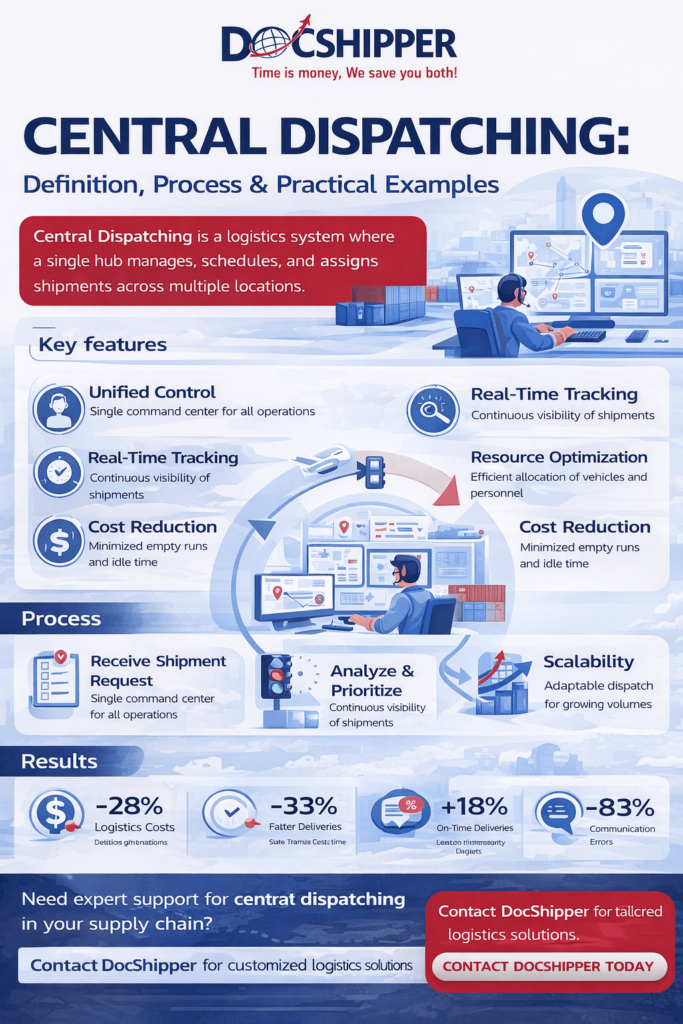
Central Dispatching is a logistics coordination system where a single centralized hub manages, schedules, and assigns shipments, vehicles, or resources across multiple locations. This approach optimizes routing, reduces operational costs, and ensures real-time visibility throughout the supply chain.
Introduction
Many importers struggle with fragmented logistics operations—multiple carriers, inconsistent tracking, and communication breakdowns. Central dispatching solves this by creating a single command center for all transportation activities.
In international trade, this system becomes critical when coordinating ocean freight, customs clearance, and last-mile delivery. A centralized approach eliminates redundancies and accelerates decision-making.
- Unified control: All shipments managed from one operational hub
- Real-time tracking: Continuous visibility across transportation modes
- Resource optimization: Efficient allocation of vehicles and personnel
- Cost reduction: Minimized empty runs and improved route planning
- Scalability: Adaptable to growing business volumes without structural changes
In-Depth Analysis & Operational Mechanisms
Central dispatching operates through integrated technology platforms that connect stakeholders—shippers, carriers, warehouses, and customs authorities. The system relies on algorithms that analyze traffic patterns, delivery windows, and cargo specifications.
The coordination workflow begins when a shipment enters the system. Dispatchers evaluate available resources, calculate optimal routes, and assign tasks based on priority levels. This prevents overlapping assignments and ensures balanced workload distribution.
Regulatory compliance is embedded into the process. For cross-border shipments, the system automatically verifies documentation requirements and flags potential customs delays. According to the World Customs Organization, centralized systems reduce clearance times by up to 40% through pre-validation mechanisms.
The communication infrastructure connects drivers, warehouse staff, and client portals. Real-time updates flow bidirectionally—dispatchers receive GPS data while field teams access modified instructions instantly. This eliminates phone tag and manual status checks.
Performance monitoring happens continuously. Key metrics include on-time delivery rates, fuel consumption, and idle time. Dispatchers adjust routes mid-transit when traffic incidents or port delays occur, maintaining schedule integrity.
At DocShipper, we implement central dispatching protocols across our multimodal networks, ensuring seamless transitions between air freight, ocean shipping, and ground transportation without client intervention.
Concrete Examples & Performance Data
A European electronics importer reduced logistics costs by 28% after implementing central dispatching. Previously, they managed 12 separate carrier relationships with inconsistent service levels. The centralized system consolidated operations under one platform.
| Metric | Before Central Dispatching | After Implementation | Improvement |
|---|---|---|---|
| Average Delivery Time | 7.2 days | 4.8 days | 33% faster |
| On-Time Delivery Rate | 76% | 94% | +18 points |
| Operational Costs | $42,000/month | $30,200/month | 28% reduction |
| Communication Errors | 18 incidents/month | 3 incidents/month | 83% decrease |
| Empty Vehicle Miles | 22% of total | 9% of total | 59% reduction |
Use Case: A pharmaceutical company shipping temperature-sensitive products from India to Germany faced frequent delays. Central dispatching integrated customs pre-clearance, refrigerated container tracking, and backup carrier protocols. Result: 99.2% compliance with temperature requirements and zero shipment losses over 18 months.
Technology impact: Companies using AI-enhanced central dispatching report 35% better route efficiency. Machine learning algorithms predict traffic congestion and suggest alternative paths before delays occur.
Scalability example: An e-commerce retailer increased order volume from 500 to 3,200 daily shipments without adding dispatch staff. The system automatically prioritized urgent deliveries and balanced workloads across 47 drivers.
Cost breakdown: For a mid-sized importer handling 200 containers monthly, central dispatching saves approximately $8,400 through reduced detention fees, optimized consolidation, and eliminated duplicate transport bookings.
Regional performance: Asian markets show 42% faster adoption rates due to higher logistics complexity. European implementations focus on sustainability metrics, reducing carbon emissions by 19% through optimized routing.
Conclusion
Central dispatching transforms fragmented logistics into a streamlined, data-driven operation. Companies gain control, visibility, and measurable cost savings while improving service quality.
Need expert guidance implementing central dispatching for your supply chain? Contact DocShipper for customized logistics solutions.
📚 Quizz
Test Your Knowledge: Central Dispatching
Q1 — What is the core definition of Central Dispatching in logistics?
Q2 — A common misconception about Central Dispatching is that it only works for large enterprises with hundreds of shipments. What does the article actually state?
Q3 — A pharmaceutical company ships temperature-sensitive products from India to Germany. Which approach best illustrates Central Dispatching in action?
🎯 Your Result
📞 Free Quote in 24hFAQ | Central Dispatching: Definition, Process & Practical Examples
Manufacturing, retail, pharmaceuticals, and perishable goods sectors gain maximum value due to complex routing needs and time-sensitive deliveries. E-commerce companies with high shipment volumes also see significant improvements.
Traditional systems use decentralized decision-making with multiple contact points. Central dispatching consolidates all coordination into one hub with unified technology, real-time data, and automated workflows.
Yes. Cloud-based platforms offer scalable solutions starting at $200-$500 monthly. Even businesses with 10-20 weekly shipments achieve 15-20% cost reductions through improved route planning.
Minimum requirements include GPS tracking devices, internet connectivity, and dispatch software. Advanced systems integrate TMS platforms, IoT sensors, and AI routing algorithms for optimal performance.
Basic setups require 2-4 weeks for software configuration and staff training. Complex integrations with existing ERP systems may take 8-12 weeks depending on data migration requirements.
Absolutely. The system coordinates customs clearance, multi-carrier handoffs, and documentation across borders. Integration with customs databases accelerates clearance by pre-validating paperwork before arrival.
Resistance to workflow changes, incomplete data migration, and inadequate staff training represent primary obstacles. Successful implementations include change management programs and phased rollouts.
Real-time tracking portals let customers monitor shipments independently. Proactive notifications about delays and accurate ETAs reduce inquiry volumes by 60-70% while increasing satisfaction scores.
Yes. Modern platforms coordinate ocean freight, air cargo, rail, and trucking within one interface. Multimodal visibility ensures seamless transitions between carriers without communication gaps.
Monitor on-time delivery rates, cost per shipment, vehicle utilization rates, customer complaint frequency, and average dispatch response time. Quarterly reviews identify optimization opportunities.
Route optimization minimizes unnecessary mileage, consolidation reduces total vehicle trips, and load balancing prevents empty runs. Companies typically achieve 12-19% emission reductions within the first year.
Yes. API integrations allow 3PL partners to access dispatch systems, submit capacity updates, and receive automated assignments. This creates collaborative networks without sacrificing control or visibility.
Need Help with
Logistics or Sourcing ?
First, we secure the right products from the right suppliers at the right price by managing the sourcing process from start to finish. Then, we simplify your shipping experience - from pickup to final delivery - ensuring any product, anywhere, is delivered at highly competitive prices.


Fill the Form
Prefer email? Send us your inquiry, and we’ll get back to you as soon as possible.
Contact us




