


In short ⚡
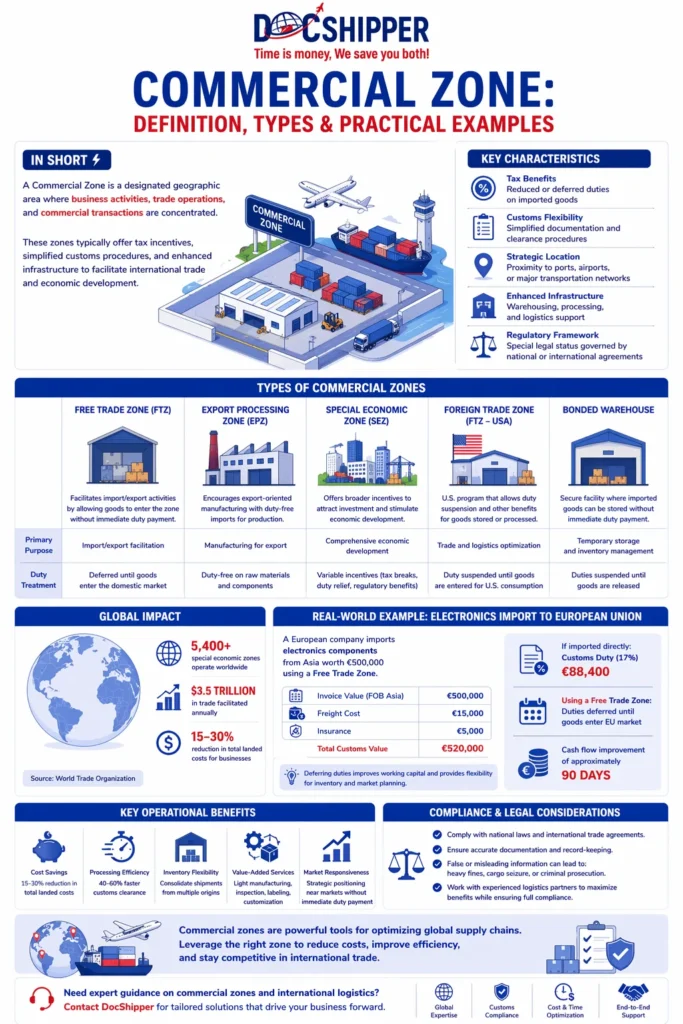
A Commercial Zone is a designated geographic area where business activities, trade operations, and commercial transactions are concentrated. These zones typically offer tax incentives, simplified customs procedures, and enhanced infrastructure to facilitate international trade and economic development.
Introduction
Many importers and exporters struggle to understand the differences between various commercial zones and their specific advantages. This confusion often leads to missed opportunities for cost savings and operational efficiency.
Commercial zones play a critical role in global supply chains by reducing barriers to international trade. They serve as strategic hubs where goods can be stored, processed, and distributed with minimal customs interference.
Key characteristics of commercial zones include:
- Tax benefits: Reduced or deferred duties on imported goods
- Customs flexibility: Simplified documentation and clearance procedures
- Strategic location: Proximity to ports, airports, or major transportation networks
- Enhanced infrastructure: Warehousing facilities, processing capabilities, and logistics support
- Regulatory framework: Special legal status governed by national or international agreements
In-Depth Analysis & Regulatory Framework
Commercial zones operate under specific legal frameworks that vary by country and zone type. The most common categories include Free Trade Zones (FTZ), Export Processing Zones (EPZ), Special Economic Zones (SEZ), Foreign Trade Zones, and Bonded Warehouses.
Free Trade Zones allow companies to import goods without paying customs duties until the products enter the domestic market. This mechanism enables businesses to defer tax payments and optimize cash flow. According to the World Trade Organization, over 5,400 special economic zones operate worldwide, facilitating approximately $3.5 trillion in trade annually.
Export Processing Zones focus specifically on manufacturing goods for export markets. Companies operating in these zones benefit from duty-free imports of raw materials and components, provided the finished products are exported. This model has proven particularly successful in developing economies seeking to attract foreign direct investment.
Special Economic Zones offer broader incentives beyond customs benefits, including corporate tax reductions, relaxed labor regulations, and simplified business registration procedures. These zones aim to stimulate comprehensive economic development rather than focusing solely on trade facilitation.
The legal status of commercial zones requires careful compliance with both national legislation and international trade agreements. At DocShipper, we systematically verify zone-specific requirements to ensure our clients maximize benefits while maintaining full regulatory compliance.
Bonded warehouses represent another form of commercial zone where imported goods can be stored without immediate duty payment. This arrangement provides flexibility for businesses managing inventory across multiple markets, allowing them to release goods into commerce based on demand patterns rather than import timing.
Practical Examples & Comparative Data
Understanding how commercial zones function in practice helps businesses make informed decisions about their international logistics strategies. The following comparative analysis illustrates key differences:
| Zone Type | Primary Purpose | Duty Treatment | Typical Activities |
|---|---|---|---|
| Free Trade Zone | Import/Export facilitation | Deferred until domestic entry | Storage, repackaging, labeling |
| Export Processing Zone | Manufacturing for export | Duty-free on inputs | Assembly, manufacturing, quality control |
| Special Economic Zone | Comprehensive development | Variable incentives | Mixed commercial and industrial |
| Bonded Warehouse | Temporary storage | Suspended until release | Inventory management, distribution |
Case Study: A European electronics company imports components from Asia worth €500,000. By utilizing a Free Trade Zone in Rotterdam, they defer €85,000 in customs duties (17% rate) until products are sold domestically. This improves their cash flow by approximately 90 days on average, representing significant working capital optimization.
Key operational benefits observed across commercial zones include:
- Cost savings: 15-30% reduction in total landed costs through duty deferral and tax optimization
- Processing efficiency: 40-60% faster customs clearance compared to standard procedures
- Inventory flexibility: Ability to consolidate shipments from multiple origins before final distribution
- Value-added services: Opportunity to perform light manufacturing, quality inspection, or customization activities
- Market responsiveness: Strategic positioning near end markets without immediate duty commitment
At DocShipper, we help clients identify the most appropriate commercial zone for their specific supply chain requirements, ensuring maximum benefit from available incentives while maintaining compliance with all applicable regulations.
Conclusion
Commercial zones represent powerful tools for optimizing international trade operations, offering significant financial and operational advantages when properly utilized. Understanding the distinctions between zone types enables businesses to make strategic decisions that reduce costs and enhance supply chain efficiency.
Need guidance on leveraging commercial zones for your import/export operations? Contact DocShipper for expert consultation tailored to your specific logistics needs.
📚 Quiz
Test Your Knowledge: Commercial Zone
Q1 — What best defines a Commercial Zone?
Q2 — A common misconception about Commercial Zones is that goods stored there are permanently exempt from customs duties. What is the correct interpretation?
Q3 — A manufacturer needs to import raw materials duty-free, assemble finished products, and export them abroad. Which type of Commercial Zone is most appropriate?
🎯 Your Result
📞 Free Quote in 24hFAQ | Commercial Zone: Definition, Types & Practical Examples
A Free Trade Zone primarily focuses on customs duty deferral for imported goods, while a Special Economic Zone offers broader incentives including tax reductions, relaxed regulations, and comprehensive business development support beyond just trade facilitation.
Yes, but customs duties and applicable taxes must be paid when goods move from the commercial zone into the domestic market. The zone status allows deferral, not elimination, of these obligations unless specific exemptions apply.
Storage duration varies by zone type and jurisdiction. Most Free Trade Zones allow indefinite storage, while bonded warehouses typically have time limits ranging from 90 days to five years depending on national regulations and product categories.
Certain restricted or prohibited goods may be excluded from commercial zone benefits, including weapons, narcotics, and products subject to special licensing. Regulations vary by country and zone, requiring verification for specific product categories.
Typical requirements include business registration within the zone, customs declarations for goods entering and leaving, inventory records, and compliance certificates. Specific documentation varies based on zone regulations and business activities conducted.
No. Export Processing Zones specifically permit manufacturing, while basic Free Trade Zones may limit activities to storage and simple processing. The permitted scope depends on zone classification and governing regulations.
SMEs gain access to reduced operational costs, improved cash flow through duty deferral, simplified customs procedures, and shared infrastructure without requiring large capital investments in dedicated facilities.
Costs vary significantly based on location and zone type, ranging from minimal registration fees for bonded warehouse arrangements to substantial investments for dedicated facilities in Special Economic Zones. Most zones charge annual fees and require security bonds.
Yes, increasingly commercial zones serve as strategic hubs for e-commerce operations, allowing businesses to store inventory near markets and fulfill orders rapidly while deferring duties until actual customer delivery.
Environmental regulations apply within commercial zones, often with enhanced monitoring for industrial activities. Some zones implement stricter environmental standards than surrounding areas to attract quality investments and maintain international certifications.
Substantial transformation activities within a zone can change a product's country of origin for trade agreement purposes. This affects applicable tariff rates and eligibility for preferential trade agreements, requiring careful documentation.
Businesses typically receive transition periods to relocate inventory or adjust operations. Existing goods may be grandfathered under previous rules, but new regulations apply to subsequent imports. Advance planning mitigates disruption risks.
Need Help with
Logistics or Sourcing ?
First, we secure the right products from the right suppliers at the right price by managing the sourcing process from start to finish. Then, we simplify your shipping experience - from pickup to final delivery - ensuring any product, anywhere, is delivered at highly competitive prices.


Fill the Form
Prefer email? Send us your inquiry, and we’ll get back to you as soon as possible.
Contact us




