In short ⚡
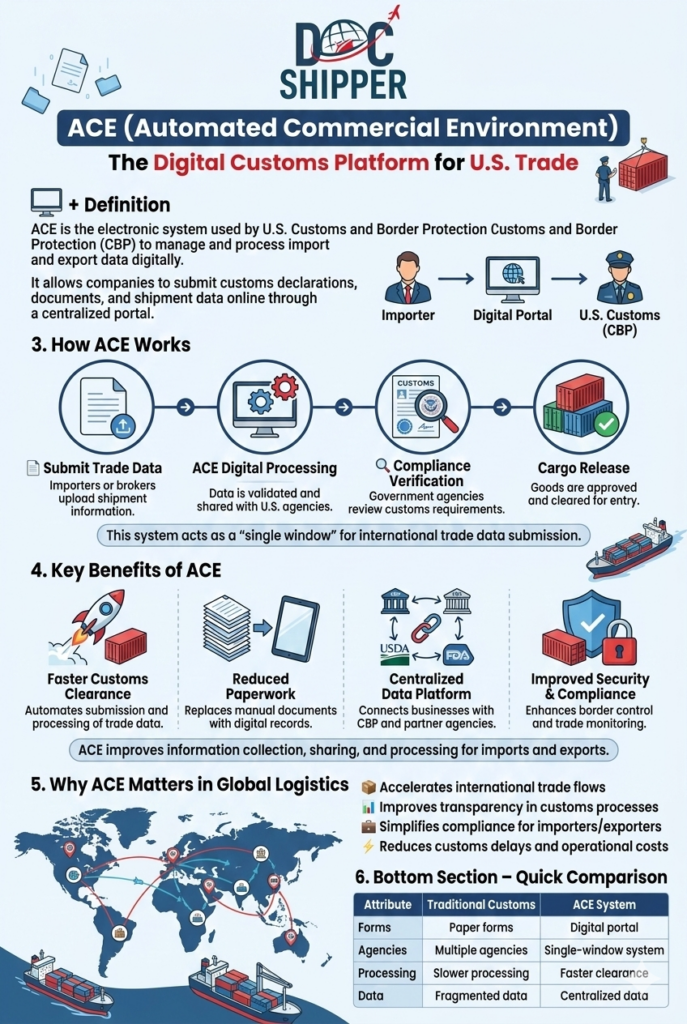
ACE (Automated Commercial Environment) is the U.S. Customs and Border Protection's electronic trade processing system that modernizes import and export operations. It enables real-time data submission, automated clearance procedures, and integrated risk assessment for international shipments entering or leaving the United States.
Introduction
Many importers struggle with customs delays caused by incomplete documentation or outdated filing systems. The transition from paper-based processes to digital platforms has transformed how goods move across U.S. borders.
ACE represents the central nervous system of American customs operations. Since replacing the Automated Commercial System (ACS) in 2016, it has become mandatory for all commercial imports into the United States.
Key characteristics of the ACE system include:
- Single Window Integration – Consolidates data submission across 47 government agencies through one platform
- Real-Time Processing – Provides instant status updates on shipment clearance and holds
- Automated Risk Assessment – Uses algorithms to identify high-risk shipments requiring inspection
- Electronic Bond Management – Streamlines continuous and single transaction bonds
- Partner Government Agency (PGA) Messaging – Routes specialized permits to FDA, EPA, USDA and other agencies automatically
Technical Framework & Operational Mechanisms
ACE operates through a portal-based architecture requiring registered users to obtain FEIN (Federal Employer Identification Number) credentials. Importers must work with licensed customs brokers or obtain direct filing privileges through ACE Secure Data Portal.
The system processes three critical data streams. Entry summaries contain commercial invoice details, tariff classifications, and declared values. Manifest data from carriers provides shipment tracking from origin to destination. PGA certifications ensure compliance with non-customs regulatory requirements.
Processing occurs through automated selectivity criteria. CBP’s Automated Targeting System (ATS) analyzes each entry against risk parameters. Low-risk shipments receive immediate release, while flagged items enter examination queues. According to U.S. Customs and Border Protection, over 95% of entries now process electronically without manual intervention.
The Account Management feature centralizes importer records. Companies maintain a single ACE account across all ports of entry, eliminating redundant filings. Bond sufficiency calculations occur automatically based on import volume and product categories.
At DocShipper, we integrate directly with ACE through certified customs brokers to ensure your shipments clear without delays. Our team monitors entry status in real-time and addresses holds immediately.
Data retention protocols require ACE records to remain accessible for five years. Importers can retrieve historical entries, duty payments, and amendment records through the portal’s reporting functions.
Practical Applications & Data Requirements
Understanding ACE’s operational requirements prevents costly clearance delays. The system demands precise data formatting and complete documentation before accepting submissions.
Mandatory Data Elements for Entry Filing:
| Data Category | Required Information | Format Specification |
|---|---|---|
| Importer of Record | FEIN or SSN, complete address | 9-digit tax ID without dashes |
| HTS Classification | 10-digit tariff code | Must match product description exactly |
| Country of Origin | Manufacturing location | ISO 2-letter country code |
| Declared Value | Transaction value in USD | Must include assists, royalties, packing |
| Entry Type | Consumption (01), Warehouse (03), etc. | 2-digit code per CBP guidelines |
Real-World Processing Scenario:
A furniture importer ships 500 dining chairs from Vietnam valued at $45,000. The ACE filing requires HTS code 9403.60.8081, Vietnam origin marking verification, and an FDA prior notice for wood packaging materials. The customs broker submits the entry 15 days before vessel arrival.
ACE performs automatic checks: bond sufficiency ($450 minimum for this value), antidumping duty applicability (none for Vietnamese furniture), and PGA requirements (USDA confirms treated wood compliance). The system releases the shipment within 2 hours of arrival, allowing immediate delivery to the warehouse.
Without proper ACE integration, this same shipment could face 5-7 day delays for manual review, storage fees exceeding $800, and potential penalty assessments for incomplete data.
Critical Success Factors:
- Pre-arrival filing – Submit entries minimum 24 hours before cargo arrival
- Accurate HTS classification – Misclassification triggers audits and penalties
- Complete commercial invoices – Include seller, buyer, payment terms, and Incoterms
- Active bond maintenance – Ensure continuous bonds cover projected annual duties
- PGA compliance verification – Confirm all permits before shipment departure
DocShipper Platform
Cut logistics costs. Not corners.
See exactly where your logistics costs are bleeding — and how to fix it. Book your expert demo.

Conclusion
ACE has transformed U.S. customs operations into a streamlined, data-driven process that rewards preparation and accuracy. Mastering its requirements directly impacts your supply chain efficiency and cost control.
Need assistance navigating ACE filing requirements or customs clearance? Contact DocShipper for expert guidance on your international shipments.
📚 Quiz
Test Your Knowledge: ACE (Automated Commercial Environment)
1. What is the primary purpose of ACE (Automated Commercial Environment)?
2. A common misconception about ACE is that it replaces the need for a customs bond. Which statement is correct?
3. A U.S. importer is shipping 500 dining chairs from Vietnam. Which ACE filing action best ensures fast clearance upon vessel arrival?
🎯 Your Result
📞 Free Quote in 24hFAQ | ACE (Automated Commercial Environment): Definition, Functions & Practical Examples
All commercial importers bringing goods into the United States must file through ACE. This includes manufacturers, distributors, retailers, and e-commerce sellers. Personal shipments under $800 may qualify for informal entry exemptions.
Yes, but you must obtain direct filing authorization from CBP and maintain a continuous customs bond. Most importers use licensed brokers due to complex regulatory requirements and liability concerns.
Low-risk shipments typically receive automated release within 1-4 hours. Entries flagged for examination may require 3-7 business days depending on inspection type and port congestion.
The system generates rejection codes specifying the error. Common issues include invalid HTS codes, incorrect importer numbers, or missing PGA data. Corrections must be resubmitted before the shipment can clear.
No. ACE is the filing system, while customs bonds guarantee duty payment. You must maintain an active bond to file entries through ACE. Bond amounts depend on your annual import value.
ACE routes PGA messages automatically to agencies like FDA, EPA, and USDA based on product codes. Importers must obtain necessary permits before filing, as ACE validates compliance during entry processing.
It's the web-based interface where authorized users access ACE functions. Features include entry filing, bond management, account maintenance, and report generation. Access requires CBP-approved credentials.
Yes, through Post Summary Corrections (PSC) for minor errors or formal protests for duty disputes. Amendments must occur within specific timeframes—typically 1 year for value adjustments, 90 days for classification changes.
The system applies tariff rates from the Harmonized Tariff Schedule based on your HTS code, country of origin, and declared value. It automatically includes merchandise processing fees, harbor maintenance fees, and applicable antidumping duties.
ABI (Automated Broker Interface) is the transmission protocol that sends data into ACE. Think of ACE as the customs database and ABI as the communication method. Brokers use ABI-certified software to file ACE entries.
ACE stores entry data and filing records, but not actual invoice PDFs. Importers must retain original commercial documents for 5 years and provide them upon CBP request during audits or examinations.
ISF (Importer Security Filing) and ACE are separate systems. ISF data must be filed 24 hours before vessel loading, while ACE entries process upon arrival. Non-compliance with either system results in penalties and cargo holds.
Need Help with
Logistics or Sourcing ?
First, we secure the right products from the right suppliers at the right price by managing the sourcing process from start to finish. Then, we simplify your shipping experience - from pickup to final delivery - ensuring any product, anywhere, is delivered at highly competitive prices.


Fill the Form
Prefer email? Send us your inquiry, and we’ll get back to you as soon as possible.
Contact us