


In short ⚡
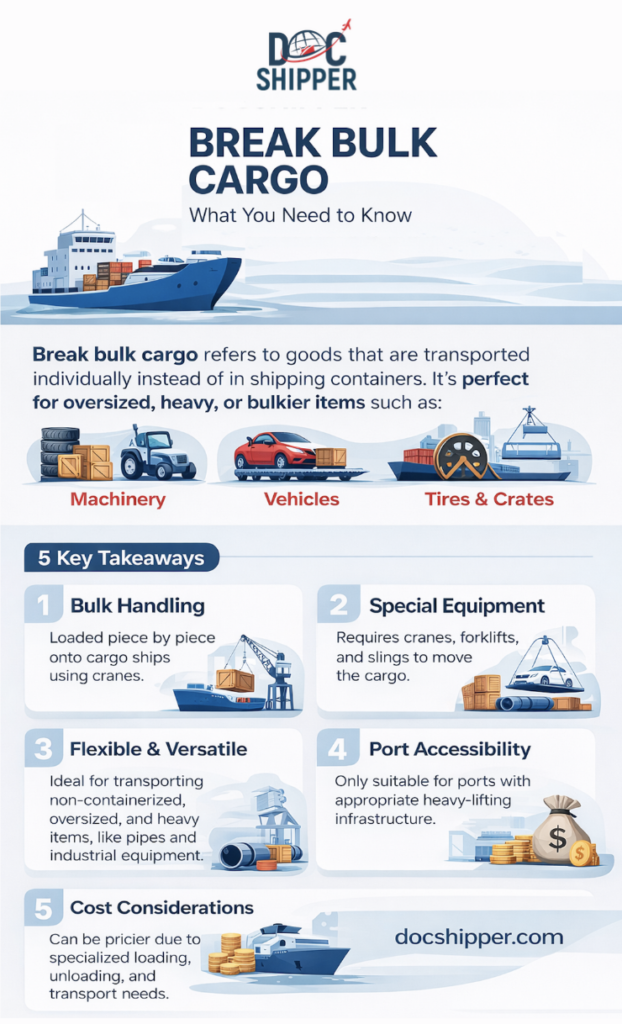
Break bulk cargo refers to goods that must be loaded individually onto a vessel, rather than in containers. This includes oversized items like machinery, steel beams, or construction equipment that cannot fit into standard shipping containers due to their dimensions or weight.Introduction
Many businesses struggle with shipping oversized or irregularly shaped goods. Standard containers simply cannot accommodate heavy machinery, industrial equipment, or construction materials. This is where break bulk cargo becomes essential in international logistics.
Break bulk shipping remains crucial for industries like construction, energy, mining, and manufacturing. Despite the containerization revolution, approximately 20-25% of global maritime cargo still moves as break bulk.
Key characteristics of break bulk cargo include:
- Individual handling: Each piece is loaded and secured separately
- Specialized equipment: Requires cranes, forklifts, or heavy-lift vessels
- Dimensional flexibility: No size or weight restrictions of containers
- Direct port-to-port shipping: Often bypasses container terminals
- Higher handling costs: Labor-intensive loading and unloading processes
Technical Handling & Operational Expertise
Break bulk cargo handling requires specialized knowledge and equipment. The loading process involves careful planning to ensure weight distribution and vessel stability. Each item must be secured with lashing, chains, or specialized cradles to prevent movement during transit.
Port infrastructure plays a critical role. Facilities must have heavy-lift cranes capable of handling weights from several tons to hundreds of tons. Not all ports can accommodate break bulk operations, making route planning essential.
The stowage factor becomes crucial in break bulk shipping. Unlike containers with standardized dimensions, break bulk cargo requires custom calculations for space utilization. Shipping lines must balance cargo volume against weight limits and deck space availability.
Documentation differs significantly from containerized shipping. The bill of lading must include detailed descriptions of each piece, including dimensions, weight, and special handling instructions. According to International Maritime Organization guidelines, proper documentation prevents disputes and ensures smooth customs clearance.
Insurance considerations are more complex for break bulk cargo. Each piece may require individual valuation and coverage. Risks include damage during loading, shifting during transit, and weather exposure on deck cargo.
At DocShipper, we coordinate break bulk shipments with specialized carriers and port facilities, ensuring your oversized cargo receives proper handling from origin to destination. Our expertise covers documentation, customs clearance, and end-to-end logistics coordination.
Practical Examples & Industry Data
Understanding break bulk shipping becomes clearer through real-world scenarios. The global break bulk market was valued at approximately $185 billion in 2023, with steady growth projected through 2030.
Comparative Analysis: Break Bulk vs. Container Shipping
| Factor | Break Bulk | Container Shipping |
|---|---|---|
| Loading Time | 3-7 days per vessel | 1-2 days per vessel |
| Cost per Ton | $45-85 | $30-50 |
| Damage Risk | Higher (exposed handling) | Lower (protected environment) |
| Size Flexibility | Unlimited | Limited to container dimensions |
| Port Availability | Limited specialized ports | Widespread global network |
Use Case: Wind Turbine Components
A European energy company needed to ship wind turbine blades measuring 75 meters in length from Denmark to Brazil. Each blade weighed 18 tons.
Solution: Break bulk shipping via specialized heavy-lift vessel. The blades were secured horizontally on deck using custom cradles. Transit time: 28 days. Total cost per blade: approximately $42,000 including handling and insurance.
Alternative considered: Containerization was impossible due to blade length exceeding standard 40-foot containers by 52 meters. Air freight would have cost 15 times more.
DocShipper Platform
One platform. Your entire supply chain
Sourcing, freight, customs & documents — all centralised, all visible, 24/7.
Key Industry Segments Using Break Bulk:
- Construction equipment: Excavators, cranes, bulldozers (35% of break bulk volume)
- Steel products: Beams, pipes, plates (28% of break bulk volume)
- Energy sector: Turbines, transformers, generators (18% of break bulk volume)
- Project cargo: Oil rigs, industrial plants, infrastructure components (12% of break bulk volume)
- Agricultural machinery: Harvesters, tractors, processing equipment (7% of break bulk volume)
Conclusion
Break bulk cargo remains indispensable for shipping oversized and heavy goods that cannot fit into standard containers. Understanding its handling requirements, costs, and logistics planning ensures successful international shipments.
Need expert guidance on break bulk shipping for your business? Contact DocShipper for customized logistics solutions tailored to your specific cargo requirements.
📚 Quiz
Test Your Knowledge: Break Bulk Cargo
Q1 — What best defines break bulk cargo?
Q2 — A common misconception is that break bulk shipping is cheaper than container shipping. What does industry data actually show?
Q3 — A European energy company needs to ship 75-meter wind turbine blades from Denmark to Brazil. Which shipping method applies?
🎯 Your Result
📞 Free Quote in 24hFAQ | Break Bulk Cargo: Definition, Handling & Practical Examples
Break bulk consists of individual packaged items loaded separately (machinery, steel beams), while bulk cargo refers to loose commodities poured directly into holds (grain, coal, oil).
Costs range from $45-85 per ton depending on cargo dimensions, weight, route, and handling complexity. Specialized equipment and longer loading times increase expenses compared to containerized shipping.
Heavy-lift cranes (10-800 ton capacity), forklifts, flatbed trailers, lashing equipment, and specialized vessels with reinforced decks are essential for safe break bulk operations.
Yes, marine cargo insurance covers break bulk shipments. Policies typically include coverage for loading/unloading damage, transit risks, and weather-related incidents. Individual item valuation is required.
Major break bulk ports include Rotterdam (Netherlands), Hamburg (Germany), Antwerp (Belgium), Houston (USA), and Singapore. Not all container ports have break bulk facilities.
Transit times vary by route but typically take 20-45 days for international shipments. Loading and unloading add 3-7 days at each port due to individual piece handling.
Essential documents include detailed bill of lading, commercial invoice, packing list with dimensions/weights, certificate of origin, and special handling instructions for each piece.
Yes, break bulk costs 50-70% more per ton due to specialized handling, longer loading times, and higher labor requirements. However, it's the only viable option for oversized cargo.
Main risks include damage during loading/unloading, cargo shifting during transit, weather exposure for deck cargo, and port congestion delays. Proper lashing and insurance mitigate these risks.
Yes, modern shipping lines provide GPS tracking for vessels carrying break bulk cargo. However, individual piece tracking is less precise than containerized cargo systems.
Project cargo refers to large-scale break bulk shipments for specific industrial projects like power plants, oil refineries, or infrastructure construction. It requires extensive planning and specialized logistics coordination.
Cargo is secured using steel lashing chains, wire ropes, turnbuckles, and custom cradles. Weight distribution calculations ensure vessel stability, and regular inspections during transit verify securing integrity.
Need Help with Logistics or Sourcing ?
First, we secure the right products from the right suppliers at the right price by managing the sourcing process from start to finish. Then, we simplify your shipping experience - from pickup to final delivery - ensuring any product, anywhere, is delivered at highly competitive prices.


Fill the Form
Prefer email? Send us your inquiry, and we’ll get back to you as soon as possible.
Contact us


