In short ⚡
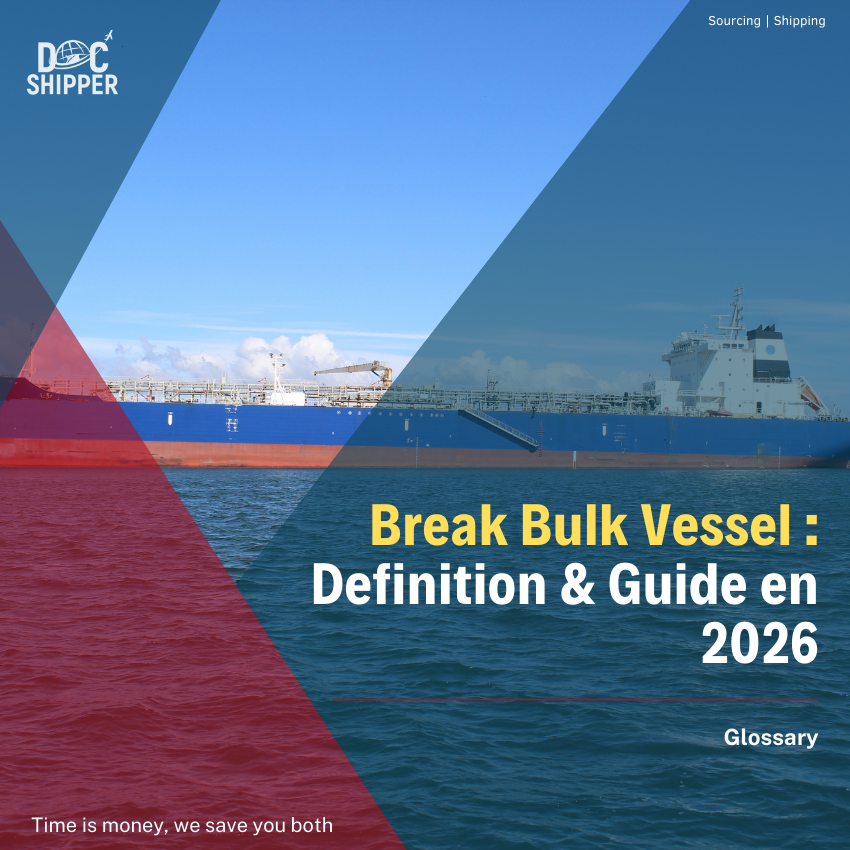
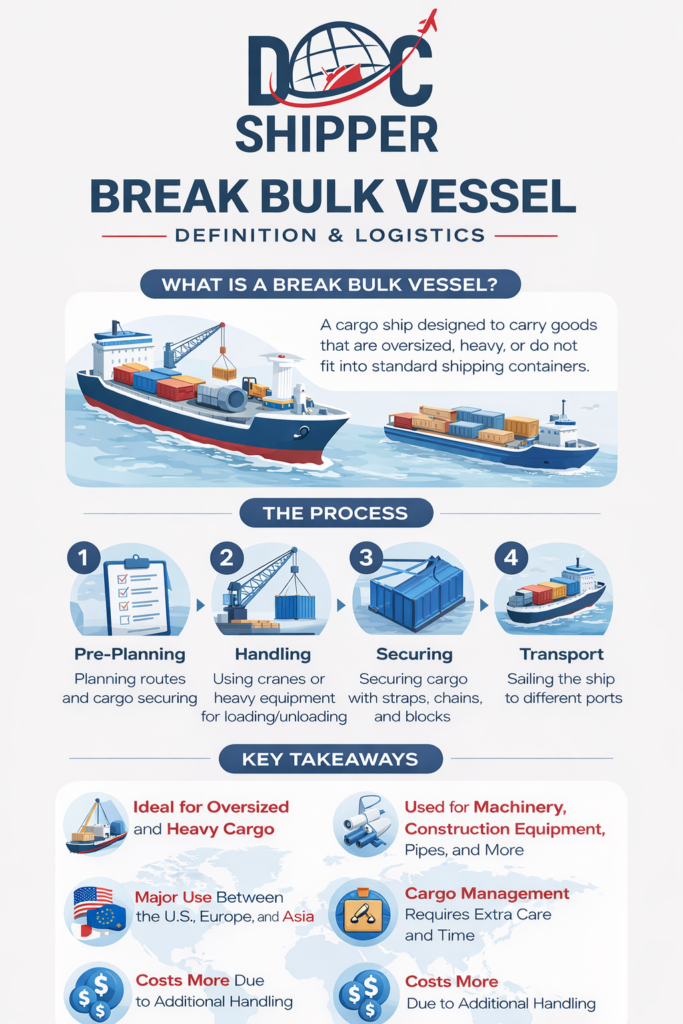
A Break Bulk Vessel is a specialized cargo ship designed to transport non-containerized goods that are loaded individually as separate pieces rather than in shipping containers. These vessels feature onboard cranes and rigging equipment to handle oversized, heavy, or irregularly shaped cargo such as machinery, steel coils, project cargo, and industrial equipment that cannot fit standard container dimensions.
Introduction
Many shippers struggle to transport oversized machinery or project cargo that exceeds standard container dimensions. Break bulk vessels solve this challenge by offering flexible loading configurations and specialized handling equipment.
In international logistics, break bulk shipping remains essential for industries requiring customized transport solutions. Despite containerization dominating global trade, approximately 15-20% of ocean freight still moves via break bulk methods due to cargo specifications.
Key characteristics of break bulk vessels include:
- Onboard cranes with lifting capacities ranging from 10 to 700+ metric tons
- Multiple cargo holds with adjustable configurations for different cargo types
- Reinforced decks designed to support heavy concentrated loads
- Flexible stowage options including under-deck and on-deck placement
- Specialized securing equipment such as lashing points, dunnage, and separation materials
Technical Operations & Vessel Specifications
Break bulk vessels operate fundamentally differently from container ships. The cargo handling process requires individual piece planning, where each item’s weight, dimensions, and center of gravity must be calculated before loading. This meticulous approach prevents stability issues and cargo damage during transit.
The vessel design architecture incorporates multiple tweendecks—intermediate decks between the main deck and tank top—allowing vertical space optimization. Modern break bulk carriers typically feature 3-5 cargo holds with tweendeck configurations, providing flexibility for simultaneous transport of different cargo types.
Cargo securing methodology follows International Maritime Organization (IMO) guidelines outlined in the Code of Safe Practice for Cargo Stowage and Securing. Each piece requires specific lashing calculations based on anticipated sea conditions, with securing forces often exceeding 2-3 times the cargo weight to account for rolling, pitching, and acceleration forces.
The loading sequence planning determines port rotation efficiency. Cargo destined for later discharge ports loads first into lower holds, while earlier-destination freight occupies accessible positions. This strategic placement minimizes restowing operations and reduces port turnaround time.
Crane capacity limitations directly impact cargo eligibility. While standard break bulk vessels feature cranes rated 25-50 metric tons, specialized heavy-lift vessels carry equipment capable of lifting 300-700 metric tons in single picks. At DocShipper, we evaluate crane specifications against your cargo requirements to select appropriate vessels and avoid loading complications.
Practical Examples & Comparative Data
Understanding break bulk economics requires examining real-world scenarios. Consider a manufacturing company shipping five industrial generators from Hamburg to Santos, Brazil.
| Specification | Break Bulk Vessel | Container Ship Alternative |
|---|---|---|
| Cargo Dimensions | 6m × 3.5m × 4m per unit | Exceeds 40ft container (12m × 2.4m × 2.6m) |
| Unit Weight | 18 metric tons each | Not feasible—standard container max 26 tons |
| Loading Method | Ship’s crane direct lift | Requires disassembly + flat rack containers |
| Transit Time | 28-32 days | 25-28 days (if possible) |
| Total Cost | $45,000 all-inclusive | $62,000+ (disassembly + 8 flat racks + reassembly) |
This comparison demonstrates break bulk vessels provide cost advantages for oversized cargo, eliminating disassembly labor, specialized packaging, and reassembly expenses at destination.
Industry-specific applications highlight break bulk versatility:
- Energy sector: Wind turbine components (blades reaching 80+ meters), transformers weighing 200+ tons
- Construction projects: Bridge sections, prefabricated building modules, cranes, excavators
- Mining operations: Crushers, conveyors, processing equipment, haul trucks
- Manufacturing: Production lines, presses, industrial boilers, paper mill machinery
- Infrastructure development: Railway cars, locomotives, steel beams, concrete segments
According to maritime industry data, break bulk freight rates typically calculate per revenue ton (1 cubic meter or 1 metric ton, whichever yields higher revenue). A shipment measuring 50 cubic meters and weighing 30 metric tons would be charged for 50 revenue tons, as volume exceeds weight in this calculation.
At DocShipper, we conduct detailed cargo surveys before vessel booking, ensuring accurate weight distribution plans and securing arrangements that comply with classification society requirements. This proactive approach prevents costly delays and cargo damage claims.
DocShipper Platform
Optimize Your Global Logistics with Cutting-Edge Solutions
Enhance efficiency, cut costs, and gain 24/7 visibility 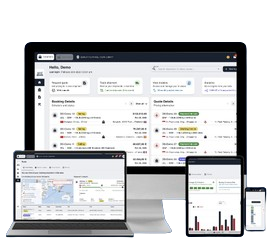 over your entire supply chain.
- Cut your shipping costs and maximize your margins
- Manage sourcing, freight, & customs on one platform
- Get real-time tracking and analytics
Conclusion
Break bulk vessels remain indispensable for transporting oversized, heavy, or project cargo that exceeds containerization capabilities. Their specialized equipment and flexible configurations provide cost-effective solutions for complex shipping requirements.
Need expert guidance on break bulk shipping for your project cargo? Contact DocShipper for customized logistics solutions and vessel selection assistance.
📚 Quiz
Test Your Knowledge: Break Bulk Vessel
Q1 — What best defines a Break Bulk Vessel?
Q2 — A shipper needs to transport five industrial generators, each weighing 18 metric tons and measuring 6m × 3.5m × 4m, from Hamburg to Santos. Which statement is correct?
Q3 — A shipment measures 50 cubic meters and weighs 30 metric tons. How is the freight charge calculated on a break bulk vessel?
🎯 Your Result
📞 Free Quote in 24hFAQ | Break Bulk Vessel: Definition, Operations & Practical Examples
Break bulk vessels transport individually packaged goods like machinery and steel coils, while bulk carriers handle unpackaged commodities such as grain, coal, or ore loaded directly into cargo holds without packaging.
Break bulk rates typically range $40-120 per cubic meter depending on route and cargo characteristics, often proving more economical than container alternatives for oversized items requiring disassembly, specialized containers, or multiple standard units.
Standard break bulk vessels accommodate cargo up to 50 metric tons per piece using onboard cranes. Specialized heavy-lift vessels equipped with reinforced gear can handle individual pieces exceeding 700 metric tons.
Most commercial ports handle break bulk cargo, though operations require adequate quayside space, suitable berth depth, and sufficient crane capacity. Specialized project cargo may need dedicated heavy-lift terminals with reinforced quays.
Loading duration varies significantly based on cargo quantity, piece weights, and port efficiency. A typical break bulk vessel might spend 3-7 days in port, compared to 24-48 hours for container ships handling similar cargo volumes.
Essential documents include commercial invoice, packing list with detailed dimensions and weights, bill of lading, certificate of origin, and cargo stowage plan. Heavy or hazardous cargo requires additional certificates and class approvals.
Yes, many modern break bulk carriers feature multipurpose designs allowing simultaneous transport of containers on deck and break bulk cargo in holds, optimizing vessel utilization and route economics.
Break bulk cargo typically requires marine cargo insurance covering Institute Cargo Clauses (A), (B), or (C) depending on risk tolerance. High-value project cargo often necessitates all-risk coverage with specific exclusions clearly defined.
Adverse weather significantly impacts break bulk loading and discharge operations. Port authorities typically suspend cargo operations when wind speeds exceed 25-30 knots or during heavy precipitation to prevent cargo damage and ensure worker safety.
Break bulk vessels accommodate cargo that cannot roll (static machinery, structural steel) and offer better stowage density for compact heavy items. RoRo suits wheeled equipment and vehicles but provides less flexibility for irregularly shaped cargo.
Securing methods include steel wire lashing, chain binding, wooden dunnage separation, welded stoppers, and friction-enhancing materials. Engineering calculations determine required lashing strength based on anticipated sea conditions and cargo characteristics.
Break bulk vessels typically operate 15-25% slower schedules than container ships due to longer port stays and less frequent service. However, for oversized cargo avoiding disassembly, total door-to-door time often favors break bulk despite slower ocean transit.
Need Help with
Logistics or Sourcing ?
First, we secure the right products from the right suppliers at the right price by managing the sourcing process from start to finish. Then, we simplify your shipping experience - from pickup to final delivery - ensuring any product, anywhere, is delivered at highly competitive prices.


Fill the Form
Prefer email? Send us your inquiry, and we’ll get back to you as soon as possible.
Contact us