In short ⚡
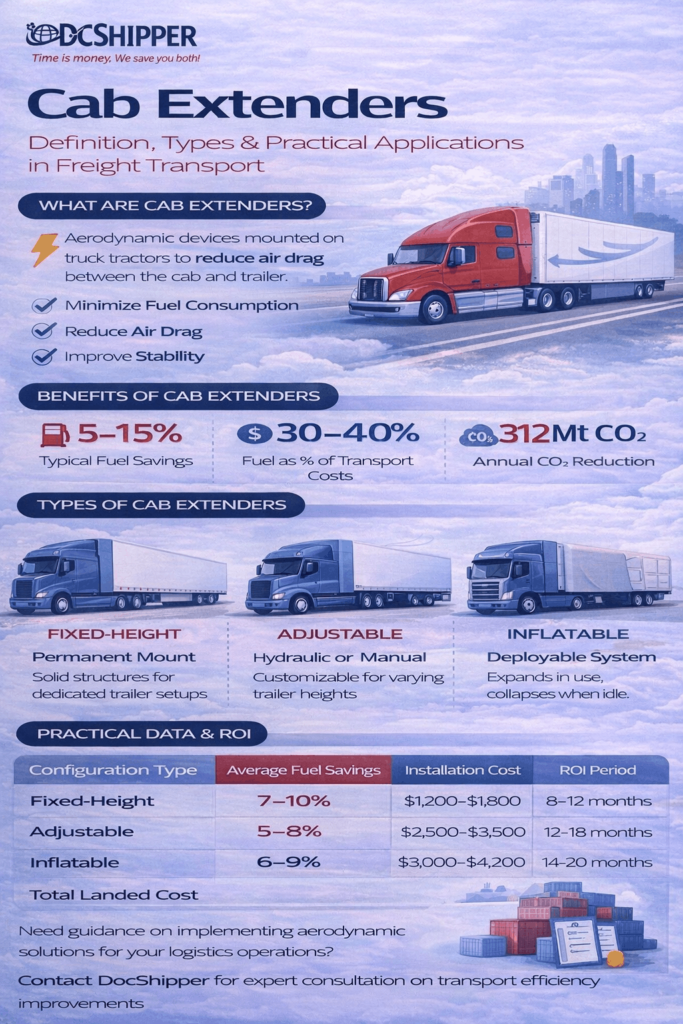
Cab extenders are aerodynamic devices mounted on truck tractors to reduce air drag between the cab and trailer. They minimize fuel consumption by streamlining airflow, bridging height gaps, and improving vehicle stability at highway speeds, typically achieving 5-15% fuel savings.Introduction
In international freight transport, fuel costs represent 30-40% of operational expenses. Many fleet operators overlook the aerodynamic gap between tractor cabs and trailers, creating turbulent air pockets that increase drag and reduce efficiency.
Cab extenders address this critical issue in long-haul logistics. These devices optimize airflow management, directly impacting profitability and environmental compliance in commercial transport operations.
- Fuel efficiency improvement: Documented savings between 5% and 15% depending on configuration
- Regulatory compliance: Supports EPA SmartWay certification and EU emissions standards
- Operational versatility: Adjustable models accommodate various trailer heights
- Installation flexibility: Retrofit options for existing fleet vehicles
- Maintenance simplicity: Durable materials requiring minimal upkeep
Technical Analysis & Aerodynamic Principles
Cab extenders function by creating a continuous aerodynamic profile between the tractor and trailer. When a truck travels at highway speeds, the height gap generates vortex formations that create substantial drag forces. These devices redirect airflow smoothly over the trailer roof.
The coefficient of drag (Cd) for a standard Class 8 tractor-trailer ranges from 0.65 to 0.75. Installing a properly sized cab extender can reduce this coefficient by 0.05 to 0.10 units, translating directly to fuel consumption reduction.
Three primary configurations exist in commercial applications:
- Fixed-height extenders: Permanent installations for dedicated trailer operations
- Adjustable extenders: Hydraulic or manual systems accommodating multiple trailer heights
- Inflatable extenders: Deployable systems that collapse when not in use
Material selection impacts performance and durability. Modern extenders utilize fiberglass-reinforced composites or aluminum frameworks with weather-resistant panels. These materials withstand highway conditions while maintaining structural integrity through temperature variations.
According to the EPA SmartWay program, aerodynamic devices including cab extenders qualify for verified technology status when meeting specific testing protocols. This certification provides fleet operators with performance assurance and potential regulatory benefits.
At DocShipper, we evaluate aerodynamic equipment specifications during fleet optimization assessments, ensuring compliance with international transport efficiency standards across our logistics networks.
Practical Applications & Performance Data
Real-world implementation data demonstrates measurable benefits. A 2022 study by the North American Council for Freight Efficiency analyzed 450 long-haul trucks over 12 months, documenting fuel savings and operational impacts.
| Configuration Type | Average Fuel Savings | Installation Cost | ROI Period |
|---|---|---|---|
| Fixed Cab Extender | 7-10% | $1,200-$1,800 | 8-12 months |
| Adjustable System | 5-8% | $2,500-$3,500 | 12-18 months |
| Inflatable Extender | 6-9% | $3,000-$4,200 | 14-20 months |
Case Study: A European logistics operator with 120 long-haul vehicles implemented adjustable cab extenders across their fleet in 2021. Operating primarily on trans-European corridors averaging 800 km per route, they documented:
- Annual fuel consumption reduction: 8.2% per vehicle
- Total savings: €187,000 across fleet (diesel at €1.45/liter)
- CO₂ emissions reduction: 312 metric tons annually
- Maintenance incidents: Zero device failures over 24 months
- Driver satisfaction improvement: Reduced wind noise and improved handling stability
Performance optimization requires proper gap measurement. The ideal cab-to-trailer distance ranges from 36 to 48 inches for maximum extender effectiveness. Gaps exceeding 60 inches diminish aerodynamic benefits significantly.
Regulatory considerations vary by jurisdiction. In the United States, cab extenders must not exceed maximum vehicle length regulations (typically 65 feet total). European Union directives allow aerodynamic devices without counting toward length restrictions when meeting specific criteria.
DocShipper’s fleet management services include aerodynamic assessments that calculate potential fuel savings based on route profiles, helping clients make data-driven equipment investment decisions.
Conclusion
Cab extenders represent a proven technology for reducing operational costs and environmental impact in commercial freight transport. The combination of measurable fuel savings, straightforward installation, and regulatory compliance makes them a strategic investment for fleet optimization.
Need guidance on implementing aerodynamic solutions for your logistics operations? Contact DocShipper for expert consultation on transport efficiency improvements.
📚 Quizz
Test Your Knowledge: Cab Extenders
1. What is the primary purpose of a cab extender on a truck tractor?
2. A fleet manager claims cab extenders deliver the same fuel savings whether the truck is driving at 30 mph in urban traffic or 65 mph on the highway. Is this correct?
3. A logistics operator runs a mixed fleet serving multiple clients with trailers of varying heights. Which cab extender configuration is the most appropriate choice?
🎯 Your Result
📞 Free Quote in 24hFAQ | Cab Extenders: Definition, Types & Practical Applications in Freight Transport
A cab extender reduces aerodynamic drag by streamlining airflow between the tractor cab and trailer, minimizing turbulent air pockets that increase fuel consumption at highway speeds.
Documented savings range from 5% to 15% depending on configuration, vehicle speed, route characteristics, and proper installation. Most operators experience 7-10% average reduction.
Adjustable models accommodate various trailer heights, but fixed extenders work best with dedicated equipment. Compatibility depends on the cab-to-trailer gap measurement and trailer roof configuration.
ROI periods range from 8 to 20 months based on configuration type, fuel prices, annual mileage, and installation costs. High-mileage operations achieve faster payback.
Minimal maintenance is required. Regular inspections for structural integrity, fastener tightness, and panel condition suffice. Adjustable systems need periodic lubrication of moving components.
Yes, most systems are designed for retrofit installation. Mounting typically requires drilling into the cab roof or utilizing existing anchor points without major modifications.
Properly installed extenders improve stability by reducing crosswind sensitivity and turbulence-induced buffeting. Drivers often report smoother highway handling and reduced wind noise.
Regulations vary by jurisdiction. US federal law limits total vehicle length, while EU directives allow aerodynamic devices without length penalties when meeting specific criteria. Always verify local requirements.
Common materials include fiberglass-reinforced composites, aluminum frameworks with polymer panels, and weather-resistant plastics. Material selection balances weight, durability, and cost considerations.
Aerodynamic benefits increase with speed. Significant fuel savings typically occur above 50 mph (80 km/h). Urban or low-speed operations see minimal impact from extenders.
Yes, combining extenders with trailer skirts, boat tails, and wheel covers creates synergistic effects. Comprehensive aerodynamic packages can achieve 15-25% total fuel reduction.
Performance remains consistent across weather conditions. Strong crosswinds actually demonstrate extender benefits more clearly by reducing side-force instability compared to unequipped vehicles.
Need Help with
Logistics or Sourcing ?
First, we secure the right products from the right suppliers at the right price by managing the sourcing process from start to finish. Then, we simplify your shipping experience - from pickup to final delivery - ensuring any product, anywhere, is delivered at highly competitive prices.


Fill the Form
Prefer email? Send us your inquiry, and we’ll get back to you as soon as possible.
Contact us