In short ⚡
Air cargo containers, also known as Unit Load Devices (ULDs), are standardized containers designed to transport freight aboard aircraft. These specialized containers maximize cargo space, protect goods during transit, and enable faster loading/unloading operations. They comply with IATA regulations and aircraft specifications to ensure safety and efficiency in air freight operations.
Introduction
Shipping goods by air without proper containerization leads to damaged cargo, wasted space, and operational delays. Air cargo containers solve these challenges by standardizing how freight moves through the aviation supply chain.
In international logistics, these containers represent the backbone of efficient air freight. They bridge ground handling and flight operations, ensuring goods travel securely from warehouse to destination.
- Standardization: IATA-approved dimensions fit specific aircraft models
- Protection: Rigid aluminum or composite materials shield contents from impact and weather
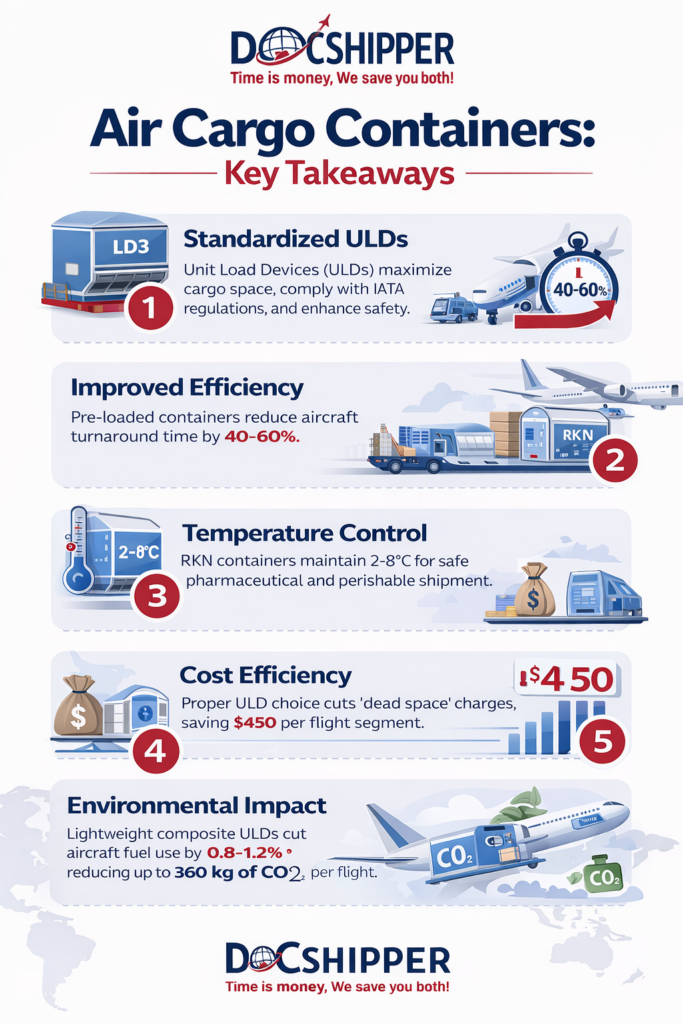
- Efficiency: Pre-loaded containers reduce aircraft turnaround time by 40-60%
- Traceability: Each ULD carries a unique identification code for tracking
- Versatility: Specialized variants accommodate temperature-sensitive, oversized, or hazardous goods
In-Depth Analysis & Technical Specifications
Air cargo containers follow strict IATA ULD regulations, which define dimensions, weight limits, and structural requirements. The most common types include LD3 containers (lower deck, 1.53m base), LD7 containers (larger capacity, 3.17m base), and LD9 pallets (flat platform with nets).
Aircraft compatibility determines container selection. Wide-body aircraft like Boeing 777 or Airbus A350 accommodate multiple main deck positions and lower deck compartments. Narrow-body planes typically use smaller units or bulk loading methods.
The tare weight (empty container weight) directly impacts payload capacity. Modern composite ULDs weigh 30-40% less than traditional aluminum versions, allowing airlines to carry more revenue cargo. At DocShipper, we systematically verify ULD specifications during shipment planning to optimize weight distribution and prevent loading rejections.
Temperature-controlled containers (RKN, RAP, or RMP types) maintain pharmaceutical or perishable goods within precise ranges. These units feature active cooling systems and require pre-cooling protocols before loading. The IATA ULD Technical Manual provides comprehensive specifications for all container categories.
Structural integrity inspections occur before each use. Damaged containers risk cargo loss or aircraft safety violations. Airlines maintain repair stations and conduct regular audits following IATA ULD Regulations Chapter 7 guidelines.
Practical Examples & Data Insights
Understanding container selection through real-world scenarios clarifies operational decisions. Below is a comparison of common ULD types based on typical shipment requirements:
| ULD Type | Dimensions (L×W×H) | Max Payload | Best Use Case |
|---|---|---|---|
| LD3 | 153×156×163 cm | 1,588 kg | E-commerce parcels, general cargo |
| LD7 | 317×224×163 cm | 4,536 kg | Heavy machinery parts, consolidated shipments |
| AKE (LD3 variant) | 153×156×163 cm | 1,588 kg | Lower deck loading on wide-body aircraft |
| RKN (Cool Dolly) | 244×318×244 cm | 6,800 kg | Pharmaceuticals requiring 2-8°C |
| PMC Pallet | 318×244×299 cm | 6,804 kg | Oversized industrial equipment |
Case Study: A medical device manufacturer ships 2,400 kg of diagnostic equipment from Frankfurt to Singapore. Using two LD7 containers instead of four LD3 units reduces handling touchpoints by 50%, cutting transit time by 6 hours and minimizing damage risk.
Cost Efficiency Data: Airlines charge by volumetric weight (dimensional weight vs. actual weight, whichever is greater). Proper ULD selection prevents “dead space” charges. A poorly packed LD3 at 60% capacity costs the same as a fully optimized unit, wasting approximately $450 per flight segment.
Temperature Monitoring: RKN containers equipped with data loggers record temperature deviations every 30 seconds. Studies show that 12% of pharmaceutical shipments experience temperature excursions during ground handling—proper ULD selection with active cooling reduces this to under 2%.
Turnaround Impact: Airports handling 200+ daily wide-body flights save 18-22 minutes per aircraft using pre-loaded ULDs versus bulk cargo. This translates to approximately $3,200 saved per flight in fuel and crew costs.
Sustainability Angle: Lightweight composite ULDs reduce aircraft fuel consumption by 0.8-1.2% on long-haul routes. For a Boeing 777F flying 12 hours, this equals 240-360 kg less CO₂ per flight.
Conclusion
Air cargo containers are essential infrastructure in global logistics, directly impacting cost, speed, and cargo integrity. Selecting the right ULD type based on shipment characteristics prevents delays and financial losses.
Need expert guidance on air freight containerization? Contact DocShipper for tailored logistics solutions.
📚 Quiz
Test Your Knowledge: Air Cargo Containers
Q1 — What is the primary definition of an air cargo container (ULD)?
Q2 — A shipper wants to transport 2,400 kg of pharmaceutical products requiring a 2–8°C temperature range. Which ULD type is most appropriate?
Q3 — A freight manager is deciding between using two LD7 containers or four LD3 units for a 2,400 kg shipment. What is the key operational advantage of choosing the LD7 option?
🎯 Your Result
📞 Free Quote in 24hFAQ | Air Cargo Containers: Definition, Types & Practical Examples
ULDs are specifically designed for aircraft, with contoured shapes matching fuselage profiles. Regular containers are rectangular and designed for ships or trucks. ULDs use lighter materials and meet aviation safety standards.
Airlines typically own or lease ULDs. Shippers cannot provide their own containers unless under specific agreements. Cargo is loaded into airline-supplied ULDs at origin handling facilities.
Each ULD has a unique identification code (e.g., AKE12345DL). Airlines scan these codes at every transfer point, providing real-time visibility through cargo management systems.
Oversized cargo uses specialized pallets with nets or is shipped as "loose loaded" bulk freight. Some aircraft have main deck configurations for non-standard items like vehicles or machinery.
Availability depends on airline fleet and route demand. Major hubs stock RKN and RAP containers, but smaller airports may require advance booking. Always confirm with your freight forwarder.
ULD costs are embedded in air freight rates. Airlines charge based on chargeable weight (volumetric or actual), not container rental. However, improper packing leading to wasted space increases costs.
Traditional ULDs use aluminum alloy frames with plywood or fiberglass panels. Modern versions employ carbon fiber composites, reducing weight by 30-40% while maintaining structural strength.
Yes, but only in IATA-certified ULDs meeting Dangerous Goods Regulations. Special labeling, documentation, and loading procedures apply. Some hazmat requires specific container types like fire-resistant units.
Ground crews load a standard LD3 in 8-12 minutes using mechanized loaders. Main deck pallets take 15-20 minutes. Pre-built ULDs significantly reduce aircraft ground time compared to bulk loading.
Aluminum ULDs last 15-20 years with proper maintenance. Composite containers can exceed 25 years. Airlines retire units after structural damage or when repair costs exceed replacement value.
Airlines cover ULD damage under their operational insurance. Shippers insure cargo contents separately. High-value shipments may require "all-risk" policies covering both container failure and handling incidents.
ULDs are aviation-specific and incompatible with truck or rail systems. After landing, cargo transfers to road containers or trucks. Some airports use specialized dollies to move ULDs short distances on ground.
Need Help with Logistics or Sourcing ?
First, we secure the right products from the right suppliers at the right price by managing the sourcing process from start to finish. Then, we simplify your shipping experience - from pickup to final delivery - ensuring any product, anywhere, is delivered at highly competitive prices.
Fill the Form
Prefer email? Send us your inquiry, and we’ll get back to you as soon as possible.
Contact us