


In short ⚡
Acquiescence is the silent or implied acceptance of contractual terms, customs practices, or regulatory requirements in international trade. It occurs when a party does not object to conditions within a reasonable timeframe, thereby legally binding themselves to those terms. This concept is crucial in logistics, where delays in contesting documents or charges can result in automatic acceptance and financial liability.
Introduction
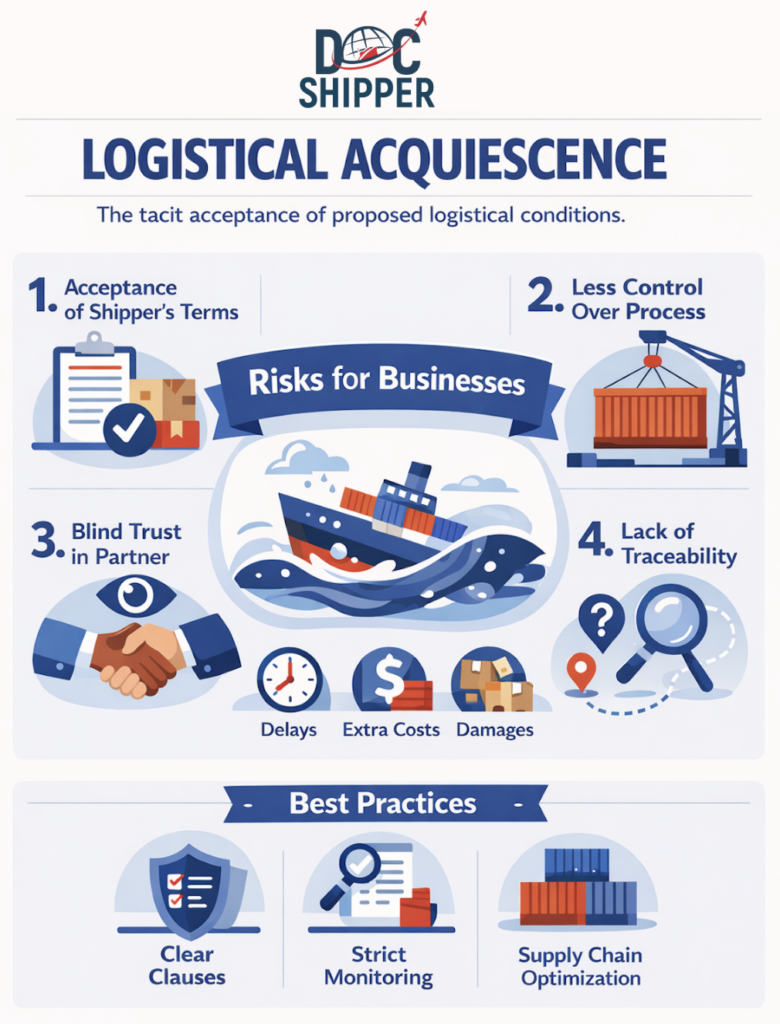
Many importers and exporters unknowingly accept unfavorable terms simply by failing to respond promptly. This passive acceptance—acquiescence—can transform preliminary quotes into binding contracts or convert disputed charges into legal obligations.
In international logistics, acquiescence affects multiple touchpoints: freight rates, demurrage charges, customs valuations, and contractual modifications. Understanding when silence equals consent is essential for cost control and legal protection.
- Automatic acceptance occurs after specified timeframes in commercial documents
- Customs acquiescence applies when importers don’t contest valuation adjustments within regulatory deadlines
- Contractual silence can validate amendments proposed by carriers or freight forwarders
- Demurrage acceptance happens when storage charges aren’t disputed within contractual windows
- Documentary compliance requires active rejection of discrepant bills of lading or certificates
Legal Mechanisms & Trade Implications
Acquiescence operates through implied consent doctrine, where inaction within commercially reasonable periods constitutes agreement. International conventions like the Hague-Visby Rules and INCOTERMS 2020 establish specific timeframes for objections.
The notice requirement is critical. Most shipping contracts stipulate that parties must contest charges or terms within 7 to 30 days. Missing these deadlines triggers automatic acceptance. For customs matters, the European Union Customs Code provides clear appeal windows—typically 30 days from notification.
Estoppel by acquiescence prevents parties from later challenging terms they implicitly accepted through prolonged silence. Courts consistently rule that businesses engaged in international trade have a duty to review and respond to commercial communications promptly.
The reasonable person standard applies: would an informed trader in similar circumstances have understood that silence equals acceptance? This subjective-objective test protects parties from hidden consent traps while enforcing commercial efficiency.
At DocShipper, we implement systematic document review protocols within 48 hours of receipt to prevent inadvertent acquiescence to unfavorable terms or charges.
Practical Examples & Data Analysis
Consider a manufacturer importing electronics from China. The freight forwarder sends a revised quote increasing ocean freight by 18% due to “market conditions.” The importer receives this on January 10th but doesn’t respond until February 5th—26 days later.
| Scenario | Response Time | Legal Status | Financial Impact |
|---|---|---|---|
| Immediate rejection (within 3 days) | 72 hours | No acquiescence | Original rate maintained |
| Delayed response (26 days) | 26 days | Likely acquiescence | +$2,340 per container |
| No response (silent acceptance) | >30 days | Full acquiescence | Cannot contest retroactively |
| Conditional acceptance (negotiation) | 5-7 days | No acquiescence | Negotiated 9% increase |
Customs valuation case: An importer receives a customs adjustment notice increasing declared value by 22%. Failure to file an administrative appeal within the statutory 30-day window results in acquiescence to the higher valuation, permanently affecting duty calculations for similar goods.
Demurrage scenario: A container incurs $150 daily storage charges after free time expires. The consignee disputes the charges on day 18. Most terminals consider objections filed beyond 14 days as acquiescence to accrued charges—in this case, $2,700.
Documentary credit modification: A bank proposes letter of credit amendments. Under UCP 600 rules, beneficiaries have a maximum of 7 banking days to reject amendments. Silence beyond this period constitutes acceptance, even if terms are commercially disadvantageous.
Industry data: Research indicates that 34% of disputed logistics charges are dismissed due to late filing—acquiescence being the primary defense. Companies with formal document review systems reduce inadvertent acceptance by 67%.
DocShipper Platform
One platform. Your entire supply chain
Sourcing, freight, customs & documents — all centralised, all visible, 24/7.
Conclusion
Acquiescence transforms silence into binding agreement in international logistics. Proactive document management and timely responses are essential to avoid unintended contractual obligations and financial exposure.
Need assistance managing complex logistics documentation and deadlines? Contact DocShipper for expert support in protecting your commercial interests.
📚 Quiz
Test Your Knowledge: Acquiescence in Logistics
Q1. What is acquiescence in the context of international logistics?
Q2. Once the objection deadline has passed, can a party reverse acquiescence and successfully contest the accepted terms?
Q3. A consignee receives a demurrage invoice for $2,700 in accrued storage charges. They dispute it on day 18, but the terminal's contractual objection window is 14 days. What is the most likely legal outcome?
🎯 Your Result
📞 Free Quote in 24hFAQ | Acquiescence in Logistics: Definition, Calculation & Practical Examples
Most commercial shipping contracts require objections within 7 to 30 days of notification. Industry standard is 14 days for demurrage and detention charges, though specific contracts may vary.
Generally no. Once the objection period expires, courts treat silence as binding acceptance. Exceptions exist only for fraud, material misrepresentation, or demonstrable impossibility of timely response.
Yes. Oral contracts are enforceable, and failure to object to stated terms during negotiations can constitute acquiescence. However, written confirmation strengthens enforceability significantly.
Express acceptance requires affirmative action (signature, written confirmation). Acquiescence occurs passively through inaction or silence within specified timeframes, creating implied consent.
Documented objections sent within contractual deadlines, registered mail receipts, email confirmations with read receipts, and contemporaneous notes of verbal objections all serve as protective evidence.
Yes. Most customs authorities impose strict appeal deadlines—typically 30 to 90 days depending on jurisdiction. Missing these windows results in permanent acceptance of customs determinations.
Potentially. If demonstrable circumstances (natural disasters, government shutdowns) prevented timely response, courts may excuse late objections. However, the burden of proof is substantial.
INCOTERMS 2020 establish responsibility transfer points but don't explicitly address acquiescence timeframes. These are governed by underlying sales contracts and applicable commercial law.
Email objections with delivery confirmation provide timestamped evidence of timely response. However, some jurisdictions require registered mail for legal disputes exceeding certain monetary thresholds.
Not necessarily. Payments made "under protest" or "without prejudice" preserve the right to dispute. However, unconditional payment of disputed amounts typically constitutes full acquiescence.
Implement document management systems with automated deadline tracking, assign responsibility for reviewing commercial communications within 48 hours, and establish escalation protocols for disputed terms.
Yes. Perishable goods, hazardous materials, and pharmaceutical logistics often have compressed objection windows (3-7 days) due to time-sensitive nature and regulatory compliance requirements.
Need Help with
Logistics or Sourcing ?
First, we secure the right products from the right suppliers at the right price by managing the sourcing process from start to finish. Then, we simplify your shipping experience - from pickup to final delivery - ensuring any product, anywhere, is delivered at highly competitive prices.


Fill the Form
Prefer email? Send us your inquiry, and we’ll get back to you as soon as possible.
Contact us




