


In short ⚡
Cost reduction is the systematic process of identifying and eliminating unnecessary expenses while maintaining or improving operational quality and service levels. In international logistics, it involves optimizing freight routes, consolidating shipments, negotiating better carrier rates, and streamlining customs procedures to lower total landed costs without compromising delivery reliability or product integrity.
Introduction
Many importers struggle with spiraling logistics costs that erode profit margins. Hidden fees, inefficient routing, and poor supplier negotiations can inflate expenses by 15-30% annually.
In global trade, cost reduction directly impacts competitiveness. Companies that master expense optimization gain pricing flexibility, faster market penetration, and improved cash flow.
Key characteristics of effective cost reduction include:
- Data-driven analysis: Tracking KPIs like cost per unit, freight spend ratios, and demurrage fees.
- Strategic sourcing: Consolidating vendors and negotiating volume discounts.
- Process automation: Reducing manual handling through digital customs clearance and inventory systems.
- Modal optimization: Selecting the right transport mode (air, sea, rail) based on urgency and volume.
- Continuous improvement: Regular audits to identify waste and inefficiency.
Cost Reduction Strategies & Expertise
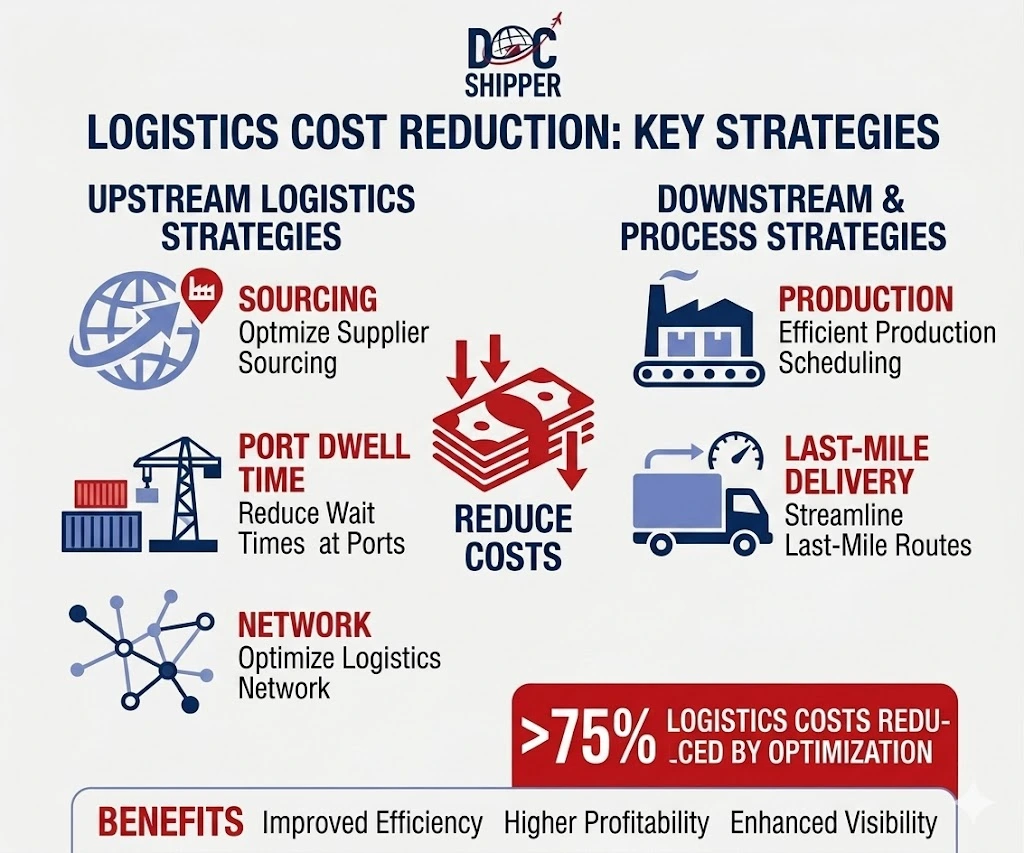
Freight consolidation remains one of the most powerful levers. Combining multiple LCL shipments into full container loads (FCL) can reduce per-unit costs by 20-40%. This requires coordinating procurement schedules and maintaining buffer inventory.
Carrier contract negotiation demands market intelligence. Leveraging annual shipping volumes, route density, and multi-year commitments unlocks better rates. According to the European Commission’s Eurostat, optimized carrier agreements reduce transport costs by an average of 12% annually.
Customs duty optimization involves selecting correct HS codes, utilizing Free Trade Agreements (FTAs), and exploring bonded warehouses. Misclassification penalties can reach 5-10% of shipment value, making expert classification critical.
Inventory management balances holding costs against ordering frequency. Just-in-time (JIT) models minimize warehousing expenses but increase freight costs. Economic Order Quantity (EOQ) calculations identify the optimal balance.
Technology integration automates documentation, real-time tracking, and exception management. Cloud-based TMS platforms reduce administrative labor by 30-50%. At DocShipper, we implement integrated systems that provide full supply chain visibility while cutting manual processing time.
Concrete Examples & Data
A European electronics importer reduced annual logistics costs by €180,000 through strategic changes:
| Initiative | Previous Cost | Optimized Cost | Annual Savings |
|---|---|---|---|
| LCL to FCL consolidation | €320,000 | €240,000 | €80,000 |
| Carrier contract renegotiation | €450,000 | €400,000 | €50,000 |
| FTA utilization (EU-Vietnam) | €75,000 (duties) | €30,000 | €45,000 |
| Automated documentation | €15,000 (labor) | €10,000 | €5,000 |
Case Study: A textile importer shipping from Bangladesh to France faced €12,000 monthly demurrage fees due to delayed customs clearance. By implementing pre-clearance procedures and appointing a licensed customs broker, they eliminated 95% of demurrage costs within three months.
Key data points for cost reduction benchmarking:
- Ocean freight: FCL rates average 35-45% lower per CBM than LCL for volumes exceeding 15 CBM.
- Air freight: Consolidators offer 20-30% discounts compared to direct airline rates for shipments under 500 kg.
- Warehousing: Shared distribution centers reduce storage costs by 40-60% versus dedicated facilities for low-volume importers.
- Customs brokerage: Flat-fee models save 15-25% compared to percentage-based pricing for high-value goods.
- Insurance: Annual policies cost 30-50% less than per-shipment coverage for regular importers.
Conclusion
Effective cost reduction transforms logistics from a cost center into a competitive advantage. Strategic planning, data analysis, and continuous optimization deliver sustainable savings while maintaining service quality.
Need expert guidance on reducing your international shipping costs? Contact DocShipper for a customized supply chain audit and optimization plan.
📚 Quiz
Test Your Knowledge: Cost Reduction
Q1 — What is the correct definition of cost reduction in international logistics?
Q2 — A common misconception about cost reduction is that switching from sea freight to air freight always saves money. What does the data actually show?
Q3 — A textile importer from Bangladesh to France was paying €12,000/month in demurrage fees. Which action eliminated 95% of those costs within three months?
🎯 Your Result
📞 Free Quote in 24hFAQ | Cost Reduction: Definition, Strategies & Concrete Examples
Consolidating shipments from LCL to FCL typically delivers immediate 20-40% savings. Combine this with carrier rate renegotiation for maximum impact within 60-90 days.
FTAs can eliminate 50-100% of tariffs on qualifying goods. EU-Vietnam FTA, for example, phases out 99% of tariffs over 10 years, offering substantial savings on electronics and textiles.
Sea freight costs 5-10 times less than air for non-urgent shipments. Use air only for time-sensitive goods, high-value low-weight items, or when inventory holding costs exceed freight premiums.
Demurrage applies when containers remain at the port beyond free time (typically 3-7 days). Detention charges occur when containers aren't returned to carriers on time. Both average €50-150 per day.
Excessive inventory increases warehousing and capital costs. Insufficient stock raises expedited shipping expenses. Optimal inventory balances ordering frequency, holding costs, and service levels using EOQ calculations.
Yes. High-volume importers can negotiate flat monthly fees instead of per-shipment charges, reducing costs by 15-30%. Annual contracts with guaranteed volumes yield better rates.
Correct HS classification determines duty rates, FTA eligibility, and import restrictions. Misclassification can result in overpayment or penalties. Expert classification saves 3-8% on dutiable value.
Bonded warehouses defer duty and VAT payments until goods enter the market. This improves cash flow and allows re-export without paying import taxes, ideal for distribution hubs.
Well-executed optimization programs achieve 10-25% total cost reduction within 12 months. Quick wins (consolidation, carrier negotiation) deliver 5-12% savings in the first quarter.
Yes. Annual open policies cost 40-60% less than per-shipment coverage. Bundling multiple trade lanes and demonstrating low claims history secures better premiums.
Reducing package dimensions by 10-15% can lower volumetric weight charges by 12-20%. Standardized packaging improves container utilization and minimizes void fill expenses.
Transportation Management Systems (TMS), automated customs platforms, and real-time tracking dashboards reduce manual errors and administrative labor by 30-50%, while improving decision-making speed.
Need Help with
Logistics or Sourcing ?
First, we secure the right products from the right suppliers at the right price by managing the sourcing process from start to finish. Then, we simplify your shipping experience - from pickup to final delivery - ensuring any product, anywhere, is delivered at highly competitive prices.


Fill the Form
Prefer email? Send us your inquiry, and we’ll get back to you as soon as possible.
Contact us




