


In short ⚡
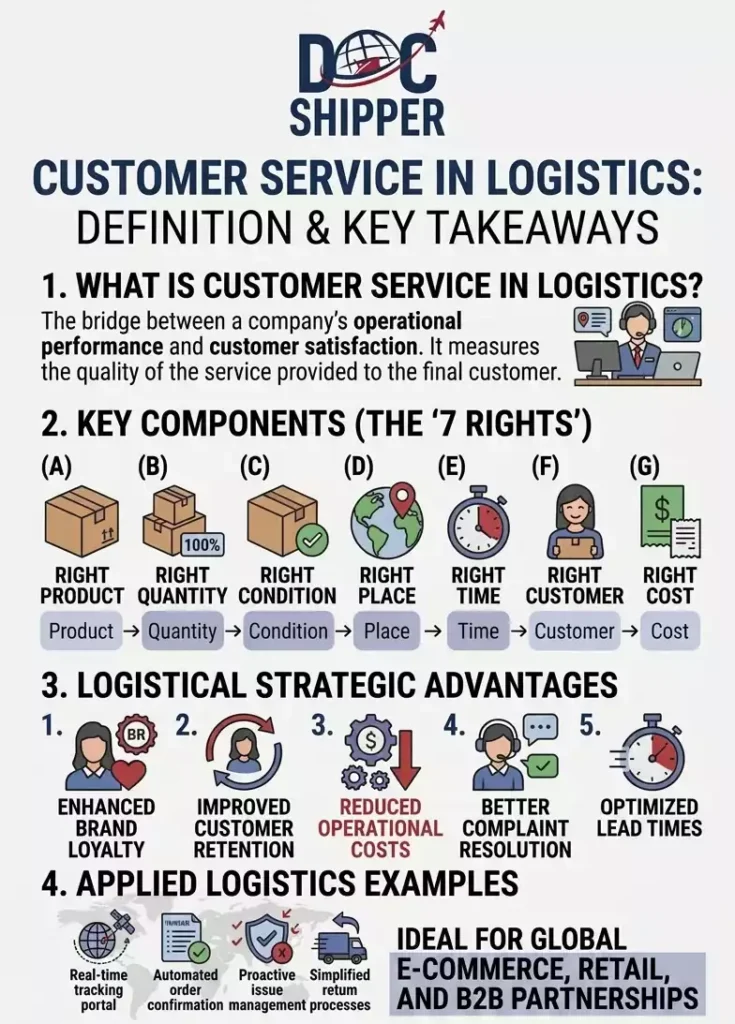
Customer service in logistics refers to the comprehensive support provided throughout the supply chain, ensuring timely communication, problem resolution, and transparency from order placement to final delivery. It encompasses shipment tracking, customs clearance assistance, documentation management, and proactive issue handling to guarantee client satisfaction and operational efficiency.
Introduction
International shipments often fail not due to logistical errors, but because of poor communication. A delayed response can transform a minor customs hold into a costly storage penalty.
Customer service represents the critical interface between complex logistics operations and client expectations. In import/export, where regulations, carriers, and time zones intersect, responsive support determines success.
- Proactive communication: Updates before clients ask, preventing anxiety and delays
- Multi-channel accessibility: Email, phone, messaging platforms for instant problem-solving
- Technical expertise: Staff understanding Incoterms, HS codes, and customs procedures
- Crisis management: Rapid response protocols for shipment disruptions or documentation errors
- Post-delivery follow-up: Ensuring complete satisfaction and identifying improvement areas
Customer Service Expertise & Strategic Importance
Effective logistics customer service operates on three fundamental pillars: transparency, responsiveness, and expertise. These elements transform transactional relationships into strategic partnerships.
Transparency means providing real-time shipment visibility. Clients receive automated notifications at each milestone: cargo pickup, port arrival, customs clearance, and final delivery. This eliminates uncertainty and allows businesses to plan inventory accurately.
Responsiveness requires dedicated account managers who understand client-specific needs. When a customs authority requests additional documentation at 4 PM, a 24-hour response window isn’t acceptable. At DocShipper, our teams respond within two hours during business days, preventing costly demurrage charges.
Expertise distinguishes basic freight forwarding from comprehensive logistics support. Customer service representatives must interpret complex regulations. For instance, explaining why a shipment to the EU requires EORI registration or how Brexit altered VAT procedures demonstrates value beyond simple cargo movement.
The European Commission’s logistics performance indicators emphasize customer service quality as a competitive differentiator. According to EU transport policy frameworks, companies with superior client communication report 30% higher retention rates.
Omnichannel support has become essential. Modern logistics clients expect assistance via email, phone, WhatsApp, and client portals. Integration across these channels ensures no query falls through communication gaps, particularly critical during customs inspections or port congestion.
Concrete Examples & Performance Data
Measuring customer service effectiveness requires concrete metrics. Industry benchmarks provide clarity on performance standards and improvement areas.
| Service Metric | Industry Standard | Excellence Benchmark |
|---|---|---|
| First Response Time | 4-6 hours | Under 2 hours |
| Issue Resolution Rate | 75-80% | 92%+ |
| Shipment Tracking Updates | Every 48 hours | Real-time + milestones |
| Customer Satisfaction Score | 3.8/5 | 4.5/5+ |
| Documentation Error Rate | 5-8% | Below 2% |
Use Case: Electronics Importer Crisis Management
A French electronics retailer faced a critical situation when 500 smartphones from China arrived at Le Havre port with incomplete CE certification documentation. Standard processing would have caused a 10-day delay during peak sales season.
DocShipper’s customer service team intervened immediately. Within three hours, we coordinated with the Chinese supplier to obtain corrected certificates, liaised with French customs authorities to explain the documentation gap, and arranged expedited clearance. The shipment cleared in 36 hours instead of the projected 10 days, saving the client €15,000 in storage fees and preventing stockouts.
Data-Driven Insights:
- 67% of logistics disputes stem from communication failures rather than operational errors
- Proactive notifications reduce client inquiry volume by 40%, freeing resources for complex issues
- Multilingual support increases client satisfaction by 28% in cross-border operations
- Dedicated account managers improve repeat business rates by 35% compared to generic service desks
- Post-delivery surveys identify process improvements, reducing future error rates by 18%
Conclusion
Customer service excellence in logistics directly impacts supply chain reliability and business profitability. Transparent communication, rapid problem-solving, and regulatory expertise separate competent freight forwarders from strategic partners.
Need support navigating international logistics complexities? Contact DocShipper for personalized assistance tailored to your supply chain requirements.
📚 Quiz
Customer Service in Logistics
Q1 — What does customer service in logistics primarily refer to?
Q2 — According to industry data, what is the most common root cause of logistics disputes?
Q3 — A shipment arrives at port with incomplete customs documentation during peak season. What is the correct customer service approach?
🎯 Your Result
📞 Free Quote in 24hFAQ | Customer Service in Logistics: Definition, Best Practices & Concrete Examples
Superior service combines proactive communication, regulatory expertise, and rapid issue resolution. Basic support reacts to problems; excellent service anticipates them through tracking alerts and documentation verification before issues arise.
Industry best practice dictates responses within 2-4 hours for urgent matters during business hours. Critical issues like customs holds require immediate acknowledgment within 30 minutes, followed by action plans within two hours.
Global supply chains operate across time zones. A customs issue in Shanghai at 9 AM occurs at 2 AM in Paris. Round-the-clock support prevents 8-12 hour response delays that compound into costly shipment holds.
Comprehensive updates include current location, estimated arrival times, customs clearance status, carrier details, and any exceptions. Proactive alerts about potential delays allow clients to adjust inventory planning accordingly.
Effective teams immediately identify missing or incorrect documents, contact suppliers for corrections, liaise with customs authorities to explain situations, and arrange expedited processing when possible. Speed minimizes demurrage and storage costs.
Absolutely. Understanding whether a shipment is FOB, CIF, or DDP determines responsibility for costs, insurance, and customs clearance. Expert customer service explains these obligations and ensures compliance with agreed terms.
When cargo damage or loss occurs, customer service coordinates documentation collection, liaises with insurance providers, and expedites claim processing. Proper support can reduce claim resolution time from months to weeks.
Multilingual teams or professional translation services ensure accurate communication. Misunderstandings about shipment instructions or customs requirements can cause expensive delays, making language capability essential for international operations.
Key performance indicators include first response time under two hours, issue resolution rates above 90%, customer satisfaction scores of 4.5/5 or higher, and documentation accuracy exceeding 98%. These metrics reflect operational excellence.
Dedicated managers develop deep understanding of client-specific requirements, industry nuances, and preferred communication styles. This personalized approach reduces errors, accelerates problem-solving, and builds long-term partnerships beyond transactional relationships.
Expert teams monitor regulatory updates from customs authorities, trade organizations, and government agencies. They proactively inform clients about new requirements—such as CBAM declarations or updated HS code classifications—preventing non-compliance penalties.
Transparent customer service communicates anticipated delays, port congestion, and carrier capacity constraints weeks in advance. This allows businesses to adjust order timing, explore alternative routes, or arrange expedited services before bottlenecks occur.
Need Help with
Logistics or Sourcing ?
First, we secure the right products from the right suppliers at the right price by managing the sourcing process from start to finish. Then, we simplify your shipping experience - from pickup to final delivery - ensuring any product, anywhere, is delivered at highly competitive prices.


Fill the Form
Prefer email? Send us your inquiry, and we’ll get back to you as soon as possible.
Contact us




