


In short ⚡
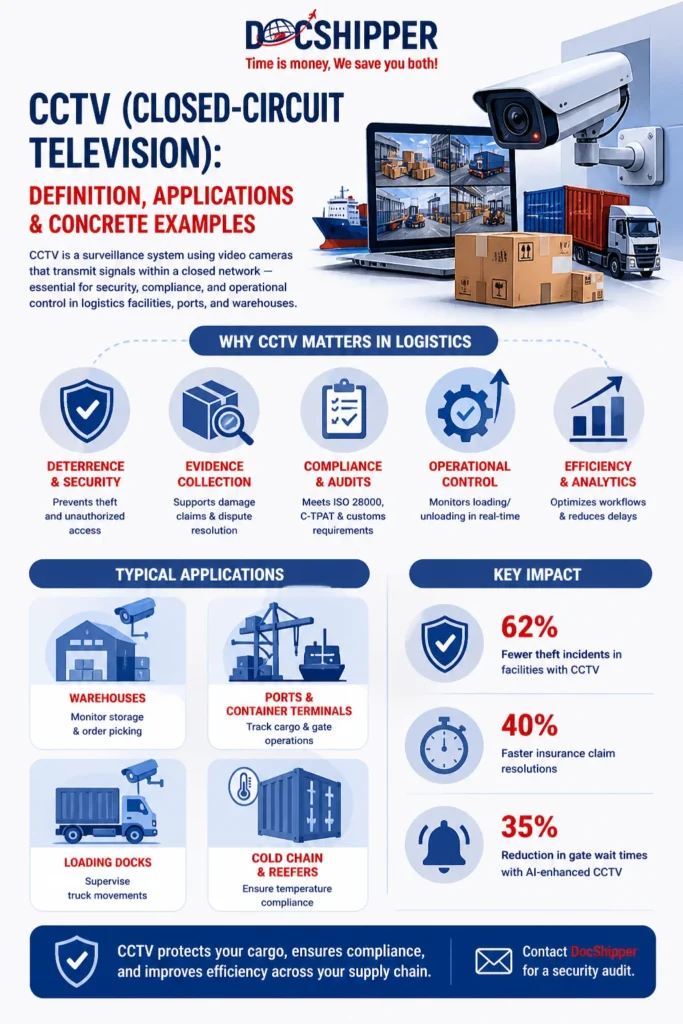
CCTV (Closed-Circuit Television) is a surveillance system using video cameras to transmit signals to specific monitors or recording devices within a restricted network. Unlike broadcast television, CCTV footage is not publicly distributed but monitored for security, operational control, and compliance purposes in logistics facilities, ports, and warehouses.Introduction
Many importers underestimate how critical video surveillance is in protecting high-value cargo. A single unmonitored blind spot in a warehouse can lead to theft, contamination claims, or insurance disputes that halt entire shipments.
In international logistics, CCTV systems serve as both a deterrent and a documentation tool. They provide verifiable evidence during customs inspections, cargo damage investigations, and security audits required by ISO 28000 or C-TPAT certifications.
- Real-time monitoring of loading/unloading operations
- Forensic evidence for cargo damage or theft claims
- Compliance verification for security-certified facilities
- Operational efficiency through workflow analysis
- Liability protection in case of disputes with carriers or clients
Technical Implementation & Regulatory Framework
Modern CCTV systems in logistics environments integrate IP-based cameras with cloud storage and AI-powered analytics. These systems automatically detect anomalies like unauthorized access, prolonged cargo dwell time, or forklift collisions.
The resolution standard for logistics CCTV typically ranges from 2MP to 8MP, with night vision capabilities essential for 24/7 port operations. Storage retention periods vary by jurisdiction but generally follow a 30 to 90-day minimum as mandated by customs authorities in the EU and US.
Data protection regulations like GDPR in Europe impose strict rules on CCTV usage. Facilities must display clear signage, limit access to footage, and ensure recordings are not retained beyond necessary periods. The European GDPR framework requires explicit consent for facial recognition features.
For AEO (Authorized Economic Operator) certification, customs administrations require comprehensive CCTV coverage of entry/exit points, storage zones, and loading docks. At DocShipper, we audit warehouse CCTV systems to ensure they meet these certification standards before onboarding new storage partners.
Advanced systems now include thermal imaging for reefer container monitoring, license plate recognition (LPR) for truck tracking, and motion-triggered alerts that reduce false alarms by 80% compared to continuous recording.
Concrete Applications & Industry Data
A 2023 survey by the International Association of Ports and Harbors found that facilities with comprehensive CCTV systems experienced 62% fewer theft incidents and 40% faster insurance claim resolutions compared to non-monitored sites.
| Facility Type | Typical Camera Count | Storage Retention | Primary Use Case |
|---|---|---|---|
| Bonded Warehouse (5,000 m²) | 15–25 cameras | 60 days | Customs compliance & theft prevention |
| Container Terminal | 200+ cameras | 90 days | Gate operations & cargo tracking |
| Air Cargo Hub | 50–80 cameras | 30 days | Security screening & damage documentation |
| Cross-Docking Facility | 10–20 cameras | 45 days | Workflow optimization & liability protection |
Case Study: A European electronics importer faced a €50,000 claim for alleged warehouse damage. CCTV footage proved the goods arrived pre-damaged, shifting liability to the ocean carrier. The case was resolved in 14 days instead of the typical 6-month dispute process.
In the pharmaceutical sector, temperature-excursion monitoring via thermal CCTV has become mandatory for GDP (Good Distribution Practice) compliance. Cameras detect when reefer units malfunction, triggering immediate alerts to prevent spoilage of temperature-sensitive cargo.
Port authorities in Rotterdam and Singapore now use AI-enhanced CCTV to predict congestion patterns. By analyzing truck movement data, they reduce average gate wait times by 35%, directly improving supply chain velocity.
Conclusion
CCTV systems have evolved from passive security tools to strategic assets in logistics operations. They ensure regulatory compliance, protect cargo integrity, and provide actionable data for operational improvements.
Need guidance on CCTV requirements for your warehousing or customs-bonded facilities? Contact DocShipper for a comprehensive security audit and compliance assessment.
📚 Quizz
Test Your Knowledge: CCTV in Logistics
Q1 — What best defines CCTV (Closed-Circuit Television) in a logistics context?
Q2 — Under GDPR regulations, which of the following is a requirement for CCTV usage in European logistics facilities?
Q3 — A European electronics importer faces a €50,000 claim for alleged warehouse damage. How does CCTV footage most directly help resolve this dispute?
🎯 Your Result
📞 Free Quote in 24hFAQ | CCTV (Closed-Circuit Television): Definition, Applications & Concrete Examples
Need Help with
Logistics or Sourcing ?
First, we secure the right products from the right suppliers at the right price by managing the sourcing process from start to finish. Then, we simplify your shipping experience - from pickup to final delivery - ensuring any product, anywhere, is delivered at highly competitive prices.


Fill the Form
Prefer email? Send us your inquiry, and we’ll get back to you as soon as possible.
Contact us




