


In short ⚡
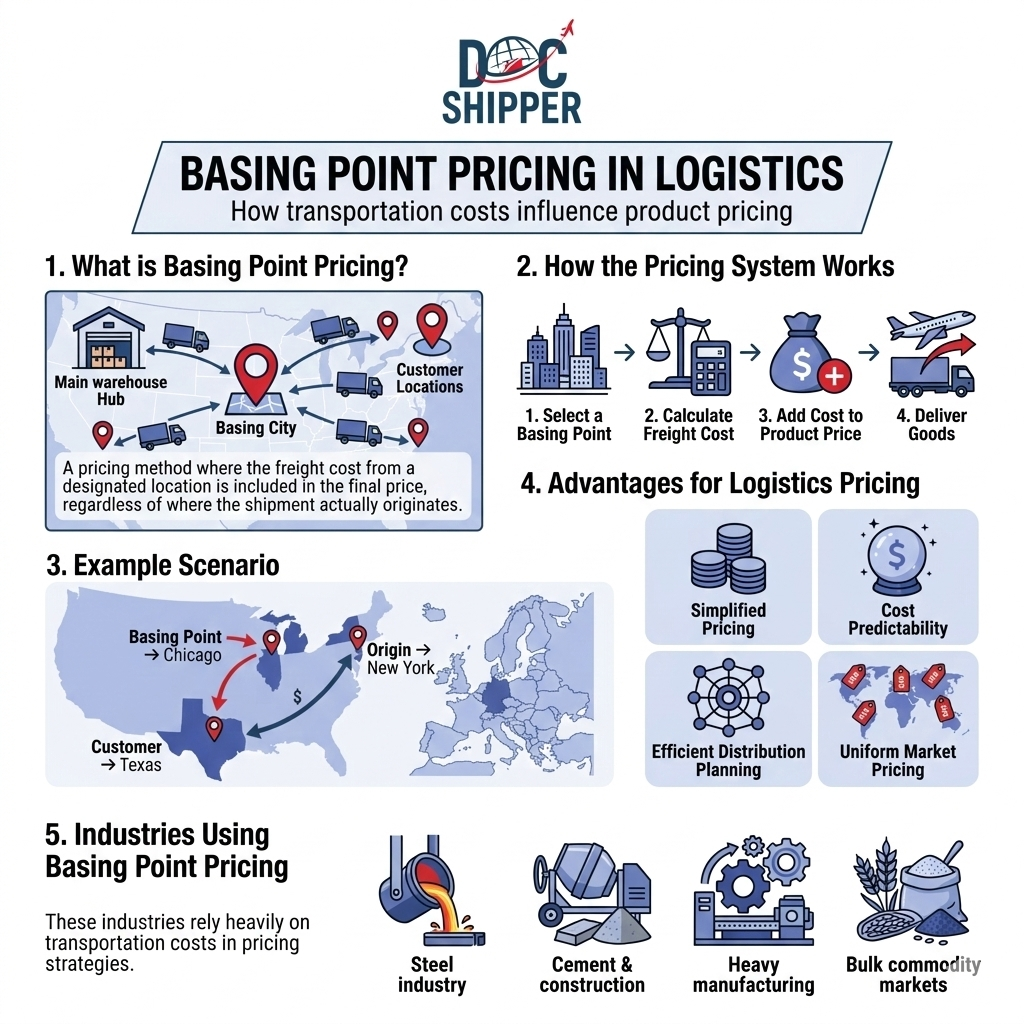
Basing-point pricing is a geographic pricing strategy where freight costs are calculated from a predetermined location (basing point) rather than the actual shipping origin. This system standardizes delivered prices across regions, regardless of where goods physically originate, creating uniform pricing structures that impact competitive dynamics in international trade.Introduction
Many importers discover unexpected freight charges when their supplier calculates shipping from a city where production never occurred. This confusion stems from basing-point pricing, a practice that fundamentally reshapes how transportation costs are determined in global logistics.
In international trade, understanding this pricing mechanism is critical because it affects quotation accuracy, competitive positioning, and landed cost calculations. Unlike FOB or CIF terms that reference actual shipment locations, basing-point systems introduce artificial geographic references that can either benefit or disadvantage buyers depending on their location relative to the designated point.
- Standardized pricing: All buyers pay freight from the same reference point
- Phantom freight: Charges for distance not actually traveled when production is closer
- Freight absorption: Sellers cover excess costs when production is farther than the basing point
- Market control: Dominant producers use it to maintain uniform delivered prices
- Regulatory scrutiny: Some jurisdictions view it as potentially anti-competitive
Mechanisms & Strategic Implications
The basing-point system operates by designating one or multiple geographic locations as pricing references. When a seller quotes a delivered price, they calculate freight from this basing point regardless of where goods actually ship from. This creates two distinct scenarios that importers must recognize.
When the actual production facility sits closer to the buyer than the basing point, the buyer pays phantom freight—charges for transportation that never occurs. Conversely, when production is farther from the buyer than the basing point, the seller absorbs the difference through freight absorption, effectively subsidizing distant customers to maintain market share.
Single basing-point systems designate one location (often an industry hub) as the universal reference. The steel industry historically used Pittsburgh as a basing point, meaning all U.S. steel buyers paid freight calculated from Pittsburgh regardless of mill location. Multiple basing-point systems allow sellers to choose from several designated points, typically selecting whichever yields the most competitive delivered price.
The legal framework surrounding this practice varies significantly. The U.S. Federal Trade Commission has challenged certain applications as violations of antitrust law, particularly when industry-wide adoption eliminates price competition. The European Union similarly scrutinizes these arrangements under competition regulations, though enforcement depends on market dominance and consumer impact.
From a strategic perspective, delivered pricing uniformity allows producers to compete in distant markets without undercutting local pricing. However, it also means buyers near production centers subsidize those farther away. At DocShipper, we analyze basing-point structures during sourcing negotiations to identify opportunities where alternative suppliers using actual-origin pricing deliver better total landed costs.
Concrete Examples & Comparative Data
Consider a European importer purchasing cement from three potential suppliers. The basing point is designated as Rotterdam, though actual production occurs in Hamburg, Rotterdam, and Marseille.
| Production Location | Buyer Location | Actual Distance | Basing-Point Distance | Freight Charged | Impact |
|---|---|---|---|---|---|
| Hamburg | Amsterdam | 350 km | Rotterdam: 200 km | €120 (Rotterdam rate) | Freight absorption: -€90 |
| Rotterdam | Amsterdam | 200 km | Rotterdam: 200 km | €120 | Actual cost |
| Marseille | Amsterdam | 1,200 km | Rotterdam: 200 km | €120 | Phantom freight: +€480 |
This scenario demonstrates how geographic positioning relative to the basing point creates pricing distortions. The Amsterdam buyer receives identical quotes despite vastly different actual transportation requirements. The Marseille supplier benefits most, collecting €120 while incurring minimal actual freight costs.
Use Case: A U.S. electronics manufacturer sources aluminum extrusions with Chicago as the industry basing point. Their Tennessee facility receives quotes calculated from Chicago (750 miles), though the actual supplier operates in Atlanta (250 miles). The delivered price includes $180/ton phantom freight. By negotiating ex-works terms and arranging direct transportation, the manufacturer reduces landed costs by 12%, demonstrating how basing-point awareness drives procurement optimization.
Industry data reveals significant variations in basing-point adoption:
- Bulk commodities: 68% use some form of basing-point pricing (cement, steel, chemicals)
- Manufactured goods: 23% adoption rate, primarily in standardized industrial components
- Average phantom freight: Ranges from 8% to 35% of total delivered cost in affected transactions
- Freight absorption threshold: Suppliers typically absorb up to 15% excess freight to maintain market access
- Price transparency impact: Markets with mandatory origin disclosure show 40% lower basing-point usage
DocShipper Platform
Optimize Your Global Logistics with Cutting-Edge Solutions
Enhance efficiency, cut costs, and gain 24/7 visibility  over your entire supply chain.
- Cut your shipping costs and maximize your margins
- Manage sourcing, freight, & customs on one platform
- Get real-time tracking and analytics
Conclusion
Basing-point pricing fundamentally alters how freight costs integrate into international procurement decisions, creating both hidden costs and strategic opportunities depending on buyer-supplier geography. Recognizing these mechanisms enables importers to negotiate more effectively and select sourcing partners based on true total landed costs rather than artificially standardized quotes.
Need assistance analyzing pricing structures in your supply chain? Contact DocShipper for expert guidance on optimizing your international logistics strategy.
📚 Quiz
Basing-Point Pricing
Q1 — What does basing-point pricing use as the reference for calculating freight costs?
Q2 — A buyer is located closer to the production facility than to the designated basing point. What does this buyer experience?
Q3 — A U.S. manufacturer suspects their supplier is using basing-point pricing. Which action is most effective to eliminate its impact on their landed cost?
🎯 Your Result
📞 Free Quote in 24hFAQ | Basing-Point Pricing: Definition, Calculation & Concrete Examples
It standardizes delivered prices across geographic markets, allowing sellers to maintain uniform pricing regardless of actual production location, which simplifies quoting and reduces regional price competition.
Legality depends on jurisdiction and implementation. While not inherently illegal, antitrust authorities may challenge industry-wide adoption if it substantially reduces competition or creates artificial price floors.
Phantom freight adds charges for transportation distance not actually traveled, increasing your delivered price. The impact ranges from 5% to 30% depending on your location relative to the basing point versus actual origin.
Yes, requesting ex-works or FOB terms with actual origin disclosure removes basing-point calculations. You then arrange transportation directly, potentially reducing costs if you're geographically closer to production than the designated basing point.
Heavy industries with standardized products—cement, steel, chemicals, lumber, and aggregates—historically rely on basing-point systems due to high transportation costs and regional production concentration.
Freight absorption occurs when the seller's actual shipping cost exceeds the basing-point calculation. The supplier absorbs this difference to maintain competitive delivered pricing in distant markets.
Sellers designate several reference locations and calculate freight from whichever basing point yields the most competitive delivered price for each buyer, providing more flexibility than single-point systems.
Yes, it primarily applies to delivered pricing terms (DDP, DAP). Choosing ex-works or FOB terms eliminates basing-point calculations, as buyers arrange transportation independently from actual origin.
Request detailed freight breakdowns showing origin location and distance calculations. Compare quotes from suppliers in different locations—identical freight charges despite varying distances indicate basing-point pricing.
Zone pricing divides markets into regions with uniform rates, FOB pricing charges from actual origin, and delivered pricing with transparent actual-cost freight both offer alternatives with different competitive implications.
Yes, buyers located farther from production than the basing point benefit from freight absorption, receiving subsidized transportation that makes distant suppliers more competitive than actual geography would suggest.
Customs authorities value goods based on transaction value, which includes freight. Phantom freight inflates declared values, potentially increasing duty payments. Accurate origin documentation helps clarify actual versus basing-point costs.
Need Help with Logistics or Sourcing ?
First, we secure the right products from the right suppliers at the right price by managing the sourcing process from start to finish. Then, we simplify your shipping experience - from pickup to final delivery - ensuring any product, anywhere, is delivered at highly competitive prices.


Fill the Form
Prefer email? Send us your inquiry, and we’ll get back to you as soon as possible.
Contact us


