


In short ⚡
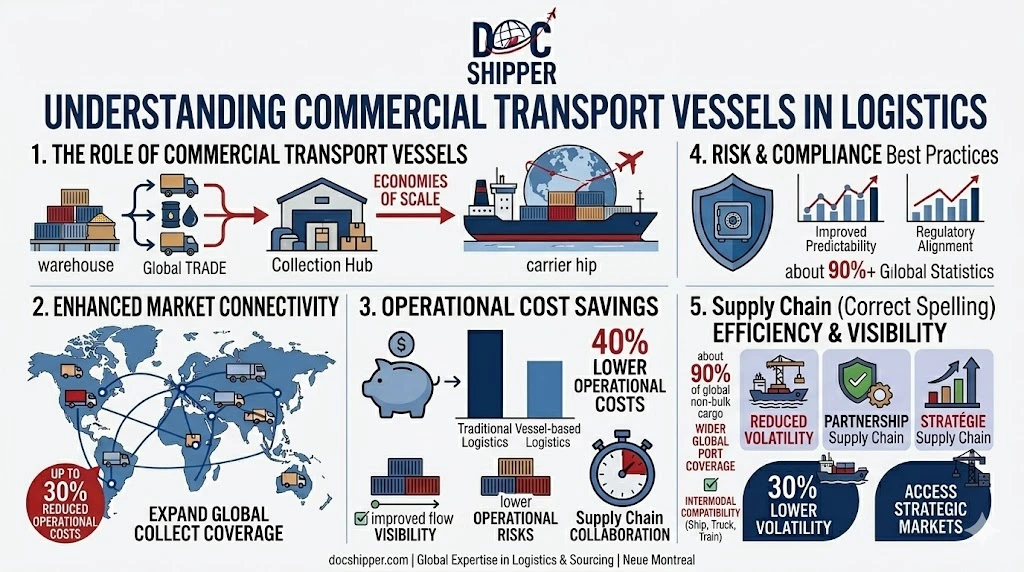
A commercial transport vessel is a ship designed and operated for the carriage of goods or passengers for profit. These vessels form the backbone of international trade, transporting approximately 90% of global cargo across maritime routes, including container ships, bulk carriers, tankers, and ro-ro vessels under international maritime regulations.
Introduction
Many importers confuse commercial transport vessels with private or military ships. This distinction matters because only certified commercial vessels can legally transport goods under international trade agreements. Understanding vessel classifications directly impacts shipping costs, transit times, and customs compliance.
In global logistics, commercial transport vessels represent the most cost-effective mode for moving large volumes internationally. They operate under strict regulations from the International Maritime Organization (IMO) and flag state authorities.
Key characteristics of commercial transport vessels include:
- Commercial registration under a national flag with proper documentation
- Profit-driven operation through freight contracts or charter agreements
- Cargo or passenger capacity designed for commercial transport purposes
- International compliance with SOLAS, MARPOL, and customs conventions
- Insurance coverage including P&I (Protection and Indemnity) policies
Technical Classification & Regulatory Framework
Commercial transport vessels operate under a complex regulatory framework governed by international conventions. The International Convention for the Safety of Life at Sea (SOLAS) establishes minimum safety standards, while the International Convention for the Prevention of Pollution from Ships (MARPOL) regulates environmental compliance.
Vessels are classified by deadweight tonnage (DWT), which measures cargo-carrying capacity in metric tons. A Panamax container ship typically carries 65,000-80,000 DWT, while Ultra Large Container Vessels (ULCV) exceed 200,000 DWT. This classification determines route capabilities, port accessibility, and operational costs.
The flag state jurisdiction determines which national laws apply to a vessel. Major registries include Panama, Liberia, and Marshall Islands, offering different regulatory frameworks and tax structures. Shippers must verify a vessel’s flag documentation to ensure legal compliance for their cargo.
Certificate requirements for commercial vessels include the International Tonnage Certificate, Safety Equipment Certificate, and Load Line Certificate. At DocShipper, we systematically verify these certifications before booking cargo to prevent customs delays or rejection at destination ports.
The charter party agreement defines the legal relationship between vessel owners and cargo shippers. Time charters, voyage charters, and bareboat charters each carry different liability structures and cost implications. Understanding these contracts prevents disputes over demurrage charges or cargo damage claims.
For authoritative regulatory information, consult the International Maritime Organization or your national maritime authority.
Vessel Types & Operational Data
Commercial transport vessels divide into specialized categories based on cargo type and handling requirements. Each vessel type operates with distinct cost structures, loading procedures, and transit characteristics that directly impact logistics planning.
| Vessel Type | Typical Capacity | Primary Cargo | Average Speed | Loading Method |
|---|---|---|---|---|
| Container Ship | 5,000-24,000 TEU | Containerized goods | 20-25 knots | Gantry cranes |
| Bulk Carrier | 30,000-200,000 DWT | Grains, coal, ore | 12-15 knots | Conveyor/grab systems |
| Tanker | 50,000-320,000 DWT | Crude oil, chemicals | 14-16 knots | Pumping systems |
| Ro-Ro Vessel | 2,000-8,000 vehicles | Cars, machinery | 18-22 knots | Drive on/drive off |
| General Cargo Ship | 5,000-15,000 DWT | Mixed breakbulk | 12-18 knots | Ship’s cranes |
Use Case: Container Shipping from Shanghai to Rotterdam
A 14,000 TEU container vessel operates on this route with the following parameters: Transit time of 28-32 days, fuel consumption of 150-200 tons per day, and slot costs ranging from $800-$2,500 per TEU depending on market conditions. The vessel calls at Singapore and Suez Canal, requiring pilotage fees and canal transit charges that add approximately $450,000 to voyage costs.
Operational cost breakdown for a typical voyage includes bunker fuel (40-50%), port charges (15-20%), crew wages (10-15%), maintenance (8-12%), and insurance (5-8%). Understanding these components helps shippers negotiate better freight rates and anticipate total landed costs.
Environmental compliance increasingly impacts vessel selection. IMO 2020 regulations mandate 0.5% sulfur content in marine fuel, forcing operators to install scrubbers or use low-sulfur fuel. These compliance costs translate to higher freight rates, typically $50-150 per container on long-haul routes.
Vessel tracking technology enables real-time cargo visibility through AIS (Automatic Identification System) transponders. Shippers can monitor vessel position, speed, and estimated arrival times through platforms like MarineTraffic or VesselFinder, improving supply chain predictability.
Conclusion
Commercial transport vessels represent the essential infrastructure of international trade, with vessel type selection directly impacting cost, transit time, and cargo security. Understanding vessel classifications, regulatory requirements, and operational characteristics enables informed logistics decisions.
Need expert guidance on vessel selection or freight optimization? Contact DocShipper for customized international shipping solutions.
📚 Quizz
Test Your Knowledge: Commercial Transport Vessel
Q1 — What is the defining characteristic of a commercial transport vessel?
Q2 — A shipper assumes that any large ship can legally transport their goods under international trade agreements. Is this correct?
Q3 — A logistics manager needs to ship 3,000 vehicles from Japan to Germany. Which vessel type is the most appropriate choice?
🎯 Your Result
📞 Free Quote in 24hFAQ | Commercial Transport Vessel: Definition, Types & Practical Examples
Commercial vessels operate for profit under commercial registration, carrying cargo or passengers with proper licenses and insurance. Private yachts serve recreational purposes without commercial cargo operations or freight contracts.
Check the vessel's IMO number through maritime databases like Equasis or contact the flag state registry. Verify SOLAS certificates, tonnage documentation, and current classification society status before booking cargo.
TEU (Twenty-foot Equivalent Unit) measures container capacity, while DWT (Deadweight Tonnage) measures total weight-carrying capacity including cargo, fuel, and provisions. Container ships use TEU; bulk carriers use DWT.
Yes, through a process called reflagging. Vessel owners can transfer registration to different flag states for tax, regulatory, or operational advantages, though this requires new certification and documentation.
Voyage charters hire vessels for single trips, time charters lease vessels for specific periods, and bareboat charters transfer operational control to charterers. Each type allocates costs and responsibilities differently between parties.
Vessels over 15 years typically face higher maintenance costs, slower speeds, and increased breakdown risk. Many ports and charterers prefer vessels under 10 years for reliability and environmental compliance.
Organizations like Lloyd's Register, DNV, and ABS inspect and certify vessels meet safety and construction standards. Their approval is mandatory for insurance coverage and port entry worldwide.
Bunker fuel represents 40-50% of voyage costs. Carriers adjust freight rates through Bunker Adjustment Factors (BAF) to offset fuel price fluctuations, typically updating these surcharges monthly or quarterly.
Port state control inspections can detain vessels for safety or environmental violations. This causes cargo delays, demurrage charges, and potential transshipment costs until deficiencies are corrected and clearance granted.
Yes, based on canal and port infrastructure. Panamax vessels fit Panama Canal locks (294m length), while Suezmax vessels maximize Suez Canal draft. Port depth and berth length also limit vessel size.
Carrier alliances like 2M, Ocean Alliance, and THE Alliance share vessel capacity on major routes, optimizing schedules and port calls. This affects service frequency, transit times, and available routing options.
P&I (Protection and Indemnity) insurance covers third-party liabilities including cargo damage, pollution, and crew injuries. Hull and machinery insurance covers vessel physical damage. Both are typically required by flag states and charterers.
Need Help with
Logistics or Sourcing ?
First, we secure the right products from the right suppliers at the right price by managing the sourcing process from start to finish. Then, we simplify your shipping experience - from pickup to final delivery - ensuring any product, anywhere, is delivered at highly competitive prices.


Fill the Form
Prefer email? Send us your inquiry, and we’ll get back to you as soon as possible.
Contact us




