


In short ⚡
A distribution channel is the pathway through which goods or services move from manufacturer to end consumer. It encompasses intermediaries such as wholesalers, retailers, distributors, and logistics providers who facilitate product flow, manage inventory, and ensure market accessibility across domestic and international markets.
Introduction
Many businesses struggle to determine the optimal route for getting products into customers’ hands. Should you sell directly online, partner with distributors, or leverage retail networks? This decision directly impacts profit margins, market reach, and customer satisfaction.
In international trade, distribution channels become even more complex. They determine how efficiently goods cross borders, clear customs, and reach diverse markets. Choosing the right channel affects everything from delivery speed to regulatory compliance.
Key characteristics of effective distribution channels include:
- Market coverage: Ability to reach target customer segments geographically
- Cost efficiency: Balance between distribution expenses and revenue generation
- Control level: Degree of influence over pricing, branding, and customer experience
- Speed to market: Time required from production to final sale
- Scalability: Capacity to expand without proportional cost increases
In-Depth Analysis & Strategic Implications
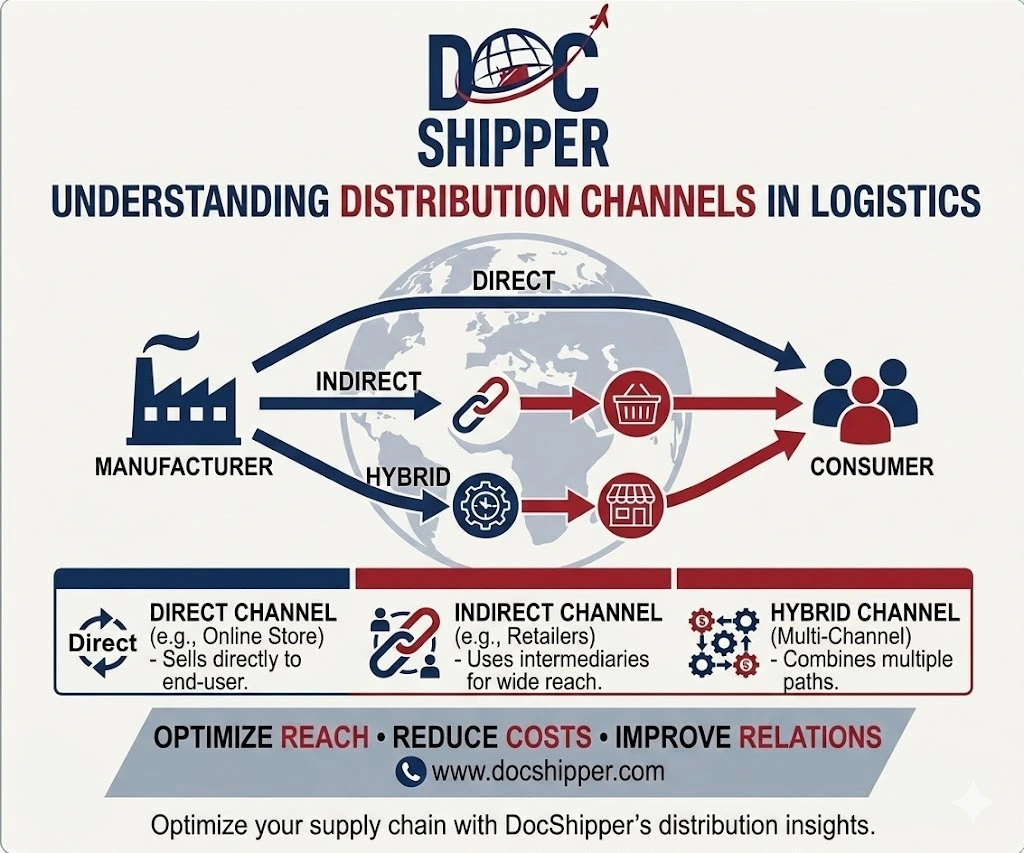
Distribution channels operate across multiple levels, each adding value while increasing product cost. Direct channels eliminate intermediaries, allowing manufacturers to sell straight to consumers through e-commerce platforms or company-owned stores. This maximizes profit margins and brand control but requires significant investment in logistics infrastructure.
Indirect channels involve one or more intermediaries. Single-tier channels use retailers who purchase from manufacturers and sell to consumers. Multi-tier systems add wholesalers or distributors who aggregate products before retail distribution. Each additional layer reduces manufacturer margin but expands market penetration.
The channel length decision depends on product characteristics. Perishable goods require short channels for rapid delivery. Complex technical products benefit from specialized distributors who provide installation and support. Commodity items often use long channels to achieve mass distribution at minimal per-unit cost.
Hybrid distribution strategies combine multiple channels simultaneously. A manufacturer might sell premium products directly online while using retail partners for standard offerings. This approach maximizes coverage but risks channel conflict when different routes compete for the same customers.
Legal and regulatory frameworks significantly impact channel design. The European Union’s distribution regulations prohibit certain exclusive arrangements that restrict competition. Import/export channels must comply with customs procedures, product certifications, and local business licensing requirements.
At DocShipper, we analyze your product portfolio and target markets to recommend optimal channel configurations, ensuring regulatory compliance while maximizing market penetration efficiency.
Concrete Examples & Data-Driven Insights
Understanding distribution channels becomes clearer through real-world comparisons and quantified scenarios. Different industries demonstrate how channel selection directly impacts business outcomes.
| Channel Type | Intermediary Levels | Margin Impact | Best For | Example |
|---|---|---|---|---|
| Direct | 0 (Manufacturer → Consumer) | 60-70% gross margin | Premium/niche products | Tesla vehicles, Apple.com |
| Single-Tier | 1 (Manufacturer → Retailer → Consumer) | 35-45% gross margin | Consumer electronics | Samsung via Best Buy |
| Two-Tier | 2 (Manufacturer → Distributor → Retailer → Consumer) | 25-35% gross margin | FMCG/mass market | Coca-Cola distribution |
| Three-Tier | 3+ (Adds wholesaler/agent layers) | 15-25% gross margin | International commodities | Agricultural exports |
| Hybrid | Variable (multiple simultaneous) | 30-60% blended margin | Omnichannel brands | Nike (own stores + retailers + online) |
Case Study: Electronics Manufacturer Entering European Market
A Chinese smartphone producer evaluated three distribution strategies for EU expansion:
- Option A (Direct): E-commerce platform with EU warehouse. Initial investment: €800,000. Projected margin: 58%. Market reach: 15% within 18 months.
- Option B (Distributor Partnership): Exclusive agreement with pan-European distributor. Initial investment: €150,000. Projected margin: 32%. Market reach: 45% within 12 months.
- Option C (Hybrid): Direct online sales + selective retail partnerships. Initial investment: €450,000. Projected margin: 42%. Market reach: 35% within 15 months.
The company selected Option C, balancing investment capacity with market penetration goals while maintaining brand control in premium segments.
Key Performance Indicators by Channel Type:
- Direct channels average 18-24 days from order to delivery internationally
- Distributor networks reduce time-to-market by 40% through pre-positioned inventory
- Multi-tier channels increase total logistics costs by 12-18% but expand geographic coverage by 300%
- Hybrid strategies show 23% higher customer satisfaction scores due to purchase flexibility
- E-commerce direct channels experience 8-12% return rates versus 3-5% for physical retail
Conclusion
Distribution channel selection fundamentally shapes business scalability, profitability, and competitive positioning. The optimal strategy balances control, cost, and market coverage based on product characteristics and target market dynamics.
Need expert guidance on designing your international distribution strategy? Contact DocShipper for customized logistics solutions that align channel design with your business objectives.
📚 Quiz
Test Your Knowledge: Distribution Channel
Q1 — What is a distribution channel?
Q2 — A manufacturer wants maximum profit margin and full brand control. Which channel type best fits this goal — and what is a key trade-off?
Q3 — A Chinese electronics brand is entering the EU market. They want broad market reach quickly (within 12 months) while keeping initial investment low. Which distribution strategy is most appropriate?
🎯 Your Result
📞 Free Quote in 24hFAQ | Distribution Channel: Definition, Types & Concrete Examples
A distribution channel focuses specifically on the path from producer to consumer, while supply chain encompasses the entire production process including raw material sourcing, manufacturing, and post-sale services. Distribution is one component within the broader supply chain framework.
Most successful businesses employ 2-4 channels simultaneously to maximize market coverage without creating excessive complexity. The optimal number depends on product diversity, target market segmentation, and operational capacity to manage multiple routes effectively.
Primary costs include warehousing, transportation, inventory holding, intermediary margins (typically 15-40%), marketing support for channel partners, returns processing, and technology systems for order management and tracking across multiple distribution points.
Yes, but transitions require careful planning. Switching channels typically involves 6-12 month transition periods to manage existing inventory, renegotiate contracts, and avoid market disruption. Hybrid approaches allow gradual channel migration while maintaining sales continuity.
E-commerce platforms enable direct manufacturer-to-consumer sales, compressing traditional multi-tier channels. However, physical retail remains crucial for product categories requiring tactile evaluation. Most brands now integrate digital and physical channels in omnichannel strategies.
Channel conflict occurs when different distribution routes compete for the same customers, often causing pricing inconsistencies. Management strategies include territorial exclusivity agreements, differentiated product offerings per channel, and transparent pricing policies with minimum advertised price requirements.
Legality varies by jurisdiction. EU competition law permits exclusive distribution if it doesn't restrict cross-border trade or create market dominance. US antitrust law evaluates exclusivity based on market impact. Always consult legal counsel before implementing exclusive arrangements in new markets.
Customs clearance requirements influence whether to use local distributors with import licenses or establish direct import capabilities. Distributors often provide customs brokerage services, reducing manufacturer administrative burden but adding intermediary costs of 5-12% of product value.
Key metrics include cost-to-serve per channel, inventory turnover rates, order-to-delivery cycle time, customer acquisition cost by channel, return rates, market penetration percentage, and channel profitability calculated as revenue minus all associated distribution costs.
Perishable goods require short, fast channels with cold chain capabilities. High-value items benefit from controlled direct channels. Commodity products use extensive multi-tier networks. Technical products need channels providing installation and support services, often requiring specialized distributors.
Reverse distribution manages product returns, repairs, and recycling flows from consumer back to manufacturer. Effective reverse channels reduce return processing costs by 30-40% and improve customer satisfaction. This is particularly critical for e-commerce where return rates average 15-30%.
Consumer purchasing behaviors vary significantly across cultures. Asian markets often prefer personal relationships with local distributors. European consumers value established retail brands. Middle Eastern markets frequently require local partnership due to ownership regulations. Channel strategy must adapt to these regional preferences.
Need Help with
Logistics or Sourcing ?
First, we secure the right products from the right suppliers at the right price by managing the sourcing process from start to finish. Then, we simplify your shipping experience - from pickup to final delivery - ensuring any product, anywhere, is delivered at highly competitive prices.


Fill the Form
Prefer email? Send us your inquiry, and we’ll get back to you as soon as possible.
Contact us




