In short ⚡
CARM (CBSA Assessment and Revenue Management) became Canada's official customs system on October 21, 2024. Since January 1, 2026, amendments to the Customs Act make the importer of record directly liable for duties, post-accounting obligations, and penalties. Personal effects shipped through commercial freight channels fall into a regulatory grey zone — and most customs brokers now refuse these files. The key: validate your customs solution before loading.
Introduction: A Regulatory Shift That Catches Shippers Off Guard
Since October 2024, Canada has officially deployed CARM — CBSA Assessment and Revenue Management — as the reference system for customs accounting and import duty payment. What was billed as a technical modernisation has translated, on the ground, into a redistribution of responsibilities across importers, customs brokers, and logistics agents.
For individuals shipping personal effects through a commercial logistics chain, the consequences are concrete: holds at destination, unexpected storage fees, and in some cases, the inability to clear goods on time. This guide explains why the problem exists — and how to prevent it before your shipment departs.
CARM by the Numbers: Key Facts for Importers
CARM Regulatory Timeline
| Date | Event | Operational impact |
| Oct. 21, 2024 | CARM becomes the CBSA’s official system of record for customs accounting and duty payment | CCP portal mandatory; paper B3-3 forms retired |
| Oct. 23, 2024 | Memorandum D11-6-11 published — post-accounting obligations of authorized agents as IOR | New liability framework for customs brokers |
| Dec. 31, 2025 | All CARM transition measures end (CN 24-27) — no more exceptions | Full enforcement of all CARM rules |
| Jan. 1, 2026 | Customs Act s.17 amendments in force — direct importer of record liability | Brokers directly exposed to duties, corrections and penalties |
Sources: CBSA Customs Notice 25-32 · Memorandum D11-6-11
Sources: CBSA Customs Notice 25-32 · Memorandum D11-6-11
What Is CARM? Canada’s New Customs System Explained
Launched on October 21, 2024, CARM is the CBSA’s new customs management system. Through the CARM Client Portal (CCP), commercial importers must now:
- Register and obtain a BN15 (15-digit business number);
- Enrol in the RPP (Release Prior to Payment) programme for pre-payment release;
- Post financial security;
- Submit CADs (Commercial Accounting Declarations) digitally.
Since January 1, 2026, amendments to section 17 of the Customs Act regarding the importer of record are in force. The entity identified as importer at accounting is now directly and personally liable for all duties and taxes owed, plus post-accounting obligations: record-keeping, corrections, and compliance verifications.
This rule also applies to customs brokers acting as importer of record on a client’s behalf — with major commercial implications for personal effects files.
Official source: CBSA Customs Notice 25-32
DocShipper info
Did you know that one of our expat clients shipping personal effects to Canada avoided a customs hold simply by validating their file before loading the container? Our FNM team coordinates your Canadian customs clearance end-to-end: duty status, BSF186 form, licensed customs agent at destination. A well-prepared file means a smooth arrival.
The Personal Effects Problem: A Regulatory Hybrid Zone
The core difficulty is a logistical paradox. Personal effects are, by definition, non-commercial goods (casual goods in Canadian customs terminology). They belong to an individual, carry no commercial value, and qualify for simplified procedures using form BSF186 (Personal Effects Accounting Document).
But in practice, how do they arrive in Canada? Often via an ocean container (FCL or LCL/groupage), a commercial manifest and a cargo control document, or a bonded warehouse (sufferance warehouse). This is where the hybrid zone is created: the client is an individual, but the goods move through the commercial stream — subject to the documentary requirements of commercial freight, yet requiring treatment as casual goods.
Under CBSA Memorandum D17-1-3, personal effects imported under tariff items 9805, 9806, 9807, or 9829 must be declared by the importer in person at their first point of entry into Canada. If the importer is not present, an agent may act on their behalf — but only if that agent is a licensed customs broker.
Official source: CBSA Memorandum D17-1-3
Which Canadian Tariff Code Applies to Your Profile? Reference Table
The customs treatment of personal effects in Canada depends entirely on the importer’s status. The 4 specific HS codes below unlock exemptions and the BSF186 form. Other profiles pay standard duties.
| Category | Examples | Status | Action required |
| Alcohol & tobacco | Wine, spirits, cigarettes | Restricted | Limited quantities, provincial duties apply |
| Vehicles | Car, motorcycle, ATV | Separate file | Transport Canada compliance + Form 1 RVSMA |
| Food products | Meats, dairy, fresh produce | Restricted/prohibited | CBSA inspection on arrival, risk of seizure |
| Plants & seeds | Potted plants, seeds, untreated wood | Restricted | CFIA permit required |
| Firearms | Handguns, rifles, prohibited weapons | Highly restricted | Import permit mandatory (RCMP) |
| New unused items | New electronics, appliances | Taxable | Duties & taxes apply even for settlers |
Source: CBSA Memorandum D17-1-3
Restricted or Prohibited Items in a Personal Effects Shipment to Canada
Certain items can block the entire shipment if included without prior declaration or a permit. The CBSA treats them separately from standard personal effects.
| Category | Examples | Status | Action required |
| Alcohol & tobacco | Wine, spirits, cigarettes | Restricted | Limited quantities, provincial duties apply |
| Vehicles | Car, motorcycle, ATV | Separate file | Transport Canada compliance + Form 1 RVSMA |
| Food products | Meats, dairy, fresh produce | Restricted/prohibited | CBSA inspection on arrival, risk of seizure |
| Plants & seeds | Potted plants, seeds, untreated wood | Restricted | CFIA permit required |
| Firearms | Handguns, rifles, prohibited weapons | Highly restricted | Import permit mandatory (RCMP) |
| New unused items | New electronics, appliances | Taxable | Duties & taxes apply even for settlers |
Why Customs Brokers Are Increasingly Refusing Personal Effects Files
Before CARM, a broker could use their BN15 and RPP enrolment to facilitate clearance of personal effects through the commercial stream. This practice remains permitted by the CBSA (CN 25-32, para. 9). But the question is no longer legal — it is commercial and operational.
Since January 1, 2026, a broker acting as importer of record is directly liable for:
- Primary liability for all post-accounting verifications;
- Obligation to maintain records (inventories, values, tariff classifications);
- Payment of additional duties if errors are found;
- Risk of penalties if information provided by the client is insufficient or incorrect.
Personal effects files present precisely the characteristics that make this risk high: vague inventories, approximate values, potentially regulated items (alcohol, food, plants, electronics), and a client who is often unavailable when goods arrive.
Result: for many brokers and general freight forwarders, the risk-to-reward ratio is unfavourable. They are withdrawing from this segment, leaving individuals without a solution at destination.
Official source: CBSA Memorandum D11-6-11
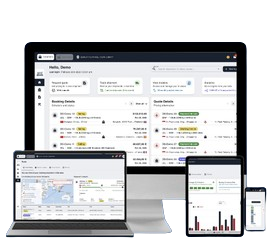
DocShipper Platform
One platform. Your entire supply chain
Sourcing, freight, customs & documents — all centralised, all visible, 24/7.
Who Is Most at Risk? The Profiles Most Affected
This issue primarily affects shipments that do not involve a specialist international mover as the main service provider:
- Expats and new residents organising their move directly with an ocean freight forwarder, without a relocation agency or specialist mover.
- International students sending boxes, furniture, or belongings from abroad by LCL groupage through a local freight forwarder.
- Returning Canadians (returning residents) using a general freight forwarder rather than a specialist mover.
- Relocation agencies organising an employee relocation without integrating Canadian customs management into the service.
- Overseas freight forwarders whose Canadian correspondent is no longer willing to handle the customs clearance for personal effects.
In all these cases the scenario is the same: the freight arrives at the Canadian port, the broker at destination refuses, and the goods enter detention at a bonded warehouse — with demurrage and storage fees accumulating fast.
How to Avoid a Customs Hold: Key Steps Before Shipping
The golden rule: do not load a container to Canada before validating your customs clearance solution at destination.
1. Identify the importer’s duty status
Customs treatment depends on the profile: new resident (settler), former resident, student, temporary resident, or beneficiary. Each status maps to different tariff codes and forms.
2. Prepare a detailed, valued inventory
The inventory must be item-by-item, with realistic and verifiable values. A vague inventory or undervalued goods are red flags for the CBSA.
3. Verify eligibility of goods
Flag any alcohol, tobacco, firearms, food, plants, or new items — these can hold up the entire shipment if undeclared or without the required permits.
4. Appoint a licensed customs agent before departure
The importer must appoint in writing a licensed customs broker to act on their behalf if goods arrive without them present. This mandate must be in place before the vessel sails.
5. Declare goods at the first point of entry
For goods to follow, a prior declaration using a signed BSF186 form at the first point of entry is mandatory. Without it, duty exemptions do not apply.
6. Confirm the clearance solution at destination
Before loading, confirm that a specialist Canadian broker or specialist mover has accepted the file and holds all the documents needed to process it. This is the most critical step.
Specialist Mover vs Freight Forwarder vs Customs Broker: Full Comparison
Three types of operator are involved in a personal effects shipment to Canada. Their ability to handle customs clearance post-CARM differs significantly.
| Criterion | Specialist mover | Freight forwarder | Customs broker |
| Ocean freight (FCL/LCL) | ✓ | ✓ | ✗ |
| BSF186 form handling | ✓ | ✗ | ◑ Rarely |
| Goods-to-follow agent mandate | ✓ | ✗ | ✓ |
| Customs clearance included | ✓ | ✗ | ✓ if accepted |
| Accepts personal effects post-CARM | Yes | Transport only | Less common |
| Clearance cost | Included in quote | Not included | $500–$1,500 USD/CAD |
| Risk of hold at destination | Low | High | Medium |
Best combination: a specialist mover who integrates a licensed customs broker at destination within their full-service offering, with document coordination from origin.
Need a Reliable Partner for Your International Move to Canada?
We handle the entire logistics and customs process: ocean freight coordination, personal effects clearance, and appointing a licensed customs broker at destination. Focus on your new life in Canada, we handle the rest.


Conclusion: A Real Constraint — and an Opportunity for Those Who Plan Ahead
CARM has not banned the shipment of personal effects to Canada via the commercial freight stream. It has made management of these files more demanding — and less accessible without a specialist operator. That is precisely where a market opportunity emerges: a segment where demand is real, supply has contracted, and clients need end-to-end support.
For shippers, the good news is that a solution exists — provided you plan ahead. A well-prepared file — correct duty status, accurate inventory, the right agent, the right forms — clears without difficulty on arrival.
Do not load your container to Canada without first confirming your customs clearance solution at destination. A hold generates demurrage and storage costs that can escalate quickly, along with a very unpleasant experience for your client.
FAQ | CARM Canada & Personal Effects
CARM primarily applies to commercial imports. Personal effects are casual goods (non-commercial) and do not require direct CARM registration. However, when they move through the commercial stream — container, groupage, bonded warehouse — they involve brokers who are subject to CARM's new liability rules, which indirectly creates obstacles for the individual shipper.
A freight forwarder handles ocean transport to the Canadian port. For customs clearance at destination, a licensed Canadian customs broker is required. Since CARM, many brokers decline personal effects files due to importer of record liability risk. Confirming the broker's acceptance before loading is essential.
The BSF186 (Personal Effects Accounting Document) is the official CBSA form for declaring personal effects imported under tariff items 9805, 9806, 9807, or 9829. It must be signed by the importer in person at the first point of entry into Canada and serves as the legal proof of importation.
Canada provides 4 specific HS tariff codes for personal effects imports:
- 9807.00.00 — Settlers' Effects: for persons relocating permanently to Canada
- 9805.00.00 — Former Residents' Effects: for Canadians returning after living abroad
- 9806.00.00 — Beneficiary's Effects: for heirs of a deceased person's belongings
- 9829.00.00 — Seasonal Residents' Effects: for seasonal residents
In all cases, form BSF186 must be signed at the first point of entry.
You must have previously appointed in writing a licensed customs broker to act on your behalf. The carrier cannot act as agent unless they are themselves a licensed broker. Without a designated agent and a pre-validated BSF186, your goods risk being detained at a bonded warehouse with accumulating demurrage fees.
It depends on your status. New residents, former residents, and certain beneficiaries can qualify for significant duty exemptions. However, some items remain taxable regardless: alcohol, tobacco, vehicles, and new unused goods. Prior validation with a specialist is strongly recommended.
The importer of record is the entity officially identified as the importer on the customs declaration. Since January 1, 2026, this entity bears direct liability for all duties owed, record-keeping obligations, and any post-accounting corrections. When a broker takes on this role for an individual, they carry the full risk — which explains why so many now refuse personal effects files.
Importing a vehicle to Canada requires a separate process: Transport Canada safety compliance, customs duties, and an inspection on arrival. It is strongly advised to handle the vehicle in a separate file, with a specialist in Canadian automotive imports.
Several categories can hold up your entire shipment if not declared:
- Alcohol & tobacco: limited quantities, provincial duties apply
- Vehicles: separate dossier, Transport Canada compliance required
- Food (meat, dairy, fresh produce): CBSA inspection on arrival, risk of seizure
- Plants & seeds: CFIA permit required
- Firearms: import permit mandatory (RCMP)
- New unused items: taxable even for settlers
Need Help with
Logistics or Sourcing ?
First, we secure the right products from the right suppliers at the right price by managing the sourcing process from start to finish. Then, we simplify your shipping experience - from pickup to final delivery - ensuring any product, anywhere, is delivered at highly competitive prices.


Fill the Form
Prefer email? Send us your inquiry, and we’ll get back to you as soon as possible.
Contact us