


In short ⚡
Dispatch is the operational process of organizing, scheduling, and coordinating the movement of goods from a distribution center or warehouse to their final destination. It encompasses vehicle assignment, route optimization, shipment documentation, and real-time tracking to ensure timely delivery while minimizing transportation costs and operational inefficiencies.
Introduction
Many businesses struggle with delivery delays, vehicle underutilization, and unclear shipment status. These challenges stem from poor dispatch coordination, which directly impacts customer satisfaction and operational profitability.
In international logistics, dispatch represents the critical bridge between warehousing and final delivery. It determines whether goods arrive on schedule or face costly delays. Effective dispatch management reduces transportation expenses by up to 20% while improving delivery punctuality.
Key characteristics of professional dispatch operations include:
- Route optimization – Strategic planning to minimize distance and fuel consumption
- Load consolidation – Combining multiple shipments for efficiency
- Real-time tracking – GPS-enabled monitoring for transparency
- Documentation accuracy – Proper paperwork for customs and compliance
- Communication protocols – Clear coordination between dispatchers, drivers, and recipients
Dispatch Mechanisms & Operational Framework
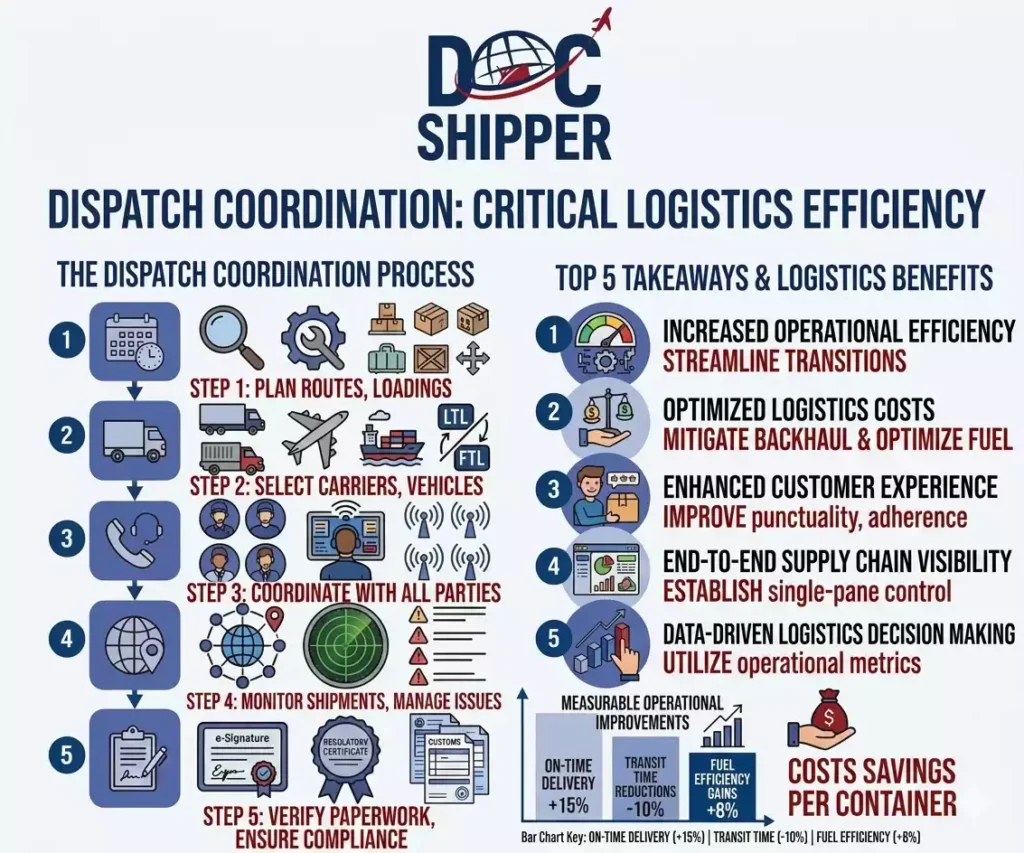
The dispatch process begins when goods are ready for shipment. A dispatch coordinator analyzes delivery requirements, vehicle availability, and destination parameters. This professional assigns shipments to appropriate carriers based on capacity, delivery windows, and cost efficiency.
Route planning constitutes the technical core of dispatch operations. Advanced software calculates optimal paths considering traffic patterns, delivery priorities, and regulatory restrictions. Modern systems integrate weather data, road conditions, and historical performance metrics.
The dispatch order serves as the official instruction document. It specifies pickup location, delivery address, handling requirements, and timeline expectations. This document must align with commercial invoices, packing lists, and customs declarations for cross-border movements.
Load sequencing determines how goods are physically arranged in transport vehicles. Proper sequencing enables efficient unloading at multiple stops while protecting fragile items. This technical consideration directly impacts delivery speed and product integrity.
Regulatory compliance forms an essential dispatch consideration. The European Union Customs Procedures mandate specific documentation for international dispatch operations. Dispatchers must verify that all shipments carry proper certificates, particularly for controlled goods.
At DocShipper, our dispatch specialists coordinate with customs authorities before shipment departure. This proactive verification eliminates border delays and ensures regulatory compliance across all trade lanes.
Practical Examples & Performance Data
Understanding dispatch through concrete scenarios demonstrates its operational impact. Consider these comparative cases across different logistics environments:
| Dispatch Model | Average Delivery Time | Cost per Shipment | On-Time Rate |
|---|---|---|---|
| Manual dispatch | 5.2 days | $124 | 78% |
| Software-optimized dispatch | 3.8 days | $97 | 94% |
| Integrated logistics platform | 2.9 days | $85 | 97% |
Use Case: Electronics Import from Shenzhen to Rotterdam
A European retailer orders 15,000 smartphones requiring delivery to 12 distribution centers. The dispatch coordinator receives goods at Rotterdam port on Monday morning. Using route optimization software, they create five delivery zones based on geographic proximity.
Three vehicles depart Tuesday at 06:00, each carrying consolidated loads for 4 destinations. The dispatcher tracks real-time progress through GPS systems. When traffic delays threaten the Frankfurt delivery window, the system automatically reroutes through alternative highways. All shipments reach destinations within 36 hours, meeting contractual obligations.
Without proper dispatch coordination, this operation would require seven vehicles over four days, increasing costs by €2,400 and risking delivery penalties.
Key Performance Indicators for Dispatch Efficiency:
- Vehicle utilization rate – Target minimum 85% capacity per trip
- First-attempt delivery success – Industry benchmark at 92%
- Average dispatch preparation time – From order receipt to vehicle departure
- Documentation accuracy – Zero-error target for customs paperwork
- Customer notification timing – Real-time updates on shipment status
Conclusion
Dispatch operations determine whether logistics systems deliver competitive advantage or operational burden. Effective coordination transforms fragmented shipments into streamlined delivery networks that reduce costs while improving service quality.
Need professional dispatch management for your international shipments? Contact DocShipper for comprehensive logistics coordination tailored to your business requirements.
📚 Quiz
Test Your Knowledge: Dispatch
1. What is the primary scope of dispatch in logistics operations?
2. A common misconception is that dispatch and delivery are the same. Which statement correctly distinguishes them?
3. Your company receives 15,000 smartphones at Rotterdam port that must reach 12 distribution centers across Europe. What is the most effective dispatch approach?
🎯 Your Result
📞 Free Quote in 24hFAQ | Dispatch: Definition, Process & Real-World Examples
Dispatch refers to the organizational process of preparing and coordinating shipment departure, including vehicle assignment, route planning, and documentation. Delivery is the physical transportation and handover of goods to the recipient. Dispatch happens before delivery begins and ensures efficient execution.
Dispatch software automates route optimization, reducing travel distances by 15-25%. It enables real-time tracking, automated customer notifications, and predictive arrival estimates. Digital platforms eliminate manual scheduling errors and provide data analytics for continuous improvement. Integration with warehouse management systems creates seamless operational flow.
The freight forwarder or logistics provider typically manages dispatch coordination for international shipments. They work with carriers, customs brokers, and warehouse operators. Large importers may employ in-house dispatch teams. The responsible party ensures regulatory compliance, proper documentation, and timely departures across borders.
Essential documents include the commercial invoice, packing list, bill of lading, certificate of origin, and customs declaration. Specific products require additional permits like phytosanitary certificates or dangerous goods declarations. Dispatch coordinators verify completeness before shipment departure to prevent customs delays. Electronic versions are increasingly accepted through trade facilitation programs.
Dispatch preparation ranges from 2 hours for simple domestic shipments to 48 hours for complex international movements. Factors include cargo volume, documentation requirements, customs pre-clearance needs, and carrier availability. Urgent dispatches can be executed within 30 minutes using expedited protocols, though this increases costs by 40-60%.
Yes, modern dispatch systems provide GPS-based tracking from warehouse departure to final delivery. Customers receive automated notifications at key milestones: dispatch confirmation, in-transit updates, and delivery completion. Advanced platforms offer predictive ETAs that adjust based on traffic conditions and operational variables. This transparency reduces customer service inquiries by approximately 35%.
Dispatch delays trigger contingency protocols including customer notification, alternative routing assessment, and expedited handling authorization. Professional dispatch teams maintain buffer capacity to reassign shipments to available vehicles. Chronic delays require root cause analysis addressing warehouse efficiency, carrier reliability, or documentation processes. Service level agreements typically specify compensation for delayed dispatches.
Effective dispatch consolidates multiple orders into single vehicle trips, reducing per-unit transportation costs by 20-35%. Route optimization minimizes fuel consumption and driver hours. Proper load planning maximizes cubic capacity utilization. Automated systems eliminate manual processing costs. Strategic carrier selection based on performance data ensures competitive pricing without compromising service quality.
A dispatch note is the official document confirming goods have left the warehouse or origin facility. It includes shipment reference numbers, departure timestamp, vehicle identification, driver details, and expected delivery date. This document serves as proof of dispatch for contractual obligations and provides tracking foundation. Recipients use it to verify expected arrivals and prepare receiving operations.
Customs clearance can add 4-72 hours to dispatch schedules depending on destination country requirements. Pre-clearance programs like AEO (Authorized Economic Operator) enable faster processing. Dispatch coordinators must account for customs examination probabilities, documentation review timelines, and duty payment procedures. Electronic customs systems significantly reduce clearance delays compared to paper-based processes.
Professional dispatchers require logistics management training, customs regulations knowledge, and transportation management software proficiency. Strong communication skills are essential for coordinating multiple stakeholders. Many hold certifications like CILT (Chartered Institute of Logistics and Transport) or FIATA credentials. Experience with specific industries (pharmaceutical, perishable, hazardous) requires specialized training. Multilingual capabilities enhance international operations effectiveness.
Perishable goods require temperature-controlled dispatch with accelerated timelines and specialized carriers. Hazardous materials need certified vehicles and additional safety documentation. High-value shipments involve security protocols and insurance verification. Oversized cargo demands route surveys and special permits before dispatch. Each category requires tailored coordination procedures matching regulatory requirements and handling characteristics.
Need Help with
Logistics or Sourcing ?
First, we secure the right products from the right suppliers at the right price by managing the sourcing process from start to finish. Then, we simplify your shipping experience - from pickup to final delivery - ensuring any product, anywhere, is delivered at highly competitive prices.


Fill the Form
Prefer email? Send us your inquiry, and we’ll get back to you as soon as possible.
Contact us




