


In short ⚡
A dry bulk container is a specialized shipping container designed to transport unpacked, dry granular or powdered commodities such as grains, minerals, cement, or sugar. Unlike standard containers, it features top loading hatches and bottom discharge outlets to facilitate efficient bulk cargo handling without individual packaging.
Introduction
Many shippers mistakenly assume that all bulk cargo must travel in specialized bulk carriers or loose containers. This misconception leads to inefficient logistics planning and increased handling costs.
In international trade, dry bulk containers bridge the gap between traditional break-bulk shipping and full vessel charter. They enable cost-effective transport of medium-volume bulk commodities through standard container shipping networks.
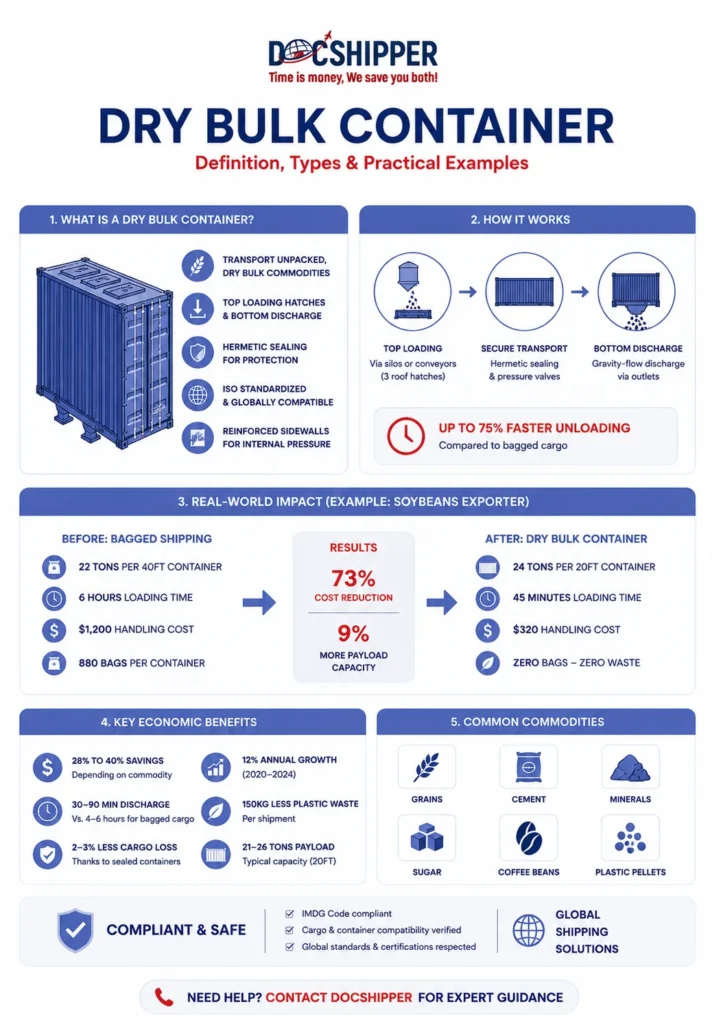
Key characteristics of dry bulk containers include:
- Top loading hatches for efficient filling with forklifts or conveyors
- Bottom discharge systems allowing gravity-assisted unloading
- Hermetic sealing protecting cargo from moisture and contamination
- ISO standardization ensuring compatibility with global container handling equipment
- Reinforced sidewalls designed to withstand internal pressure from bulk materials
Technical Specifications & Operational Characteristics
Dry bulk containers operate fundamentally differently from standard containers. While conventional units require manual packing of bagged goods, dry bulk containers accept unpackaged materials directly, reducing labor costs and material waste.
The most common configuration is the 20-foot dry bulk container, measuring approximately 6 meters in length with a typical capacity of 21-24 cubic meters. These units feature three hatches on the roof and corresponding discharge outlets at the base, creating a gravity-flow discharge system.
Loading procedures involve positioning the container under silos or conveyors. Materials flow through the top hatches which typically measure 455mm x 580mm each. Modern designs incorporate pressure equalization valves preventing vacuum formation during discharge and allowing air intake during filling.
The discharge mechanism utilizes strategically placed outlets with slide gates or pneumatic valves. When opened, bulk materials flow naturally into receiving hoppers or pneumatic conveying systems. This eliminates manual unloading labor and reduces cargo handling time by up to 75% compared to bagged alternatives.
Legal compliance requires adherence to IMDG Code regulations for bulk cargo classification. Materials transported must meet specific criteria regarding moisture content, angle of repose, and flow characteristics. The International Maritime Organization provides detailed guidelines on acceptable bulk commodities and container preparation standards.
At DocShipper, we systematically verify that dry bulk containers are properly certified and that cargo characteristics match container specifications, preventing costly rejections at ports or destination facilities.
Practical Examples & Industry Data
Understanding dry bulk container economics requires examining real-world applications across different commodity types and trade routes.
Comparative Cost Analysis
| Commodity Type | Bagged (Cost per Ton) | Dry Bulk Container (Cost per Ton) | Savings |
|---|---|---|---|
| Wheat | $45 | $28 | 38% reduction |
| Cement | $52 | $31 | 40% reduction |
| Coffee Beans | $68 | $49 | 28% reduction |
| Plastic Pellets | $58 | $37 | 36% reduction |
Case Study: Agricultural Export Optimization
A Brazilian soybean exporter previously shipped 22 tons of bagged soybeans in standard 40-foot containers, requiring 880 individual bags. Labor costs for filling, palletizing, and loading reached $1,200 per container.
After transitioning to 20-foot dry bulk containers, the same exporter now ships 24 tons per unit without bagging. Loading time decreased from 6 hours to 45 minutes using silo-direct filling. Total handling cost dropped to $320 per container, representing a 73% cost reduction while increasing payload capacity by 9%.
Key Performance Indicators
- Average payload capacity: 20-foot units typically carry 21-26 tons depending on commodity density
- Discharge efficiency: Complete unloading achievable in 30-90 minutes versus 4-6 hours for bagged cargo
- Contamination reduction: Sealed containers reduce cargo loss by approximately 2-3% compared to bagged alternatives
- Market growth: Global dry bulk container usage increased by 12% annually between 2020-2024
- Environmental impact: Eliminates approximately 880 bags per container, reducing plastic waste by 150kg per shipment
Conclusion
Dry bulk containers represent a strategic logistics solution for shippers handling unpackaged commodities, combining cost efficiency with operational flexibility. Their integration into standard container shipping networks eliminates traditional bulk shipping complexities while maintaining cargo protection standards.
Need assistance optimizing your bulk cargo logistics? Contact DocShipper for expert guidance on container selection and shipping optimization.
📚 Quiz
Test Your Knowledge: Dry Bulk Container
What is the primary defining characteristic of a dry bulk container compared to standard containers?
A shipper believes dry bulk containers and flexitanks serve the same purpose. Which statement correctly identifies the key difference?
A Brazilian soybean exporter wants to optimize cargo handling costs. Based on the case study, what operational advantage would dry bulk containers provide?
🎯 Your Result
📞 Free Quote in 24hFAQ | Dry Bulk Container: Definition, Types & Practical Examples
Dry bulk containers transport free-flowing granular materials including grains (wheat, corn, rice), minerals (sand, salt), industrial powders (cement, flour), plastic resins, and agricultural products (coffee beans, cocoa). Materials must have moisture content below 12% and consistent flow characteristics. Hazardous materials require specialized lined containers meeting IMDG Code classifications.
Dry bulk containers feature rigid construction with integrated discharge systems and top-loading hatches, designed for granular solids. Flexitanks are flexible bladders installed inside standard containers for liquid cargo transport. Bulk containers offer reusability and faster discharge through gravity systems, while flexitanks are single-use and require pumping equipment for liquids like oils or juices.
Loading typically requires overhead silos with chute systems, conveyor belts with directional spouts, or pneumatic blowing equipment. The container must be positioned with top hatches accessible, usually requiring flatbed positioning under loading infrastructure. Small-scale operations can use forklift-mounted hoppers or manual filling through funnel systems, though efficiency decreases significantly with manual methods.
Yes, dry bulk containers meet ISO standards and integrate seamlessly into global container shipping networks. They're compatible with standard container vessels, rail systems, and truck chassis. However, destination facilities must have appropriate discharge infrastructure such as tipping frames, pneumatic unloading systems, or bottom-discharge collection hoppers. Pre-shipment verification of receiving capabilities is essential.
Well-maintained dry bulk containers typically operate 12-15 years with regular inspections and proper handling. Lifespan depends on commodity types transported, cleaning protocols between shipments, and environmental exposure. Corrosive materials like fertilizers reduce longevity unless containers feature specialized protective liners. Annual structural inspections and valve maintenance are critical for sustained operational safety and cargo protection.
Standard 20-foot dry bulk containers have maximum gross weight ratings of 30,480 kg (67,200 lbs) under ISO standards. Subtracting the container's tare weight (approximately 2,200-2,500 kg), typical payload capacity ranges from 24-26 tons depending on specific unit construction. Actual loading must consider commodity density, shipping line restrictions, and road transport weight limits in origin and destination countries.
Yes, thorough cleaning prevents cross-contamination between different commodities. Food-grade materials require steam cleaning and sanitization meeting international food safety standards. Industrial commodities need mechanical cleaning removing residues and dust. Some shippers install disposable liners for food products, eliminating intensive cleaning but adding per-shipment costs of $80-150. Certification of cleanliness may be required by buyers or regulatory authorities.
Dry bulk containers provide flexibility for smaller cargo volumes (20-25 tons versus minimum 5,000-ton vessel charters), eliminate port demurrage charges associated with bulk carriers, enable door-to-door intermodal transport without transloading, reduce cargo theft through sealed transit, and allow consolidated shipments with other containerized goods. They're ideal for producers without sufficient volume to justify full vessel charters.
Standard dry bulk containers lack temperature control, making them unsuitable for heat-sensitive commodities without additional measures. Some specialized versions incorporate insulated walls maintaining ambient temperature stability. For products requiring controlled cooling, shippers must use refrigerated containers with bulk modifications or implement alternative packaging. Temperature excursions during tropical shipping can degrade products like chocolate or certain chemical powders.
Pre-loading inspections should verify all hatches seal properly without gaps, discharge valves operate smoothly and close completely, interior surfaces are clean and free from previous cargo residues, no structural damage compromises container integrity, and certification plates confirm suitability for intended commodity. Moisture meters should check internal humidity levels, and odor assessments ensure no contamination. Photographic documentation protects against cargo damage claims.
Some jurisdictions impose restrictions due to agricultural biosecurity concerns, requiring fumigation certificates or pest-free declarations. Countries like Australia and New Zealand have stringent quarantine regulations for grain containers. Additionally, road transport may face weight restrictions on specific highway routes, and rail operators sometimes limit acceptance during peak agricultural seasons. Advance consultation with customs brokers and destination receivers prevents transit delays.
Standard marine cargo insurance covers dry bulk shipments, but policies must specify bulk cargo coverage rather than packaged goods. Key considerations include commodity value declaration, moisture damage exclusions, contamination risks from previous cargoes, and liability for discharge equipment failures. Premium rates vary based on commodity type, with food-grade products typically 15-20% higher than industrial minerals due to quality sensitivity and stricter contamination standards.
Need Help with
Logistics or Sourcing ?
First, we secure the right products from the right suppliers at the right price by managing the sourcing process from start to finish. Then, we simplify your shipping experience - from pickup to final delivery - ensuring any product, anywhere, is delivered at highly competitive prices.


Fill the Form
Prefer email? Send us your inquiry, and we’ll get back to you as soon as possible.
Contact us




