


In short ⚡
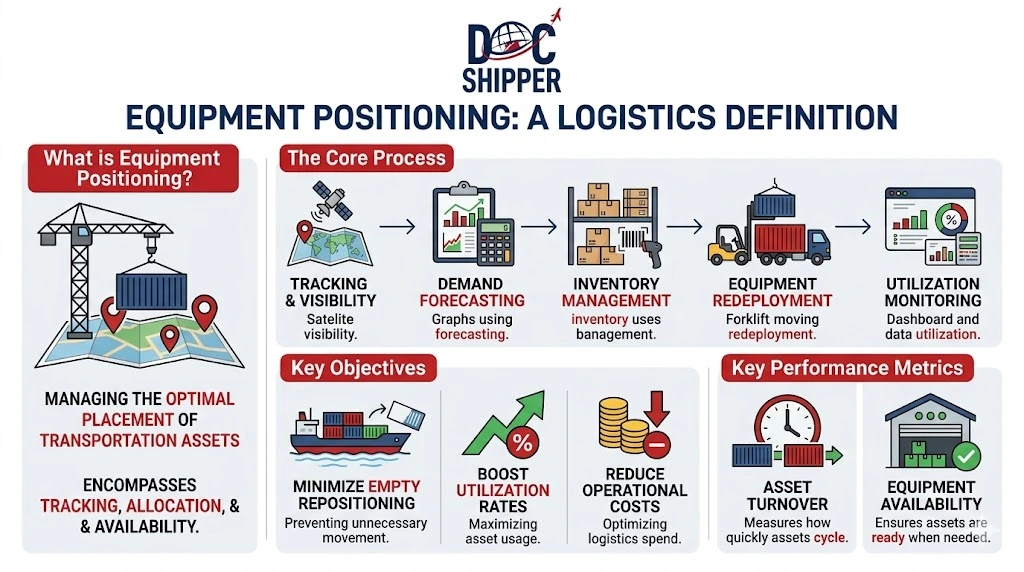
Equipment Positioning is the strategic placement and movement of shipping containers, chassis, and other cargo-handling equipment to designated locations before loading operations. This logistical coordination ensures optimal resource allocation, reduces dwell time, and minimizes operational costs in international freight operations. Effective positioning directly impacts supply chain velocity and terminal efficiency.Introduction
One of the most underestimated challenges in international shipping is the timely availability of equipment at the right location. Delays in equipment positioning can cascade into detention charges, missed vessel departures, and supply chain disruptions costing thousands per incident.
This concept encompasses the entire pre-loading phase where containers, trailers, and specialized equipment must be strategically moved from depots or previous locations to loading sites. The coordination involves multiple stakeholders including shipping lines, trucking companies, warehouse operators, and customs authorities.
Key characteristics of effective equipment positioning include:
- Timing precision: Equipment arrives within the required loading window
- Location accuracy: Correct placement reduces unnecessary handling
- Documentation readiness: All release orders and gate passes prepared
- Equipment condition: Verified suitability for cargo type and destination
- Cost optimization: Minimized repositioning fees and detention charges
Strategic Importance & Operational Mechanisms
Equipment positioning operates as the foundational layer of container logistics. Without proper positioning, even the most efficient loading operations cannot proceed. The process begins when a shipper books cargo space and must secure appropriate equipment from the carrier’s available pool.
The equipment release process typically involves obtaining authorization from the shipping line through an Equipment Interchange Receipt (EIR). This document transfers responsibility from the carrier to the shipper or their agent. At DocShipper, we systematically coordinate equipment releases 72 hours before loading to avoid last-minute complications.
Positioning strategies vary by cargo type and urgency. For standard dry containers, positioning from nearby depots suffices. However, specialized equipment like refrigerated containers or open-top units requires advance booking and may involve longer positioning distances. The choice between merchant haulage (shipper arranges positioning) and carrier haulage (shipping line handles positioning) significantly impacts cost structures.
The empty container depot network plays a crucial role in positioning economics. Containers accumulate at import-heavy locations, creating imbalances that carriers address through repositioning incentives or surcharges. Understanding these dynamics allows shippers to negotiate better positioning terms during contract negotiations.
From a regulatory perspective, customs and security requirements add complexity to equipment positioning. Containers destined for certain markets require pre-loading inspections or scanning, necessitating positioning at authorized facilities. The U.S. Customs and Border Protection mandates specific protocols for equipment entering American ports, affecting positioning timelines.
Technology integration has transformed positioning efficiency through real-time tracking systems and automated dispatch platforms. GPS-enabled containers and blockchain-based documentation reduce positioning errors by up to 40%. These systems provide visibility into equipment availability, location status, and condition reports before physical positioning occurs.
Real-World Applications & Data Analysis
Examining actual positioning scenarios reveals the practical implications of this process. A comparative analysis demonstrates how different approaches impact overall logistics costs and timelines.
| Positioning Method | Average Cost | Lead Time | Risk Level |
|---|---|---|---|
| Depot Pickup (Self-Arranged) | $150-$300 | 24-48 hours | Medium |
| Carrier Haulage | $250-$450 | 48-72 hours | Low |
| Street Turn (Direct Transfer) | $75-$150 | 12-24 hours | High |
| On-Site Staging | $400-$700 | 5-7 days | Very Low |
Case Study: A European automotive parts manufacturer experienced recurring detention charges averaging $8,400 monthly due to poor equipment positioning. By implementing a dedicated positioning coordinator and switching to carrier haulage for 60% of shipments, they reduced detention incidents by 73% within four months.
The positioning calculation for cost-benefit analysis follows this framework:
Total Positioning Cost = Base Transport Fee + Detention Risk + Opportunity Cost of Delays
Consider a shipment from Chicago to Shanghai requiring a 40ft container. The shipper has three positioning options:
- Option A: Depot pickup 60 miles away = $220 transport + $150 detention risk = $370
- Option B: Carrier delivery to warehouse = $380 flat rate + $50 detention risk = $430
- Option C: Pre-positioned equipment (5-day advance) = $180 storage + $280 transport = $460
While Option A appears cheapest, the detention risk factor increases if loading delays occur. For high-value cargo or tight schedules, Option C provides the most predictable outcome despite higher upfront costs.
Industry data reveals that 32% of positioning delays stem from documentation issues rather than equipment availability. This statistic underscores the importance of parallel processing—securing equipment release authorizations while coordinating physical positioning logistics.
Conclusion
Equipment positioning represents a critical yet often overlooked component of international logistics that directly affects cost predictability and operational efficiency. Strategic positioning decisions can differentiate between profitable shipments and loss-generating transactions.
Mastering this process requires understanding carrier networks, regulatory requirements, and cost structures while maintaining flexibility to adapt to changing circumstances. Need expert guidance on optimizing your equipment positioning strategy? Contact DocShipper for comprehensive logistics support.
📚 Quiz
Test Your Knowledge: Equipment Positioning
What is the primary purpose of equipment positioning in international freight operations?
According to industry data, what causes the majority of equipment positioning delays?
A shipper needs to position a 40ft container from a depot 60 miles away with moderate detention risk ($150). The base transport cost is $220. What positioning method is this scenario describing?
🎯 Your Results
📞 Free Quote in 24hFAQ | Equipment Positioning: Definition, Calculation & Practical Examples
Standard container positioning typically requires 24-72 hours depending on depot proximity and carrier responsiveness. For specialized equipment like refrigerated or tank containers, allow 5-7 days. Expedited positioning within 12 hours is possible but incurs premium charges ranging from 50-150% above standard rates.
Cost responsibility depends on the agreed Incoterm. Under FOB or EXW terms, the shipper arranges and pays for positioning. With CIF or DAP terms, the seller includes positioning costs in the total price. Clear contractual definition of equipment pickup location prevents disputes over positioning charges.
Detention charges apply when positioned equipment remains with the shipper beyond the free time period (typically 3-5 days). Demurrage applies to containers at terminals. Poor positioning timing creates detention exposure—equipment arriving too early incurs storage costs while late arrival risks missing vessel cutoffs and triggering rollover fees.
Yes, street turns allow direct container transfer between shippers without returning to the depot, reducing positioning costs by 40-60%. However, this requires carrier approval, compatible routing, and precise timing coordination. Not all shipping lines support street turns, and availability varies by location and equipment type.
Essential documents include the Equipment Release Order from the shipping line, booking confirmation, valid insurance certificate, and gate pass for depot pickup. For hazardous cargo, additional placarding and certification documents must accompany the positioning request. Missing documentation causes positioning delays averaging 18-24 hours.
Container imbalances occur when more equipment arrives than departs from a location. Positioning from surplus areas costs 20-40% less than deficit areas where carriers charge repositioning fees. Coastal import hubs typically have container surpluses while inland manufacturing regions face shortages, creating regional pricing variations.
Shippers should inspect equipment immediately upon positioning through the Equipment Interchange Receipt (EIR) process. Document any existing damage with photos and notations. Rejecting unsuitable equipment requires immediate carrier notification and replacement request, potentially delaying loading by 24-48 hours. Pre-trip inspections reduce rejection rates by 85%.
IoT-enabled containers provide real-time location tracking, condition monitoring, and automated status updates during positioning. This technology reduces positioning errors by 43% and enables predictive availability forecasting. Smart containers cost 15-25% more in positioning fees but deliver ROI through reduced delays and improved cargo security.
Reefer positioning requires pre-trip inspections (PTI) to verify cooling functionality, typically conducted at specialized depots. Position reefers 48-72 hours before loading to allow temperature stabilization. Coordinate power hookup at staging locations and verify generator availability for extended positioning periods. Reefer positioning costs average 60-80% higher than dry containers.
Most depots operate limited weekend hours with reduced staff, increasing positioning costs by 25-50% and extending lead times. Holiday positioning requires 5-7 days advance notice and may incur surcharges up to 100%. Planning shipments around operational calendars reduces premium positioning fees and improves equipment availability.
For exports requiring pre-clearance, position equipment only after receiving customs release to avoid premature detention charges. Import positioning should align with customs exam schedules when inspections are required. Coordinating positioning with customs processes through systems like AMS or AES prevents equipment idle time averaging 2-4 days per shipment.
When carrier equipment is scarce, consider shipper-owned containers (SOC), leasing from equipment providers, or switching to alternative shipping lines with better equipment availability. Transloading into available equipment types or adjusting shipment timing by 3-5 days often resolves positioning constraints without significant cost increases.
Need Help with
Logistics or Sourcing ?
First, we secure the right products from the right suppliers at the right price by managing the sourcing process from start to finish. Then, we simplify your shipping experience - from pickup to final delivery - ensuring any product, anywhere, is delivered at highly competitive prices.


Fill the Form
Prefer email? Send us your inquiry, and we’ll get back to you as soon as possible.
Contact us




