


In short ⚡
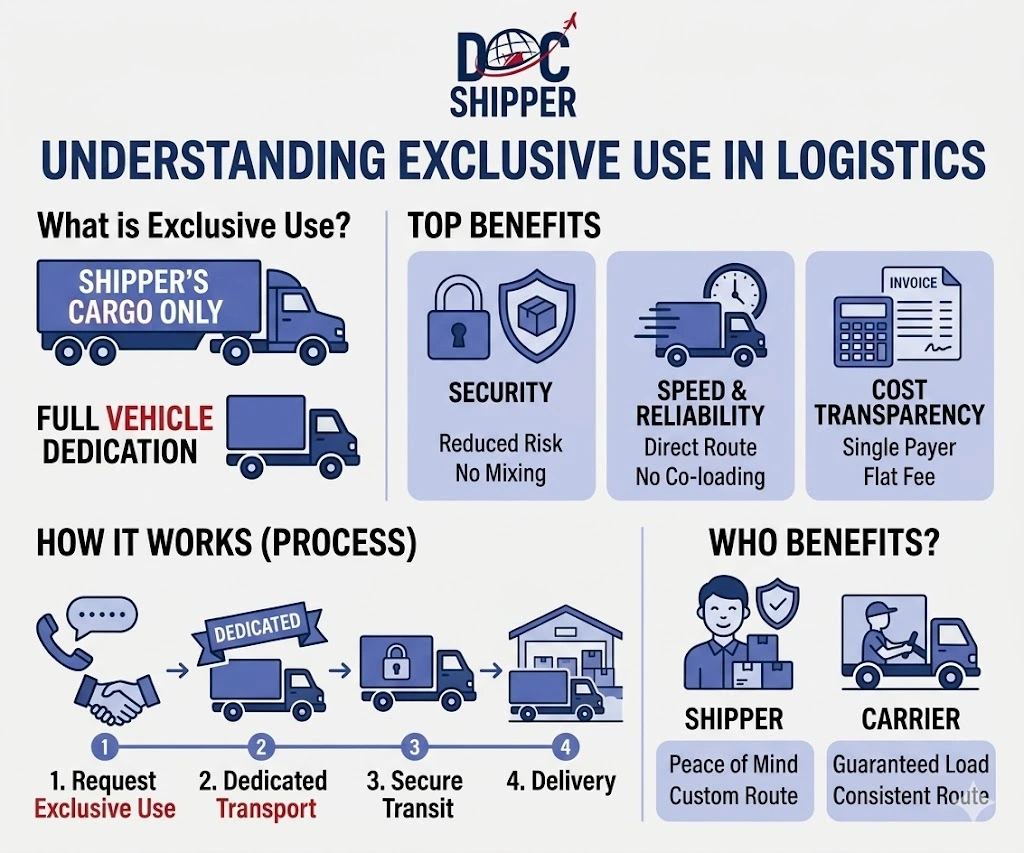
Exclusive Use refers to a shipping method where an entire transport unit—container, truck, or aircraft—is reserved for a single shipper's goods. This dedicated allocation eliminates sharing with other cargo, ensuring faster transit, reduced handling, and enhanced security for high-value or time-sensitive shipments.Introduction
Many importers struggle with damaged goods, delayed deliveries, or cargo mixed with incompatible products. The root cause often lies in shared transport arrangements where multiple shippers’ freight occupies the same container or truck. Exclusive Use solves this by dedicating an entire transport unit to one client.
In international trade, this logistics solution becomes critical when transporting fragile electronics, perishable foods, or hazardous materials. It guarantees priority handling and eliminates contamination risks. Understanding when to deploy Exclusive Use directly impacts cost-efficiency and product integrity throughout the supply chain.
- Full control: The shipper dictates loading sequences, departure times, and routing preferences
- Security enhancement: Single-client cargo reduces theft and tampering risks during transit
- Regulatory compliance: Simplifies customs inspections and dangerous goods documentation
- Damage prevention: Eliminates crushing or contamination from incompatible mixed freight
- Time optimization: Direct routing without consolidation delays at warehouses
Deepening & Expertise
Exclusive Use fundamentally alters transport economics by converting variable costs into fixed costs. Unlike Less-than-Container Load (LCL) shipments priced per cubic meter, Exclusive Use charges apply regardless of whether you fill 50% or 100% of the space. This makes it economically viable only when cargo volume justifies the expense.
From a legal standpoint, Exclusive Use arrangements require specific Bill of Lading clauses stating the container remains sealed throughout transit. The Incoterms® 2020 rules influence liability distribution—under FCA terms, the buyer assumes risk once goods are loaded, while DDP terms keep the seller responsible until final delivery. Exclusive Use intensifies these obligations since tracking becomes shipper-specific.
Temperature-controlled shipments exemplify when Exclusive Use becomes mandatory. Pharmaceutical cold chains require continuous 2-8°C monitoring without interruption. Mixing such cargo with ambient goods in shared containers creates temperature fluctuations that violate Good Distribution Practice (GDP) standards. At DocShipper, we systematically verify reefer container calibration certificates before exclusive loading to prevent $100,000+ product losses from temperature deviations.
Hazardous materials under IMDG Code regulations often necessitate Exclusive Use. Class 1 explosives cannot share containers with Class 8 corrosives due to segregation requirements. The shipper must provide a Container Packing Certificate (CPC) proving correct stowage, which simplifies when all items belong to one consignment. This documentation becomes exponentially complex in consolidated shipments.
Insurance considerations shift dramatically with Exclusive Use. Standard cargo policies assume shared liability limits, but exclusive arrangements allow higher coverage amounts since the entire transport value belongs to one party. Marine insurers may offer 15-20% premium reductions for sealed exclusive containers due to reduced claims frequency from handling damage.
Concrete Examples & Data
To illustrate cost-benefit analysis, consider a Paris-based electronics manufacturer shipping 18 pallets of smartphones to Dubai. The cargo occupies 28 cubic meters—insufficient for a full 33 CBM 20-foot container but exceeding LCL economic thresholds. Below is a comparative breakdown:
| Shipping Method | Transit Time | Cost (USD) | Risk Level |
|---|---|---|---|
| LCL (Shared) | 22-28 days | $4,200 | High (4 handling points) |
| Exclusive 20′ Container | 14-18 days | $5,800 | Low (1 loading point) |
| Air Freight (Exclusive Pallet) | 3-5 days | $18,500 | Minimal (direct flight) |
The $1,600 premium for Exclusive Use becomes negligible when factoring in smartphone retail value ($840,000) and potential damage costs. Industry data shows LCL shipments experience 12% higher damage claims than exclusive containers.
Use Case: Automotive Parts to Australia
A German auto supplier ships 15 tons of brake assemblies monthly to Melbourne. Initially using LCL, they faced 8% average damage rates from improper stacking by consolidators. Switching to Exclusive Use reduced damage to 0.5% within six months. The supplier now benefits from:
- Custom loading plans: Heavy items placed at container bottom per engineering specs
- Sealed integrity: Australian customs clear containers 40% faster with single-shipper documentation
- Insurance savings: Annual premiums dropped from $28,000 to $19,000
- Brand protection: Zero retailer complaints about damaged parts since implementation
- Sustainability: Consolidated monthly shipments vs. weekly LCL reduce carbon footprint by 22%
According to World Shipping Council data, Exclusive Use adoption grew 34% from 2020-2023 as e-commerce brands prioritize delivery speed and product condition. DocShipper clients using exclusive containers report 89% on-time delivery rates versus 67% for consolidated freight.
Conclusion
Exclusive Use transforms logistics from cost-centered to value-driven by prioritizing cargo integrity and delivery certainty. While initial expenses exceed shared options, the long-term gains in reduced claims, faster transit, and customer satisfaction justify investment for medium-to-high value goods.
Need tailored guidance on whether Exclusive Use suits your shipments? Contact DocShipper for a free logistics audit comparing costs across transport modes.
📚 Quiz
Test Your Knowledge: Exclusive Use
What is the primary defining characteristic of Exclusive Use shipping?
When does Exclusive Use typically become cost-effective compared to LCL shipping?
A pharmaceutical company needs to ship temperature-sensitive vaccines requiring continuous 2-8°C monitoring. Which statement correctly applies to this scenario?
🎯 Your Results
📞 Free Quote in 24hFAQ | Exclusive Use: Definition, Application & Concrete Examples
Need Help with
Logistics or Sourcing ?
First, we secure the right products from the right suppliers at the right price by managing the sourcing process from start to finish. Then, we simplify your shipping experience - from pickup to final delivery - ensuring any product, anywhere, is delivered at highly competitive prices.


Fill the Form
Prefer email? Send us your inquiry, and we’ll get back to you as soon as possible.
Contact us




