


In short ⚡
High-Density Compression is a freight optimization technique that maximizes cargo volume by mechanically reducing package dimensions or strategically reorganizing goods within shipping containers. This method reduces wasted space, lowers shipping costs per unit, and increases the efficiency of international logistics operations.Introduction
Every importer faces the same challenge: paying for air when shipping containers arrive half-empty. High-density compression addresses this critical inefficiency by transforming how cargo occupies physical space during international transport.
In global freight, container utilization rates directly impact profitability. A 20-foot container holds 33 cubic meters, yet most shipments use only 60-75% of available space due to irregular packaging shapes and protective materials.
Key characteristics of high-density compression include:
- Volume reduction: Mechanical compression of soft goods (textiles, foam, plastic products)
- Strategic packing: Mathematical optimization of container space allocation
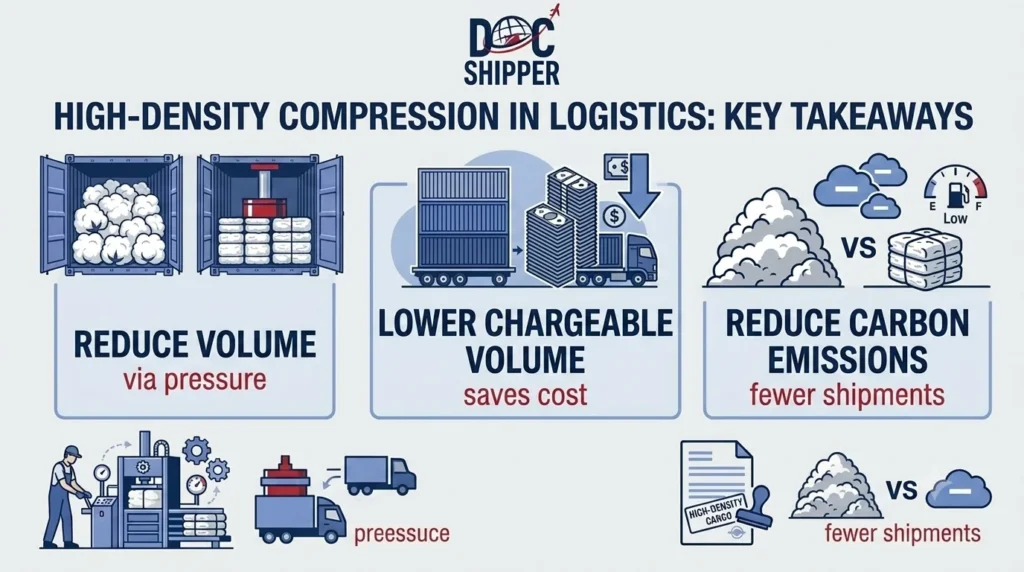
- Cost efficiency: Reduction in freight costs by increasing units per container
- Environmental impact: Fewer shipments required for the same volume of goods
- Weight-to-space ratio: Balancing dimensional weight against actual cargo weight
This technique is particularly valuable when shipping lightweight but bulky products where dimensional weight exceeds actual weight—a common scenario in apparel, furniture, and packaging industries.
Technical Mechanisms & Logistics Impact
High-density compression operates through two primary methodologies: mechanical compression and algorithmic space optimization. Mechanical methods use hydraulic or vacuum equipment to physically reduce package dimensions, while algorithmic approaches employ software to calculate optimal cargo arrangements.
The compression process begins with load planning analysis. Freight forwarders assess cargo characteristics—compressibility, fragility, dimensional specifications—to determine compression feasibility. Soft goods like textiles can achieve 40-60% volume reduction without damage, while semi-rigid items require specialized equipment.
From a customs perspective, compressed cargo must maintain product integrity documentation. The World Customs Organization requires that compressed goods remain identifiable for inspection. Packaging modifications cannot obscure product origins, quantities, or HS code classification.
Weight distribution becomes critical in container stacking strategies. International maritime regulations (SOLAS VGM) mandate verified gross mass for compressed loads. Uneven compression can shift the center of gravity, creating safety hazards during ocean transport.
At DocShipper, we implement compression protocols during our warehousing consolidation phase, ensuring regulatory compliance while maximizing container utilization. Our quality control teams verify that compression levels maintain product specifications required by destination markets.
The financial impact extends beyond freight savings. Reduced container quantities lower port handling fees, terminal storage costs, and inland transportation expenses. However, importers must balance compression benefits against potential insurance implications for damaged goods claims.
Concrete Examples & Quantified Data
Consider a practical scenario: an apparel importer shipping 10,000 units of winter jackets from Bangladesh to Germany. Without compression, the shipment requires three 40-foot containers at €3,200 each (€9,600 total freight cost).
| Method | Containers Required | Volume per Unit | Total Freight Cost | Cost Savings |
|---|---|---|---|---|
| Standard Packing | 3 x 40ft | 0.021 m³ | €9,600 | Baseline |
| High-Density Compression | 2 x 40ft | 0.013 m³ | €6,400 | €3,200 (33%) |
The compression reduces per-unit volume by 38%, eliminating one container entirely. Additional savings include port handling fees (€280 per container) and reduced customs processing time at Hamburg port.
A second case study involves furniture exporters shipping flat-pack products. A Malaysian manufacturer reduced shipping costs by €47,000 annually using compression techniques:
- Original configuration: 18 containers monthly at €2,900 each (€52,200/month)
- Compressed configuration: 14 containers monthly at €2,900 each (€40,600/month)
- Monthly savings: €11,600
- Annual impact: €139,200 reduction in ocean freight expenses
- Environmental benefit: 48 fewer container shipments per year, reducing CO2 emissions by approximately 67 tons
Industry data from logistics providers indicates that compression techniques increase container utilization from 68% to 89% on average for eligible cargo types. This translates to significant cost reductions for high-volume importers in textile, packaging, and consumer goods sectors.
Conclusion
High-density compression represents a strategic advantage in international logistics, directly improving cost efficiency and environmental sustainability. For businesses shipping compressible goods, implementing these techniques can reduce freight expenses by 25-40% while maintaining product integrity.
Need expert guidance on optimizing your cargo configurations? Contact DocShipper for a customized compression feasibility assessment tailored to your products and shipping routes.
📚 Quiz
Test Your Knowledge: High-Density Compression
What is the primary purpose of high-density compression in international freight?
Which statement correctly describes high-density compression's impact on customs duties?
A textile importer ships 10,000 winter jackets. Using compression, they reduce container needs from 3 to 2 units at €3,200 each. What is the correct application of compression benefits?
🎯 Your Result
📞 Free Quote in 24hFAQ | High-Density Compression: Definition, Application & Concrete Examples
Soft goods with inherent compressibility work best: textiles, apparel, bedding, foam products, plastic packaging materials, and certain types of furniture. Products requiring rigid structural integrity (electronics, glassware, machinery) are generally unsuitable. The key criterion is whether the product can withstand 30-50% volume reduction without functional damage or customer dissatisfaction upon delivery.
No. Customs duties are calculated based on declared value, HS code classification, and quantity—not shipping volume. However, compressed packaging must still allow customs inspectors to verify product contents. Documentation should clearly indicate that goods were compressed for shipping efficiency to avoid inspection delays at destination ports.
Savings depend on cargo type and shipping routes. Textile importers typically reduce freight costs by 25-35% through compression. High-volume shippers (10+ containers monthly) can save €50,000-€200,000 annually. The calculation includes direct freight reduction, lower port fees, reduced warehousing costs, and decreased carbon offset expenses in regulated markets.
Properly executed compression maintains product integrity. Professional freight forwarders use calibrated equipment with pressure limits specific to cargo types. Quality control inspections verify that compression levels stay within manufacturer specifications. Most apparel and textile warranties remain valid as long as compression doesn't exceed industry-standard levels (typically 40-60% volume reduction).
Industrial compression requires vacuum-seal machines, hydraulic presses, or baling equipment. Freight consolidation warehouses typically invest €15,000-€50,000 in compression infrastructure. For smaller operations, manual vacuum bags and strategic packing methods can achieve 20-30% volume reduction without specialized machinery. Professional freight forwarders like DocShipper provide compression services as part of consolidation offerings.
Standard cargo insurance covers compressed goods if compression is declared in shipping documentation. Insurers may require confirmation that compression methods meet industry standards. Claims for damage must prove that compression—not inherent product defects—caused the issue. Premium rates typically remain unchanged since compression reduces transit risks by stabilizing cargo within containers.
Yes, though applications differ from ocean freight. Airlines charge based on dimensional weight (volume-to-weight ratio), making compression highly valuable. Vacuum-sealed packaging can reduce air freight costs by 30-45% for lightweight, bulky items. However, air cargo compression must account for pressure changes during flight, requiring specialized vacuum-seal materials that prevent expansion at altitude.
Compression reduces the number of containers or trucks needed, directly lowering carbon emissions per unit shipped. A 30% volume reduction translates to approximately 25% fewer shipments for the same cargo volume. This reduction decreases fuel consumption, port congestion, and logistics-related pollution. Companies targeting sustainability certifications (ISO 14001, Carbon Neutral status) gain measurable environmental metrics through compression programs.
Compression adds 2-4 hours to standard consolidation timelines for a 40-foot container load. Automated vacuum systems process 200-300 units per hour for textiles. Manual compression methods take longer but remain cost-effective for smaller shipments. Expedited services can reduce compression time by 40% using multiple workstations, though this may increase handling fees by €150-€300 per container.
Most countries permit compressed cargo, but some require specific labeling. Australia and New Zealand mandate clear exterior markings indicating compressed contents for quarantine inspection purposes. Japan requires compression documentation in customs declarations for textile imports. The EU has no specific restrictions, though compressed hazardous materials must meet ADR/IMDG packaging regulations regardless of compression methods.
Yes, all compression methods are reversible. Vacuum-sealed packages can be opened and re-sealed if necessary. Hydraulically compressed bales can be decompressed for inspection, though re-compression requires specialized equipment typically available only at origin warehouses. Most customs authorities accept compressed cargo inspection without full decompression, examining sample units from each batch instead.
Standard shipping documents (commercial invoice, packing list, bill of lading) remain the same, with added notation indicating compression ratios. Documentation should specify original versus compressed dimensions, compression method used, and confirmation that products meet destination market standards post-compression. This transparency prevents customs delays and facilitates insurance claims if needed.
Need Help with
Logistics or Sourcing ?
First, we secure the right products from the right suppliers at the right price by managing the sourcing process from start to finish. Then, we simplify your shipping experience - from pickup to final delivery - ensuring any product, anywhere, is delivered at highly competitive prices.


Fill the Form
Prefer email? Send us your inquiry, and we’ll get back to you as soon as possible.
Contact us




