


In short ⚡
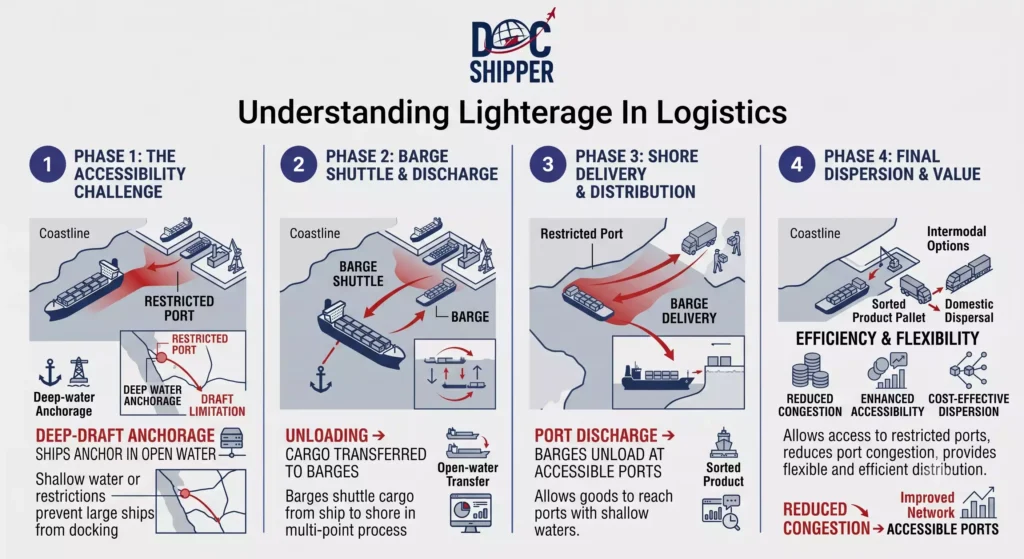
Lighterage is the maritime operation of transferring cargo between a large vessel and smaller boats (lighters) to navigate shallow waters or reach ports without deep-water facilities. This transhipment method enables cargo movement in areas where draft restrictions prevent direct vessel access to berths or inland waterways.
Introduction
Shippers frequently encounter unexpected delays when vessels cannot access designated ports due to insufficient water depth. This problem becomes critical in river ports, tidal harbors, or facilities under construction. Lighterage solves this logistical challenge by enabling cargo transfer outside the main berth.
This operation remains essential in international trade for three key reasons:
- Port accessibility: Enables deliveries to shallow-draft terminals without costly infrastructure upgrades
- Cost efficiency: Avoids vessel waiting charges and demurrage fees during port congestion
- Operational flexibility: Allows partial unloading to reduce vessel draft before final berthing
- Emergency response: Provides alternative discharge methods when regular port operations are disrupted
- Environmental compliance: Reduces risk of grounding incidents that could cause marine pollution
Technical Expertise & Regulatory Framework
Lighterage operations involve complex coordination between multiple parties. The lighter (small barge or tugboat) positions alongside the mother vessel in open anchorage or protected waters. Cargo handling equipment—ship’s gear, floating cranes, or lighter-mounted derricks—transfers goods between vessels.
International maritime regulations govern these operations. The International Maritime Organization (IMO) establishes safety protocols for ship-to-ship transfers under SOLAS Convention requirements. Weather windows dictate operational feasibility—operations typically cease when wave heights exceed 1.5 meters or wind speeds surpass 20 knots.
Three primary types of lighterage exist in modern shipping:
- Direct lighterage: Cargo transfers directly from ocean vessel to lighter without intermediate storage
- Indirect lighterage: Goods are temporarily stored on floating platforms before final distribution
- Emergency lighterage: Unplanned operations due to vessel grounding, port closure, or draft restrictions
Contractual responsibility for lighterage costs depends on Incoterms and charter party agreements. Under CIF or CFR terms, sellers typically bear pre-delivery expenses. However, when caused by vessel-related issues, shipowners absorb costs. Charter parties often include “lighterage clauses” specifying responsibility allocation.
At DocShipper, we coordinate with local lighter operators to ensure compliant cargo transfers when ports cannot accommodate your vessel’s draft. Our team verifies that all lighterage operations meet maritime safety standards and insurance requirements, preventing coverage disputes during claims.
Practical Examples & Operational Data
Understanding lighterage economics requires analyzing cost components and operational parameters. The table below compares direct port discharge versus lighterage scenarios:
| Parameter | Direct Berthing | Lighterage Operation |
|---|---|---|
| Vessel Draft Requirement | 12-15 meters minimum | 8-10 meters (anchorage) |
| Average Discharge Rate | 500-800 tons/day | 200-350 tons/day |
| Additional Cost per Ton | $0 (baseline) | $15-40 |
| Weather Dependency | Low | High (stops in rough seas) |
| Cargo Damage Risk | Standard | +15-25% (handling exposure) |
Case Study: West African Port Operations
A European machinery exporter shipped 2,500 tons of construction equipment to a Nigerian river port. The port’s maximum draft was 9 meters, but the chartered vessel required 12.5 meters fully loaded.
Solution implemented:
- Anchorage discharge: Vessel anchored 8 nautical miles offshore in 15-meter depth waters
- Lighter mobilization: Four barges (capacity 300 tons each) contracted for 9-day operation
- Total lighterage cost: $87,500 ($35/ton) including barge hire, stevedoring, and tug assistance
- Time savings: Avoided 14-day port congestion wait, preventing $42,000 demurrage charges
- Net outcome: Overall savings of $45,500 despite additional lighterage expenses
This example demonstrates how strategic lighterage planning transforms apparent obstacles into cost-effective solutions. The shipper maintained delivery schedules while optimizing total landed costs—critical factors in competitive markets.
Conclusion
Lighterage remains an indispensable tool in the global shipping industry, particularly for emerging markets with limited port infrastructure. Understanding operational requirements, cost structures, and regulatory frameworks enables informed decision-making when draft restrictions arise.
Need assistance coordinating lighterage operations or evaluating port accessibility for your shipments? Contact DocShipper for expert logistics support tailored to your specific requirements.
📚 Quiz
Test Your Knowledge: Lighterage
What is the primary purpose of lighterage operations in shipping?
According to the article, what is a common misconception about who pays for lighterage costs?
In the West African case study, why did the shipper choose lighterage despite the additional $35/ton cost?
🎯 Your Results
📞 Free Quote in 24hFAQ | Lighterage: Definition, Operations & Practical Examples in Shipping
Lighterage specifically refers to cargo transfer using small vessels (lighters) to overcome draft restrictions in shallow waters. Transshipment is a broader term covering any cargo transfer between vessels or transport modes, often at intermediate ports regardless of water depth. Lighterage is a specialized form of transshipment addressing accessibility challenges.
When contracts are silent, responsibility typically depends on the cause. If draft restrictions were known and not disclosed by the buyer, they may bear costs. If vessel-related issues (overloading, incorrect ballasting) cause the problem, shipowners pay. In charter parties, the "safe port" warranty often determines liability. Always include explicit lighterage clauses in contracts to avoid disputes.
Duration varies significantly based on cargo volume, lighter capacity, and weather conditions. For a 2,000-ton shipment, operations typically span 5-10 days using standard barges. Bulk commodities discharge faster than breakbulk cargo requiring individual handling. Weather delays add 20-40% to planned schedules in tropical regions during monsoon seasons.
Standard marine cargo insurance policies often exclude or limit coverage during ship-to-ship transfers. Shippers should request "lighterage clauses" in their insurance certificates confirming coverage during these operations. Additional premiums typically range from 0.05% to 0.15% of cargo value. Always verify coverage before operations commence to avoid claim rejections.
Extremely heavy lifts exceeding lighter capacity (typically 50+ tons per piece), hazardous materials requiring specialized handling, and highly perishable goods sensitive to handling delays. Containerized cargo presents challenges due to equipment requirements. Ultra-high-value goods often avoid lighterage due to increased damage risks and insurance limitations.
Operations require wave heights below 1.5 meters and wind speeds under 20 knots. Tidal ranges matter significantly—spring tides can add 2-3 hours of operational time in estuarine locations. Monsoon seasons in Southeast Asia and West Africa reduce available work windows by 40-60%. Professional operators maintain 72-hour weather forecasts to optimize scheduling.
Yes, but with limitations. Specialized container lighters equipped with cell guides handle standard boxes. However, discharge rates drop to 120-180 TEU per day versus 400-600 TEU for direct gantry operations. Costs increase due to specialized equipment requirements. Reefer containers present additional challenges requiring generator-equipped lighters, further increasing expenses.
Essential documents include lighter hire agreements, cargo transfer receipts, weather logs, and mate's receipts for each lighter load. Port authorities require advance notification (typically 48-72 hours). Customs documentation must specify the lighterage process to avoid clearance delays. Insurance certificates should explicitly cover the operation period.
Security measures include tally clerks on both vessels, sequential container/package numbering, photographic documentation, and GPS tracking of lighters. High-value cargo may require security escorts during barge transit. Sealed containers should have seals verified at transfer points. Night operations typically cease unless special lighting and security arrangements exist.
Costs include lighter/barge hire (daily rates), stevedoring labor, tug assistance, cargo gear rental if vessel equipment is inadequate, and agency fees for coordination. Additional expenses cover customs overtime, security services, and weather standby charges. Damage risks may require increased insurance premiums. Total costs typically range from $15-60 per ton depending on location and cargo type.
Calculate by dividing total cargo volume by lighter capacity, then factor in round-trip time (loading + transit + discharge + return). For example, 3,000 tons with 250-ton lighters requiring 6-hour round trips needs 4-5 barges for continuous operation. Add 20% buffer capacity for weather delays and operational inefficiencies. Oversizing fleets increases costs; undersizing extends project duration.
Alternatives include partial cargo discharge to reduce draft, waiting for high tide windows (adds delays), using smaller feeder vessels for the entire voyage (higher freight costs), or diverting to deeper alternative ports with inland transport (trucking costs). Some modern ports offer floating cranes that eliminate need for lighters. Each alternative presents distinct cost-benefit trade-offs requiring careful analysis.
Need Help with
Logistics or Sourcing ?
First, we secure the right products from the right suppliers at the right price by managing the sourcing process from start to finish. Then, we simplify your shipping experience - from pickup to final delivery - ensuring any product, anywhere, is delivered at highly competitive prices.


Fill the Form
Prefer email? Send us your inquiry, and we’ll get back to you as soon as possible.
Contact us




