


In short ⚡
A lighter is a flat-bottomed barge used to transfer cargo between ships and shore in ports with shallow water or inadequate docking facilities. This vessel enables the loading and unloading of goods from larger ships anchored offshore, facilitating maritime trade in locations where deep-water access is limited or unavailable.
Introduction
Many importers underestimate the logistical complexity when their cargo ship cannot dock directly at port. This scenario is more common than expected, particularly in developing regions or congested harbors.
The lighter plays a crucial role in international shipping by bridging the gap between deep-water vessels and shore-based infrastructure. Without this intermediary vessel, significant portions of global trade would face severe bottlenecks.
Key characteristics of lighters include:
- Shallow draft design allowing navigation in coastal waters of 2-4 meters depth
- Flat bottom construction for stability during cargo transfer operations
- Variable cargo capacity ranging from 500 to 5,000 metric tons depending on vessel size
- Versatile loading methods accommodating containers, bulk cargo, or break-bulk shipments
- Cost-effective solution compared to port infrastructure investments in shallow-water locations
Operational Mechanisms & Technical Aspects
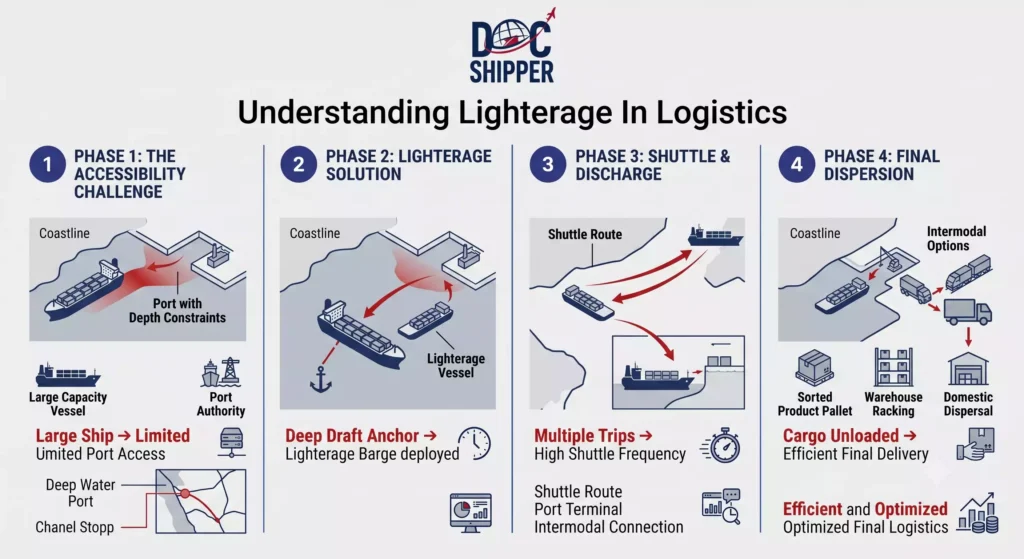
The lighterage operation involves transshipment procedures governed by international maritime regulations. The process requires coordination between the mother vessel, lighter operators, and port authorities.
According to the International Maritime Organization, lightering operations must comply with SOLAS (Safety of Life at Sea) conventions, particularly when handling hazardous materials or operating in restricted waters.
Draft limitations represent the primary technical consideration. While container ships may require 12-15 meters of water depth, lighters operate efficiently in 2-4 meters, enabling access to riverine ports and shallow harbors.
The loading sequence typically follows this pattern: the mother vessel anchors in deep water, lighters position alongside, cargo transfer occurs via ship’s cranes or shore-based equipment, and loaded lighters proceed to the wharf for discharge.
Weather dependency significantly impacts operations. Wind speeds exceeding 25 knots or wave heights above 1.5 meters typically suspend lightering for safety reasons, potentially causing costly delays.
At DocShipper, we coordinate with specialized lighter operators to ensure seamless cargo transfer, particularly when shipping to ports in Southeast Asia, West Africa, or the Amazon Basin where this method remains essential.
Practical Examples & Cost Analysis
Lighterage costs vary considerably based on geographic location, cargo type, and operational complexity. Understanding these variables helps importers budget accurately for total landed costs.
| Region | Average Cost per TEU | Typical Waiting Time | Common Applications |
|---|---|---|---|
| West Africa (Lagos, Douala) | $150-250 | 3-7 days | Containers, vehicles, machinery |
| Southeast Asia (Manila, Jakarta) | $80-150 | 2-5 days | General cargo, construction materials |
| South America (Amazon ports) | $200-350 | 4-10 days | Bulk commodities, equipment |
| Middle East (Iraq, Kuwait) | $120-200 | 2-4 days | Project cargo, industrial goods |
Case Study: Electronics Import to Lagos
A European manufacturer shipped 40 containers of consumer electronics to Lagos, Nigeria. Due to chronic port congestion, the vessel anchored offshore for lightering operations.
- Direct costs: Lighterage fees totaled $8,000 ($200 per TEU)
- Time impact: Five days waiting for lighter availability added demurrage charges of $2,500
- Insurance adjustment: Marine cargo policy premium increased by 0.3% due to transshipment risk
- Opportunity cost: Delayed market entry during peak season resulted in estimated 15% reduction in potential sales
- Total additional cost: Approximately $15,000 beyond standard ocean freight charges
This example demonstrates why experienced freight forwarders factor lighterage into route planning. At DocShipper, we analyze port conditions and recommend alternative routings when lighterage costs or delays become prohibitive.
Conclusion
The lighter remains an indispensable tool in maritime logistics, particularly for trade routes serving infrastructure-limited regions. Understanding its operational requirements and cost implications enables better supply chain planning and accurate budgeting for international shipments.
Need expert guidance on lighterage operations or alternative shipping solutions? Contact DocShipper for customized logistics support tailored to your specific trade lanes and cargo requirements.
📚 Quiz
Test Your Knowledge: Lighter Operations
What is the primary function of a lighter in maritime shipping?
Which statement about lightering operations is correct?
A shipment to Lagos requires lightering. Which factor should an importer anticipate?
🎯 Your Result
📞 Free Quote in 24hFAQ | Lighter: Definition, Usage & Practical Examples in Shipping
A lighter is a cargo-carrying barge designed for transporting goods between ships and shore, while a tugboat is a powerful vessel used for towing or pushing other ships. Tugboats may pull lighters but serve fundamentally different functions in port operations. Lighters have cargo holds; tugboats have powerful engines for maneuvering larger vessels.
Lightering becomes mandatory when port regulations prohibit deep-draft vessels from entering harbor waters, when berth availability forces ships to anchor offshore, or when cargo weight exceeds allowable limits for direct docking. Environmental regulations may also mandate lightering for petroleum products in ecologically sensitive areas. Local maritime authorities publish specific requirements for each port jurisdiction.
Standard marine cargo insurance typically covers lightering operations, but insurers may impose additional premiums for increased handling risk. Policies should explicitly include "transshipment" and "lighterage" clauses. Some insurers require notification before lightering begins, particularly for high-value shipments. Always verify coverage terms with your insurance provider before accepting lighterage conditions in shipping contracts.
Yes, reefer containers can be lightered, but operations require specialized equipment. Lighters must provide continuous power supply to maintain temperature control during transfer and transportation to shore. This increases operational costs by approximately 40-60% compared to standard container lightering. Not all lighter operators possess this capability, requiring advance arrangements through experienced freight forwarders.
Weather conditions account for 45-50% of lightering delays, particularly high winds and rough seas. Equipment breakdowns contribute 20-25%, while coordination issues between ship agents and lighter operators cause 15-20% of delays. Port congestion and regulatory inspections comprise the remaining delays. Planning buffer time of 3-5 days beyond estimated lightering duration helps mitigate schedule disruptions.
Liability depends on contractual terms and the stage where damage occurs. Under standard shipping terms, the ocean carrier remains responsible until cargo delivery at the discharge port, including lightering operations. However, bills of lading may contain "lighterage at merchant's risk" clauses transferring liability to the shipper. Always review contract language carefully and ensure appropriate insurance coverage for all transshipment activities.
Highly hazardous materials classified under IMO dangerous goods codes often face restrictions. Many ports prohibit lightering of explosives, radioactive materials, and certain toxic chemicals due to safety concerns. Extremely fragile or temperature-sensitive cargo may also be unsuitable. Port authorities publish specific prohibited cargo lists, and shippers must verify restrictions before booking shipments requiring lightering.
Essential documents include the original bill of lading, cargo manifest, lightering order from the ship agent, customs declarations, and port authority permits. For hazardous goods, Material Safety Data Sheets (MSDS) and dangerous goods declarations are mandatory. Some countries require separate lightering permits issued by maritime authorities. Documentation errors frequently cause operational delays and potential penalties.
Lightering operations add 2-10 days to total transit time depending on port efficiency, weather conditions, and lighter availability. West African ports average 5-7 days additional time, while Southeast Asian operations typically require 3-5 days. This excludes potential delays from equipment failures or adverse weather. Importers should factor these timeframes into inventory planning and customer delivery commitments.
Refusal depends on contract terms and port conditions. If the freight quote specified "berth terms" delivery but lightering becomes necessary due to port congestion beyond carrier control, the shipper may be contractually obligated to accept associated costs. However, if lightering was foreseeable and not disclosed, importers may dispute additional charges. Clear contract language regarding discharge methods prevents such disputes.
Alternatives include routing cargo through deeper-water regional hub ports with onward transportation via smaller feeder vessels, using smaller ships that can access shallow ports directly, or investing in port dredging projects to accommodate larger vessels. Air freight offers an option for time-sensitive, high-value goods. Each alternative involves cost-benefit analysis comparing transportation expenses, transit time, and logistical complexity against lighterage operations.
Environmental regulations increasingly restrict lightering locations and methods, particularly for petroleum products and bulk liquids. Marine protected areas often prohibit lightering entirely. Operations near sensitive ecosystems require environmental impact assessments and special permits. Ballast water management rules apply to lighters moving between different water bodies. Compliance costs can add 10-15% to total lightering expenses in heavily regulated jurisdictions.
Need Help with
Logistics or Sourcing ?
First, we secure the right products from the right suppliers at the right price by managing the sourcing process from start to finish. Then, we simplify your shipping experience - from pickup to final delivery - ensuring any product, anywhere, is delivered at highly competitive prices.


Fill the Form
Prefer email? Send us your inquiry, and we’ll get back to you as soon as possible.
Contact us




