


In short ⚡
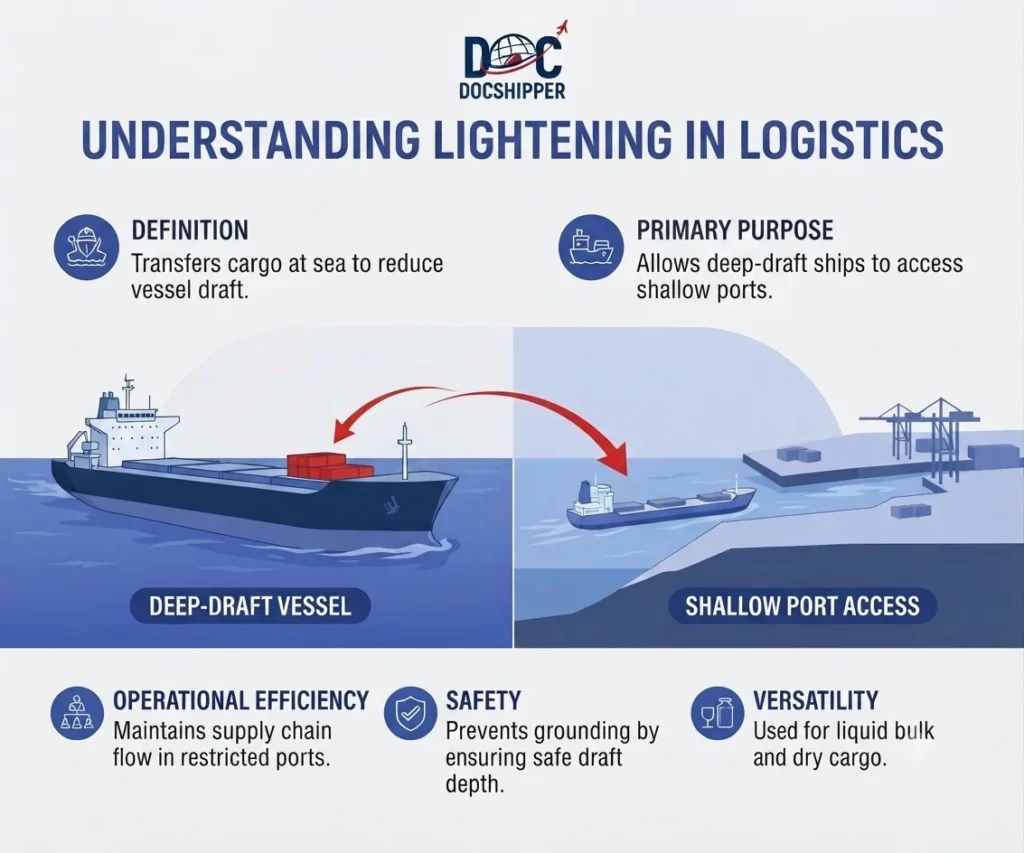
Lightening is a cargo logistics operation consisting of transferring part of a ship's load to another vessel or lighter to reduce draft and enable navigation in shallow waters or restricted port access. This technique proves essential when ships cannot reach berths due to depth limitations or excessive cargo weight.
Introduction
Many importers discover lightening operations only when their shipment faces unexpected port access restrictions. A fully loaded vessel arriving at a shallow-water terminal may suddenly require cargo offloading before docking, triggering additional costs and delays.
In international trade, lightening represents a critical solution for overcoming physical limitations at ports with inadequate infrastructure or tidal variations. The practice affects shipping schedules, freight rates, and cargo handling procedures across maritime corridors worldwide.
Key characteristics of lightening operations include:
- Draft reduction: Lowering vessel depth to meet port channel requirements
- Cargo transfer: Moving containers, bulk goods, or liquids to auxiliary vessels
- Cost implications: Additional handling fees, demurrage, and operational expenses
- Time sensitivity: Weather windows and tidal schedules dictate operation feasibility
- Regulatory compliance: Port authority approvals and safety protocols mandatory
Technical Mechanisms & Regulatory Framework
Lightening operations follow precise maritime protocols governed by international conventions and local port regulations. The process begins with draft surveys measuring a vessel’s underwater depth to determine the exact tonnage requiring offloading.
Ship masters must coordinate with port authorities to secure anchorage zones approved for cargo transfer operations. According to International Maritime Organization guidelines, all lightening activities require advance notification and adherence to SOLAS safety standards.
The cargo transfer mechanism involves three primary methods:
Ship-to-ship transfer utilizes specialized barges or smaller vessels positioned alongside the mother ship. Cranes or conveyor systems move containers, bulk materials, or liquid cargo between vessels. This method dominates in Asian transshipment hubs where port depth limitations are common.
Floating cranes handle heavy-lift cargo requiring specialized equipment unavailable at destination ports. These operations demand calm sea conditions and precise load calculations to maintain vessel stability throughout the transfer.
Pipeline systems serve liquid cargo such as crude oil or chemicals. Flexible hoses connect vessels to floating storage units or directly to shore-based tanks when partial offloading suffices.
At DocShipper, we coordinate lightening operations in advance when pre-shipment analysis identifies draft restriction risks, ensuring our clients avoid unexpected delays and surcharges at destination ports.
Weather conditions impose strict operational constraints. Wind speeds exceeding 15 knots typically suspend lightening activities due to collision risks between vessels. Tidal variations create time-sensitive windows, particularly in estuarine ports where depth fluctuates significantly.
Concrete Examples & Operational Data
Real-world lightening scenarios demonstrate the financial and operational stakes involved in draft-restricted shipping routes.
Case Study: Brazilian Iron Ore Export
A Capesize bulk carrier loaded with 180,000 metric tons of iron ore at Port of Tubarão requires lightening before reaching European steel mills. The vessel’s draft of 18.5 meters exceeds the 14-meter channel depth at Rotterdam’s outer anchorage.
The operation unfolds in three phases:
- Phase 1: Transfer 60,000 tons to two Panamax vessels at offshore anchorage (48 hours)
- Phase 2: Mother ship navigates inner channel with reduced 13.8-meter draft
- Phase 3: Reload cargo at deepwater terminal using shore-based infrastructure
Total additional cost: $450,000 including barge hire, stevedore fees, and port charges. Alternative route via deeper Antwerp terminal would add 12 sailing days and $280,000 in fuel costs, making lightening the economical choice.
Comparative Cost Analysis
| Operation Type | Time Required | Cost per Operation | Cargo Volume Limit |
|---|---|---|---|
| Container Lightening | 24-36 hours | $8-15 per TEU | 500-2,000 TEUs |
| Bulk Cargo Transfer | 48-72 hours | $3-7 per metric ton | 30,000-80,000 MT |
| Liquid Cargo Pumping | 12-24 hours | $1.5-4 per barrel | 500,000-2M barrels |
Asia-Pacific Operational Statistics
Data from Southeast Asian ports reveals lightening frequency correlates directly with infrastructure investment gaps:
- Vietnam ports: 18% of arriving bulk carriers require lightening due to Mekong Delta silt accumulation
- Indonesian archipelago: 35% of inter-island cargo movements involve partial offloading at transshipment points
- Philippine secondary ports: Limited to 8-meter drafts, forcing 60% of Panamax vessels to lighten at Manila Bay anchorage
- Myanmar river ports: Seasonal monsoons reduce navigable depths by 3-4 meters, mandating year-round lightening operations
DocShipper’s logistics teams monitor port depth restrictions across 240+ global terminals, providing clients with advance lightening cost estimates during quotation phases to eliminate budget surprises.
Conclusion
Lightening transforms shipping constraints into manageable logistics challenges through strategic cargo transfer operations. Understanding draft limitations and operational costs enables importers to optimize routing decisions and budget accurately for port-specific requirements.
Need expert guidance on lightening operations or draft-restricted shipping routes? Contact DocShipper for customized logistics solutions tailored to your cargo specifications.
📚 Quiz
Test Your Knowledge: Lightening
What is the primary purpose of lightening operations in maritime logistics?
Which weather condition typically suspends lightening operations?
A Capesize bulk carrier with 180,000 metric tons of iron ore has an 18.5-meter draft but needs to enter a port with a 14-meter channel depth. What should the shipper do?
🎯 Your Result
📞 Free Quote in 24hFAQ | Lightening: Definition, Calculation & Concrete Examples
Lightening becomes necessary when a vessel's loaded draft exceeds the maximum depth available at destination ports, anchorages, or navigation channels. Common triggers include seasonal tidal variations, port infrastructure limitations, unexpected cargo weight increases, or river port access requiring shallow-draft vessels. Port authorities mandate lightening when vessel dimensions risk grounding or channel obstruction.
Lightening expenses typically range from $50,000 to $500,000 depending on cargo type and volume transferred. Alternative deepwater port routing may cost less in direct fees but adds 3-10 sailing days, increasing fuel consumption by $150,000-$400,000 for large vessels. The optimal choice depends on cargo urgency, market conditions, and available port infrastructure at alternative destinations.
Operations cease when wind speeds exceed 15 knots, wave heights surpass 1.5 meters, or visibility drops below 500 meters. Tropical storm warnings, strong currents above 2 knots, or nighttime operations in unlit anchorages also trigger suspension. Tidal windows impose strict scheduling constraints, particularly in estuarine ports where depth variations reach 4-6 meters between high and low tides.
Most cargo types support lightening, though requirements vary. Containerized goods transfer easily using ship cranes. Bulk commodities like grain, coal, or ore require specialized grabs or conveyor systems. Liquid cargoes need pumping infrastructure and compatible hose connections. Dangerous goods face additional regulatory restrictions, requiring certified handling equipment and specialized barges meeting IMDG code standards.
Liability allocation depends on contractual terms and operational phase. Shipowners typically retain responsibility during ship-to-ship transfer under bills of lading terms. Port operators assume liability when cargo enters terminal custody. Cargo insurance policies usually cover lightening-related damages under marine cargo clauses, though exclusions may apply for unseaworthy vessels or negligent operations.
Duration varies by cargo type and transfer volume. Container lightening averages 24-36 hours for 500-1,000 TEUs. Bulk cargo operations transferring 50,000 metric tons require 48-72 hours. Liquid cargo pumping completes fastest, handling 2 million barrels in 12-24 hours. Weather delays, equipment availability, and port congestion can extend timelines by 2-5 days beyond initial estimates.
Lightening operations require amended cargo manifests reflecting the cargo split between vessels. Customs authorities need separate bills of lading for each vessel, revised packing lists, and lightening operation certificates from port authorities. Exporters must provide supplementary declarations confirming cargo integrity and chain of custody documentation proving no unauthorized access occurred during transfer operations.
Draft-restricted ports command freight rate premiums of 5-15% compared to deepwater alternatives. Shippers disclose lightening requirements during RFQ processes, allowing carriers to incorporate estimated costs into quotations. Contract terms specify whether lightening expenses fall under freight-all-kinds rates or constitute additional charges. Volume shippers negotiating annual contracts often secure fixed lightening rates rather than spot market pricing.
Yes, offshore lightening represents common practice in petroleum trades and bulk commodity markets. Tankers conduct ship-to-ship transfers at designated offshore anchorages outside territorial waters. This approach bypasses congested ports and reduces port fees. However, offshore operations demand specialized vessels, certified crews, and favorable weather windows, typically limiting execution to designated global lightening zones.
Marine cargo policies typically cover lightening as ordinary maritime practice without premium increases. However, insurers require notification when lightening occurs in high-risk zones or involves high-value cargo. Protection and indemnity clubs covering shipowner liability assess additional premiums for vessels frequently operating in draft-restricted trades. Cargo owners should verify policy coverage extends to all transfer phases and intermediate storage periods.
Congested ports experience anchorage shortages, delaying lightening commencement by 3-7 days. Limited barge availability during peak seasons increases equipment hire costs by 20-40%. Queue priority systems favor scheduled vessel arrivals, potentially relegating unplanned lightening operations to lower priority. Forward booking of anchorage slots and barge capacity becomes essential in high-traffic ports experiencing chronic congestion.
Automated draft monitoring systems provide real-time depth calculations, optimizing transfer volumes. Dynamic positioning technology maintains precise vessel separation during cargo operations without anchor deployment. Portable cranes with 100-ton capacities reduce dependency on fixed port infrastructure. Digital cargo tracking ensures chain of custody documentation through IoT sensors monitoring container movements between vessels, reducing documentation errors and customs clearance delays.
Need Help with
Logistics or Sourcing ?
First, we secure the right products from the right suppliers at the right price by managing the sourcing process from start to finish. Then, we simplify your shipping experience - from pickup to final delivery - ensuring any product, anywhere, is delivered at highly competitive prices.


Fill the Form
Prefer email? Send us your inquiry, and we’ll get back to you as soon as possible.
Contact us




