


In short ⚡
Marks and Numbers are unique identification codes applied to shipping packages and containers to ensure proper handling, tracking, and delivery throughout the international supply chain. These alphanumeric markings include consignee information, destination codes, package counts, and handling instructions, serving as the primary reference system for cargo management.Introduction
How do logistics operators ensure that a container traveling from Shanghai to Rotterdam reaches the correct warehouse among thousands of daily shipments? The answer lies in a seemingly simple yet critical element: marks and numbers.
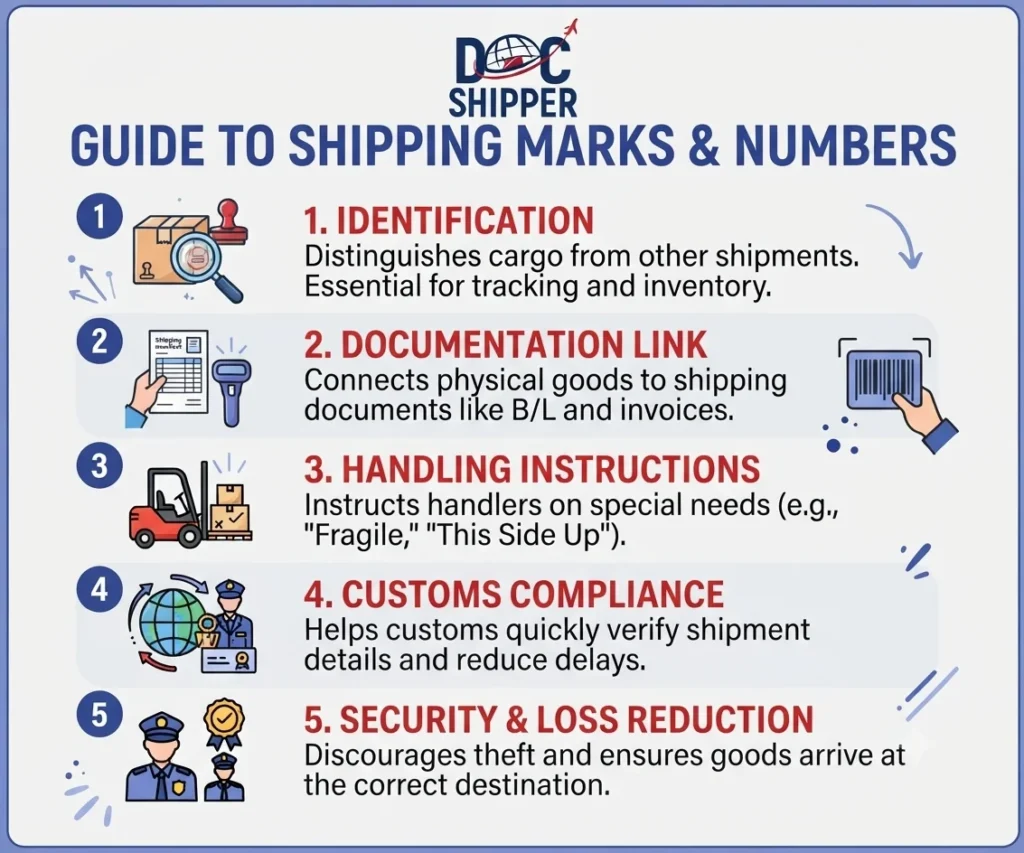
These identification codes represent the backbone of cargo tracking in international trade. Without them, confusion multiplies, deliveries fail, and insurance claims become nightmares. Every stakeholder—from freight forwarders to customs authorities—relies on these markings to maintain shipment integrity.
Key characteristics of marks and numbers include:
- Unique identification for each shipment or package batch
- Standardized format following international shipping conventions
- Multi-level information covering consignee, destination, and handling requirements
- Physical durability to withstand weather, handling, and long transit times
- Cross-reference capability linking to bills of lading and commercial invoices
Technical Framework & Regulatory Requirements
The structure of marks and numbers follows internationally recognized conventions established by organizations like the International Chamber of Commerce (ICC). These markings typically comprise four distinct components that work together to create a complete identification system.
The main mark identifies the consignee or buyer, often abbreviated using company initials or a designated code. This primary identifier appears prominently on all packages within the shipment. The destination mark specifies the port of discharge and final delivery location, frequently using UNLOCODE standards for clarity across languages and regions.
Package count notation indicates the sequential numbering of items within a shipment (e.g., “1/25” for package one of twenty-five total). This prevents loss and facilitates inventory verification at each checkpoint. The handling marks provide visual instructions for proper cargo treatment—symbols for fragility, orientation, temperature requirements, or hazardous materials.
According to World Trade Organization guidelines, proper marking reduces clearance delays by up to 40% and significantly decreases the risk of customs penalties. Regulatory compliance extends beyond mere identification—certain products require additional markings for safety, origin certification, or import restrictions.
At DocShipper, we systematically verify that all marks and numbers comply with destination country requirements before shipment departure. Our quality control process includes cross-referencing these markings against shipping documentation to prevent costly errors. We also advise clients on marking durability standards—ensuring stenciled, painted, or labeled information remains legible throughout multi-modal transport involving sea freight, trucking, and warehousing stages.
The digital integration of marks and numbers now extends to RFID tags and QR codes, creating dual-layer tracking systems. While traditional physical markings remain mandatory for human operators and documentation purposes, these digital enhancements enable real-time scanning and automated customs processing in advanced logistics hubs.
Practical Application & Real-World Examples
Understanding theoretical requirements means little without seeing how marks and numbers function in actual shipping scenarios. The following examples demonstrate proper application across different cargo types and trade routes.
Standard Container Shipment Example
Consider a European furniture manufacturer exporting 50 pallets of office chairs to a distributor in Singapore. The marking system would appear as follows:
| Marking Component | Actual Example | Purpose |
|---|---|---|
| Main Mark | SGD-FURNITURE-2024 | Identifies consignee and contract reference |
| Destination Mark | SINGAPORE/SGSIN | Port and country destination code |
| Package Count | 1/50, 2/50… 50/50 | Sequential numbering for inventory control |
| Handling Marks | THIS SIDE UP + Fragile symbol | Orientation and care instructions |
| Additional Info | Made in Germany / PO#45782 | Origin declaration and purchase order reference |
According to industry statistics, properly marked shipments experience 73% fewer handling errors compared to inadequately labeled cargo. The financial impact is substantial—misdeliveries cost shippers an average of $1,200 per container in re-routing fees and storage charges.
Pharmaceutical Cold Chain Case Study
Temperature-sensitive medical supplies require enhanced marking protocols. A vaccine shipment from Belgium to Kenya would include standard marks plus temperature range indicators (2-8°C), time-sensitive delivery requirements, and regulatory compliance codes linked to WHO certification standards. These additional markings trigger specialized handling procedures at every transit point.
Consolidated LCL Shipment Scenario
When multiple shippers share container space (Less than Container Load), distinct marks prevent commingling. Each shipper’s goods carry unique identifiers that warehouse operators use to separate cargo upon arrival. DocShipper manages these consolidation logistics, ensuring each client’s marks remain clearly distinguishable throughout the deconsolidation process.
Key Practical Guidelines
- Location consistency: Apply marks on at least two sides of each package (typically top and one long side)
- Size standards: Characters should measure minimum 50mm height for container-level markings
- Weather resistance: Use waterproof materials or protective covering for ocean freight exposure
- Documentation matching: Verify that marks exactly match bill of lading descriptions
- Language considerations: Include both Latin alphabet and local script when shipping to non-English-speaking destinations
Conclusion
Marks and numbers represent far more than administrative formality—they constitute the universal language of global logistics, enabling seamless coordination across borders, languages, and handling systems. Proper implementation prevents delays, reduces costs, and ensures regulatory compliance.
Need expert guidance on marking requirements for your specific cargo and destination? Contact DocShipper for comprehensive support throughout your international shipping process.
📚 Quiz
Test Your Knowledge: Marks and Numbers
What is the primary function of marks and numbers in international shipping?
Which statement about the relationship between marks and numbers versus container numbers is correct?
A pharmaceutical company ships temperature-sensitive vaccines internationally. Which marking approach is most appropriate?
🎯 Your Result
📞 Free Quote in 24hFAQ | Marks and Numbers: Definition, Usage & Practical Examples in International Shipping
Marks and numbers identify individual packages or shipment batches and link to commercial documents, while container numbers are unique identifiers assigned to the shipping container itself by the container owner. The former travels with cargo across multiple containers; the latter identifies the transport equipment. Both serve distinct tracking purposes in the logistics chain.
While not universally mandated by international law, most destination countries and carriers require proper marking for customs clearance, cargo identification, and liability purposes. Specific regulations vary by commodity type—hazardous materials and pharmaceuticals face stricter requirements than general merchandise. Consult destination-specific import regulations before shipping.
Durable adhesive labels are acceptable for most shipments, provided they withstand environmental conditions throughout transit. Ocean freight exposure to salt water, temperature fluctuations, and physical handling demands high-quality waterproof materials. Painted or stenciled marks offer superior durability for long-distance or rough-handling scenarios. Always verify carrier requirements before choosing application method.
The bill of lading description field must exactly replicate the marks and numbers appearing on physical cargo. This cross-reference allows port operators, customs officials, and consignees to match documentation with actual shipments. Discrepancies between physical markings and paperwork trigger inspections, delays, and potential penalties. Verification before shipment departure prevents these issues.
Avoid including sensitive commercial data like product pricing, detailed specifications, or proprietary manufacturing codes that competitors could exploit. Similarly, exclude personal information beyond basic consignee identification. Focus on functional data required for routing, handling, and delivery. Confidential details belong in sealed commercial invoices and packing lists, not external package markings.
English remains the predominant language in international shipping, but including destination-country script enhances local handling efficiency. China, Russia, and Arabic-speaking nations particularly benefit from dual-language markings. At minimum, destination city names should appear in local characters alongside Latin alphabet versions. This practice reduces misrouting risk and accelerates customs processing.
Maintain consistent main marks and destination codes across all packages, but differentiate using sequential numbering (1/10, 2/10, etc.). If the shipment contains distinct product categories, add sub-marks like "ITEM-A" or "SKU-12345" beneath the main mark. This allows selective unpacking and inventory verification without opening every package. Clear differentiation prevents warehouse confusion.
Digital codes supplement rather than replace traditional marks. Advanced ports and warehouses scan QR codes or RFID tags for automated processing, but human operators and less-developed facilities still rely on visible alphanumeric markings. Current best practice combines both methods—physical marks ensure universal readability while digital codes enable technology-enhanced tracking where infrastructure supports it.
Illegible markings trigger cargo detention while authorities attempt identification through documentation cross-referencing. This process delays delivery and incurs demurrage charges. Shippers bear responsibility for ensuring marking durability. If illegibility results from inadequate application method, insurance may not cover resulting losses. Secondary markings on interior packaging provide backup identification when exterior marks fail.
Air freight permits smaller marking sizes due to shorter transit times and indoor handling environments. Sea freight demands larger, more weather-resistant markings capable of withstanding weeks of ocean exposure and outdoor port storage. Air cargo also requires specific airline codes and flight routing information, while ocean shipments need port-specific identifiers. Handling mark requirements remain similar across both modes.
Insurance policies typically require accurate documentation matching physical cargo. Significant discrepancies between marked identification and policy declarations may provide grounds for claim denial, especially if incorrect markings contributed to loss or damage. Minor clerical errors usually receive leniency, but systematic marking failures demonstrate negligence. Always verify marking accuracy before accepting insurance coverage.
Contractual terms determine responsibility, but shippers generally handle marking as part of export packing procedures. Freight forwarders verify marking compliance and may apply corrections or additions when necessary. For consolidated shipments, forwarders often add their own handling marks to differentiate clients' cargo. Clear communication regarding marking responsibility prevents last-minute complications and ensures compliance with all applicable standards.
Need Help with
Logistics or Sourcing ?
First, we secure the right products from the right suppliers at the right price by managing the sourcing process from start to finish. Then, we simplify your shipping experience - from pickup to final delivery - ensuring any product, anywhere, is delivered at highly competitive prices.


Fill the Form
Prefer email? Send us your inquiry, and we’ll get back to you as soon as possible.
Contact us




