In short ⚡
What is an EORI number and how to get one? An EORI is a customs identification number required for import, export and transit operations in the EU, with separate GB and XI numbers for relevant UK customs flows. To obtain the correct number:- Identify where your business is established and where its first customs operation takes place.
- Apply through your national customs authority if established in the EU, or through the first EU country where a non-EU business carries out customs operations.
- Apply for a GB EORI through HMRC if your business trades with Great Britain.
- Apply for an XI EORI only after receiving a GB EORI when Northern Ireland customs flows require it.
- Prepare the requested business, tax and company details, such as a UTR, VAT information, SIC code or company documents where applicable.
- Check the issued number using the European Commission or HMRC validation tool, then share it with your customs broker, freight forwarder and carrier.
Transit times, required business details, EORI formats and validation, UK and EU application procedures, and the consequences of missing or invalid numbers are explained alongside France’s 2026–2027 EORI reform.
We hope you’ll find this article genuinely useful, but remember, if you ever feel lost at any step, whether it’s finding a supplier, validating quality, managing international shipping or customs, DocShipper can handle it all for you!
What is an EORI number and who needs one?
An EORI number, meaning Economic Operators Registration and Identification, identifies a business to customs. In the EU, it is mandatory for customs operations such as imports, exports and transit; the UK uses separate GB and XI EORI numbers.
Your EORI appears on customs declarations, entry summary declarations and the files exchanged between your business, customs broker and carrier. A customs declaration is the formal data submission that tells customs what the goods are, who owns them and how they should be treated.
The European Commission, DG Taxation and Customs Union, states: “An EORI number is mandatory for the clearance of all types of customs operations in the customs territory of the EU, such as import, export and transit.” The system was introduced by Commission Regulation (EC) No 312/2009, applicable from 1 July 2009.
One customs ID recognised across the EU, with UK equivalents
An EORI is not the same as a VAT number. VAT identifies a business for tax purposes, while an EORI identifies it for customs; a company can therefore need both on the same import transaction.
It is also different from a company registration number. The legal form does not decide whether you need an EORI: companies, sole traders and other operators may need one when they carry out customs operations. The relevant question is whether you are acting in a customs flow, not whether you are incorporated as a limited company.
Who needs one, and who does not
You normally need an EORI when your business imports, exports or moves goods under a customs procedure. A private individual shipping personal goods that are not controlled usually does not need a UK EORI, although personal shipments involving restricted or controlled goods can follow different rules.
| Identifier | What it identifies | Where it is used |
| EORI number | The operator in customs procedures | Import, export, transit and related customs filings |
| VAT number | The business for value-added tax | VAT reporting, invoicing and tax checks |
| Company registration number | The legal entity in a national register | Corporate and legal administration |
DocShipper Info
Confirm whether your flow requires an EU, GB or XI EORI before booking
Which EORI do you need: EU, GB or XI?
An EU business applies to the customs authority of its own country. A business outside the EU applies in the EU country where it carries out its first customs operation. To trade with Great Britain, you need a GB EORI from HMRC; to move goods into or out of Northern Ireland in relevant customs flows, you may also need an XI EORI, and the GB number comes first.
| Your situation | EORI needed | Where to apply |
| Business established in an EU member state | That country’s EU EORI | Your national customs authority |
| Business outside the EU importing into the EU | EU EORI | The first EU member state where you carry out the customs operation |
| Business established in Great Britain | GB EORI | HMRC |
| Business moving goods into or out of Northern Ireland | GB EORI first, then XI EORI where required | HMRC |
| US business importing into the United States | No US EORI | Use the applicable US importer identification process |
Businesses established in the EU
If your business is established in France, Germany, the Netherlands or another EU member state, apply through that country’s customs authority. The resulting EU EORI can identify your business in customs operations across the EU.
The issuing country matters because the number begins with its two-letter country code. A French business therefore receives an identifier beginning with FR, while a Dutch authority issues a number beginning with NL.
Looking for a Reliable Shipping & Sourcing Partner?


Businesses outside the EU, including US and Asian sellers
A non-EU company does not simply choose the EU country with the most convenient administration. It generally applies in the member state where it carries out its first customs operation, such as its first import clearance.
For example, a US brand sells DDP to customers in France and Germany, but its goods first clear customs in Rotterdam. The business should apply to Dutch customs and use a Dutch EORI for those EU import operations. DDP, or Delivered Duty Paid, does not remove the need to identify the correct importer of record, the party legally responsible for the import declaration and duties.
The United States does not issue EORI numbers. A US importer normally uses an IRS Employer Identification Number or an importer number assigned through US Customs and Border Protection, including the process associated with CBP Form 5106, where applicable.
Trading with Great Britain or Northern Ireland
Great Britain means England, Scotland and Wales for these customs purposes. If you move goods between Great Britain or the Isle of Man and another country, including an EU member state, you may need a GB EORI.
Northern Ireland uses the XI prefix for relevant EU customs operations. HMRC requires you to have a GB EORI before applying for an XI EORI, so do not begin with XI alone.
DocShipper Tips
Use the correct official portal and share your issued EORI with your broker and carrier
How to get an EORI number step by step
In the UK, apply online through a Government Gateway account. HMRC says a GB EORI is issued immediately unless checks are required; when HMRC checks the application, it can take up to 5 working days. In the EU, apply through the national customs authority, such as France’s SOPRANO service.
In the UK: apply through HMRC
- Confirm the flow. Check whether your business is moving goods between Great Britain or the Isle of Man and another country, or whether it needs an XI number for Northern Ireland.
- Open Government Gateway. Use the official HMRC EORI application service.
- Prepare your details. Depending on your status, HMRC may request your Unique Taxpayer Reference, SIC code, VAT number and VAT registration date. Sole traders may need a National Insurance number.
- Submit the application. Non-UK businesses do not need a UK UTR, SIC code or National Insurance number for the application requirements listed by HMRC.
- Apply for XI if required. Complete the XI application only after the GB EORI has been issued. HMRC states that an XI EORI is issued within 5 days.
- Send the number to your broker. Give the correct GB or XI identifier to your customs broker, freight forwarder and carrier before the shipment is booked.
DocShipper Platform
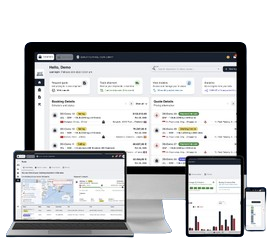
One platform. Your entire supply chain
Sourcing, freight, customs & documents — all centralised, all visible, 24/7.
In an EU country: France as an example
- Identify the issuing country. If you are established in the EU, use your country of establishment. If you are outside the EU, use the first member state where you carry out the customs operation.
- Open the national customs portal. In France, apply through SOPRANO on douane.gouv.fr. Germany uses Zoll, while the Netherlands uses Belastingdienst.
- Enter the legal entity details. Keep your company registration and tax information available. In France, the requested evidence can include a Kbis when the business does not have a French VAT number.
- Submit and monitor the request. Follow the national authority’s instructions and retain the confirmation of issue.
- Check activation. The French customs guidance indicates that the EORI becomes active after issue, with the relevant operational delay to be checked in the current portal instructions.
- Update your logistics file. Add the identifier to your ERP, broker instructions, commercial invoice template and shipment master data.
How long does it take, and is it free?
Applying for a UK EORI is free according to GOV.UK. The GB number is normally immediate, unless HMRC needs to perform checks, in which case the stated maximum is 5 working days; an XI EORI is issued within 5 days.
EU application procedures are managed nationally. France’s SOPRANO process is free according to the official process information available for this guide. Apply before placing the first purchase order, not when the container is already waiting at the port.
| Prepare before applying | UK | EU example: France |
| Online account | Government Gateway | SOPRANO account or national portal access |
| Business identification | UTR and business details where applicable | Legal entity and customs details |
| Tax information | VAT number and registration date where applicable | VAT and company documents where requested |
| Special documents | NINO may apply to sole traders | Kbis may be requested if there is no French VAT number |
| Cost | Free | Free according to the French process information |
DocShipper Tips
Check the complete identifier in the official EU or HMRC tool before filing
EORI number format and how to check one
An EU EORI starts with the two-letter code of the issuing country followed by an identifier of up to 15 alphanumeric characters. A UK number starts with GB or XI. Always validate the complete number, because a correct-looking prefix does not prove that the identifier is active.
Fictitious format examples are FR123456789 for a French SIREN-based EORI and GB123456789000 for a GB EORI. These examples are not real company numbers and must not be used in a declaration.
To check an EU number, enter it in the European Commission EORI validation tool. For a UK number, use HMRC’s Check an EORI number service.
- Copy the number directly from the business or customs document.
- Check the prefix against the operation: EU country code, GB or XI.
- Enter the complete identifier into the relevant official tool.
- Save the result with the shipment file.
- If the result is invalid, stop the declaration and ask the holder or issuing authority to confirm the number.
| Prefix | Issuing authority | Where to check |
| EU country code, such as FR or NL | National customs authority | European Commission validation tool |
| GB | HMRC | HMRC check service |
| XI | HMRC | HMRC check service |
DocShipper Alert
Resolve an invalid EORI before submission to avoid storage, demurrage and missed delivery dates
What happens if your EORI is missing or invalid?
Without a valid EORI, your broker may be unable to lodge the customs declaration. The goods can remain at the port or airport, storage and demurrage costs can accumulate, and the delivery date can slip.
The operational chain is straightforward: the identifier fails validation, the declaration is rejected or cannot be submitted, the goods remain under customs control, free time expires, and the carrier or terminal may charge storage or demurrage. Demurrage is the charge associated with keeping a container at a terminal beyond the allowed free period.
Do not assume that an old EORI remains valid forever. France is transitioning in 2026 and 2027 to one EORI per legal entity based on the SIREN, using the FR plus SIREN structure; SIRET-based EORIs are scheduled to stop being issued and to be fully deactivated in 2027 under the indicative timetable in DGDDI notice NAO no. 26000045.
Before every new trade flow, check the number, share it with every broker and forwarder, and update your ERP or shipping platform. For example, 5 extra days at a terminal after free time can add several hundred dollars per container in demurrage, depending on the contract and terminal. Check the applicable demurrage rules rather than relying on a generic rate.
Conclusion: key points about the EORI number
An EORI is a customs identifier, not a VAT number. The right choice depends mainly on where your business is established and where the first customs operation takes place.
- You need an EORI for customs operations in the EU and, where applicable, the UK.
- EU businesses apply through their national customs authority.
- Businesses outside the EU apply in the first EU country where they carry out the customs operation.
- Great Britain requires a GB EORI, while Northern Ireland may require an XI EORI after the GB number is issued.
- UK applications are free and usually immediate, with checks taking up to 5 working days.
- Check every identifier in the official EU or HMRC tool before a declaration is filed.
- Existing numbers can be deactivated, as illustrated by France’s 2026-2027 SIREN-based reform.
Your EORI is ready? Let our customs team handle the rest: we check your identifiers, file your import and export declarations, and ship your goods to and from Europe in one file.
FAQ | EORI Number: Which One You Need and How to Get It
Usually not. A broker may use its own EORI when acting as the customs representative or declarant, but your business may still need to be identified as the importer, exporter or holder of the customs procedure. Ask the broker whether it will act under direct or indirect representation and confirm which EORI will appear in each data field before the declaration is submitted.
Not usually. One legal entity generally uses the same EU EORI for its customs operations across the EU; you do not normally need a new number for each warehouse, customer or shipment. However, separate subsidiaries or other distinct legal entities generally need their own EORI numbers, and a non-EU business must apply in the member state where its first EU customs operation takes place.
Do not assume that the existing number remains correct. Notify the issuing customs authority of changes to the legal entity or registration details and check whether the change requires an updated or new EORI. A change from one legal entity to another, for example after an acquisition or restructuring, usually cannot be handled by simply reusing the former company’s identifier.
A small parcel is not automatically exempt. If the shipment requires a customs declaration, the relevant economic operator may still need an EORI, even when a courier or postal operator submits the declaration on its behalf. Before shipping, ask the carrier who will act as customs representative and whose EORI will be recorded.
Potentially, yes. Temporary admission, returned goods, inward processing and repair shipments are customs procedures, so the business using the procedure may need an EORI even when the goods are not being permanently imported. Confirm the procedure with your customs broker before dispatching samples, exhibition equipment or goods sent for repair.
Only once the number is active in the relevant customs system. An application confirmation or a number that looks correctly formatted does not guarantee that customs systems will accept it. Validate the complete identifier before booking the shipment, and give your broker enough time to resolve any activation or registration mismatch.
Need Help with
Logistics or Sourcing ?
First, we secure the right products from the right suppliers at the right price by managing the sourcing process from start to finish. Then, we simplify your shipping experience - from pickup to final delivery - ensuring any product, anywhere, is delivered at highly competitive prices.


Fill the Form
Prefer email? Send us your inquiry, and we’ll get back to you as soon as possible.
Contact us