


In short ⚡
A cleat is a metal or wooden fastening device installed on ships, docks, and containers to secure ropes, cables, and lashing equipment. Essential for cargo securing and vessel mooring operations, cleats prevent load shifting during transport and ensure safe berthing. Their design varies based on load capacity and specific maritime applications.
Introduction
Many cargo damage incidents stem from inadequate securing systems during maritime transport. Cleats represent the fundamental anchor point in the cargo lashing chain, yet their selection and installation remain frequently misunderstood by logistics professionals.
In international freight operations, cleats serve as the critical interface between cargo securing equipment and the vessel or container structure. Their failure can result in cargo shifts, container damage, and significant financial losses.
Key characteristics of shipping cleats include:
- Load-bearing capacity ranging from 500 kg to 30 tons depending on type
- Material composition typically forged steel, cast iron, or marine-grade aluminum
- Installation methods including welded, bolted, or recessed mounting systems
- Regulatory compliance with IMO CSS Code and ISO 1161 standards
- Corrosion resistance through galvanization or specialized coatings for maritime environments
Technical Specifications & Maritime Standards
Cleat classification follows strict international maritime regulations. The IMO Code of Safe Practice for Cargo Stowage and Securing establishes minimum strength requirements based on vessel type and cargo category.
Container cleats must comply with ISO 1161 standards, which specify corner fitting dimensions and load capacities. Standard container corner castings incorporate integrated cleats capable of withstanding 45-ton vertical loads and 15-ton horizontal forces.
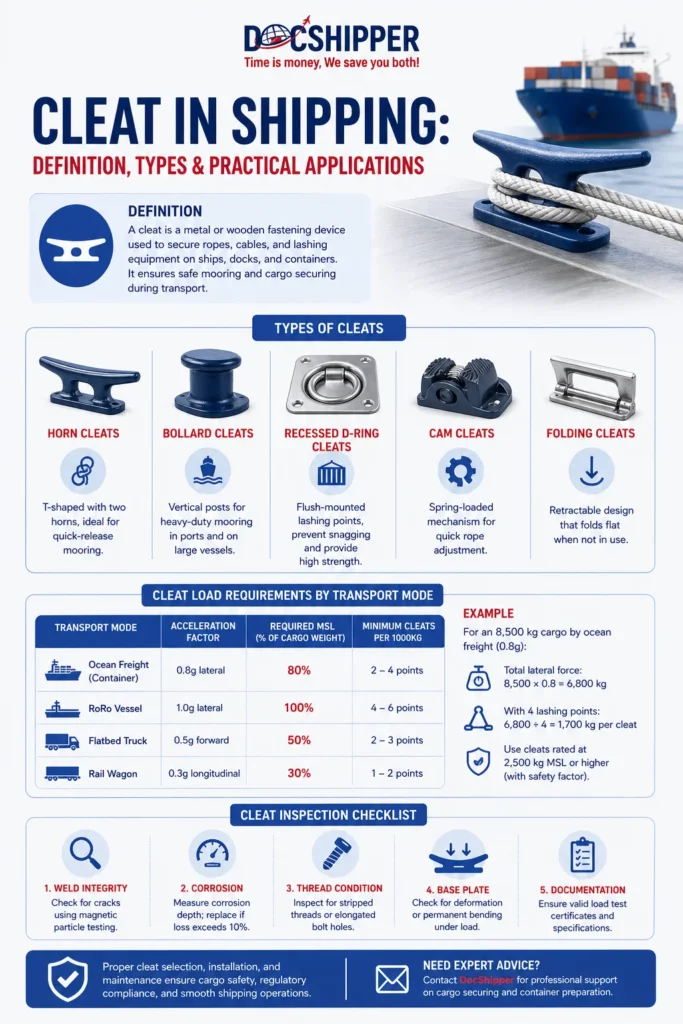
The five primary cleat categories in maritime logistics include:
Horn cleats feature two protruding arms forming a T-shape, ideal for quick-release mooring applications. Their design allows ropes to be secured with figure-eight patterns, commonly used on vessels up to 500 gross tonnage.
Bollard cleats consist of vertical posts with enlarged heads, designed for heavy-duty mooring operations. Port facilities typically install bollards rated between 50 and 200 tons for large vessel berthing.
Recessed D-ring cleats mount flush with container floors or vessel decks, preventing snag hazards while providing 2,000-5,000 kg lashing points. At DocShipper, we verify that all container modifications include properly rated recessed cleats to meet carrier acceptance standards.
Cam cleats incorporate spring-loaded mechanisms for rapid rope adjustment, frequently used in smaller craft and specialized cargo securing applications where frequent tension adjustments are necessary.
Folding cleats provide retractable securing points that stow flat when not in use, preventing damage to cargo or personnel in multi-purpose cargo holds.
Practical Applications & Load Calculations
Proper cleat selection requires calculating the Maximum Securing Load (MSL) based on cargo weight, transport mode, and anticipated forces during transit.
The basic formula for determining required cleat capacity follows:
| Transport Mode | Acceleration Factor | Required MSL (% of Cargo Weight) | Minimum Cleats per 1000kg |
|---|---|---|---|
| Ocean Freight (Container) | 0.8g lateral | 80% | 2-4 points |
| RoRo Vessel | 1.0g lateral | 100% | 4-6 points |
| Flatbed Truck | 0.5g forward | 50% | 2-3 points |
| Rail Wagon | 0.3g longitudinal | 30% | 1-2 points |
Use Case Example: A machinery shipment weighing 8,500 kg in a 40-foot container requires ocean freight securing. Using the 0.8g lateral acceleration factor, the total lateral force equals 6,800 kg (8,500 × 0.8). With four lashing points, each cleat must support minimum 1,700 kg, requiring cleats rated at 2,500 kg MSL with safety factor.
Inspection protocols mandate quarterly cleat examinations for commercial vessels. Critical inspection points include:
Weld integrity verification using magnetic particle testing to detect subsurface cracks that compromise load capacity.
Corrosion depth measurement with ultrasonic gauges, requiring cleat replacement when material loss exceeds 10% of original thickness.
Thread condition assessment for bolted cleats, checking for cross-threading, stripped threads, or elongated bolt holes indicating overload damage.
Base plate deformation analysis measuring deflection under load, as permanent bending indicates structural failure risk.
Documentation compliance review confirming load test certificates remain valid and match installed equipment specifications. DocShipper systematically verifies this documentation during container loading supervision to prevent customs delays related to improper cargo securing.
Conclusion
Cleats form the essential foundation of cargo securing systems in international logistics. Proper selection, installation, and maintenance directly impact cargo safety and regulatory compliance throughout the supply chain.
Need expert guidance on cargo securing requirements for your shipments? Contact DocShipper for professional consultation on lashing equipment and container preparation standards.
📚 Quiz
Test Your Knowledge: Cleat in Shipping
Q1 — What is the primary function of a cleat in maritime shipping?
Q2 — A logistics manager needs to secure a 8,500 kg machinery shipment in a 40-foot ocean freight container. According to IMO standards, what is the correct lateral force that must be accounted for when sizing the cleats?
Q3 — A freight operator wants to add extra cleats to a shipping container for a heavy-lift project. Which statement correctly describes what this modification requires?
🎯 Your Result
📞 Free Quote in 24hFAQ | Cleat in Shipping: Definition, Types & Practical Applications
Cleats feature protruding arms or posts for rope wrapping, while lashing rings provide circular attachment points for hooks and shackles. Cleats offer higher friction for rope-based securing, whereas rings facilitate quick-connect hardware systems.
ISO 1496 recommends annual inspections for container corner fittings including integrated cleats. Commercial operators typically conduct quarterly visual inspections with full load testing every five years or after suspected overload incidents.
Container modifications require approval from the container owner and must maintain CSC plate validity. Welding must follow ISO 1161 specifications with certified welders to preserve structural integrity and insurance coverage.
Properly maintained steel cleats in saltwater environments last 15-20 years with regular galvanization renewal. Aluminum cleats offer 25-30 year lifespans but require higher initial investment and careful alloy selection for load requirements.
High-strength polymer cleats exist for light-duty applications under 500 kg, but maritime regulations require metal cleats for commercial cargo operations. Plastic components risk brittle failure in cold temperatures and UV degradation.
Safe Working Load (SWL) equals the Maximum Securing Load divided by the safety factor (typically 2:1 for cargo securing). Always verify manufacturer specifications rather than estimating capacity based on visual size assessment.
Primary failure modes include weld cracking from cyclic loading, corrosion-induced material loss, improper installation torque causing base plate separation, and overloading beyond rated capacity. Regular inspection prevents 90% of cleat failures.
While ISO standards provide international harmonization, some nations enforce additional requirements. US Coast Guard regulations may exceed IMO minimums, and EU member states apply specific certification requirements for domestic vessels.
Dual-purpose use is acceptable only when the cleat's rated capacity exceeds both applications' maximum loads. Mooring forces often exceed cargo lashing requirements, so verify specifications cover the higher demand scenario.
Modifications require engineering drawings, material certificates, welding procedure specifications, non-destructive testing reports, and load test documentation. Classification societies must approve changes affecting vessel certification.
Optimal cleat positioning creates lashing angles between 30-60 degrees from horizontal, maximizing both vertical and lateral restraint. Cleats placed too close to cargo reduce securing efficiency, while excessive distance increases required lashing tension.
Marine environments require hot-dip galvanized steel or marine-grade aluminum alloys. Freshwater operations permit powder-coated carbon steel. Extreme cold necessitates impact-tested materials preventing brittle fracture below -40°C.
Need Help with
Logistics or Sourcing ?
First, we secure the right products from the right suppliers at the right price by managing the sourcing process from start to finish. Then, we simplify your shipping experience - from pickup to final delivery - ensuring any product, anywhere, is delivered at highly competitive prices.


Fill the Form
Prefer email? Send us your inquiry, and we’ll get back to you as soon as possible.
Contact us




