


In short ⚡
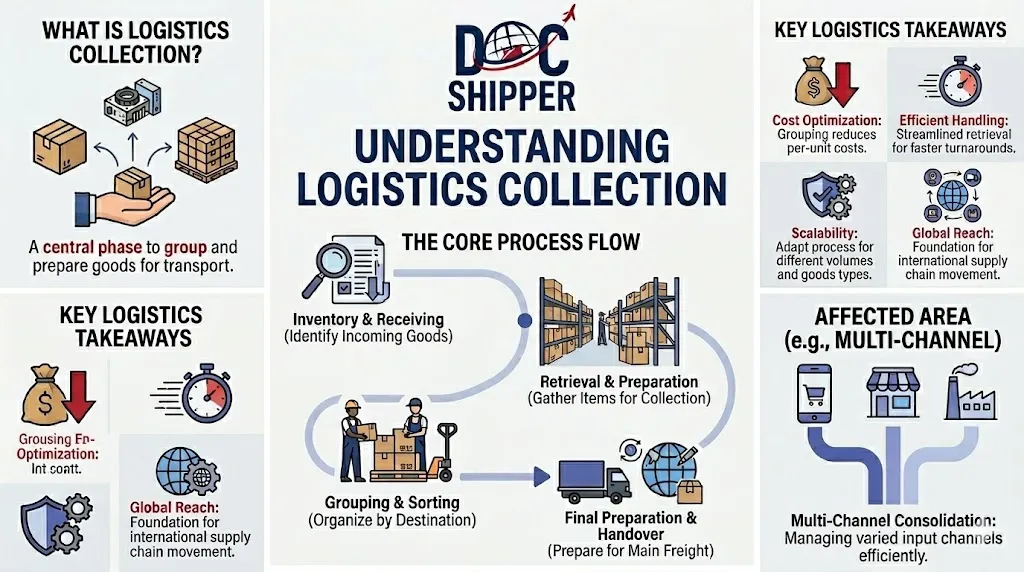
Collection is the logistics process of gathering goods from multiple suppliers, warehouses, or points of origin to consolidate them for transport. This operation optimizes freight costs, reduces carbon footprint, and streamlines supply chain coordination by grouping shipments before main carriage.
Introduction
Many importers struggle with fragmented pickups from different suppliers, leading to inflated transport costs and complex coordination. Collection solves this challenge by creating a centralized pickup strategy that transforms scattered shipments into a unified logistics flow.
In international trade, collection represents a critical pre-shipment phase. It directly impacts delivery timelines, freight budgets, and inventory management. Understanding this process enables businesses to negotiate better rates and maintain tighter control over their supply chain.
- Cost efficiency: Consolidating multiple pickups reduces per-unit transportation expenses
- Time optimization: Coordinated collection schedules prevent delays in the shipping cycle
- Quality control: Centralized inspection points before main transport
- Documentation accuracy: Simplified customs paperwork through consolidated shipments
- Carbon footprint reduction: Fewer individual trips mean lower environmental impact
Collection Mechanisms & Strategic Importance
Collection operates through two primary models: milk run collection (sequential pickups following a predetermined route) and hub-based collection (suppliers deliver to a central consolidation point). Each model serves different geographic and volume requirements.
The legal framework governing collection varies by jurisdiction. In the EU, collection services must comply with Regulation 2020/1056 on electronic freight transport information. This ensures traceability throughout the collection phase, particularly for cross-border movements.
Route optimization algorithms now dominate modern collection planning. These systems calculate the most efficient pickup sequence based on geographic proximity, time windows, and cargo compatibility. The technology reduces empty mileage by up to 35% compared to manual planning.
Temperature-controlled collection presents unique challenges. Pharmaceutical and perishable goods require cold chain integrity from the moment of pickup. This demands specialized vehicles, real-time temperature monitoring, and strict time compliance to prevent product degradation.
Reverse logistics collection handles product returns, recycling materials, or defective goods. This growing segment requires separate processes due to inspection needs, repackaging requirements, and different destination points compared to forward logistics.
At DocShipper, we coordinate collection services across 150+ countries, ensuring seamless pickup from your suppliers with full visibility through our tracking platform. Our local teams verify cargo condition at collection point to prevent downstream issues.
Practical Examples & Comparative Data
Consider an electronics importer sourcing components from five Chinese manufacturers in Shenzhen, Dongguan, and Guangzhou. Individual pickups would cost approximately $180 per supplier ($900 total). A coordinated collection service reduces this to $420—a 53% cost saving.
| Collection Method | Cost per Pickup | Total Time | CO2 Emissions |
|---|---|---|---|
| Individual Pickups | $180 × 5 = $900 | 5-7 days | ~285 kg |
| Milk Run Collection | $420 total | 2-3 days | ~125 kg |
| Hub-Based Collection | $380 total | 1-2 days | ~95 kg |
Real-world scenario: A European fashion retailer collecting garments from 12 Turkish suppliers in Istanbul reduced lead time from 14 days to 6 days by implementing weekly scheduled collections. The predictable pickup schedule allowed suppliers to plan production more efficiently, improving overall supply chain velocity.
Data from the International Road Transport Union shows that consolidated collection reduces transport costs by 40-60% for shipments under 10 cubic meters. The savings diminish for larger volumes where dedicated trucks become more economical.
Peak season considerations: During Q4 retail peaks, collection capacity becomes constrained. Booking collection services 3-4 weeks in advance prevents delays, while spot bookings can incur 25-40% premium charges due to limited vehicle availability.
Technology integration transforms collection efficiency. GPS tracking, electronic proof of delivery (ePOD), and automated exception alerts provide real-time visibility. Companies using digital collection platforms report 78% fewer pickup-related disputes compared to manual processes.
Conclusion
Collection represents a strategic lever for cost reduction and supply chain acceleration in international logistics. Mastering this phase enables importers to negotiate from strength, reduce environmental impact, and maintain predictable delivery schedules.
Need expert coordination for your multi-supplier collections? Contact DocShipper for a customized collection strategy tailored to your trade lanes and volume requirements.
📚 Quiz
Test Your Knowledge: Collection in Logistics
Q1 — What does "collection" mean in a logistics context?
Q2 — A common misconception about collection services is that they are only useful for large shipments. What does the data actually show?
Q3 — An electronics importer sources components from 5 factories spread across Shenzhen, Dongguan, and Guangzhou. Which approach best illustrates a "milk run collection"?
🎯 Your Result
📞 Free Quote in 24hFAQ | Collection in Logistics: Definition, Process & Practical Examples
Collection refers to gathering goods from multiple sources in a coordinated operation, while pickup typically means retrieving cargo from a single location. Collection involves route planning and consolidation strategy.
Standard collection services need 48-72 hours notice. Express collections are possible with 24-hour notice but incur premium charges. Peak seasons require 2-3 weeks advance booking for guaranteed capacity.
Yes, but specialized collection is required for dangerous goods. Carriers must hold ADR/IMDG certification, use compliant vehicles, and follow strict segregation rules when combining hazmat with general cargo.
Commercial invoice, packing list, collection authorization letter, and supplier contact details are essential. Cross-border collections may require export declarations depending on the origin country's customs regulations.
Pricing typically uses distance-based tiers plus a per-stop fee. Milk run collections charge $60-120 per additional stop, while hub-based models charge suppliers individually for delivery to the consolidation center.
Most carriers allow 30-60 minutes waiting time. Beyond this, waiting fees apply ($40-80/hour). If goods aren't ready, the collection may be rescheduled with additional charges for the return trip.
Yes, though this may increase costs by 15-25%. Time-definite collections are common for just-in-time manufacturing or perishable goods where pickup timing directly impacts production schedules or product quality.
Drivers use electronic proof of delivery systems to record piece counts, weights, and photographic evidence. Discrepancies trigger immediate notifications to both shipper and consignee for resolution before departure.
Standard carrier liability covers collection at approximately $2-3 per kilogram. Full cargo insurance should be arranged separately, with coverage beginning at the first pickup point rather than the consolidation warehouse.
Most providers require a combined minimum of 1 cubic meter or 100 kg across all collection points. Below this threshold, individual pickups may be more economical despite higher per-unit costs.
Severe weather can delay collections by 24-48 hours. Reputable providers maintain buffer time in schedules and communicate delays proactively. Force majeure clauses typically exempt carriers from penalties during extreme weather events.
Yes, third-party inspection can be integrated at collection points. This allows defect detection before consolidation, preventing contamination of good batches and reducing return logistics costs for rejected goods.
Need Help with
Logistics or Sourcing ?
First, we secure the right products from the right suppliers at the right price by managing the sourcing process from start to finish. Then, we simplify your shipping experience - from pickup to final delivery - ensuring any product, anywhere, is delivered at highly competitive prices.


Fill the Form
Prefer email? Send us your inquiry, and we’ll get back to you as soon as possible.
Contact us




