


In short ⚡
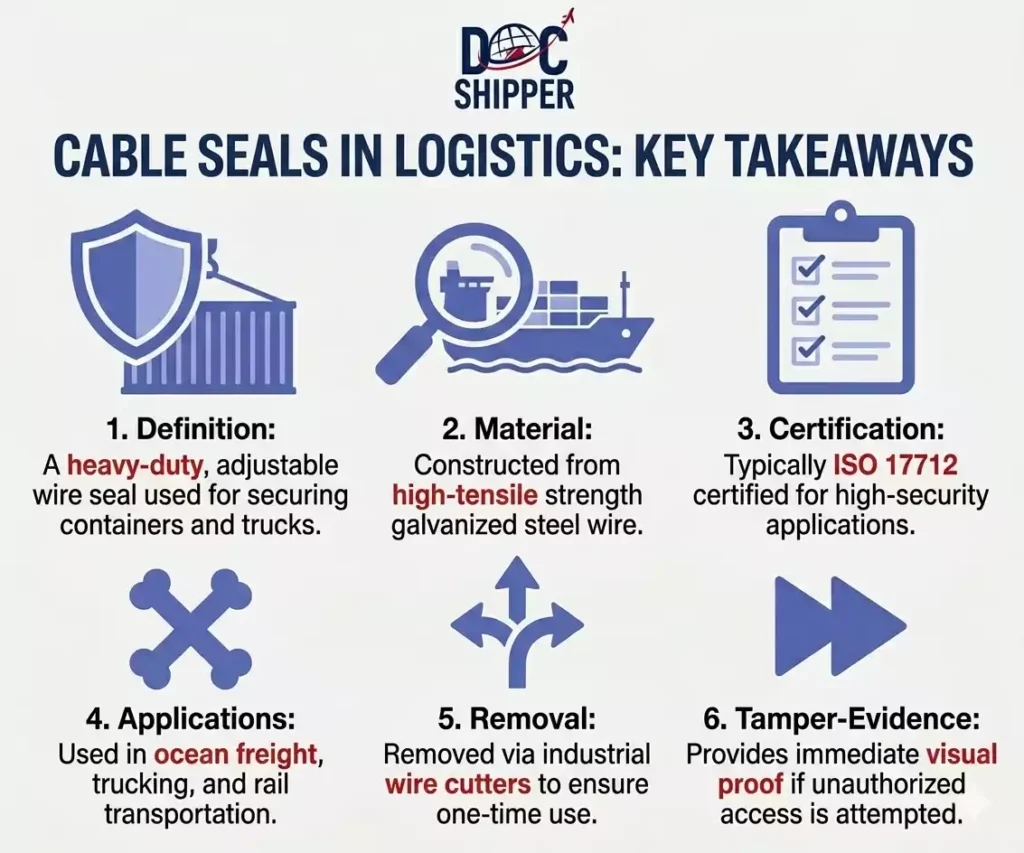
A cable seal is a tamper-evident security device used to secure cargo containers, trailers, and trucks during international transport. Consisting of a flexible steel cable and locking mechanism, it prevents unauthorized access and provides visible evidence of tampering, ensuring cargo integrity from origin to destination.
Introduction
One of the most common security vulnerabilities in international shipping occurs between loading and customs inspection. Without proper sealing mechanisms, cargo faces theft, contamination, or regulatory rejection at borders.
The cable seal addresses this critical security gap in the global supply chain. Unlike traditional bolt seals, cable seals offer flexibility for irregular closure points while maintaining high-security standards required by customs authorities worldwide.
Key characteristics of cable seals include:
- Adjustable length – Fits various locking configurations from 180mm to 500mm
- Sequential numbering – Unique identification for tracking and verification
- ISO 17712 compliance – Meets international high-security seal standards
- Tamper-evident design – Visible destruction required for removal
- Weather resistance – Performs across temperature extremes (-40°C to +80°C)
Technical Specifications & Regulatory Compliance
Cable seals function through a locking barrel mechanism that permanently captures the steel cable once inserted. The barrel contains internal teeth that grip the cable in one direction, preventing withdrawal without visible destruction.
The ISO 17712 standard classifies cable seals as “high-security” devices when they meet specific resistance criteria. This certification requires seals to withstand at least 1,500 newtons of pulling force and resist hand tool attacks for a minimum duration defined by the standard.
According to U.S. Customs and Border Protection, all containers entering the United States under the Container Security Initiative must use ISO 17712-compliant seals. The seal number must appear on the cargo manifest and match physical inspection upon arrival.
Manufacturing specifications include corrosion-resistant materials such as galvanized steel cables and ABS plastic or aluminum alloy barrels. The cable diameter typically ranges from 1.8mm to 3.5mm, with breaking strength between 1,200 and 2,000 kg depending on construction.
Laser engraving or hot stamping applies unique serial numbers to each seal body. Advanced models incorporate barcodes or QR codes for digital tracking integration. These identifiers link to shipper databases, enabling real-time verification throughout the logistics chain.
At DocShipper, we verify seal integrity at every handover point and maintain photographic records of seal numbers to prevent disputes during customs clearance. This documentation proves essential when shipments cross multiple jurisdictions with varying inspection protocols.
Practical Applications & Industry Data
Cable seals serve diverse applications beyond standard container doors. Their flexibility makes them ideal for tanker truck valves, airline cargo nets, and railcar hatches where rigid seals cannot function effectively.
Industry data reveals significant cost implications of seal failures. A 2023 supply chain security report indicated that 18% of cargo theft incidents involved compromised or missing seals. The average loss per incident exceeded $180,000, not including regulatory penalties and shipment delays.
Comparative Analysis: Cable Seal Types
| Seal Type | Cable Diameter | Breaking Strength | Typical Application | Cost per Unit |
|---|---|---|---|---|
| Standard Cable | 1.8mm | 1,200 kg | Domestic trailers | $0.40–$0.70 |
| ISO 17712 High-Security | 2.5mm | 1,800 kg | International containers | $1.20–$2.00 |
| Heavy-Duty Cable | 3.5mm | 2,000+ kg | High-value cargo | $2.50–$4.00 |
| RFID-Enabled Cable | 2.5mm | 1,800 kg | Smart logistics tracking | $8.00–$15.00 |
Use Case: Pharmaceutical Cold Chain
A European pharmaceutical distributor shipping temperature-sensitive vaccines to West Africa implemented cable seals with integrated temperature indicators. The 300mm adjustable length accommodated specialized refrigerated container latches that standard bolt seals could not secure.
Results over 12 months showed:
- Zero tampering incidents across 847 shipments
- 22% reduction in customs inspection delays due to clear seal verification
- $340,000 saved in prevented cargo loss and insurance claims
- 98.7% seal survival rate in harsh tropical conditions
- Full regulatory compliance with WHO PQS requirements
The distributor noted that seal documentation integrated with their blockchain-based tracking system, providing immutable proof of chain-of-custody for regulatory audits. This digital-physical security combination became a competitive advantage when bidding for government contracts.
Conclusion
Cable seals represent a critical security infrastructure in modern logistics, balancing flexibility with regulatory compliance. Their proper selection and documentation directly impact cargo security, customs efficiency, and supply chain integrity.
Need expert guidance on seal selection for your specific shipping requirements? Contact DocShipper for a customized security assessment and compliance review.
📚 Quiz
Test Your Knowledge: Cable Seal
Q1 — What is the primary purpose of a cable seal in international logistics?
Q2 — A cable seal breaks during transit. Which of the following statements is correct?
Q3 — A pharmaceutical company needs to seal specialized refrigerated container latches with irregular closure points for a shipment to West Africa. Which seal type is the most appropriate choice?
🎯 Your Result
📞 Free Quote in 24hFAQ | Cable Seal: Definition, Usage & Practical Examples in Logistics
Cable seals use flexible steel cables for irregular closure points, while bolt seals employ rigid metal bars for standard container doors. Cable seals offer length adjustability (180-500mm), whereas bolt seals provide higher breaking strength (3,000+ kg) but less versatility.
No. Cable seals are single-use tamper-evident devices. Removal requires cutting the cable or destroying the locking mechanism, making reuse impossible. This design ensures any unauthorized access leaves visible evidence of tampering.
Check the unique serial number against shipping documents, inspect for ISO 17712 markings, verify the manufacturer's logo, and examine the locking barrel for consistent engraving quality. Counterfeit seals often show irregular numbering or poor finishing.
Document the broken seal immediately with photographs showing the container door and surrounding area. Notify customs authorities and the shipping company. A new seal must be applied with updated documentation noting the incident and new seal number.
ISO 17712-compliant cable seals function between -40°C and +80°C. Galvanized steel cables resist corrosion in marine environments, while UV-resistant plastic barrels prevent degradation under direct sunlight during extended outdoor storage.
The shipper or their authorized agent applies the seal after loading completion. The seal number must be recorded on the Bill of Lading and other shipping documents before the container leaves the loading facility.
Most countries recognize ISO 17712-compliant cable seals. However, some jurisdictions require specific seal types or additional security measures. Always verify destination country requirements before shipment to avoid clearance delays.
When properly applied, cable seals maintain security indefinitely under normal transport conditions. The steel cable does not degrade, and the locking mechanism remains engaged until physically destroyed during authorized opening.
Standard cable seals require manual verification. RFID-enabled versions allow electronic tracking through compatible readers at checkpoints. These smart seals cost significantly more ($8-15 vs. $1-2) but provide real-time location and tamper alerts.
Required documents include the seal number on the commercial invoice, packing list, Bill of Lading, and customs declaration. Photographs of the applied seal and container door provide additional verification during disputes.
Air freight typically uses different security measures, but cable seals secure ULD (Unit Load Device) nets and specialized cargo. IATA regulations permit cable seals for consolidations requiring tamper-evidence beyond standard airline security protocols.
Cut cable seals should be collected and recycled as scrap metal. Many logistics facilities maintain seal disposal bins for proper recycling. Never discard seals with visible serial numbers in unsecured areas to prevent counterfeiting attempts.
Need Help with
Logistics or Sourcing ?
First, we secure the right products from the right suppliers at the right price by managing the sourcing process from start to finish. Then, we simplify your shipping experience - from pickup to final delivery - ensuring any product, anywhere, is delivered at highly competitive prices.


Fill the Form
Prefer email? Send us your inquiry, and we’ll get back to you as soon as possible.
Contact us




