


In short ⚡
Devanning is the process of unloading cargo from a shipping container at destination. This critical operation involves removing goods, verifying quantities, inspecting for damage, and preparing merchandise for onward distribution. Proper devanning ensures cargo integrity and supply chain efficiency.
Introduction
Many importers underestimate the complexity of container unloading. Rushed devanning leads to damaged goods, inventory discrepancies, and costly delays. This operation represents a critical handoff point in international logistics.
In global trade, devanning bridges ocean freight and final delivery. Whether at port terminals, warehouses, or distribution centers, this process determines whether cargo reaches customers intact and on schedule.
- Quality control checkpoint: First opportunity to identify shipping damage or shortages
- Customs compliance: Physical verification for duty assessment and regulatory inspection
- Inventory accuracy: Reconciliation between shipping documents and actual received quantities
- Time-sensitive operation: Container demurrage charges accrue during delays
- Safety-critical activity: Proper handling prevents worker injuries and product damage
Devanning Process & Operational Expertise
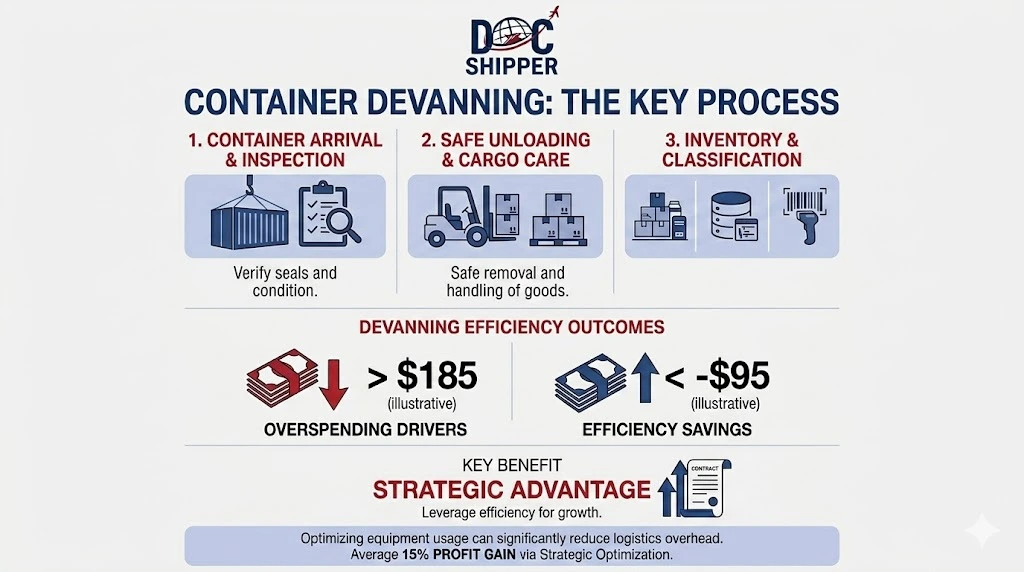
Professional devanning follows standardized protocols. The operation begins with container inspection before doors open. Operators check seal integrity, record container numbers, and photograph external condition. This documentation protects all parties in damage disputes.
The unloading sequence matters significantly. Cargo positioned at container rear exits first, while front-loaded items require complete emptying. Fragile goods demand specialized handling equipment. Forklifts, pallet jacks, or manual labor depend on cargo characteristics and packaging.
Verification procedures run parallel to physical unloading. Teams count pieces against packing lists, scan barcodes for inventory systems, and segregate damaged items. This real-time reconciliation prevents downstream errors. At DocShipper, we systematically verify every container against commercial invoices to eliminate discrepancies before customs clearance.
The workspace configuration impacts efficiency dramatically. Adequate staging areas prevent bottlenecks. Clear labeling zones separate different consignments. Temperature-controlled environments protect sensitive products during the transition period.
Regulatory compliance adds complexity in certain industries. Food products require HACCP-certified facilities. Pharmaceuticals demand GDP validation. Hazardous materials follow UN dangerous goods protocols. Customs authorities may require supervised devanning for high-risk shipments or random inspections.
Practical Examples & Performance Data
Devanning efficiency varies by cargo type and facility capabilities. Industry benchmarks reveal significant performance differences across operational models.
| Cargo Type | Average Time (20ft) | Labor Required | Damage Risk |
|---|---|---|---|
| Palletized goods | 45-60 minutes | 2 operators + forklift | Low (2-3%) |
| Floor-loaded cartons | 2-3 hours | 4-6 workers | Medium (5-8%) |
| Bulk materials (bags) | 3-4 hours | 6-8 workers | High (10-15%) |
| Heavy machinery | 1-2 hours | Specialized rigging crew | Very Low (<1%) |
Case Study: A European electronics importer received 40ft containers with 800 cartons floor-loaded. Initial devanning took 6 hours with frequent damage. After switching to palletized loading, devanning time dropped to 90 minutes with damage rates under 2%. The packaging investment paid back within three shipments through reduced labor costs and claims.
Cost implications extend beyond labor. Container detention fees average $75-150 per day at major ports. A two-hour devanning delay can trigger overnight charges. Damaged goods require repackaging, disposal, or claims processing—each adding administrative burden.
Technology integration improves accuracy. RFID scanning reduces count time by 40%. Mobile inventory apps eliminate paper documentation. Automated damage detection systems using AI image recognition identify issues human inspectors miss.
Seasonal variations affect performance. Peak shipping periods (September-November) create warehouse congestion. Devanning appointments extend 2-3 days during high season versus same-day service in slow months. Planning buffer time prevents supply chain disruptions.
Geographic factors influence procedures. Tropical climates require rapid devanning for temperature-sensitive goods. Cold storage facilities charge premium rates. Port proximity reduces drayage costs but may increase labor expenses in high-cost urban areas.
Conclusion
Devanning represents far more than simple unloading. This operation determines cargo condition, inventory accuracy, and supply chain velocity. Professional execution protects product value and prevents costly delays.
Need expert support for your container devanning operations? Contact DocShipper for comprehensive logistics solutions tailored to your cargo requirements.
📚 Quizz
Test Your Knowledge: Devanning
Q1 — What does "devanning" specifically refer to in international logistics?
Q2 — Under which Incoterm is the seller responsible for covering devanning costs at the destination?
Q3 — An importer receives a 40ft container with 800 floor-loaded cartons. Devanning takes 6 hours and damage rates are high. What is the most effective solution to reduce both time and damage?
🎯 Your Result
📞 Free Quote in 24hFAQ | Devanning: Definition, Process & Practical Examples
Devanning specifically refers to emptying shipping containers, while unloading is a broader term covering any cargo removal from transport vehicles including trucks, trains, or aircraft.
Devanning duration ranges from 45 minutes for palletized cargo in 20ft containers to 4+ hours for floor-loaded bulk goods in 40ft containers, depending on cargo type and labor availability.
Responsibility depends on Incoterms. Under DDP terms, sellers cover devanning. With DAP or FOB, buyers typically arrange and pay for container unloading at destination facilities.
Yes, many ports offer Container Freight Stations (CFS) for devanning services. However, warehouse devanning often provides better control, lower damage rates, and direct integration with distribution networks.
Essential equipment includes forklifts for palletized cargo, pallet jacks for maneuvering, hand trucks for cartons, loading docks for efficiency, and safety gear including gloves and steel-toe boots.
Damage prevention requires proper equipment selection, trained personnel, adequate workspace, systematic unloading sequences, and immediate segregation of fragile items. Rushed operations increase breakage exponentially.
Standard documents include the container packing list, commercial invoice, delivery order, equipment interchange receipt, and damage/shortage reports. Photographic evidence supports insurance claims if needed.
Temperature-sensitive goods require climate-controlled facilities. Pharmaceuticals need 15-25°C environments, frozen foods demand immediate cold chain transfer, and electronics benefit from humidity-controlled spaces to prevent condensation damage.
Discrepancies trigger exception reports. Teams document shortages with photos, notify freight forwarders immediately, file claims with carriers within required timeframes, and adjust inventory systems to reflect actual received quantities.
Yes, customs authorities may conduct examinations during devanning. Officers verify cargo against declarations, inspect for prohibited items, assess duties on actual goods, and ensure compliance with import regulations.
Proper devanning documentation supports cargo insurance claims. Immediate damage notation, photographic evidence, independent surveys when needed, and timely carrier notifications preserve claim rights under marine insurance policies.
Containers incur demurrage charges after free time expires—typically 3-5 days at port. Fees escalate daily, ranging from $75-200+ per container. Efficient devanning scheduling prevents these unnecessary costs.
Need Help with
Logistics or Sourcing ?
First, we secure the right products from the right suppliers at the right price by managing the sourcing process from start to finish. Then, we simplify your shipping experience - from pickup to final delivery - ensuring any product, anywhere, is delivered at highly competitive prices.


Fill the Form
Prefer email? Send us your inquiry, and we’ll get back to you as soon as possible.
Contact us




