


In short ⚡
Dunnage refers to protective materials used to secure, stabilize, and cushion cargo during transportation. It prevents shifting, absorbs shocks, and fills void spaces in containers or pallets, ensuring goods arrive undamaged while optimizing loading efficiency.Introduction
A common misconception in international shipping is that packaging alone protects cargo. Without proper dunnage, even well-packaged goods face damage from vibrations, shifting, and impact during transit. This protective layer is critical in preventing costly insurance claims and delivery delays.
In global logistics, dunnage serves as the final barrier between your products and the harsh realities of ocean freight, air transport, and road haulage. It directly impacts cargo integrity, loading efficiency, and compliance with carrier requirements.
- Primary function: Prevents cargo movement and absorbs transit shocks
- Space optimization: Fills voids to maximize container utilization
- Regulatory compliance: Meets ISPM 15 standards for wood-based materials
- Cost reduction: Minimizes damage claims and product loss
- Versatility: Adapts to diverse cargo types and transport modes
Technical Expertise & Material Types
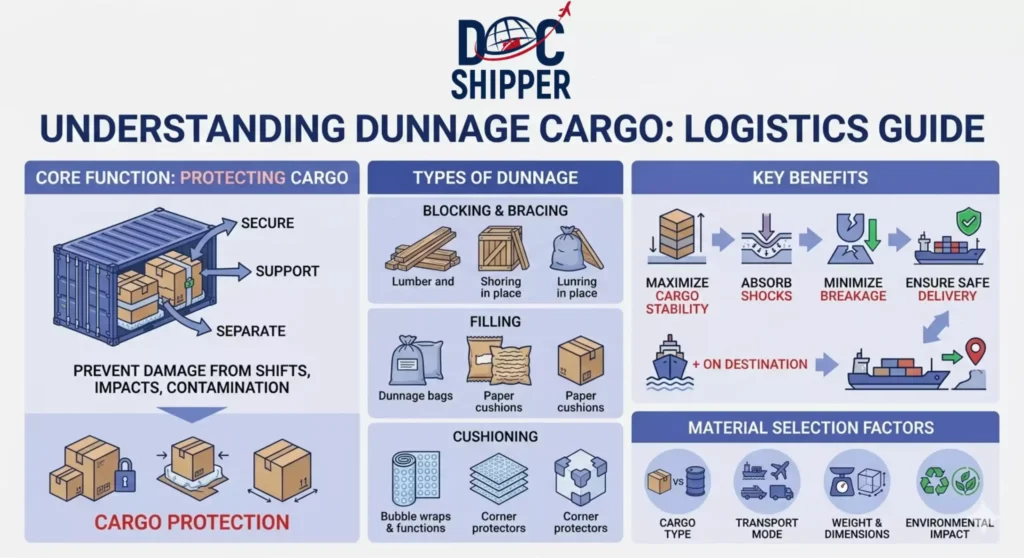
Understanding dunnage requires knowledge of material science and logistics engineering. The choice depends on cargo weight, fragility, moisture sensitivity, and destination regulations.
Wood-based dunnage remains the industry standard for heavy machinery and automotive parts. Lumber, plywood, and timber blocks provide exceptional load-bearing capacity. However, international shipments require heat-treated or fumigated wood complying with ISPM 15 phytosanitary standards to prevent pest contamination.
Air-filled dunnage bags utilize polywoven fabric and inflatable bladders to create pressure barriers. These expand to fill container gaps, preventing lateral cargo movement during ocean transport. Pressure ratings range from 2 to 8 PSI depending on cargo weight distribution.
Foam and corrugated materials offer lightweight alternatives for fragile electronics and consumer goods. Polyethylene foam absorbs vibrations while maintaining structural integrity. Corrugated paper dunnage provides cost-effective cushioning for non-critical applications.
Reusable plastic systems include modular dividers, corner protectors, and edge guards. These reduce waste and long-term costs for repetitive shipping routes. At DocShipper, we systematically assess dunnage requirements during our packing services to ensure optimal cargo protection and regulatory compliance.
Anti-slip mats and friction sheets prevent pallet sliding without adding significant weight. Rubber-coated textiles increase surface friction by up to 400%, crucial for stacked cargo in refrigerated containers where condensation creates slippery conditions.
Practical Examples & Data-Driven Applications
Real-world applications demonstrate dunnage’s impact on logistics efficiency and damage prevention. Consider these scenarios:
| Cargo Type | Dunnage Solution | Damage Reduction | Cost Impact |
|---|---|---|---|
| Automotive Parts (FCL) | Wood blocking + airbags | 87% fewer claims | +$450 per container |
| Electronics (LCL) | Foam inserts + corner guards | 92% damage prevention | +$120 per pallet |
| Perishable Goods | Anti-slip mats + spacers | 78% stability improvement | +$85 per shipment |
| Industrial Machinery | Steel bracing + timber cribbing | 95% secure transport | +$1,200 per unit |
Case Study: A European electronics manufacturer shipping to Southeast Asia experienced 14% product damage in Q1 2023. After implementing custom foam dunnage with void fillers, damage rates dropped to 1.8% in Q2, saving $47,000 in replacement costs across 230 shipments.
Container utilization data shows that strategic dunnage placement increases loading density by 12-18%. A 40-foot container typically wastes 9% of volume due to irregular cargo shapes. Adjustable dunnage systems recover 6-7% of this space, translating to reduced freight costs per unit.
Regulatory impact: Non-compliant wood dunnage causes 23% of customs delays in Australia and New Zealand. Heat-treated alternatives eliminate quarantine holds, reducing transit time by 3-5 days on average.
Environmental considerations: Reusable plastic dunnage systems reduce waste by 68% compared to single-use corrugated materials. A mid-sized importer handling 500 containers annually saves 12 tons of disposal costs while meeting sustainability targets.
Temperature-sensitive cargo: Insulated dunnage maintains cold chain integrity. Thermal barriers combined with gel packs keep pharmaceutical shipments within ±2°C tolerance for 72-hour transit windows, meeting GDP compliance standards.
Conclusion
Dunnage is not an optional expense but a strategic investment in cargo integrity and supply chain reliability. Proper material selection directly impacts damage rates, regulatory compliance, and overall logistics costs.
Need expert guidance on dunnage solutions for your specific cargo? Contact DocShipper for tailored packing and logistics support.
📚 Quiz
Test Your Knowledge: Dunnage
Q1 — What is the primary purpose of dunnage in cargo transportation?
Q2 — A shipper uses untreated wood dunnage for an international shipment to Australia. What is the most likely consequence?
Q3 — A logistics manager is shipping fragile electronics in an LCL container and wants to minimize damage. Which dunnage solution is most appropriate?
🎯 Your Result
📞 Free Quote in 24hFAQ | Dunnage: Definition, Types & Practical Examples in Cargo Protection
Need Help with
Logistics or Sourcing ?
First, we secure the right products from the right suppliers at the right price by managing the sourcing process from start to finish. Then, we simplify your shipping experience - from pickup to final delivery - ensuring any product, anywhere, is delivered at highly competitive prices.


Fill the Form
Prefer email? Send us your inquiry, and we’ll get back to you as soon as possible.
Contact us




