In short ⚡
The American Trucking Associations (ATA) is the largest national trade association representing the trucking industry in the United States. Founded in 1933, ATA advocates for policies affecting motor carriers, promotes safety standards, and provides industry data critical for logistics professionals managing freight operations across North America.
Introduction
Understanding regulatory changes, compliance requirements, and industry benchmarks can overwhelm importers and exporters relying on trucking services. The American Trucking Associations serves as the central voice for over 37,000 members spanning every segment of the motor carrier industry.
For international logistics operations, ATA’s influence extends beyond domestic trucking. Their policy positions shape cross-border freight regulations, driver qualification standards, and equipment specifications that directly affect import/export timelines.
Key characteristics of ATA’s role include:
- Legislative advocacy at federal and state levels affecting transportation policy
- Safety program development including America’s Road Team and National Truck Driving Championships
- Economic research publishing authoritative data on freight tonnage and industry trends
- Regulatory guidance helping carriers navigate FMCSA, DOT, and EPA compliance
- Industry representation in negotiations affecting labor, infrastructure, and trade agreements
ATA Structure & Advocacy Framework
The American Trucking Associations operates through a federated structure combining national leadership with state-level trucking associations. This dual-layer organization allows for coordinated advocacy on federal regulations while addressing region-specific challenges affecting freight movement.
ATA’s policy committees focus on five critical areas: safety and operations, economics and finance, legal affairs, security, and sustainability. Each committee comprises industry executives who shape ATA’s positions on emerging regulations. When FMCSA proposes new Hours of Service rules or EPA introduces emission standards, these committees formulate industry responses.
The organization’s conference structure includes specialized councils representing different trucking segments—less-than-truckload carriers, truckload carriers, private fleets, and intermodal operators. This segmentation ensures diverse operational models receive appropriate representation in policy discussions.
ATA’s lobbying effectiveness stems from its Political Action Committee (PAC) and grassroots mobilization capabilities. The association maintains relationships with Congressional transportation committees and regularly testifies on legislation affecting freight efficiency, infrastructure funding, and international trade facilitation.
For logistics providers like DocShipper managing North American freight, ATA’s regulatory updates provide advance notice of compliance changes affecting carrier selection and routing strategies. We monitor ATA bulletins to anticipate regulatory shifts impacting cross-border operations between the US, Canada, and Mexico.
The association publishes industry standards adopted by carriers nationwide, including best practices for cargo securement, driver training protocols, and maintenance schedules. These voluntary standards often become de facto requirements as shippers demand compliance verification from their transportation partners.
External reference: American Trucking Associations Official Website provides current policy positions and regulatory alerts.
Industry Impact & Key Statistics
ATA’s economic research division produces the most comprehensive trucking industry data available, directly influencing rate negotiations and capacity planning for international freight forwarders.
The association’s annual American Trucking Trends report documents industry performance across operational and financial metrics. Recent data reveals trucking’s economic magnitude:
| Metric | Current Value | Logistics Implication |
|---|---|---|
| Annual Revenue | $940.8 billion | Represents 80.7% of US freight spend |
| Total Trucks Operated | 11.84 million | Fleet capacity for route planning |
| Employment | 8.4 million jobs | Driver shortage affects lead times |
| Freight Tonnage Share | 72.6% of total | Dominant mode for import/export drayage |
Driver shortage projections published by ATA influence capacity forecasts. The association estimates an 80,000-driver shortfall in 2023, projected to reach 160,000 by 2031. This data informs DocShipper’s carrier vetting process, prioritizing partners with robust recruitment and retention programs.
ATA’s For-Hire Truck Tonnage Index serves as a leading economic indicator tracked by Federal Reserve economists. Month-over-month changes signal shifts in manufacturing output and consumer demand, helping logistics planners anticipate volume fluctuations.
Safety benchmarking data from ATA’s SafetyFirst program allows shippers to evaluate carrier performance against industry averages. Key metrics include crash rates per million miles, out-of-service violations, and compliance scores—all critical when selecting transportation partners for high-value international cargo.
The association’s Technology & Maintenance Council publishes recommended practices adopted by major fleets, influencing equipment specifications for tractors and trailers used in international intermodal operations. These standards affect container chassis availability and specialized equipment for temperature-controlled shipments.
Use Case Example: An electronics importer receiving containers at the Port of Los Angeles uses ATA’s port drayage capacity reports to anticipate truck availability during peak season. When ATA data shows a 15% capacity reduction due to California’s Advanced Clean Trucks regulation phase-in, the importer adjusts lead times and considers rail alternatives for inland distribution.
DocShipper Platform
Optimize Your Global Logistics with Cutting-Edge Solutions
Enhance efficiency, cut costs, and gain 24/7 visibility 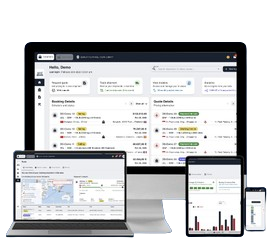 over your entire supply chain.
- Cut your shipping costs and maximize your margins
- Manage sourcing, freight, & customs on one platform
- Get real-time tracking and analytics
Conclusion
The American Trucking Associations functions as the essential knowledge hub and advocacy engine for North America’s trucking industry, directly impacting international logistics operations through regulatory influence and authoritative industry data. Understanding ATA’s policy positions and research outputs enables better carrier selection and regulatory compliance planning.
Need expert guidance on navigating US trucking regulations for your import/export operations? Contact DocShipper for comprehensive freight forwarding solutions aligned with current ATA standards.
📚 Quiz
Test Your Knowledge: American Trucking Associations (ATA)
1. What is the primary role of the American Trucking Associations (ATA)?
2. According to ATA data, what share of total US freight tonnage is moved by trucking?
3. An electronics importer at the Port of Los Angeles notices truck availability dropping sharply during peak season. Which ATA resource would best help them anticipate this capacity issue and adjust their supply chain strategy?
🎯 Your Result
📞 Free Quote in 24hFAQ | American Trucking Associations (ATA): Definition, Role & Industry Impact
ATA serves as the national trade association representing the trucking industry, advocating for favorable legislation, promoting safety standards, and providing economic research that shapes transportation policy and industry practices across the United States.
Freight forwarders gain access to regulatory updates, industry benchmarking data, carrier vetting resources, and advance notice of policy changes affecting transportation costs and compliance requirements for domestic and cross-border shipments.
Yes, ATA participates in NAFTA/USMCA transportation working groups and advocates on cross-border trucking policies affecting US-Mexico and US-Canada freight movements, including driver qualification reciprocity and equipment standards harmonization.
ATA develops voluntary safety programs like SafetyFirst, coordinates industry-wide safety initiatives, and works with FMCSA to shape Hours of Service rules, electronic logging device requirements, and driver training standards adopted nationwide.
ATA releases monthly tonnage index updates, quarterly economic reports, and an annual American Trucking Trends publication providing comprehensive statistics on fleet size, employment, revenue, and operational metrics used for capacity planning.
International logistics providers can access public ATA reports and subscribe to regulatory updates, though full membership benefits are primarily designed for US-based motor carriers, suppliers, and transportation service providers.
ATA supports gradual autonomous vehicle integration with appropriate safety testing and regulatory frameworks, viewing automation as a tool to address driver shortages while maintaining employment in logistics support roles.
ATA's Environmental Affairs Committee works with EPA on emission standards, advocates for infrastructure supporting alternative fuels, and provides compliance guidance for state-level environmental regulations affecting trucking operations.
TMC develops recommended maintenance practices, equipment specifications, and technology standards adopted by fleets nationwide, influencing trailer design, telematics systems, and maintenance scheduling protocols that affect freight reliability.
ATA's cost indices tracking fuel, labor, equipment, and insurance expenses provide objective benchmarks used by shippers and carriers during rate negotiations, ensuring pricing reflects current operational realities.
Yes, ATA offers professional development programs through its Management Conference & Exhibition, webinars on regulatory compliance, and certification courses covering transportation law, safety management, and operational best practices.
ATA lobbies for federal and state infrastructure funding, advocates for highway improvement projects reducing freight bottlenecks, and supports policies modernizing bridges, rest areas, and truck parking facilities critical for efficient logistics operations.
Need Help with
Logistics or Sourcing ?
First, we secure the right products from the right suppliers at the right price by managing the sourcing process from start to finish. Then, we simplify your shipping experience - from pickup to final delivery - ensuring any product, anywhere, is delivered at highly competitive prices.


Fill the Form
Prefer email? Send us your inquiry, and we’ll get back to you as soon as possible.
Contact us