


In short ⚡
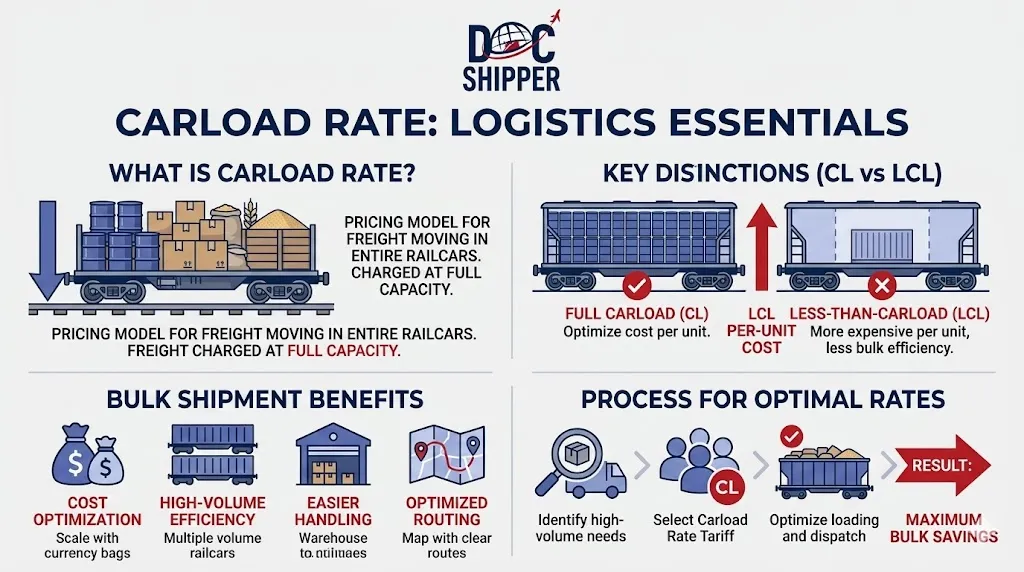
Carload rate is a freight pricing structure applied when shipping a full railcar of goods, typically offering lower per-unit costs compared to less-than-carload (LCL) shipments. This rate incentivizes bulk transportation by rail, optimizing carrier capacity utilization and reducing handling complexity for shippers moving large volumes.
Introduction
Shippers often face confusion when choosing between carload and less-than-carload rail freight options. The decision directly impacts transportation costs, transit times, and supply chain efficiency.
In international and domestic logistics, the carload rate represents a critical pricing mechanism. It applies when a shipper utilizes an entire railcar’s capacity, contracting directly with rail carriers for dedicated space.
Key characteristics of carload rates include:
- Volume commitment: Requires filling minimum weight or space thresholds (typically 20,000+ lbs or full car capacity)
- Cost efficiency: Offers 15-40% savings per ton compared to LCL shipments
- Direct routing: Minimizes intermediate handling and transloading operations
- Commodity-specific pricing: Rates vary based on product density, value, and handling requirements
- Origin-destination pairs: Pricing reflects specific lane economics and infrastructure availability
Understanding carload rate structures enables businesses to optimize modal selection and negotiate favorable terms with rail carriers.
Understanding Carload Rate Mechanisms
Carload rates operate on a dedicated capacity model. When a shipper books a full railcar, they secure exclusive use of that equipment from origin to destination. This contrasts with LCL shipping, where multiple shippers share space in a single car.
The pricing structure reflects several operational factors. Weight-based calculations form the foundation, with carriers establishing minimum tonnage requirements (often 80-100% of car capacity). Shippers failing to meet these thresholds may incur penalties or be redirected to LCL services.
Commodity classification significantly influences rates. The National Motor Freight Classification (NMFC) or similar systems categorize goods by density, stowability, handling, and liability. Hazardous materials, perishables, and fragile items command premium rates due to specialized equipment and regulatory compliance costs.
Rail carriers apply distance-based tariffs with declining marginal costs per mile. Short-haul movements (under 500 miles) may not justify carload economics, whereas long-distance shipments (1,000+ miles) maximize rate advantages. At DocShipper, we analyze lane-specific data to determine when carload rates deliver optimal value for our clients’ supply chains.
Accessorial charges supplement base rates. These include fuel surcharges (indexed to diesel prices), demurrage fees for delayed loading/unloading, and switching charges when railcars move between carriers. Shippers must account for these variables when comparing total landed costs.
Contractual agreements govern carload rates. Spot rates apply to one-time shipments, fluctuating with market demand. Contract rates lock in pricing for committed volumes over 6-12 month periods, providing budget certainty. According to the Association of American Railroads, contract shippers secure 8-15% discounts versus spot market pricing.
Practical Examples & Comparative Data
Real-world applications demonstrate carload rate economics across different scenarios. Consider a manufacturer shipping steel coils from Pittsburgh to Los Angeles—a 2,400-mile journey.
| Shipping Method | Weight (lbs) | Rate per Ton | Total Cost | Transit Time |
|---|---|---|---|---|
| Carload Rate | 90,000 | $42 | $1,890 | 7-9 days |
| LCL Rate | 90,000 | $68 | $3,060 | 10-14 days |
| Truck (FTL) | 45,000 | $95 | $4,275 | 4-5 days |
This comparison reveals a 38% cost reduction using carload rates versus LCL, and 56% savings compared to trucking. The trade-off involves longer transit times, making carload ideal for non-urgent bulk shipments.
Use Case: Agricultural Commodities
A grain exporter moves 100 tons of soybeans from Iowa to a Gulf Coast port (1,200 miles). The carload rate of $35/ton totals $3,500. LCL pricing at $58/ton would cost $5,800—a $2,300 premium. The exporter books multiple carloads annually, securing a contract rate of $32/ton, saving an additional $300 per shipment.
Key Factors Influencing Carload Rate Selection:
- Shipment frequency: Regular volumes justify contract negotiations and dedicated equipment
- Product characteristics: Dense, non-perishable goods maximize car utilization
- Infrastructure access: Origin/destination rail siding availability eliminates drayage costs
- Market conditions: Seasonal demand fluctuations impact spot rate volatility (10-25% variance)
- Carrier competition: Multi-carrier lanes offer 5-12% better pricing than monopoly routes
At DocShipper, we leverage proprietary rate databases and carrier relationships to secure optimal carload pricing. Our clients benefit from volume aggregation strategies, pooling shipments to achieve carload thresholds even with smaller individual orders.
Conclusion
Carload rates provide significant cost advantages for high-volume rail shipments, balancing efficiency with strategic trade-offs in transit time. Mastering these pricing structures enables informed modal selection and competitive supply chain positioning.
Need expert guidance on carload rate negotiations or multimodal logistics strategies? Contact DocShipper for tailored solutions that optimize your freight spend.
📚 Quiz
Test Your Knowledge: Carload Rate
Q1 — What does a carload rate primarily apply to?
Q2 — A shipper books a carload rate for a 500-mile haul. Is this likely to maximize the cost advantages of carload pricing?
Q3 — A grain exporter ships 100 tons of soybeans by rail. The carload rate is $35/ton and the LCL rate is $58/ton. Which option should they choose to minimize cost, and how much do they save?
🎯 Your Result
📞 Free Quote in 24hFAQ | Carload Rate: Definition, Calculation & Concrete Examples
Most carriers require 20,000-30,000 lbs minimum, though specific thresholds vary by commodity type and railcar capacity. Underweight shipments incur penalties or reclassification to LCL rates.
Carload rates apply to pure rail movements, while intermodal combines rail and truck segments. Intermodal typically costs 10-20% more but offers faster delivery and greater destination flexibility.
Spot carload rates are negotiable based on market conditions, though discounts are limited. Contract commitments yield 8-15% better pricing through volume guarantees.
Common charges include fuel surcharges (15-25% of base rate), demurrage ($50-200/day for delayed loading), switching fees ($200-500 per interchange), and special equipment premiums for temperature-controlled or hazmat cars.
Carriers apply the highest classification rate among mixed goods, or charge separate rates per commodity if segregated within the car. This often negates carload advantages for diverse shipments.
Spot rates fluctuate with demand, capacity, and fuel costs. Contract rates remain fixed for agreement duration, typically 6-12 months, with escalation clauses tied to cost indices.
Shippers must provide a bill of lading, commercial invoice, packing list, and commodity-specific certificates (e.g., phytosanitary for agricultural goods). Hazardous materials require additional placarding and manifests.
Agricultural harvest seasons and holiday shipping peaks drive 15-30% rate increases. Shippers booking off-peak capacity secure discounts through counter-cyclical contracting strategies.
Yes, for cross-border rail movements (U.S.-Canada, U.S.-Mexico). International carload rates include customs clearance coordination and comply with bilateral trade agreements, adding 5-10% to domestic equivalents.
Rail produces 75% fewer greenhouse gas emissions per ton-mile than trucking. Carload efficiency further reduces environmental impact by maximizing payload utilization and minimizing empty backhauls.
Digital platforms provide instant quotes for standard lanes. Complex routings or specialized equipment require 24-48 hours for carrier response. Contract negotiations span 2-4 weeks depending on volume commitments.
Base rates exclude cargo insurance. Shippers must purchase separate coverage or accept carrier liability limits (typically $100,000 per car). High-value commodities warrant additional all-risk policies.
Need Help with
Logistics or Sourcing ?
First, we secure the right products from the right suppliers at the right price by managing the sourcing process from start to finish. Then, we simplify your shipping experience - from pickup to final delivery - ensuring any product, anywhere, is delivered at highly competitive prices.


Fill the Form
Prefer email? Send us your inquiry, and we’ll get back to you as soon as possible.
Contact us




