


In short ⚡
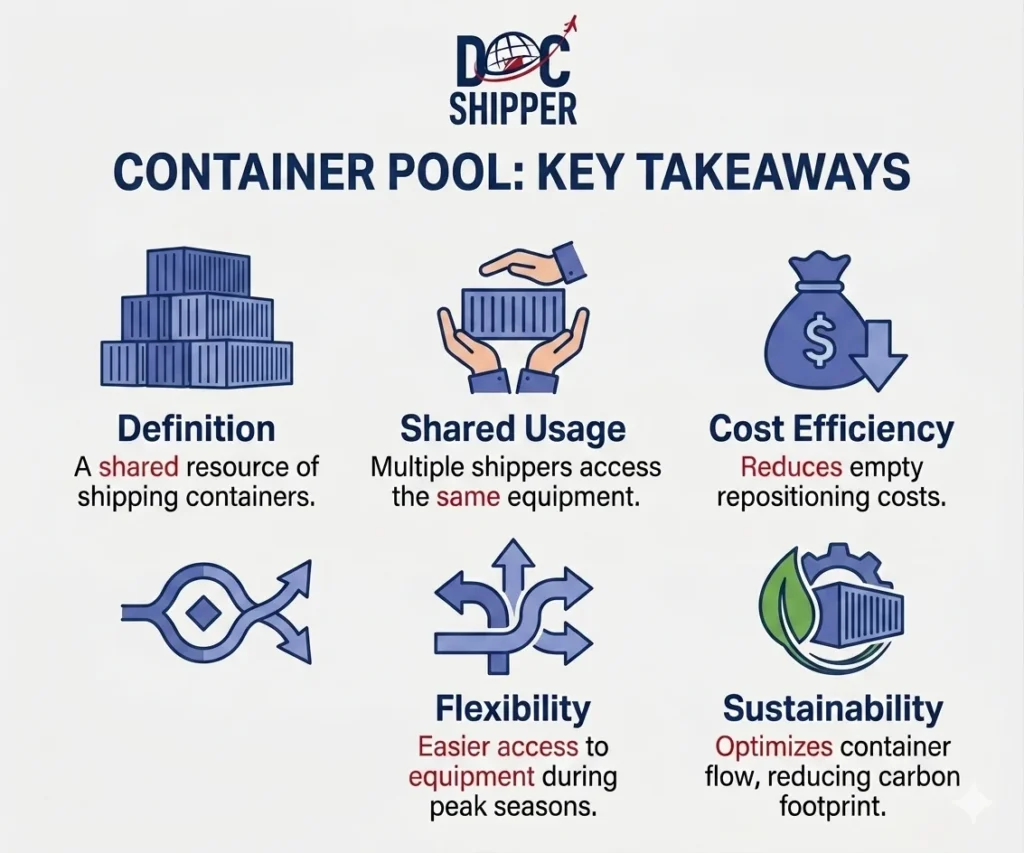
A container pool is a strategic inventory of shipping containers maintained by carriers, leasing companies, or logistics operators at specific locations to ensure immediate availability for cargo loading. This centralized system optimizes container circulation, reduces demurrage costs, and maintains supply chain fluidity across global trade routes.
Introduction
Importers and exporters frequently face a critical challenge: container shortages at the exact moment cargo is ready for shipment. This bottleneck creates costly delays, storage fees, and disrupted delivery schedules.
Container pools solve this problem by maintaining strategic reserves at key ports and inland depots. These managed inventories ensure containers are available when needed, particularly during peak seasons or trade imbalances where more goods move in one direction than another.
Understanding container pool dynamics is essential for:
- Equipment availability planning – securing containers during high-demand periods
- Cost optimization – minimizing detention and demurrage charges
- Operational flexibility – accessing various container types (20ft, 40ft, reefer, open-top)
- Geographic positioning – leveraging pools near manufacturing or distribution centers
- Sustainability goals – improving container utilization rates and reducing empty repositioning
Container Pool Management & Operations
Container pools function through sophisticated inventory management systems that track equipment location, condition, and availability in real-time. Major shipping lines like Maersk, MSC, and CMA CGM maintain extensive pools at global hubs, while regional operators focus on specific trade corridors.
The operational model involves three key stakeholders. Carriers own the largest fleets and manage pools to support their scheduled services. Leasing companies such as Triton and Textainer provide flexible capacity through short-term and long-term rental agreements. Depot operators physically manage storage, maintenance, and container handover processes.
Pool allocation mechanisms prioritize containers based on booking commitments, customer tier agreements, and route profitability. Advanced algorithms predict demand patterns using historical data, seasonal trends, and economic indicators. At DocShipper, we maintain direct access to multiple carrier pools, ensuring our clients receive priority allocation even during capacity crunches.
The legal framework governing container pools includes the Container Safety Convention (CSC) for structural integrity and the International Convention for Safe Containers for cross-border movements. The International Maritime Organization (IMO) establishes global standards that pool operators must follow for equipment certification and maintenance schedules.
Technology integration has transformed pool management through IoT sensors that monitor container condition, GPS tracking for location visibility, and blockchain platforms for transparent ownership records. These innovations reduce administrative overhead and improve asset utilization rates from industry averages of 60-65% to over 75% for leading operators.
Practical Examples & Data Analysis
Container pool performance varies significantly by region and equipment type. The following comparative analysis illustrates typical availability and cost structures across major trade lanes:
| Trade Route | Pool Availability | Average Pickup Fee | Peak Season Impact |
|---|---|---|---|
| Asia-Europe | High (85-90%) | $120-180 | +25% cost increase |
| Trans-Pacific | Medium (70-75%) | $200-280 | +40% cost increase |
| Africa-Asia | Low (50-60%) | $300-450 | +60% cost increase |
| Intra-Europe | Very High (90-95%) | $80-120 | +15% cost increase |
Use Case: Electronics Manufacturer in Shenzhen
A European electronics importer needed 150 x 40ft high-cube containers monthly from Shenzhen. By partnering with a pool operator instead of relying solely on carrier allocations, they achieved:
- 98% container availability versus 72% with carrier-only approach
- $45,000 monthly savings through reduced demurrage (average 2.3 days faster pickup)
- Guaranteed equipment during Q4 peak season when spot market rates tripled
- Access to specialized containers (45ft pallet-wide) for oversized shipments
Cost-Benefit Analysis: Pool Membership vs. Spot Market
For shippers moving 50+ containers annually, pool membership programs typically cost $3,000-8,000 yearly but provide priority access and fixed pickup fees. Spot market users face variable costs ranging from $150-500 per container depending on availability. Break-even occurs at approximately 35-40 annual shipments, making pools economically advantageous for regular exporters and importers.
Regional Pool Efficiency Metrics
- Shanghai/Ningbo pools: 12-hour average pickup time, 96% same-day availability
- Rotterdam/Hamburg pools: 8-hour average pickup time, 94% same-day availability
- Los Angeles/Long Beach pools: 18-hour average pickup time, 78% same-day availability (congestion-dependent)
- Dubai/Jebel Ali pools: 10-hour average pickup time, 88% same-day availability
- Santos/Buenos Aires pools: 24-36 hour average pickup time, 65% same-day availability
Conclusion
Container pools represent a fundamental infrastructure component enabling reliable global trade flows. Strategic pool utilization reduces costs, improves supply chain predictability, and provides competitive advantages through guaranteed equipment access.
Need expert guidance on optimizing your container sourcing strategy? Contact DocShipper for tailored logistics solutions that leverage our extensive carrier and pool operator network.
📚 Quiz
Test Your Knowledge: Container Pool
Q1 – What best defines a container pool in logistics?
Q2 – A shipper assumes that a container pool and a container depot are the same thing. Is this correct?
Q3 – A European importer ships 60 containers per year from Asia. Which approach is most cost-effective for securing equipment?
🎯 Your Result
📞 Free Quote in 24hFAQ | Container Pool: Definition, Management & Practical Examples
A container pool is the inventory management system tracking available equipment across locations, while a depot is the physical facility where containers are stored, inspected, and maintained. Pools may span multiple depots within a region.
Allocation follows tiered priority systems based on contract commitments, booking volume, customer relationship status, and route profitability. Premium service agreements guarantee availability even during capacity shortages.
Yes, through freight forwarders and NVOCCs who consolidate demand and maintain pool access agreements. Individual shippers typically need minimum volume commitments (10-20 containers annually) for direct pool membership.
Fees range from $80-450 depending on location, container type, and demand conditions. Asian ports average $120-200, European ports $100-180, and emerging markets $250-450 for standard 20ft/40ft dry containers.
Low pool availability triggers Equipment Imbalance Surcharges (EIS) of $200-1,500 per container and forces shippers to accept less favorable booking slots, potentially delaying shipments by 1-2 weeks and increasing total logistics costs by 15-30%.
Standard pools include 20ft/40ft dry containers, 40ft high-cubes, and 20ft/40ft refrigerated units. Specialized equipment (open-top, flat-rack, tank containers) requires advance booking and may incur 30-50% premium fees.
Leasing companies like Triton and CAI position containers based on predictive demand models, repositioning empty units to high-demand locations 4-6 weeks before seasonal peaks. They charge daily rental rates ($2-8/day) plus positioning fees.
Shortages trigger cascading effects: extended free time elimination, mandatory advance bookings (10-14 days), priority allocation to contract customers, and spot market rate increases of 200-400% for non-contracted shippers.
Key metrics include availability rate (percentage of requests fulfilled within 24 hours), average pickup time, equipment condition scores, and turn-time (days between return and next dispatch). Top-tier pools maintain 90%+ availability rates.
Yes, through booking systems that allow 7-30 day advance reservations. Reservation fees ($25-75 per container) apply, but guarantee availability and lock pickup fees, protecting against market volatility during peak seasons.
IoT sensors monitor container location and condition in real-time, AI algorithms optimize repositioning decisions, and blockchain platforms provide transparent availability data. These technologies reduce administrative costs by 40% and improve utilization rates by 12-18%.
Efficient pools reduce empty container repositioning (which accounts for 20% of global container movements), optimize asset utilization, and extend equipment lifespan through better maintenance scheduling. Leading operators report 15-25% carbon footprint reductions through pool optimization.
Need Help with
Logistics or Sourcing ?
First, we secure the right products from the right suppliers at the right price by managing the sourcing process from start to finish. Then, we simplify your shipping experience - from pickup to final delivery - ensuring any product, anywhere, is delivered at highly competitive prices.


Fill the Form
Prefer email? Send us your inquiry, and we’ll get back to you as soon as possible.
Contact us




