


In short ⚡
The Harbor Master is the official authority responsible for managing port operations, maritime traffic control, and safety enforcement within a harbor's jurisdiction. This maritime official oversees vessel movements, berth allocation, and regulatory compliance to ensure efficient, safe port operations.
Introduction
Confusion often arises between port authorities, shipping agents, and the Harbor Master—yet the latter holds unique regulatory power over vessel movements. In international trade, misunderstanding this role causes delays, fines, or denied port access.
The Harbor Master serves as the maritime traffic controller and safety enforcer, bridging governmental regulations and commercial shipping operations. Their decisions directly impact vessel schedules, cargo handling efficiency, and compliance with international maritime laws.
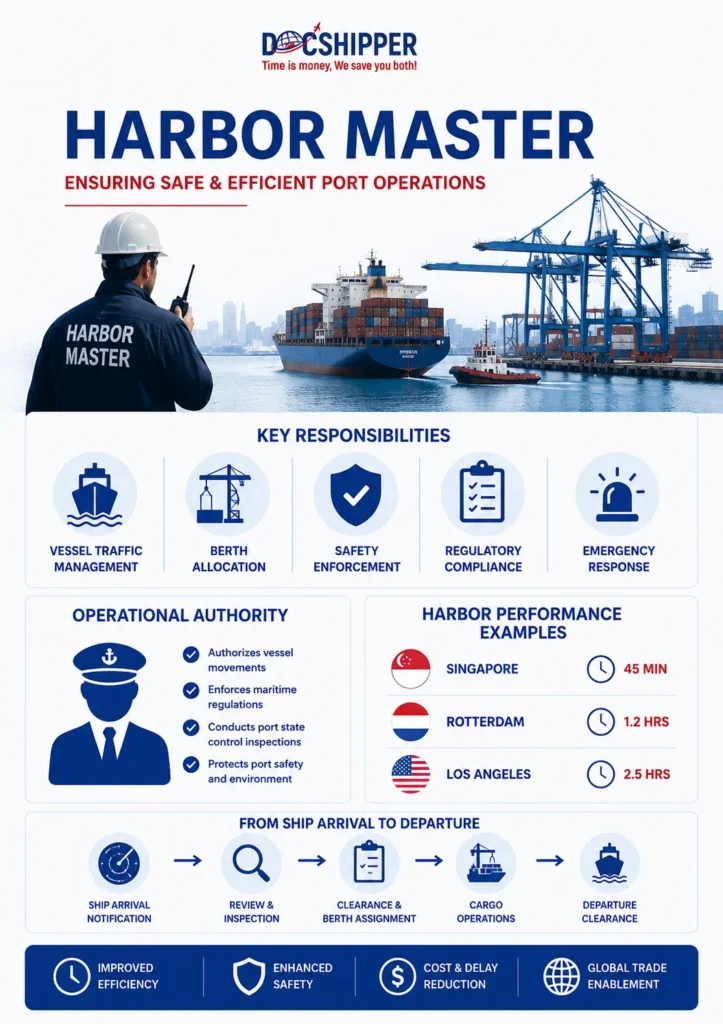
Key responsibilities include:
- Vessel Traffic Management: Coordinating arrivals, departures, and anchorage assignments
- Berth Allocation: Assigning dock space based on vessel size, cargo type, and priority
- Safety Enforcement: Inspecting vessels for seaworthiness and hazardous material compliance
- Regulatory Compliance: Enforcing national and international maritime regulations (ISPS Code, MARPOL)
- Emergency Response: Managing incidents like oil spills, collisions, or security threats
Roles & Regulatory Expertise
The Harbor Master operates under statutory authority granted by national maritime administrations. In most jurisdictions, they function as the port’s executive officer, empowered to issue directives that all vessels must obey upon entry into territorial waters.
Vessel Movement Authorization constitutes the primary function. No ship may enter, depart, or shift berths without explicit permission. The Harbor Master evaluates factors including weather conditions, traffic density, tide schedules, and vessel draft before granting clearance. This authority prevents congestion and collision risks in confined harbor waters.
Port State Control inspections fall within their jurisdiction. The Harbor Master ensures visiting vessels comply with international conventions such as SOLAS (Safety of Life at Sea) and the International Ship and Port Facility Security Code. Non-compliant vessels face detention until deficiencies are corrected, potentially costing shipowners thousands in demurrage fees.
According to International Maritime Organization guidelines, Harbor Masters must maintain continuous VHF radio monitoring on designated channels. This communication protocol enables real-time coordination during emergencies and routine operations alike.
Environmental protection enforcement represents an expanding responsibility. Harbor Masters monitor ballast water discharge, sulfur emissions, and waste disposal practices. Violations trigger immediate investigation and can result in port bans or substantial penalties imposed by environmental agencies.
At DocShipper, we coordinate directly with Harbor Master offices worldwide to expedite vessel clearances and ensure our clients’ shipments avoid regulatory delays. Our customs brokerage teams verify all documentation meets port-specific requirements before vessel arrival, minimizing inspection complications.
Operational Examples & Data
Harbor Master efficiency directly impacts port throughput metrics. Consider the comparative operational data across major container hubs:
| Port | Average Berth Allocation Time | Annual Vessel Traffic | Harbor Master Staff |
|---|---|---|---|
| Singapore | 45 minutes | 130,000+ vessels | 24/7 rotation (8 officers) |
| Rotterdam | 1.2 hours | 89,000+ vessels | 6 dedicated officers |
| Los Angeles | 2.5 hours | 55,000+ vessels | 4 officers (peak hours) |
Case Study: Container Ship Diversion Crisis. In March 2023, a 15,000-TEU container ship arriving at Hamburg received port entry denial from the Harbor Master due to undeclared hazardous cargo (lithium batteries). The vessel diverted to Antwerp, incurring €340,000 in additional costs—bunker fuel, crew wages, and schedule disruption fees. Proper pre-arrival communication with the Harbor Master’s office would have prevented this scenario.
Operational priorities vary by port classification:
- Commercial Ports: Maximizing berth utilization (target: 85%+ occupancy rate)
- Petroleum Terminals: Enforcing safety zones around tanker operations (minimum 500m clearance)
- Cruise Terminals: Coordinating passenger vessel schedules to prevent terminal congestion
- Fishing Harbors: Managing small vessel traffic and fish market supply chains
- Naval Bases: Integrating military vessel movements with civilian traffic patterns
Technology integration has revolutionized Harbor Master operations. Modern port management systems use AI-powered predictive algorithms to forecast berth availability 72 hours in advance, enabling proactive vessel scheduling. The Port of Antwerp reported a 23% reduction in anchorage waiting times after implementing automated allocation systems supervised by Harbor Master personnel.
Conclusion
The Harbor Master functions as the central authority ensuring maritime safety and operational efficiency within port jurisdictions. Understanding their regulatory powers prevents costly shipping delays and compliance violations.
Need expert assistance navigating port formalities or coordinating vessel operations? Contact DocShipper for comprehensive freight forwarding support.
📚 Quiz
Test Your Knowledge: Harbor Master
What is the primary statutory authority held by a Harbor Master?
A vessel arrives at port without prior notification to the Harbor Master. What is the most likely outcome?
During an oil spill emergency in the harbor, who assumes incident command authority?
🎯 Your Results
📞 Free Quote in 24hFAQ | Harbor Master: Definition, Roles & Responsibilities in Port Operations
The Harbor Master holds governmental authority over port operations and safety enforcement, while a Port Captain typically represents a shipping company's interests in managing their fleet's port activities. The Harbor Master can override Port Captain decisions if safety or regulatory concerns arise.
Yes, Harbor Masters possess statutory authority to deny entry based on safety violations, security threats, incomplete documentation, or port congestion. Vessels must correct deficiencies before receiving clearance. Repeated refusals can result in port bans or flag state investigations.
International maritime protocol requires vessels to notify the Harbor Master 24-48 hours before estimated arrival. High-traffic ports may require 72-hour advance notice for container ships or tankers. Last-minute arrivals often face priority delays and additional pilotage fees.
National maritime administrations or port authorities appoint Harbor Masters. Qualifications typically include a Master Mariner certificate, 10+ years sea-going experience, advanced navigation certification, and specialized training in port management and maritime law. Some jurisdictions require government examination passage.
Harbor Masters maintain continuous monitoring of VHF marine radio channels (typically Channel 16 for distress calls and designated port operations channels). Larger ports also use AIS (Automatic Identification System) data, radar systems, and digital port management platforms for vessel tracking.
During emergencies—collisions, fires, oil spills, or security threats—the Harbor Master assumes incident command. They coordinate coast guard response, activate emergency protocols, redirect vessel traffic, and communicate with environmental agencies. Their decisions override commercial shipping schedules during crises.
Yes, Harbor Masters typically coordinate mandatory pilotage assignments for vessels exceeding certain size thresholds or carrying hazardous cargo. They schedule pilot dispatches based on vessel arrival times, weather conditions, and available licensed pilots. Refusing pilotage can result in port entry denial.
Penalties vary by jurisdiction but may include vessel detention, fines up to $100,000 for serious safety violations, mandatory inspections, port bans, and referral to flag state authorities. Repeated offenders face escalating sanctions and potential criminal prosecution for gross negligence.
While immediate compliance is mandatory, vessel operators can file formal appeals through maritime administrative tribunals or port authority review boards. However, appeals rarely overturn safety-related decisions. Legal challenges typically focus on procedural errors or disputed interpretations of regulations.
Harbor Masters facilitate border agency inspections by scheduling customs and immigration officer access to arriving vessels. They enforce quarantine requirements for ships from high-risk health zones and ensure crew documentation verification occurs before shore leave approval. This coordination prevents unauthorized entry and smuggling.
Harbor Masters enforce MARPOL regulations regarding waste discharge, sulfur emissions limits, and ballast water treatment. They inspect vessels for compliance certificates, monitor fuel quality, and coordinate environmental agency investigations of pollution incidents. Non-compliance triggers immediate detention and remediation requirements.
Major commercial ports operate 24/7 Harbor Master services with rotating duty officers. Smaller ports may maintain daytime office hours with on-call emergency coverage. Round-the-clock operations are standard at ports handling petroleum products, LNG carriers, or significant container traffic exceeding 1 million TEU annually.
Need Help with
Logistics or Sourcing ?
First, we secure the right products from the right suppliers at the right price by managing the sourcing process from start to finish. Then, we simplify your shipping experience - from pickup to final delivery - ensuring any product, anywhere, is delivered at highly competitive prices.


Fill the Form
Prefer email? Send us your inquiry, and we’ll get back to you as soon as possible.
Contact us




