


In short ⚡
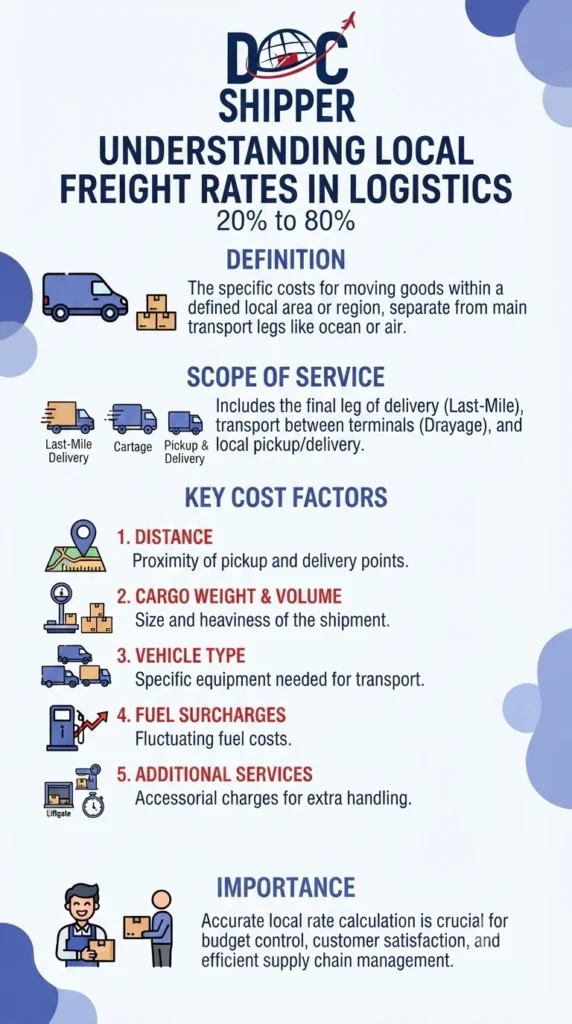
The Local Rate is a freight charge applied by shipping lines for the transport of goods between a port and an inland destination within the same country. This rate covers terminal handling, inland transport, and associated costs, representing a crucial component of total logistics expenses in international trade operations.
Introduction
Many importers discover hidden costs only after their cargo arrives at the destination port. The Local Rate often becomes an unexpected expense that impacts profitability calculations.
In international shipping, understanding local charges is essential for accurate cost forecasting. This rate bridges the gap between ocean freight and final delivery, making it a critical element in door-to-door logistics.
Key characteristics of Local Rates include:
- Port-to-inland charges: Covers transport from the discharge port to the final destination
- Terminal handling fees: Includes container unloading, storage, and documentation
- Regional variations: Rates differ significantly based on destination infrastructure and distance
- Currency considerations: Usually charged in the destination country’s currency
- Seasonal fluctuations: Prices may vary during peak shipping seasons or due to fuel surcharges
Understanding Local Rates in Logistics
The Local Rate structure encompasses multiple cost components that shipping lines consolidate into a single charge. Understanding these elements helps businesses negotiate better terms and identify potential savings.
Terminal Handling Charges (THC) form the foundation of local rates. These fees cover container discharge from the vessel, storage at the port terminal, and preparation for inland transport. At DocShipper, we systematically audit THC components to ensure clients aren’t overcharged for standard operations.
Inland haulage costs represent the physical movement of containers from port to destination. These charges depend on distance, road infrastructure quality, fuel prices, and regional transport regulations. Different carriers may offer varying rates for identical routes based on their network efficiency.
Documentation and administrative fees cover customs paperwork, delivery orders, and cargo release documentation. While seemingly minor, these charges can accumulate significantly across multiple shipments. Regulatory compliance requirements from EU Customs authorities influence documentation complexity and associated costs.
Equipment positioning charges apply when empty containers must be relocated to accommodate your cargo. In regions with trade imbalances, these costs increase substantially. Importers in landlocked countries often face higher positioning fees due to limited container availability.
Congestion surcharges emerge during peak periods when port facilities reach capacity limits. Shipping lines implement these temporary fees to manage demand and compensate for operational delays. At DocShipper, we monitor port congestion trends to help clients schedule shipments during cost-optimal windows.
Calculation Examples & Data
Local Rate structures vary significantly across regions and shipping routes. Understanding these differences enables accurate budgeting and informed carrier selection.
| Route | Distance | Local Rate (20′ Container) | Local Rate (40′ Container) |
|---|---|---|---|
| Hamburg Port to Munich | 780 km | €420 | €580 |
| Rotterdam to Brussels | 145 km | €280 | €390 |
| Los Angeles to Phoenix | 595 km | $650 | $920 |
| Shanghai Port to Chengdu | 1,950 km | ¥4,200 | ¥5,800 |
Use Case: Electronics Import to Germany
A company imports 15 containers monthly of consumer electronics from Shenzhen to Frankfurt. The shipment breakdown includes:
- Ocean freight (Shenzhen-Hamburg): $2,400 per 40′ container
- Local Rate (Hamburg-Frankfurt, 490 km): €520 per 40′ container
- Terminal Handling Charges: €185 per container
- Documentation fees: €45 per container
Total local charges per container: €750. Monthly local charges: €11,250 for 15 containers. Annual local costs reach €135,000, representing approximately 23% of total logistics expenses.
Key factors influencing Local Rate variations:
- Infrastructure quality: Well-maintained rail and road networks reduce costs by 15-30%
- Container type: Refrigerated and specialized containers incur 40-60% higher rates
- Fuel price volatility: Diesel costs directly impact inland haulage, with surcharges adjusted quarterly
- Trade volume imbalances: Routes with heavy import flows but low exports face equipment repositioning premiums
- Regulatory compliance: Stricter environmental regulations in certain regions add 8-12% to transport costs
Conclusion
The Local Rate represents a significant yet often overlooked component of international shipping costs. Mastering these charges enables businesses to negotiate effectively, budget accurately, and optimize supply chain expenses. Understanding regional variations and cost drivers transforms local rates from hidden expenses into manageable, predictable logistics elements.
Need expert guidance on optimizing your local logistics charges? Contact DocShipper for personalized consultation and cost-saving strategies tailored to your shipping routes.
📚 Quiz
Test Your Knowledge: Local Rate
What does the Local Rate primarily cover in international shipping?
A common misconception about Local Rates is that they:
Your electronics company imports 15 containers monthly from Asia to Frankfurt. Local charges are €750 per container. To reduce these costs, which strategy would be MOST effective?
🎯 Your Results
📞 Free Personalized QuoteFAQ | Local Rate: Definition, Calculation & Concrete Examples
The Local Rate typically includes terminal handling charges, inland transportation from port to destination, documentation fees, equipment positioning costs, and any applicable surcharges. Some carriers bundle additional services like customs documentation support or temporary storage, while others itemize these separately. Always request a detailed breakdown to understand exactly what services you're paying for.
Ocean freight covers port-to-port transportation across international waters, while the Local Rate handles the inland leg from the destination port to your final delivery location. Ocean freight is typically quoted in USD and determined by international market rates, whereas local rates reflect regional transportation costs, infrastructure conditions, and domestic market factors in the destination country's currency.
Yes, Local Rates are negotiable, especially for high-volume shippers or long-term contracts. Shipping lines offer volume discounts, seasonal rates, and preferential pricing for loyal customers. Factors that strengthen your negotiating position include consistent shipping volumes, flexible delivery schedules, and willingness to commit to annual contracts. Working with freight forwarders like DocShipper can leverage collective bargaining power for better rates.
Local Rate variations stem from infrastructure quality, distance from port, fuel costs, labor expenses, equipment availability, and regional competition among carriers. Landlocked destinations typically face higher rates due to longer distances and limited transport options. Countries with modern rail networks often offer competitive rates compared to regions dependent solely on road transport.
Local Rates are typically charged per container unit, with different pricing for 20-foot and 40-foot containers. High-cube containers and specialized equipment like refrigerated units incur premium charges. Some carriers offer consolidated rates for full truck loads or multiple containers moving on the same route simultaneously, potentially reducing per-unit costs.
Strategies to minimize local charges include consolidating shipments to maximize container utilization, selecting ports closer to final destinations, scheduling deliveries during off-peak periods, negotiating annual contracts for volume discounts, and considering intermodal transport options like rail where available. Partnering with experienced logistics providers helps identify route-specific optimization opportunities.
While the term "Local Rate" primarily applies to maritime shipping, air freight has equivalent charges called destination handling fees or airport-to-door charges. These cover cargo unloading, customs clearance, and ground transportation from airport to final destination. Air freight local charges typically represent a smaller percentage of total costs compared to ocean shipping due to higher base freight rates.
Local Rates are usually invoiced upon delivery completion or shortly after cargo release from the port. Some shipping lines collect these charges prepaid at origin, while others bill them as "collect" at destination. Payment terms vary by carrier and contract agreements. Understanding whether local charges are prepaid or collect affects cash flow planning and total landed cost calculations.
Non-payment of Local Rates results in cargo detention at the port or terminal, with daily storage fees accruing rapidly. Shipping lines hold legal rights to retain cargo until all charges are settled. Prolonged non-payment may lead to cargo auctions to recover costs, legal action, and blacklisting from future services. Always resolve billing disputes promptly through proper channels to avoid operational disruptions.
Fuel surcharges (also called bunker adjustment factors for ocean freight or fuel adjustment factors for inland transport) fluctuate based on diesel and gasoline prices. Most carriers adjust these surcharges quarterly or monthly, adding 10-25% to base local rates during high fuel price periods. Some contracts fix fuel surcharges annually to provide cost predictability, though this may result in slightly higher average rates.
Yes, local charges often differ significantly between import and export flows due to trade imbalances, equipment positioning needs, and directional demand patterns. Export-heavy ports may offer lower outbound local rates to attract cargo and reposition empty containers, while import-dominant regions charge premium rates due to equipment scarcity. Understanding these dynamics helps optimize bidirectional shipping strategies for businesses with both import and export activities.
Standard Local Rates typically do not include customs brokerage fees, duties, taxes, or specialized clearance services. These are usually charged separately by customs brokers or freight forwarders. Some comprehensive door-to-door quotes bundle all charges together, but it's essential to request itemized invoices to distinguish between transport costs and customs-related expenses for accurate accounting and potential duty drawback claims.
Need Help with
Logistics or Sourcing ?
First, we secure the right products from the right suppliers at the right price by managing the sourcing process from start to finish. Then, we simplify your shipping experience - from pickup to final delivery - ensuring any product, anywhere, is delivered at highly competitive prices.


Fill the Form
Prefer email? Send us your inquiry, and we’ll get back to you as soon as possible.
Contact us




