


In short ⚡
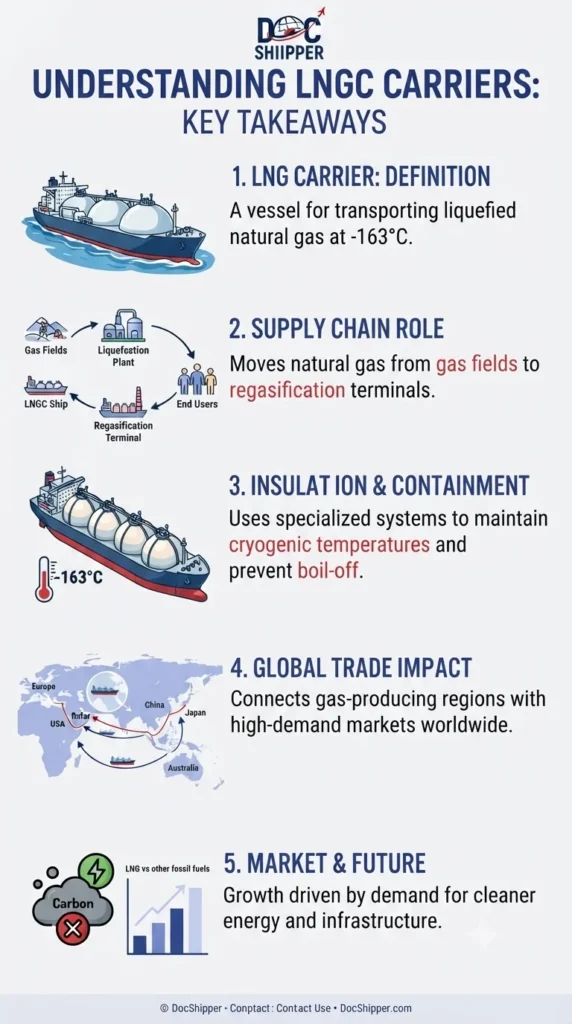
An LNGC (LNG Carrier) is a specialized maritime vessel designed to transport liquefied natural gas (LNG) at cryogenic temperatures of approximately -162°C. These ships feature double-hulled construction with advanced insulation systems and containment tanks to safely transport natural gas in liquid form across international waters, serving as the primary infrastructure for global LNG trade.
Introduction
Many logistics professionals confuse standard tankers with LNG carriers, but the technical requirements differ dramatically. A single operational error in temperature management or containment integrity can result in cargo loss worth tens of millions of dollars.
LNGC vessels represent the backbone of the global natural gas supply chain. As countries transition toward cleaner energy sources, understanding these specialized carriers becomes essential for importers, freight forwarders, and energy sector stakeholders.
Key characteristics of LNG carriers include:
- Cryogenic containment systems maintaining LNG at -162°C to keep natural gas in liquid state
- Double-hull construction meeting IMO safety standards for hazardous cargo transport
- Advanced insulation technology minimizing boil-off gas (BOG) during transit
- Specialized loading terminals requiring dedicated port infrastructure
- Capacity ranging from 125,000 to 266,000 cubic meters depending on vessel classification
Technical Specifications & Operational Expertise
LNG carriers operate under strict regulatory frameworks established by the International Maritime Organization (IMO). The IGC Code (International Code for the Construction and Equipment of Ships Carrying Liquefied Gases in Bulk) governs design, construction, and operational standards for these vessels.
The containment systems fall into four primary categories. Moss-type spherical tanks feature independent aluminum spheres protruding above the deck, offering excellent structural integrity. Membrane systems utilize thin metallic barriers within the hull, maximizing cargo space efficiency. Type B independent tanks provide prismatic designs with reduced construction costs. Type C pressure vessels serve smaller-capacity carriers operating regional routes.
Temperature control remains critical throughout transport. Natural gas transforms to liquid at -162°C, reducing volume by approximately 600 times. This liquefaction process enables economical long-distance transport that pipeline infrastructure cannot achieve.
Boil-off gas management presents ongoing operational challenges. Despite advanced insulation, approximately 0.10-0.15% of cargo evaporates daily during transit. Modern LNG carriers employ dual-fuel engines that consume this BOG as propulsion fuel, converting a loss into operational efficiency.
Port infrastructure requirements distinguish LNG operations from conventional shipping. Loading and unloading occurs at specialized terminals equipped with cryogenic transfer arms, vaporization facilities, and safety zones. At DocShipper, we coordinate with certified terminals worldwide to ensure seamless scheduling and compliance verification for LNG shipments.
Capacity Categories & Real-World Data
The global LNG carrier fleet demonstrates clear segmentation by capacity and route optimization. Understanding these classifications helps logistics planners select appropriate vessels for specific trade lanes.
| Vessel Category | Capacity (m³) | Typical Route | Daily Charter Rate |
|---|---|---|---|
| Small-Scale LNGC | 10,000-30,000 | Regional/Short-sea | $15,000-$25,000 |
| Mid-Range LNGC | 125,000-145,000 | Pan-Pacific/Atlantic | $40,000-$60,000 |
| Conventional LNGC | 165,000-175,000 | Major trade routes | $55,000-$80,000 |
| Q-Max/Q-Flex | 210,000-266,000 | Middle East-Asia | $90,000-$150,000 |
Real-world scenario: A European energy importer contracts a 174,000 m³ LNGC to transport LNG from Qatar to Rotterdam. The journey covers approximately 6,500 nautical miles, requiring 15 days at standard speed. With current charter rates averaging $70,000 per day, the transport cost reaches $1,050,000, excluding port fees and canal transit charges.
The Q-Max vessels, exclusively serving Qatari exports, represent the largest LNG carriers globally. These 266,000 m³ giants optimize Qatar-Asia routes, delivering approximately 4.7 billion cubic feet of natural gas per voyage—enough to power a city of one million residents for nearly three weeks.
Charter rates fluctuate significantly based on seasonal demand patterns. Winter months in the Northern Hemisphere typically see rates increase by 40-60% as heating demand peaks. Summer maintenance periods reduce available tonnage, creating additional rate pressure.
Environmental regulations increasingly influence vessel selection. Next-generation LNG carriers feature improved propulsion systems reducing greenhouse gas emissions by up to 30% compared to conventional designs. These vessels command premium charter rates but offer long-term operational savings and regulatory compliance advantages.
At DocShipper, we maintain partnerships with major LNG shipping lines and provide comprehensive cargo management services, from vessel booking to documentation compliance and terminal coordination across all major LNG import/export hubs.
Conclusion
LNG carriers represent specialized maritime infrastructure requiring expert logistics coordination. Understanding vessel classifications, containment technologies, and operational requirements proves essential for efficient natural gas supply chain management.
Need assistance coordinating LNG shipments or evaluating carrier options? Contact DocShipper’s energy logistics specialists for expert guidance on your next project.
📚 Quiz
Test Your Knowledge: LNGC (LNG Carrier)
What is the primary defining characteristic of an LNGC vessel?
What happens to boil-off gas (BOG) on modern LNG carriers during transit?
A logistics manager needs to transport LNG from Qatar to South Korea. Which vessel category would be most appropriate for this major trade route?
🎯 Your Result
📞 Free Quote in 24hFAQ | LNGC (LNG Carrier): Definition, Types & Operational Examples
LNG carriers feature specialized cryogenic containment systems maintaining cargo at -162°C, while oil tankers transport liquid petroleum at ambient temperatures. LNG vessels require double-hull construction, advanced insulation, and specialized loading infrastructure. The operational complexity and safety requirements for LNG transport significantly exceed those of conventional oil tankers.
Modern LNG carriers have operational lifespans of 35-40 years with proper maintenance. Major overhauls occur every 5 years, including containment system inspections and propulsion upgrades. Vessels undergo special periodic surveys every 2.5 years to maintain classification society certification and regulatory compliance for continued operation.
Despite advanced insulation, approximately 0.10-0.15% of LNG cargo evaporates daily during transit. Modern carriers equipped with dual-fuel engines use this boil-off gas as propulsion fuel, converting cargo loss into operational efficiency. Older vessels may reliquify BOG or vent it safely under specific regulatory conditions, though this practice is increasingly rare.
Yes, most conventional LNG carriers (up to 175,000 m³) can transit the expanded Panama Canal locks, which opened in 2016. However, Q-Max and Q-Flex vessels exceeding 210,000 m³ capacity cannot fit through Panama Canal locks and must use alternative routes such as the Suez Canal or Cape of Good Hope for intercontinental transit.
LNG carriers implement multiple redundant safety systems including double-hull construction, emergency shutdown systems, gas detection networks, and fire suppression equipment. Crews undergo specialized training in cryogenic cargo handling. International regulations require continuous monitoring of tank pressure, temperature, and structural integrity throughout voyages to prevent incidents.
Charter rates vary significantly based on vessel size, route, and market conditions. Small-scale carriers (10,000-30,000 m³) cost $15,000-$25,000 daily, while large Q-Max vessels (266,000 m³) command $90,000-$150,000 per day. Winter demand peaks can increase rates by 40-60%. Long-term contracts typically offer discounted rates compared to spot market charters.
Essential documents include the International Gas Carrier Certificate, cargo manifest detailing LNG specifications, ship-shore safety checklist, loading/discharge plans, and port clearance permits. Additional requirements include tank condition reports, boil-off gas logs, and emergency response procedures. All documentation must comply with IMO IGC Code and local port authority regulations.
Qatar operates the world's largest dedicated LNG carrier fleet, primarily Q-Max and Q-Flex vessels serving its massive LNG export industry. Japan, South Korea, and Greece maintain substantial fleets supporting both domestic imports and international charter markets. The global fleet exceeds 700 vessels, with significant expansion planned through 2030 to meet growing natural gas demand.
LNG composition varies by source, affecting heating value and density. Carriers maintain cargo segregation when transporting multiple grades. Loading terminals provide detailed composition analysis including methane content, nitrogen levels, and heating value. Discharge terminals verify specifications match contractual requirements before accepting cargo, ensuring compatibility with receiving infrastructure and end-user requirements.
Key challenges include coordinating specialized terminal availability, managing weather-related delays (LNG loading cannot occur during certain conditions), optimizing boil-off gas consumption, ensuring crew training compliance, and navigating complex international regulations. Berth scheduling conflicts at major terminals can cause significant delays, requiring careful voyage planning and terminal relationship management.
Modern LNG carriers represent relatively clean shipping options, as many use LNG boil-off gas for propulsion, reducing heavy fuel oil consumption. Next-generation vessels feature improved energy efficiency and lower emissions compared to conventional cargo ships. However, methane slip from engines and boil-off venting remains an environmental concern. Industry initiatives focus on zero-emission technologies and improved containment systems.
LNG carrier insurance premiums exceed conventional vessel rates by 30-50% due to cargo value and specialized risk factors. Coverage includes hull and machinery, protection and indemnity (P&I), cargo insurance, and pollution liability. Premiums vary based on vessel age, containment system type, operating region, and crew experience. Total insurance costs typically represent 8-12% of annual operational expenses.
Need Help with
Logistics or Sourcing ?
First, we secure the right products from the right suppliers at the right price by managing the sourcing process from start to finish. Then, we simplify your shipping experience - from pickup to final delivery - ensuring any product, anywhere, is delivered at highly competitive prices.


Fill the Form
Prefer email? Send us your inquiry, and we’ll get back to you as soon as possible.
Contact us




:%20Definition,%20Types%20&%20Operational%20Examples)