Introduction
The whole global logistics is changing. In fact, freight and warehousing have been the main contributors of about 7% of the total global greenhouse gas emissions; thus, sustainable logistics has become the most important issue.
To meet the requirements of the new regulation IMO 2030, as well as the expectations of the consumers, companies are asking themselves how goods can be transported across borders in a different way. A great number of them decide to use AI in supply chain operations and intelligent automation to increase their efficiency and also to lower their emissions.
This article consists of information on how green shipping initiatives and carbon regulations are changing global logistics. We will discuss sustainable fuels, carbon compliance, electric delivery vehicles, the future of sustainability in logistics and many more.
Key Statistics on Sustainable Logistics
Worldwide, sustainable logistics is becoming a major trend as industries demand cleaner and more efficient supply chains. These are the main numbers that reveal this change:
- 7% of Global Emissions: Freight and warehousing account for at least 7 % of global greenhouse gas (GHG) emissions.
- 11× Higher Supply Chain Impact: The environmental footprint of a long, complex supply chain is often 11 times that of direct emissions.
- The transport and logistics sector is responsible for nearly 24% of global CO₂ emissions, with freight transport being a major contributor.
- 3 % of Global Emissions from Shipping: The shipping sector (under IMO jurisdiction) accounted for about 3 % of global GHG emissions in recent years.
- The 2023 report on supply chain sustainability by MIT Center for Transportation & Logistics shows that sustainability considerations now span raw material sourcing through to end‑of‑life product logistics in many firms worldwide.
DocShipper info
Think sustainability is expensive?
With the right choices (transport modes, consolidation, AI, alternative fuels…), your emissions can be reduced by up to 40% while also reducing expenses.
👉 Our experts analyze your cash flow and identify potential savings.
Get your diagnosis within 48 hours.
Why Sustainable Logistics Matters Today
The logistics sector is transitioning to a new era, an era characterized by accountability, energy-saving, and the ability to recover over time. As international trade increases, so does its impact on the environment.
Just freight and warehousing make up 1/3 of the total global greenhouse gas emissions, and companies all over the world are being pushed to lower their carbon footprint.
Environmentally friendly logistics is no longer just a corporate buzzword. It has become a core business strategy that helps companies to be compliant with the law, get eco-conscious customers and have stronger supply chains.
Sustainability is a matter of renovating from one stage of logistics operations to another, i.e., it is going all the way from clean shipping routes through to low-emission fleets and intelligent carbon tracking.
Today, it is recommended that leaders in logistics undertake an examination of full-cycle logistics solutions that can lessen waste, make the best use of routes and increase transparency. Sustainability going hand in hand with profitability, is guaranteed by this approach, which is a very important thing in today’s fiercely competitive market.
Alternative Fuels and Green Shipping Innovation
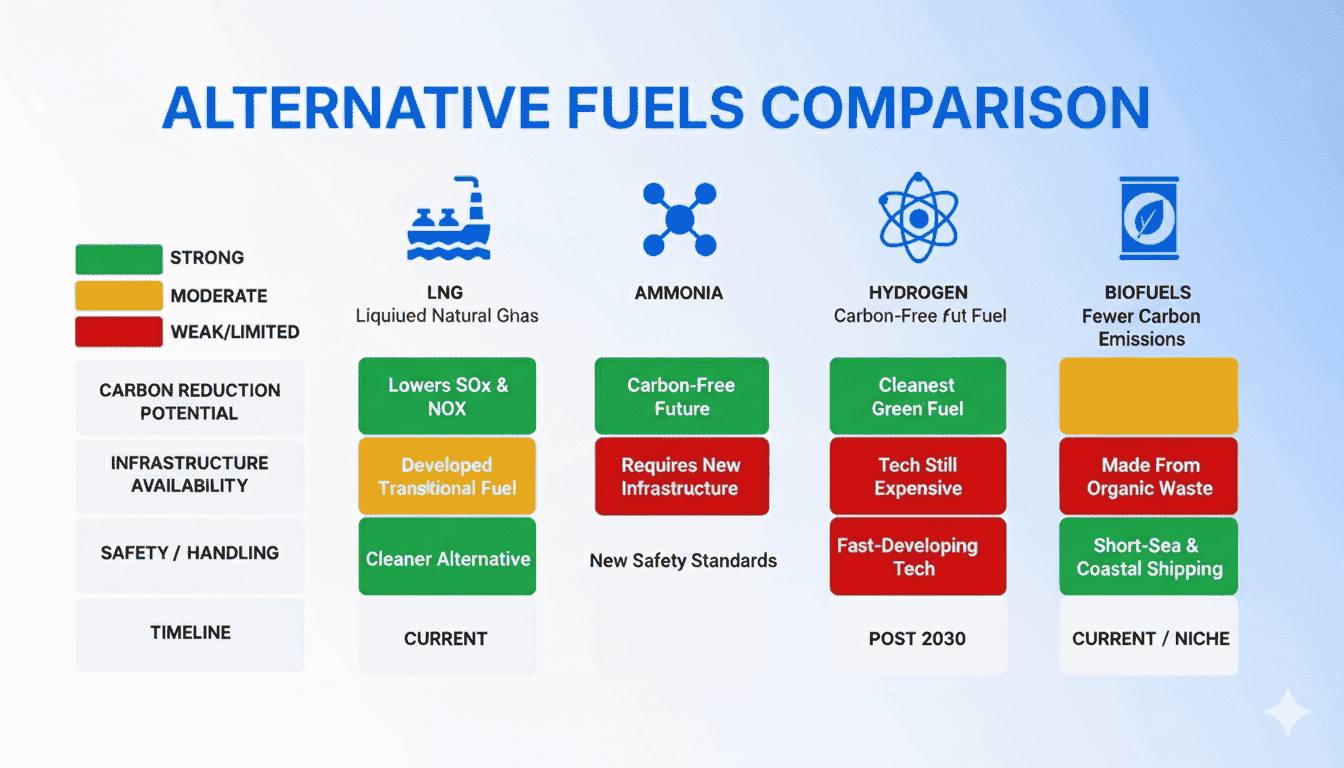
- LNG (Liquefied Natural Gas): As a majorly developed transitional fuel, LNG is helping a lot to lower the emission of sulfur oxide and nitrogen oxide, thus, it is a cleaner alternative for the current logistics operations.
- Ammonia: A carbon-free energy source of the future, ammonia, has a lot of potential; however, it requires new safety standards and a specially designed handling infrastructure.
- Hydrogen: To most people, hydrogen is the cleanest green fuel; however, the technology is still very expensive today, but it is moving very fast to be used widely in the commercial sector.
- Biofuels: Biofuels are made from organic waste materials, and they are becoming more and more popular for short-sea and coastal shipping, thus providing a sustainable way with fewer carbon emissions.
The companies that are embracing these innovations are also experiencing the same efficiency gains. According to a McKinsey analysis, the current technology has the potential to reduce logistics emissions by 40-50% by 2030.
While the shipping industry is changing, it remains equally important to uphold quality control standards in worldwide supply chains. Quality control is the means by which one can be sure that eco-friendly measures are not sacrificing the functioning, safety, or standard regulations.
DocShipper Advice
Maritime transport remains the most environmentally friendly mode of transport, and companies are adopting new fuels: LNG, ammonia, biofuels.
But it’s difficult to know which option is the most viable for your business.
👉 DocShipper advises you on the most sustainable and economical fuel, route, and vessel.
Receive a “green-certified” shipping quote.
The Rise of Electric Mobility in Last-Mile Delivery

Leading logistics operators are electrifying their fleets with city vans, cargo bikes, and micro-mobility vehicles in urban areas across the globe. Besides lowering emissions, such vehicles contribute to cost savings of the enterprise through less fuel and maintenance consumption.
The use of EVs is consistent with the move towards decentralized urban logistics hubs and more efficient routing. In combination with AI optimization tools, companies can foresee the demand, schedule delivery routes in the most efficient way, and reduce the time when vehicles stand still, thus cutting the carbon footprint significantly.
Businesses can additionally raise their performance level through implementing best practices from AI in Logistics, which is characterized by the use of automation and data-driven insights for driving both efficiency and sustainability.
Technology as the Core Driver of Green Transformation
Digitalization is changing the way logistics companies implement environmentally friendly practices. As technology is the main enabler of sustainability, it has become the core of the green turnaround all over the supply chains around the world.
These are some of the groundbreaking ideas that are helping to make this change happen:
- Predictive Analytics: Makes it possible to forecast demand very accurately and to plan routes in such a way that fuel consumption and empty runs are minimized.
- Intelligent Automation: By using AI, logistics operations both in warehouses and in transportation become more efficient, thus less emission is produced, and the chain of supply becomes more traceable.
- Bockchain Carbon Tracking: Gives emission reporting a new level of openness and assists firms in confirming their sustainability status.
- Cloud Collaboration Tools: Connect suppliers, freight forwarders, and customers in real time, leading to fewer wasted resources and more sharing of resources.
- AI Optimization Systems: Empower logistics providers to make evidence-based decisions for greener, better, and cheaper delivery systems.
How Businesses Benefit from Green Logistics Practices
These are companies that integrate green logistics measures into their operations, which in turn positively influences nature and at the same time makes their profit grow and keeps their advantage.
Lower Operating Costs
Green transport modes, alternative fuels, and energy-efficient fleets are all measures that directly result in less fuel consumption and less wear and tear on the vehicle. Cleaner supply chains become lower-cost businesses over their life cycles.
Improved Risk Management & Compliance
The worldwide implementation of stricter carbon regulations is still in progress. Companies that do not take any steps to reform their logistics operations will face penalties such as border taxes and emission limits. Early use of AI in logistics offers full visibility of the supply chain and facilitates compliance with regulations for different departments.
Stronger Brand Reputation and Customer Trust
Customers and investors of today are not just waiting for companies to treat them well; they are actually challenging companies to behave ethically and show social responsibility. A company, which is creating a green logistics profile, is able to increase brand trust, obtain customer loyalty, and get new collaboration opportunities with stakeholders.
Improved Resilience and Efficiency
Complying with emissions requirements is merely one of the facets of implementing sustainable logistics strategies. Through the aforementioned activities, such as shipment consolidation, route optimization, and correct modal selection of transportation, enterprises are thus able to achieve significant cost savings. Technology is the main lever for operational agility, transparency, and resilience for the future, which are required by such operations.
Access to New Markets and Growth Opportunities
As sustainability becomes more of a requirement for cross-border trades, companies having environmentally friendly credentials will get facilitated entry into those markets that impose carbon-intensive products. The enterprises that foresee such changes will be the ones to leverage the carbon regulations to their advantage first worldwide.
Challenges in Green Logistics and How to Overcome Them
High Setup Costs
The green infrastructure and low-emission vehicles would need much investment. The use of AI integration for business to optimize routes and manage energy will help companies reduce expenses to achieve quicker returns.
Little Green Infrastructure
The absence of biofuel supply chains and charging stations is a hindrance. The joint ventures and common logistical systems allow businesses to have access to cleaner means of transport.
Complex Regulations
The different carbon regulations and emission quotas complicate compliance. Carbon reporting is made easier with the use of digital platforms that are also transparent.
Supply Chain Gaps
Disjointed networks lead to a decrease in visibility. Live tracking and smart analytics enhance the cooperation among all logistics partners.
Skill Shortages
The sustainability efforts require technical expertise. Training will assist the teams in adjusting smoothly to digital and green logistics tools.
DocShipper Alert
New global regulations (IMO 2030, EU ETS, CBAM) are already increasing logistics costs, and projections show that carbon-related expenses could rise by 20–25% by 2030 for companies that don’t adapt their operations.
Most businesses overpay because they lack:
- accurate carbon reporting
- optimized routing and fuel choice,
- compliance with EU maritime/emission requirements,
- sustainable alternatives (biofuels, LNG, EV fleets, consolidation, modal shift).
👉 DocShipper identifies where your emissions (and costs) are the highest, then builds a compliant, low-carbon logistics plan that reduces both your footprint AND your spending.
The Future of Sustainable Logistics
The future of logistics lies in new technologies, smarter and sustainable systems, in order to become a global partnership. As the environmental standards become stricter, businesses already go beyond the regulations and optimize their operations from a long-term perspective.
It is anticipated that, in less than ten years, hydrogen-powered vessels will be sailing, fleets will be electric, and warehouses will be carbon neutral. The new carbon regulations that are emerging will bring with them a demand for transparency at every stage of the supply chain, from the farm gate to the final delivery, thus ensuring that there is accountability.
One of the main ways in which intelligent automation and AI integration will be of help is in energy optimization, prediction of disruptions, and providing support for the decision-making process in real-time. Such technologies will be used by logistics providers to scale up their sustainability efforts without compromising on cost efficiency and speed.
The coming logistics generation is not merely environmentally friendly; it is smart, data-driven, and built for global resilience.
Conclusion
Logistical sustainability is no longer optional, it’s the foundation of future global trade. Companies investing in sustainable technologies, smarter automation, and AI are setting new standards for efficiency and responsibility.
Sea freight advantages are also one of the key sources of green transformation as the industry moves to carbon-neutral operations. Ocean transport is significantly more eco-friendly than air or road alternatives, offering reliable delivery with reduced emissions.
To stay competitive and compliant with emerging carbon regulations, organizations must embrace innovation and sustainable growth. The future of logistics means moving the world responsibly and intelligently.
Read More
Looking for more? These articles might interest you:
FAQ | Title
Yes, while the initial costs may be higher, sustainable logistics systems become cost-effective when total dollars are calculated for fuel, automated systems, and better utilization of assets over time.
The first step for any business would be to assess the current carbon footprint, start to look for renewable energy alternatives, and look for collaborative supply chain partners who use green transport.
Green shipping lowers greenhouse emissions, increases energy efficiency, and assists companies in complying with the international carbon regulations, such as IMO 2030, all of which lead to the improvement of brand credibility.
The carbon laws offer standards for emissions and demand that carbon should be reported properly. Those companies that fail to do it will pay higher taxes, have limited access to the market, and face reputational risks.
In the future, the use of electric fleets, AI-driven operations, and tougher carbon regulations will become integral measures of transparency and responsibility to the world supply chains.
Sustainable logistics basically means attempting to minimize the environmental impacts caused by the process of transportation, warehousing, and distribution by using clean energy, effective routes, and responsible usage of the available resources.
The carbon regulations establish the limit of carbon emissions and mandate proper carbon reporting. Companies that do not comply are taxed more, have limited access to the market, and are also exposed to reputational risks.
About the Author
Bharti Jadon is a content writer at Amplework, a digital transformation solutions provider. She creates clear and well-researched content on technology, sustainability, and industry trends, helping readers understand evolving topics like green logistics and modern operational challenges.
Need Help with Logistics or Sourcing ?
First, we secure the right products from the right suppliers at the right price by managing the sourcing process from start to finish. Then, we simplify your shipping experience - from pickup to final delivery - ensuring any product, anywhere, is delivered at highly competitive prices.
Fill the Form
Prefer email? Send us your inquiry, and we’ll get back to you as soon as possible.
Contact us