


In short ⚡
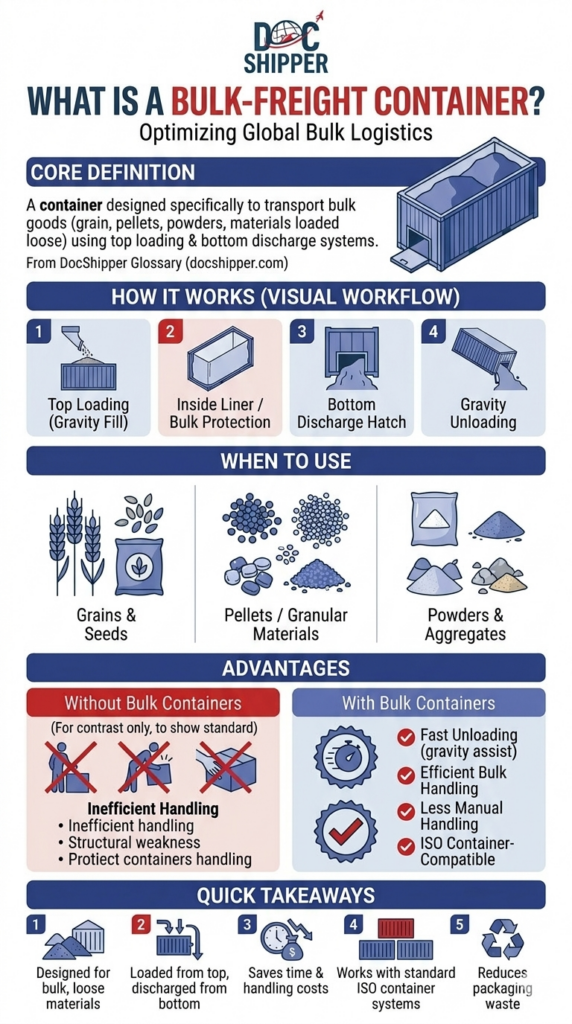
A bulk-freight container is a specialized shipping unit designed to transport unpackaged cargo in large quantities, including dry bulk (grains, minerals) and liquid bulk (oils, chemicals). These containers feature unique loading mechanisms such as top hatches, discharge valves, and reinforced structures to handle high-density materials efficiently in international logistics.
Introduction
Many importers confuse standard containers with bulk-freight containers, leading to costly loading errors and cargo damage. Unlike conventional 20ft or 40ft containers, bulk units require specialized handling equipment and compliance with specific safety protocols.
In global supply chains, bulk-freight containers represent a critical solution for industries like agriculture, mining, and petrochemicals. They eliminate intermediate packaging costs while ensuring product integrity during multimodal transport.
- Capacity optimization: Handles 20-30% more volume than bagged alternatives
- Contamination prevention: Sealed systems protect sensitive materials
- Cost efficiency: Reduces labor and packaging material expenses
- Regulatory compliance: Meets ISO 1496 and IMDG Code standards
- Versatility: Adaptable for both dry and liquid cargo types
Technical Specifications & Regulatory Framework
Bulk-freight containers fall into three primary categories: dry bulk containers for granular materials, tank containers for liquids, and flexitank containers for non-hazardous liquids. Each type features distinct structural reinforcements to withstand internal pressure and prevent cargo shifting during transit.
The ISO 1496-4 standard governs bulk container manufacturing, mandating minimum wall thickness, pressure ratings, and valve specifications. For hazardous materials, the International Maritime Dangerous Goods (IMDG) Code requires additional certifications including UN portable tank approvals and periodic inspection intervals.
Loading mechanisms vary significantly: dry bulk units typically employ top-loading hatches with gravity discharge systems, while tank containers use bottom valves with pneumatic or pump-assisted unloading. At DocShipper, we systematically verify container compatibility with cargo specifications to prevent equipment damage and customs delays.
Weight distribution remains critical—payload capacity for standard 20ft bulk containers ranges from 21,000 to 24,000 kg, depending on tare weight. Exceeding axle load limits triggers port penalties and transport restrictions across EU and North American routes.
Ventilation systems in dry bulk containers prevent condensation buildup, particularly for hygroscopic materials like grain or cement. Modern designs incorporate membrane valves that allow moisture escape while blocking external contaminants, maintaining cargo quality throughout 30-45 day ocean transits.
Practical Applications & Comparative Data
A European grain importer shipping 22 tons of wheat from Ukraine to Rotterdam demonstrates bulk container efficiency. Using a standard 20ft dry bulk unit with top-loading hatches reduced packaging costs by €1,200 per shipment compared to bagged alternatives, while discharge time decreased from 6 hours to 90 minutes using pneumatic systems.
| Container Type | Typical Cargo | Capacity (20ft) | Loading Method | Cost vs. Standard |
|---|---|---|---|---|
| Dry Bulk | Grains, minerals, plastics | 21-24 tons | Top hatch + gravity | +15% rental |
| ISO Tank | Chemicals, oils, food liquids | 21,000-26,000 L | Bottom valve + pump | +40% rental |
| Flexitank | Wine, juice, edible oils | 16,000-24,000 L | Disposable liner + valve | -25% vs. tank |
A chemical manufacturer transporting 20,000 liters of glycerin from Malaysia to Germany illustrates tank container advantages. The T11 ISO tank maintained temperature control (±2°C) throughout the 35-day journey, preventing crystallization that would have occurred in standard drums. Total logistics cost: €3,800 versus €5,200 for drum-based shipping.
Key operational metrics for bulk-freight containers include:
- Cleaning costs: €150-€400 per tank container between loads
- Inspection frequency: Every 2.5 years for hazardous materials (IMDG requirement)
- Discharge rates: 1,500-3,000 L/hour for gravity systems, 8,000+ L/hour with pumps
- Residue levels: <0.5% for food-grade containers (FDA compliance)
- Demurrage risks: 30% higher for bulk units due to specialized cleaning requirements
DocShipper clients shipping powdered minerals from Australia to India achieved 18% cost savings by switching from bagged to bulk containers, factoring in reduced labor, packaging materials, and faster port turnaround times.
DocShipper Platform
One platform. Your entire supply chain
Sourcing, freight, customs & documents — all centralised, all visible, 24/7.
Conclusion
Bulk-freight containers transform logistics economics for high-volume shippers by eliminating packaging waste and accelerating handling processes. Proper container selection based on cargo properties and regulatory requirements prevents costly delays and product loss.
Need expert guidance on bulk container logistics? Contact DocShipper for tailored solutions across all cargo types and trade routes.
📚 Quiz
Test Your Knowledge: Bulk-Freight Container
Q1 — What is the primary defining characteristic of a bulk-freight container?
Q2 — A shipper needs to transport 20,000 liters of a hazardous chemical liquid internationally. Which bulk container type is legally compliant for this cargo?
Q3 — A European importer wants to ship 22 tons of wheat using a bulk-freight container instead of bagged alternatives. What is the most accurate statement about this decision?
🎯 Your Result
📞 Free Quote in 24hFAQ | Bulk-Freight Container: Definition, Types & Practical Examples
Bulk containers feature specialized loading/unloading mechanisms (hatches, valves) for unpackaged cargo, while standard containers transport packaged goods. Bulk units have reinforced floors and walls to handle high-density materials like grains or liquids.
Yes, but only ISO tank containers with UN portable tank certification meet IMDG Code requirements for hazardous liquids. Dry bulk containers lack necessary safety features for dangerous goods transport.
Dry bulk containers cost 10-20% more than standard units (approximately $150-$250/month). ISO tank containers range from $300-$600/month depending on specifications and cleaning requirements.
Highly reactive chemicals, radioactive materials, and cargo requiring constant agitation cannot use standard bulk containers. Consult the IMDG Code Segregation Table for specific restrictions.
Subtract the container's tare weight (2,300-3,800 kg for 20ft units) from the maximum gross weight (24,000-30,480 kg). Always verify axle load limits for destination countries to avoid penalties.
No, flexitanks are single-use disposable liners designed for non-hazardous liquids. They offer lower costs than tank containers but cannot be cleaned for subsequent shipments.
FDA regulations require residue levels below 0.5% and full sanitization between loads. Certificates of Cleanliness must accompany each shipment to prove compliance with food safety standards.
Gravity-fed dry bulk systems discharge 20 tons in 60-90 minutes. Liquid tank containers with pumps complete 20,000-liter unloading in 2-4 hours depending on viscosity and temperature.
No, bulk containers are designed exclusively for sea and rail transport. Air freight requires specialized bulk packaging like intermediate bulk containers (IBCs) or certified drums.
IMDG Code mandates 2.5-year inspections for hazardous material tanks, including pressure testing and valve functionality checks. Non-hazardous tanks require 5-year inspections under ISO standards.
Yes, top-loading dry bulk containers need conveyor systems or pneumatic blowers. Tank containers require pump connections and heating equipment for viscous liquids. Standard forklifts cannot handle these units safely.
Request Certificates of Cleanliness, verify previous cargo compatibility, and inspect gaskets/valves before loading. For food-grade shipments, ensure the container meets FDA or EU food contact material regulations.
Need Help with
Logistics or Sourcing ?
First, we secure the right products from the right suppliers at the right price by managing the sourcing process from start to finish. Then, we simplify your shipping experience - from pickup to final delivery - ensuring any product, anywhere, is delivered at highly competitive prices.


Fill the Form
Prefer email? Send us your inquiry, and we’ll get back to you as soon as possible.
Contact us




