


In short ⚡
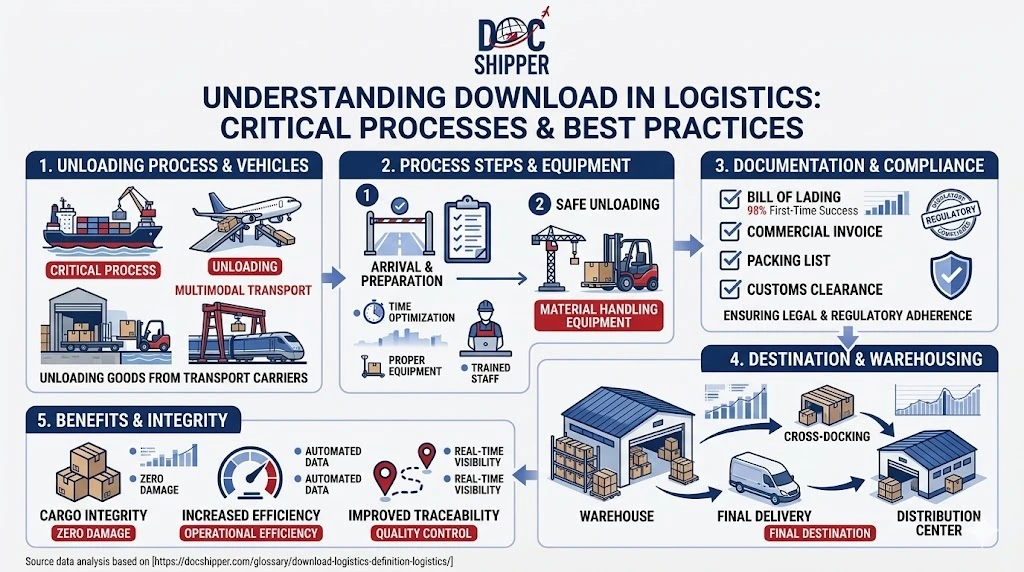
Download in logistics refers to the process of unloading cargo from a transport vehicle (ship, aircraft, truck, or train) at its destination point. This critical operation involves transferring goods from the carrier to a warehouse, distribution center, or final delivery location, requiring proper documentation, equipment, and coordination to ensure cargo integrity and regulatory compliance.
Introduction
Many businesses underestimate the complexity of the download phase. A delayed or mishandled unloading operation can trigger demurrage charges, damage goods, or disrupt the entire supply chain.
Download operations represent the critical transition point where cargo shifts from transportation custody to warehouse control. This phase determines product condition, inventory accuracy, and delivery timelines.
- Time-sensitive process: Carriers impose strict unloading windows to maintain schedule efficiency
- Documentation checkpoint: All shipping papers must be verified before cargo release
- Equipment dependency: Specialized machinery (forklifts, cranes, conveyors) required for different cargo types
- Quality control moment: Immediate inspection detects transportation damage or discrepancies
- Regulatory compliance: Customs clearance and safety protocols must be completed during download
Download Operations & Technical Expertise
The download process follows a structured methodology that varies by transport mode and cargo characteristics. Maritime containers require different handling than air freight pallets or bulk truck shipments.
Pre-download preparation begins before the vehicle arrives. Warehouse teams review shipping manifests, allocate storage space, and prepare handling equipment. This advance coordination prevents bottlenecks and reduces turnaround time.
Physical unloading procedures depend on cargo specifications. Fragile items demand gentle handling with specialized equipment. Hazardous materials follow strict safety protocols outlined in UN dangerous goods regulations. Temperature-controlled products require immediate transfer to climate-controlled storage.
Documentation verification occurs simultaneously with physical download. Operators cross-reference packing lists against actual cargo, noting any discrepancies. Bill of lading details must match customs declarations for international shipments.
Damage assessment protocols protect all parties. Receivers photograph cargo condition, document visible damage, and obtain carrier signatures acknowledging issues. This evidence proves essential for insurance claims and liability determination.
System integration completes the download cycle. Warehouse management systems (WMS) update inventory records in real-time, triggering downstream processes like quality inspections or order fulfillment. At DocShipper, we coordinate download operations across global facilities, ensuring seamless transitions from carrier to warehouse with full tracking visibility.
Practical Examples & Performance Data
Download efficiency directly impacts operational costs and customer satisfaction. Industry benchmarks reveal significant performance variations across logistics networks.
| Transport Mode | Average Download Time | Crew Size | Cost per Unit |
|---|---|---|---|
| 20ft Container (Port) | 45-60 minutes | 2-3 operators | $120-180 |
| Full Truck Load (FTL) | 30-45 minutes | 1-2 operators | $75-110 |
| Air Freight Pallet | 15-25 minutes | 2 operators | $95-140 |
| Bulk Cargo (Rail) | 90-120 minutes | 4-6 operators | $250-400 |
Case Study: Electronics Import Optimization
A European retailer reduced download times by 35% through process improvements. Previously, their 40ft containers required 90 minutes to unload. By implementing pre-staging protocols, upgrading to electric forklifts, and training staff on efficient palletization, they decreased average time to 58 minutes. This improvement saved €18,000 annually in labor costs and eliminated demurrage fees.
Critical performance factors:
- Dock availability: Facilities with multiple loading bays process 40% more cargo daily
- Equipment maintenance: Breakdowns increase download time by 200-300%
- Staff training: Certified operators complete tasks 25% faster than untrained personnel
- Technology adoption: RFID scanning reduces documentation time from 12 to 3 minutes per shipment
- Communication systems: Real-time carrier updates prevent 60% of scheduling conflicts
Conclusion
Download operations form the foundation of efficient warehouse management and supply chain continuity. Mastering this phase reduces costs, prevents damage, and accelerates inventory availability.
Need expert assistance coordinating your download operations across international facilities? Contact DocShipper for comprehensive logistics support.
📚 Quiz
Test Your Knowledge: Download in Logistics
Q1 — What does "download" refer to in a logistics context?
Q2 — Under which Incoterm does the SELLER bear responsibility for download costs in international shipping?
Q3 — A warehouse receives a refrigerated pharmaceutical shipment. Which action is most critical during the download operation?
🎯 Your Result
📞 Free Quote in 24hFAQ | Download in Logistics: Definition, Process & Practical Examples
Both terms describe cargo removal from transport vehicles. "Download" typically applies to systematic warehouse operations, while "offloading" often refers to the physical act at ports or terminals. Functionally, they represent the same process.
Payment responsibility depends on Incoterms. Under DDP terms, the seller covers all costs including download. With EXW terms, the buyer handles and pays for unloading. Always verify your contract terms.
Standard 20ft containers require 45-60 minutes, while 40ft containers take 75-90 minutes. Time varies based on cargo type, equipment availability, and operator experience. Refrigerated or hazardous cargo requires additional handling time.
Essential equipment includes forklifts, pallet jacks, dock levelers, and conveyor systems. Specialized cargo may require cranes, temperature-controlled vehicles, or hazmat handling tools. Equipment selection depends on cargo specifications and facility capabilities.
Yes, but additional fees apply. After-hours downloads typically cost 50-100% more due to overtime labor rates. Many ports and warehouses offer 24/7 operations for urgent shipments or to avoid demurrage charges.
Immediate documentation is critical. Photograph damage, note details on delivery receipts, and obtain carrier acknowledgment. File claims within carrier-specified timeframes (typically 24-48 hours). Liability depends on when damage occurred and contract terms.
Customs inspection often occurs during or immediately after download. Cargo must remain accessible for examination. Delays in download can postpone clearance, triggering storage fees. Proper documentation expedites both processes simultaneously.
Demurrage fees apply when cargo remains on carrier equipment beyond free time allowances (typically 3-5 days for ocean freight). Daily charges range from $75-200 per container. Efficient download scheduling prevents these costly penalties.
Warehouse management systems (WMS) automate documentation, optimize storage allocation, and track inventory in real-time. RFID technology reduces manual scanning time by 75%. Automated guided vehicles (AGVs) increase throughput by 30-40% compared to manual operations.
OSHA regulations mandate proper equipment certification, personal protective equipment (PPE), and load securing procedures. Operators must complete safety training annually. Facilities require clear signage, designated pathways, and emergency response plans for hazardous materials.
Yes, and advance scheduling is highly recommended. Most facilities require 24-48 hours notice for container downloads. Pre-booking ensures dock availability, equipment allocation, and staff readiness, reducing wait times and associated costs.
Severe weather delays outdoor downloads at ports and rail terminals. Rain, snow, or extreme temperatures damage sensitive cargo during transfer. Covered facilities maintain operations regardless of conditions. Always factor weather contingencies into logistics planning.
Need Help with
Logistics or Sourcing ?
First, we secure the right products from the right suppliers at the right price by managing the sourcing process from start to finish. Then, we simplify your shipping experience - from pickup to final delivery - ensuring any product, anywhere, is delivered at highly competitive prices.


Fill the Form
Prefer email? Send us your inquiry, and we’ll get back to you as soon as possible.
Contact us




